Dresses & Skirts
What Shoes to Wear with a Shirt Dress
Sandals, loafers, sneakers and boots compared for shirt dresses, with complete outfits for warm days, work and cooler weather, a walking check and enclosed-shoe substitutes.
Outfit guide
A shirt dress can be styled belted or loose according to the shape and comfort you prefer — the waist decision changes the silhouette, not the formality. This guide walks through the checks to make first, the belted and relaxed versions side by side, and the shoe and layer pairings that suit each.
Begin hereInspiration
Style a shirt dress with or without a belt according to the shape and comfort you prefer. First check that the buttons stay secure when you sit and move, then choose shoes and a layer for the setting. A belt changes the silhouette, but it does not by itself make the dress formal or suitable for every venue.
The placket decides how much styling the dress can take, so read it before choosing a belt or shoes. Three things matter: whether the buttons sit flat when you stand, whether the overlap stays closed when you sit or reach, and whether the fabric gaps between buttons at the fullest point of the chest or hip.
In the mirror, before planning the outfit:
If the placket gaps persistently, that is a fit problem, not a styling one. The fixes are the same ones that stop a wrap dress gaping — the wrap-dress gaping guide in the dresses and skirts hub covers the underlying causes in detail. Deeper overlaps, a size adjustment or a discreet press stud usually do more than re-arranging the outfit.
Waist definition is the single biggest lever on a shirt dress, and it works in both directions. Belted at the natural waist, the dress gains a waistline and reads closer to tailoring; worn loose and unbelted, it reads easier and longer through the body. What the belt does not do is upgrade the dress code on its own.
Belted
Relaxed (unbelted)
A belt makes a shirt dress formal, and left unbelted it is only suitable for weekends.
A belt changes the silhouette, not the dress code. Whether the outfit is formal enough depends on the fabric, the condition, the shoes and what the venue expects — a belted cotton dress is still a casual cotton dress, and a crisp unbelted shirtdress with leather sandals is a common smart casual summer look.
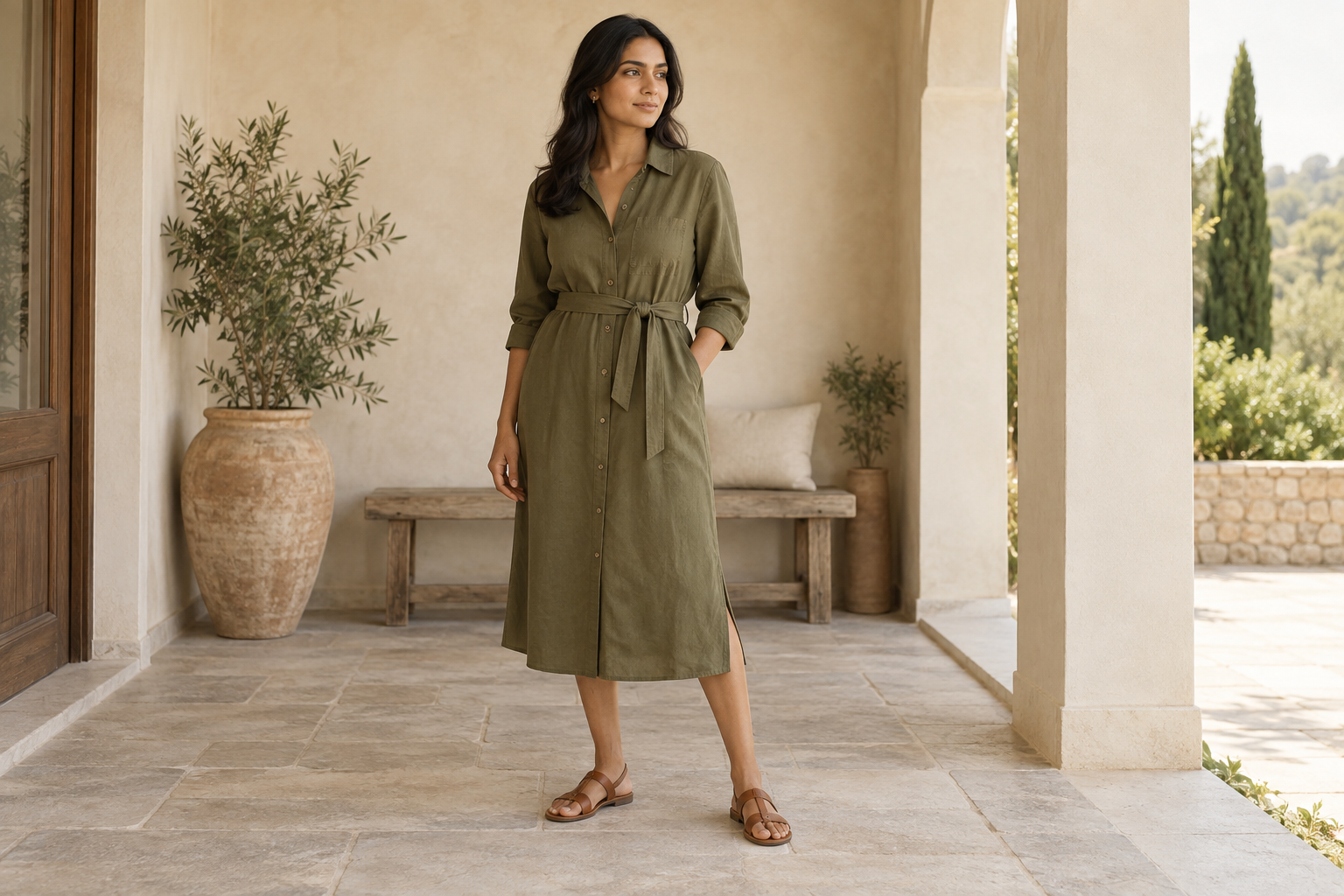
The illustration shows the belted version: an olive shirt dress cinched at the waist, worn with flat tan sandals on a stone verandah. The belt defines the waist, and the flat sandal keeps the outfit warm-weather-easy while the leather (rather than rubber) keeps it dressed. This is the starting point the other looks below vary from.
The image library does not include honest pictures of the following combinations, so they are described rather than dressed up with mismatched photos. Each is a complete outfit; the table underneath gathers the shoe and layer decisions in one place.
| Look | Waist | Shoes | Layer | Where it fits |
|---|---|---|---|---|
| Navy cotton-poplin dress | Slim dark-brown belt | Brown leather loafers | None, or sleeves rolled to just below the elbow | Offices with no strict code, meetings, lunches |
| Deep-green dress, hem just below the knee | Narrow belt at the natural waist | Black heeled ankle boots with opaque tights | None — the heel lifts the silhouette | Dinner, evening events |
| Chambray dress | Open and unbelted | White leather sneakers | Worn open over a plain white t-shirt and straight-leg jeans | Weekends, travel, casual errands |
| Stone linen dress, hem near the ankle | Loose, unbelted | Flat leather sandals | None; a woven tote finishes it | Warm-weather weekends, holidays |
| Navy dress worn as a long shirt | Unbuttoned over a fine turtleneck | Chelsea boots with dark tights | Longline cardigan in a matching neutral | Cool-weather days, casual offices |
| Black dress | Belted | Pointed flats or loafers | Cropped or waist-length jacket — denim or a soft blazer | Casual dinners through to smarter venues |
Two proportion rules sit under the table. Match hem to shoe weight: knee-length dresses pair with loafers, flats or heeled boots, while a longer hem wants a flat sandal or a boot so the line does not cut across the calf. And keep one short layer in reserve: a cropped jacket restores a waistline that a long cardigan or a loose dress hides, which is why it earns its place even over a belted dress. For more footwear options, the guide to smart casual shoes without heels covers flat styles in detail.
The narrowest point of your torso, usually just above the navel. A belt worn low over the hips slides, and a dress belted there bunches at the hem every time you move.
Roll the sleeves to just below the elbow in one or two firm folds rather than pushing them up. Pushed-up sleeves creep down and gather at the wrist within the hour.
Static cling and riding up are layer problems: a slip or close-fitting base layer under the dress lets it move over the body instead of with it.
Treat it as fit, not styling — deeper overlap or a discreet fastening repair, following sewing guidance for the fabric. Care and construction details on the manufacturer's label are the reference for what the fabric will tolerate; nothing on this page has been tested on a specific garment.
1 look to explore
The belted version, shown in the illustration: the belt defines the waist so the dress reads tailored, while flat tan leather sandals keep it warm-weather-easy. Use it as the reference for proportion — every other look on this page is described in words, not pictures.
Dresses & Skirts
Sandals, loafers, sneakers and boots compared for shirt dresses, with complete outfits for warm days, work and cooler weather, a walking check and enclosed-shoe substitutes.
Dresses & Skirts
Compare shirt dresses and wrap dresses on fit, formality, layering, and care to decide which one earns the space in your wardrobe.
Dresses & Skirts
How to style a wrap dress for smart casual: check the overlap and fastening first, then build work, celebration and weekend outfits with cardigan or blazer layers.