To wear ankle boots with a dress, compare the boot shaft and dress hem together, then check comfort as you walk. These six looks show flat, heeled and with-tights versions, with the shaft-to-hem relationship doing the explaining.
To wear ankle boots with a dress, compare the boot shaft and dress hem together, then check comfort as you walk. You can leave a gap, cover it with tights or choose a longer hem; each creates a different appearance. Start with the boots you can comfortably wear and adjust the outfit around the occasion and weather.
Ankle boots work with almost any dress length; what changes is the strip between the boot shaft and the hem. Treat that strip as a dial you set — bare, sheer-dimmed or solid — rather than a rule to satisfy, and let the boots' comfort carry the final say.
Shaft height and hem length: what to compare
Shaft height is the distance from the boot's sole to the top of its collar; ankle boots typically sit around ankle-bone height. Hem length is where the dress ends on your leg. Put the two on together and notice three things: how much leg shows between them, whether the shaft cuts the leg at its narrower ankle or wider point, and whether the whole line reads deliberate from a normal standing distance.
Myth
The bare gap between hem and boot shaft is always the main decision, and the right gap lengthens the leg.
Fact
The gap is one thing to compare, not the only one. Comfort, weather and occasion can all decide the outfit before proportion does, and tights make shaft height almost irrelevant by reading leg and boot as one column. There is no required proportion — only a relationship you chose on purpose.
Three ways to resolve the hem-to-shaft strip
Approach
How it looks
Best for
Leave a bare band
A visible strip of leg between hem and shaft keeps the look light and casual
Warmer days, shorter hems, relaxed settings
Fill it with tights
Sheer tights dim the band; opaques erase it so leg and boot read as one column
Cool weather and long days — also the most forgiving if tones differ
Close the distance
A longer hem sits near the shaft, so the eye travels hem-to-boot in one move
Midi and tea-length dresses where a long bare gap would look accidental
Three dress formulas, decided end to end
The six looks in the collection below cover flat, heeled and with-tights versions. These three formulas are worked through completely, one per dress type, so you can copy a whole outfit rather than a fragment.
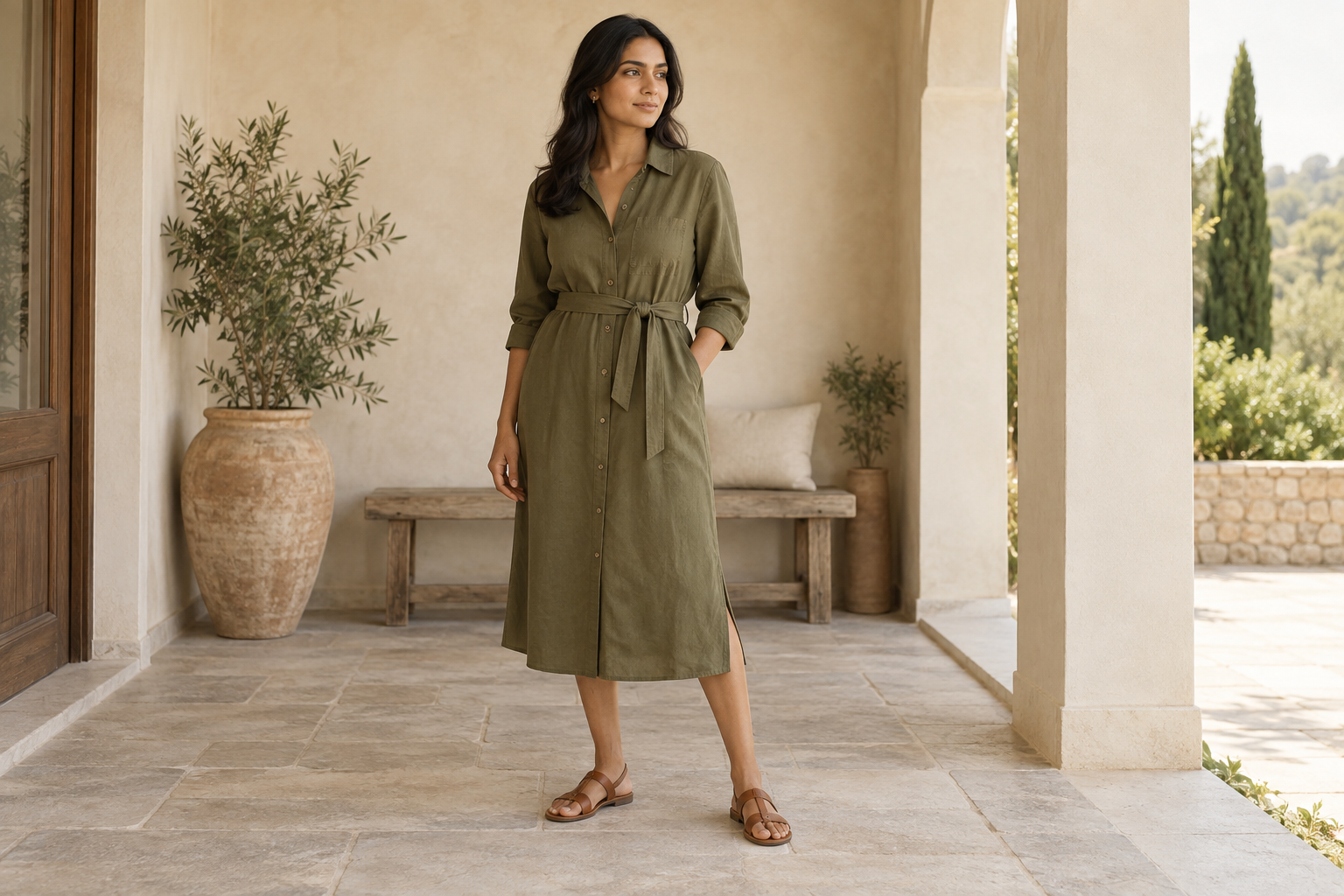
Shirt dress, daytime: an olive belted shirt dress ending just above the knee with flat chelsea boots, shaft at the ankle bone. The belt defines the waist and the low, narrow shaft keeps the casual shape light — the flat version to try first.
Knit dress, cold day: a grey sweater dress ending above the knee, 60-denier opaque tights and brown flat boots with a slightly higher shaft. Filling the gap with opaques makes shaft height almost irrelevant and is the warmest version for a long day out.
Evening dress, dinner: a charcoal slip dress with a blazer draped over it and black heeled ankle boots with a pointed toe. The narrow shaft keeps the ankle visible so the dress keeps its drape; a chunky lug sole would pull the same dress toward streetwear.
The comfort check: walking, stairs and sitting
A proportion that works standing still can fail in motion, because boot toplines rub and hems ride. Outdoor-retailer fitting guides — Cotswold Outdoor's boot fitting advice — recommend checking the flex point, heel, width and toe box, then walking a slope to confirm heel hold; the same checks transfer to everyday ankle boots.
Walk ten paces
On a hard floor in the socks or tights you plan to wear. Feel whether the boot topline rubs the ankle bone and whether the heel slips; a small amount of new-boot slip is normal, persistent rubbing is not.
Take a flight of stairs
Up and down. Stairs flex the boot at the ankle and lift the hem higher than walking does — a shaft that pinches on stairs, or a hem you have to mind, changes the outfit's practicality.
Sit for five minutes
Check where the hem rides to seated and whether the shaft digs when the ankle bends. Seated hem changes are why a bare band that looked right standing can read differently across a café table.
Re-check with the tights decision
If you add tights, try the boots over them — toe room and shaft fit change with the extra layer, and toe wiggle room is the check fitters point to first.
Flat or heeled: choose for the day, not for the illusion
Both heel states work with every hem length in this collection. Choose between them on comfort and occasion — walking distance, floor surfaces, how long you will be on your feet — rather than on leg-lengthening effect, which no hem-to-shoot arrangement owes you.
Flat boots earn their place when
The day involves real walking, stairs or standing
The dress is casual in fabric or pattern — utility shirting, sweater knits
You want the hem, not the shoe, to carry the look's structure
A heel earns its place when
The occasion is evening or celebratory and the walking is short
The dress has drape that a lift preserves, as with a slip
A low block heel gives lift without punishing the foot
Heel height is not a proportion tool either. A stacked heel lifts a hem slightly and a flat keeps a casual dress grounded, but neither one fixes a shaft-to-hem relationship you dislike — that is what tights, a different hem, or a different shaft are for.
The tights half of the shaft-to-hem decision: denier, coverage and colour, with a fit checklist.
Cotswold Outdoor, boot fitting guide — source of the fit-check framing (flex point, heel, width, toe box), the note that a little heel slip is normal in new boots, the toe wiggle-room check, and the advice to walk a slope to confirm heel hold. It is walking-boot guidance applied here as general footwear-fit practice, not dress-boot evidence.
Which mood feels like your day?
Find a setting.
6 looks to explore
Shirt dress with flat chelsea boots
An olive utility shirt dress worn open-collared, with black flat leather chelsea boots as the intended pairing — the photo itself shows the dress with flat sandals, its summertime baseline. The dress ends just above the knee and the ankle-bone shaft leaves a clear band of leg that keeps the casual dress from looking heavy; swap the sandals for the boots and the same logic holds in cooler weather.
Floral midi dress with low flat boots
A deep green floral midi dress with a cropped cardigan, worn here with flat shoes — the boots to add are a low, narrow-shafted pair. A midi hem suits a shaft that sits low and close, so the eye travels from hem to floor in one line; a wide, slouchy shaft under a full skirt cuts the leg twice and reads heavy.
Slip dress with heeled ankle boots
The formula to recreate: a charcoal slip-style dress with a blazer draped over it and black heeled ankle boots with a pointed toe — the stacked heel lifts the hem slightly and the narrow shaft keeps the ankle exposed, so the dress keeps its evening drape. The photo shows chocolate brown tailoring with a silk-style shirt in a warmly lit restaurant; borrow the evening register, and judge the boot pairing on your own mirror.
Tea-length dress with western-style heel
The formula to recreate: a printed tea-length dress with a fitted waist and tan heeled ankle boots with a subtle western stitch — the full mid-calf hem lets the boot carry the visible lower line, and the tan keeps the ground lighter than the dark print above it. The photo shows a man in a dark suit with an open-collar shirt and a champagne glass at a celebration; it sets the occasion, not the dress-and-boots pairing.
Sweater dress with opaques and flat boots
A grey sweater dress ending above the knee, 60-denier opaque tights and brown flat ankle boots with a slightly higher shaft. Filling the gap with opaques makes the shaft height almost irrelevant — leg and boot read as one continuous column — which is why this is the easiest version to wear and the warmest for a long day out.
Wool dress with sheers and heeled boots
The formula to recreate: a black knee-length wool-blend dress with a longline cardigan, 40-denier black tights and low-heeled ankle boots — sheers dim the bare-leg band without erasing it, and all-black from hem to toe is the most forgiving pairing if the boots and the hem are not the same tone. The photo shows a cream tailored trouser suit with a canvas tote; it carries the office smartness, and the tights-and-boots layer underneath a dress is the part to recreate.
Make an idea your own.
Put the dress and boots on together and set the hem-to-shaft strip deliberately: a bare band for lightness, tights to dim or fill it, or a longer hem that sits near the shaft.
Recreate the flat look first: an olive belted shirt dress just above the knee with flat chelsea boots, shaft at the ankle bone, keeping a visible band of leg so the casual shape stays light.
For midi and tea-length hems, keep the shaft low and narrow — a slouchy or wide shaft under a full skirt cuts the leg twice and reads heavy, as in the floral midi look.
Switch to the heeled version for evening: a charcoal slip dress with pointed black ankle boots, letting the narrow shaft and slight lift preserve the dress's drape.
For cold days, fill the gap instead of fighting it: 60-denier opaques under the sweater dress make shaft height irrelevant because leg and boot read as one column.
Run the comfort check before committing — ten paces, one flight of stairs, five minutes seated — and swap flat for heeled, or adjust tights, until the outfit survives the day.
How to style a shirt dress with or without a belt: the placket and movement checks to make first, how the belted and relaxed versions differ, and the shoe and layer pairings for each.
How to style a midi skirt for smart casual settings: one worked knit-and-flats outfit, five more complete looks, and the waist and shoe choices that decide the tone.
Sandals, loafers, sneakers and boots compared for shirt dresses, with complete outfits for warm days, work and cooler weather, a walking check and enclosed-shoe substitutes.