Skip to content

Find your next good read.

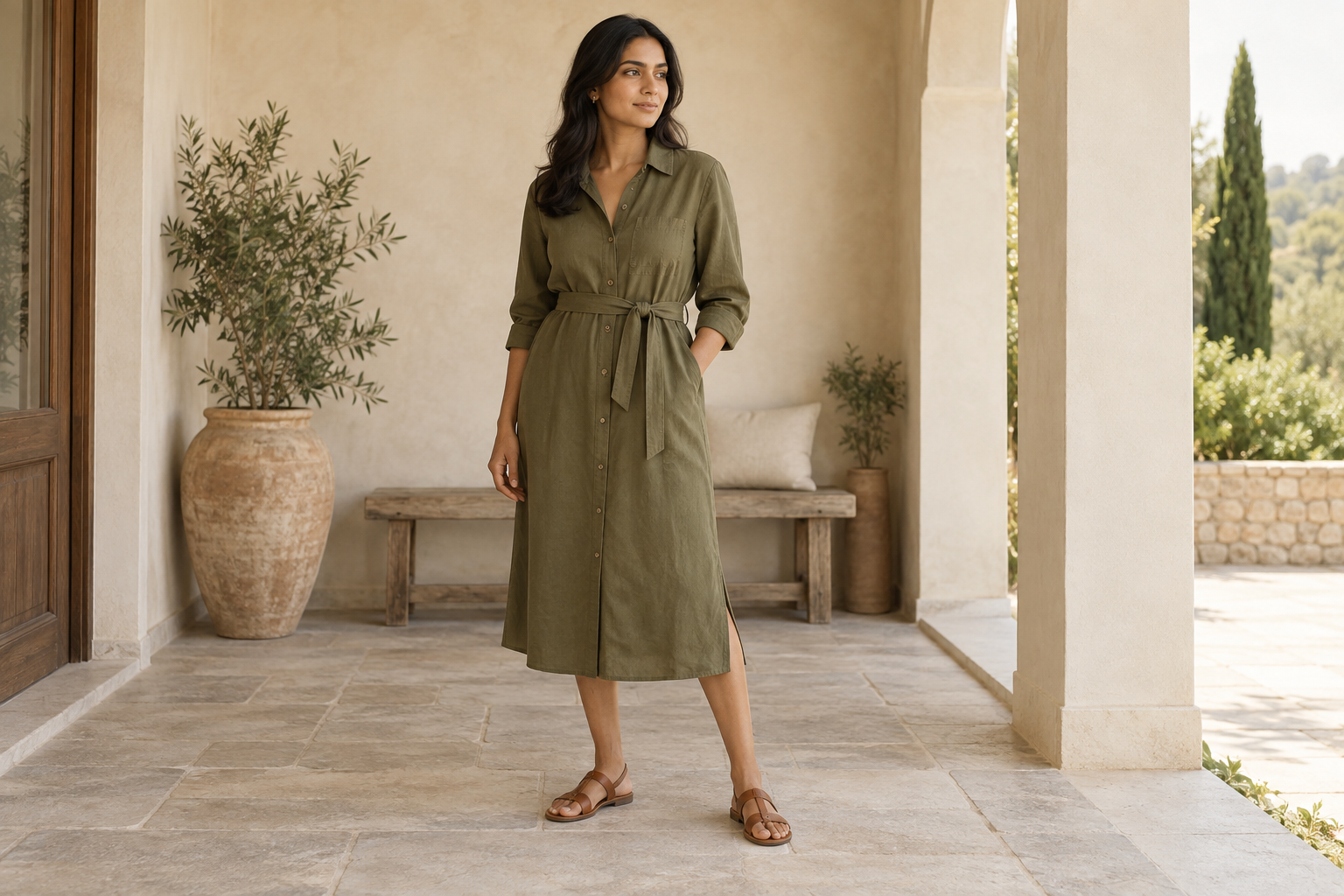
Woman wearing an olive belted shirt dress and tan sandals on a stone verandah.

Head-to-head comparison

Shirt Dress or Wrap Dress: Which Works for Your Plans?

Two of the most versatile dress shapes, compared on closure, fit and everyday practicality so you can pick the right one for your week.

Begin here

Comparison

Shirt dress or wrap dress: which works for your plans?

Choose between a shirt dress and a wrap dress by checking the closure, the fit and the activities you have planned. Buttons, ties and overlap behave differently when you sit, reach or move. Try the actual garment rather than assuming every wrap adjusts easily or every shirt dress fits the same way.

Myth

A wrap dress adjusts to fit anyone, so it flatters every body straight off the rail.

Fact

Only the waist tie adjusts. The bust, shoulder, sleeve and skirt are cut to specific measurements, and a shallow or poorly anchored overlap can gape on any figure. Fit is tested in the garment — never assumed from the closure style.

Check the closure before comparing anything else

Construction differences change how the dress fastens, adjusts and survives the wash. Two dresses can look similar on the hanger and behave nothing alike in a chair. Use this table to name what you are actually holding.

Closure types and what to check on each
Closure typeHow it fastensWhat to check
Full button-through shirt dressButtons run from collar to hem along a fixed placket.Gapping between buttons over the bust or hip when you sit; whether the button spacing matches your body, not a size chart.
Half-placket shirt dressButtons stop mid-chest; the skirt pulls on, sometimes with a zip or elastic back.Whether the pull-on skirt still lets you dress without a fight, and whether the fixed bodice gaps at the open placket.
True wrapOne side wraps over the other and ties at the waist; the dress opens fully.Overlap depth — enough fabric to stay closed when seated — and whether the tie holds a knot through movement.
Faux wrapPulls on, with the crossover sewn shut and often a hidden zip or elastic waist.The sewn overlap cannot adjust at all, so the V-neck must sit flat without gaping and the waist must fit as cut.

Run two movement checks in the fitting room

  1. The button-strain check (shirt dresses)

    Sit down, then reach forward as if setting a table. Look at the panel between buttons across the fullest part of your bust or stomach: small horizontal pulls mean the spacing or size is wrong. Sizing up the shoulders to close a gap is a poor trade.

  2. The overlap check (wraps)

    Sit, stand and bend forward in the dress. The top layer should stay closed and the crossover should sit flat. If wind, movement or a shallow overlap exposes the layer beneath, that dress will need a camisole or a tailoring fix to be wearable.

Finish every try-on with these checks before deciding:

  • Fastened and seated: no gaps at the bust, hip or overlap from a chair.
  • Waist definition, if you want it: the belt on the shirt dress or tie on the wrap sits where you want without cinching.
  • Neckline: the shirt collar buttons (or not) as you like; the wrap V sits where you want without a pin.
  • Under-layer test over your usual bra or base layer, not bare skin.
  • Care label read and matched to your actual laundry routine.
  • Hem checked at your height with the shoes you plan to wear.

Where each dress earns its place

Choose a shirt dress when

  • Your week mixes office, errands and weekends in one wardrobe.
  • You layer over turtlenecks or under coats through cold months.
  • Pockets and machine-washable cotton carry real weight for you.
  • You want a piece that doubles as a light jacket in travel.

Choose a wrap dress when

  • Your days run from desk straight into dinner or events.
  • A defined waist is the look you are dressing for.
  • You mostly wear it in warmer months or heated rooms.
  • You will follow the fabric's care instructions faithfully.

THE SHORT ANSWER

Choose for the day ahead.

There is no overall winner. Choose a shirt dress if you want structure, pockets and easy layering for mixed office-and-weekend wear; choose a wrap dress if you want a defined waist and a dress that moves smoothly from desk to dinner. Try both closures on before committing, because the fit you get depends on the specific cut, not the category.

Side by side.

The differences that matter
AspectShirt dressWrap dress
Dressing easeButtons take longer but the dress opens flat, so stepping into it is simple; half-placket versions pull on.A true wrap goes on fast, but tying it neatly takes a moment; faux wraps pull on like a T-shirt dress.
AdjustabilityThe cut is fixed; a belt adds shape but the button spacing cannot move without a tailor.The waist tie adjusts continuously, though the bust, shoulders and skirt remain cut to fixed measurements.
NecklineCollared shirt neckline, buttonable to your preferred height; reads structured or casual depending on styling.V-neck from the overlap; flattering when it sits flat, and prone to gaping if the overlap is shallow or unanchored.
Bust fit behaviourRoomy like a shirt, but buttons can strain and gap across the fullest point, especially when seated.Follows the bust through the crossover, but a loose wrap or slippery fabric can shift and open in movement.
Seated coverageThe skirt behaves like a shirt: check that buttons at the hip hold when you sit.Check that the overlap stays closed and the skirt wraps fully when seated — this varies more between cuts.
LayeringExcellent: opens fully like a jacket and layers over turtlenecks and under coats without bunching.Limited: the V-neck and tie restrict underlayers to a camisole, with coats worn on top.
SeasonsAll four with layers; heavier cotton and twill versions carry into winter.Strongest in spring and summer; bulkier winter fabrics weigh down the silhouette.
CareUsually machine-washable cotton or linen blends that press back into shape.Depends on fabric: jersey is low-effort, while silk and satin wraps often need hand washing or dry cleaning.

What should guide your choice?

  • Dressing ease and adjustability: how the closure behaves day to day, not just in the mirror.
  • Comfort in motion: how buttons and overlap hold up when you sit, reach and walk.
  • Formality range: how many settings the same dress covers without restyling.
  • Layering options: what can sit over and under it in your climate.
  • Care demands: what the label requires versus the laundry you will actually do.

The right choice depends on the setting.

You dress for an office with a smart-casual dress code

A cotton poplin shirt dress with loafers and a structured bag reads appropriately formal, and the button front layers over a thin turtleneck in winter. A wrap dress also works, but you will need a camisole underneath and a smarter fabric to keep it office-grade, which raises the upkeep.

Your days run straight from work into dinner or drinks

The wrap dress usually earns the pick: swap loafers for heeled boots and add bolder jewellery at the V-neckline, and the same dress reads evening. A shirt dress can be belted tighter for a similar shift, though its casual DNA tends to show through after dark.

You want one dress for travel and weekends

Take the shirt dress. It doubles as a light layer over a tee and leggings, the pockets carry the essentials, and machine-washable cotton forgives hotel sinks. A jersey wrap is a close second for comfort, but it offers little coverage worn open and often lacks pockets.

You find that buttons gap or wraps ride open

Match the fix to the closure instead of blaming your body. Button gapping calls for a cut with stretch, darts or bust-mapped sizing — or a tailor who can move a button; wrap gaping calls for a deeper overlap, an anchored crossover or a camisole underneath. Test both fixes seated in the fitting room, not standing in front of it.

Keep exploring.

Dresses & Skirts

What Shoes to Wear with a Shirt Dress

Sandals, loafers, sneakers and boots compared for shirt dresses, with complete outfits for warm days, work and cooler weather, a walking check and enclosed-shoe substitutes.