Style a wrap dress after checking that the overlap and fastening stay comfortable when you sit and move. Then add shoes and a layer for the setting. These looks cover the office, a celebration and the weekend, and each starts from the same construction check.
Style a wrap dress after checking that the overlap and fastening stay comfortable when you sit and move. Then add shoes and a layer for the setting, such as flats and a cardigan or loafers and a blazer. A camisole is an option if you want more coverage; it is not a substitute for a fastening that fails.
A wrap dress brings its own structure at the waist: the crossed front and tie do the work that a belt does on other dresses. What that construction asks in return is a minute of checking, because a tie that loosens or a cross that sits shallow changes how the whole outfit wears. Do the check once, then style with confidence.
True wrap or faux wrap: check the construction first
Not every dress sold as a wrap behaves like one. Look inside the garment before you plan anything around the tie, because the construction decides which checks matter.
Wrap constructions and what they mean for styling
Construction
How to recognise it
What it means for you
True wrap
Two full front panels that overlap and fasten only by the tie, inside or out
The overlap and tie carry the fit — check them standing, sitting and bending before styling
Faux wrap
The front is sewn shut; the wrap is a printed or stitched detail with an elastic or fixed waist
The cross cannot shift, so style freely — but the waist still needs to sit comfortably when seated
Wrap-look with hidden fastenings
A partial overlap secured by snaps, a zip or buttons behind the tie
Mostly secure, though the opening can still strain across the bust — one seated check settles it
The fastening check: stand, sit, bend
Run this check in the dress, in the light you will wear it in, before styling anything. The pass mark is your own comfort — how much neckline or overlap coverage you prefer is entirely your call.
Tie at your natural waist
Place the tie where your waist actually is, not where the loop happens to rest. Knot it rather than bowing it — a bow works loose through the day.
Stand and look in a mirror
Check that the two panels fully overlap across the bust and that the neckline sits where you want it. Adjust the cross before judging anything else.
Sit down
Sitting changes the tension across the cross. Confirm the overlap holds and the waist tie does not dig or press.
Bend forward
Lean over a mirror or toward the floor. If the neckline moves somewhere you did not plan, re-tie, or treat the dress as one that needs an underlayer or alteration — not one to battle on the day.
Three complete combinations for work, celebration and weekend
Once the fastening passes, the dress is one of the easiest garments to build on. Each formula names the fabric weight, because that is what keeps the cross flat.
Wrap dress formulas by setting
Setting
The outfit
Why it works
Work
Mid-weight navy jersey wrap, charcoal longline cardigan, black leather loafers, structured tote
Jersey heavy enough to hold the wrap flat keeps the cross where you tied it, and the cardigan's vertical line follows the dress's diagonal
Celebration
Floral or satin-look wrap midi, tan block-heel sandals, small clutch, cream pashmina for evening
Prints soften the diagonal seam lines, block heels stand on grass, and a snug waist tie keeps the panels fully overlapped when seated
Weekend
Cotton wrap dress, white leather sneakers, denim jacket worn open
Cotton grips at the cross so the tie holds without help, and an open jacket adds a layer without pressing the wrap apart
Cardigan or blazer: choosing a layer that respects the tie
The one styling mistake that undoes a wrap dress is a boxy layer that ends exactly at the waist and presses the panels apart. Both classic layers avoid it — for different reasons.
A longline cardigan suits the dress when
You want softness — its vertical line follows the wrap's diagonal instead of cutting across it
The setting is relaxed or creative-casual
The dress is jersey or cotton that already holds the cross flat
A cropped blazer is the better layer when
The setting asks for tailoring — its hem ends above the waist tie so it never presses the wrap out of place
The fabric is slippery, and a structured layer stops the front from shifting under bag straps
You want the waist tie visible as the outfit's detail
Coverage, security and when to stop adjusting
A camisole or fitted underlayer is a straightforward option if you want more coverage at the neckline, and silk-look fabrics benefit from the reduced friction. What an underlayer cannot do is hold a tie that fails the sit-and-bend check.
Myth
A safety pin or a strip of clothing tape will secure any wrap dress on the day, on any fabric.
Fact
Pins and adhesives behave differently across fabrics — a pin can show through fine jersey or damage a satin weave, and tape loses grip on moisture or texture. If you use one at all, test it on an inside seam or spare swatch of the actual fabric first. A cross that gapes through the checks is a fit question, and alteration advice is the route that solves it permanently.
Re-tie first: most movement through the day comes from a bow loosening, so knot the tie and re-check after an hour
Add a fitted camisole in a matching tone for neckline coverage that moves with the dress
For a dress that gapes every time you sit, treat it as a sizing or construction issue and take it to alteration advice rather than taping it for each wear
The parent hub for every dress and skirt guide on the site.
Which mood feels like your day?
Find a setting.
6 looks to explore
Jersey wrap dress with a longline cardigan
A mid-weight navy jersey wrap with a charcoal longline cardigan and black loafers — the cardigan's vertical line follows the dress's diagonal cross, and the jersey weight holds the wrap flat through a desk day. The illustration shows the office tailoring reference for this palette, not the wrap dress itself.
Silk-look wrap under a cropped blazer
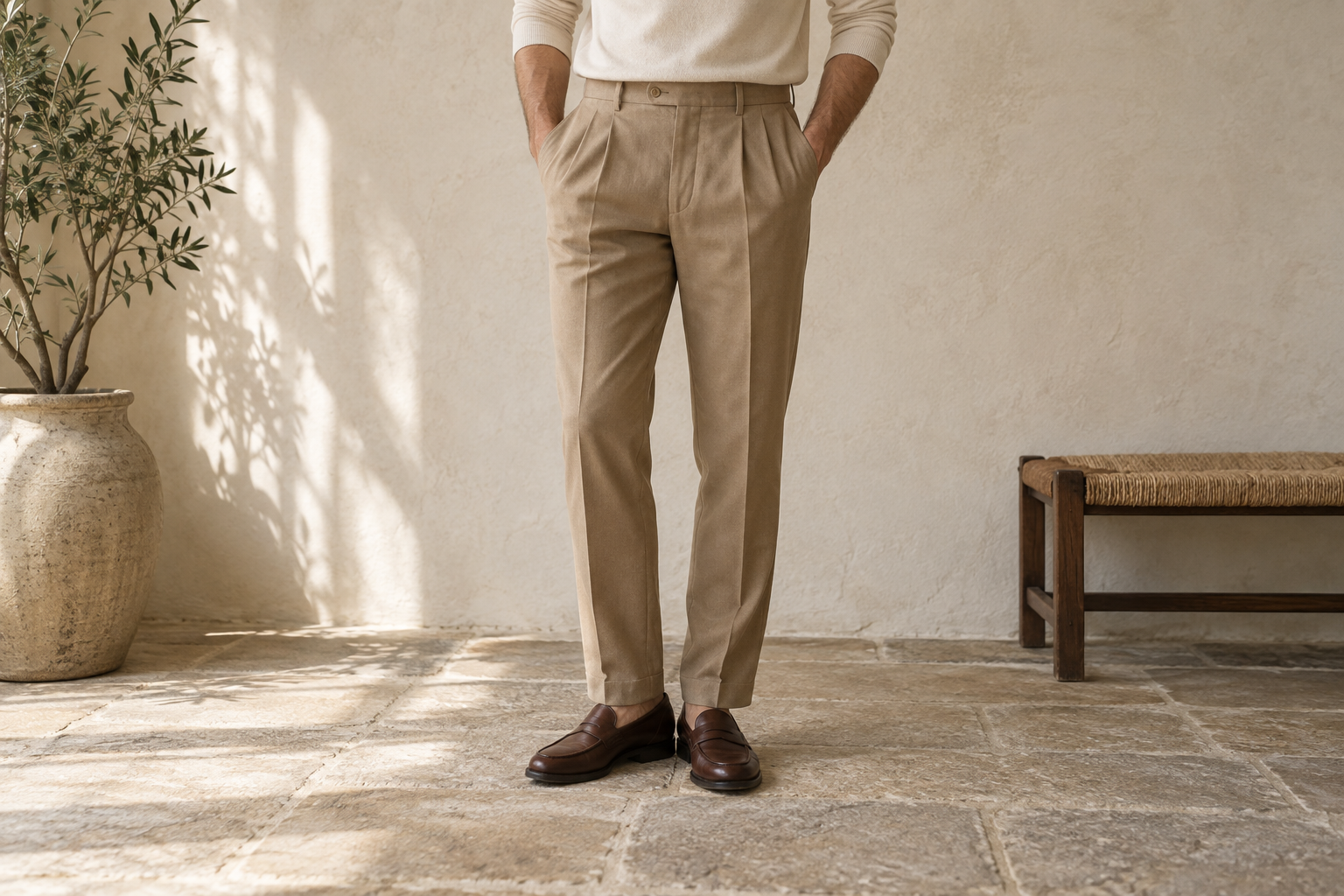
A burgundy silk-look wrap with a black cropped blazer and pointed flats. The crop ends above the waist tie so it never presses the panels apart, and silk-look fabric rewards the sit-and-lean check before you leave. The still life shows the trouser-and-loafer tone pairing for this look.
Floral midi with block heels
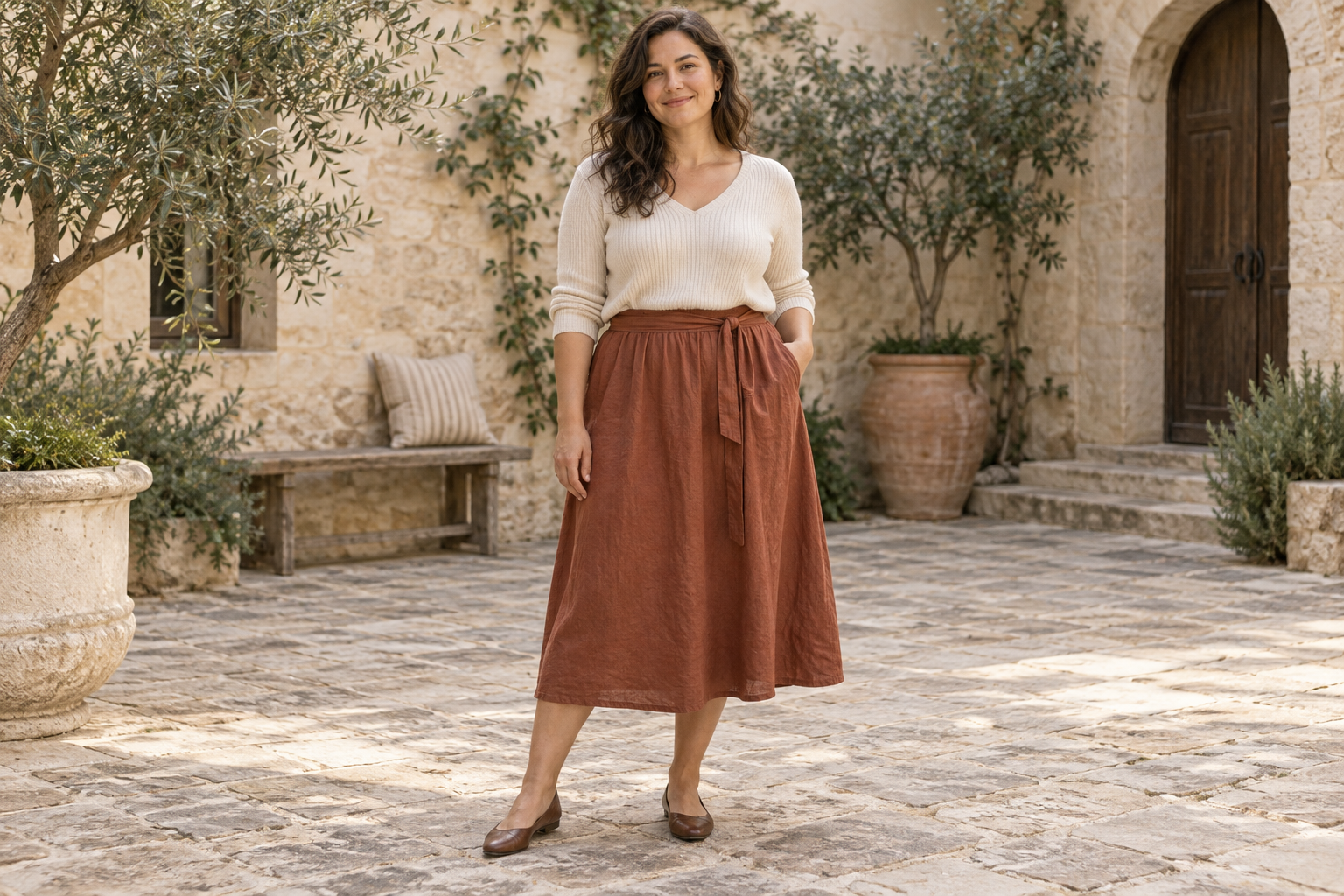
A floral wrap midi in sage and cream with tan block-heel sandals and a small clutch — prints soften the diagonal seams and block heels stand on grass. Tie in a double knot rather than a bow. The dress pictured is a celebration midi, not a wrap; it sets the setting and footwear.
Satin-look wrap with a pashmina
A deep teal satin-look wrap with a cream pashmina over the shoulders and nude block heels. Snug the waist tie so the panels fully overlap at the bust with no gap seated — satin-look fabric shows every pull. The image shows a midi-length look for hem-and-shoe proportion.
Cotton wrap dress with white sneakers
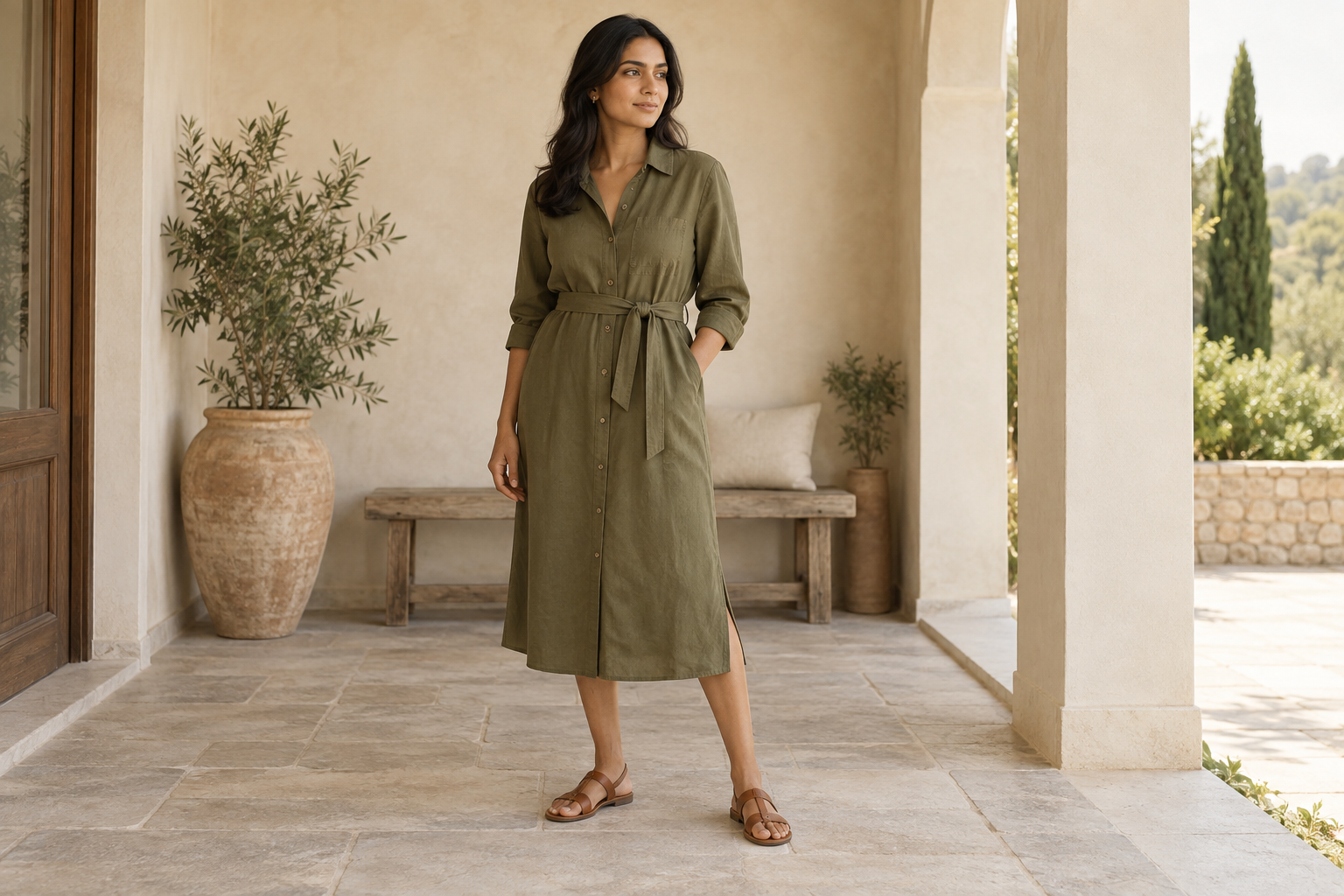
A striped cotton wrap with white leather sneakers and a denim jacket worn open. Cotton grips at the cross, so the tie holds without help; roll the jacket sleeves once and keep it off the waist. The illustration shows the cardigan-and-sneaker weekend pairing.
Linen-blend wrap with flat sandals
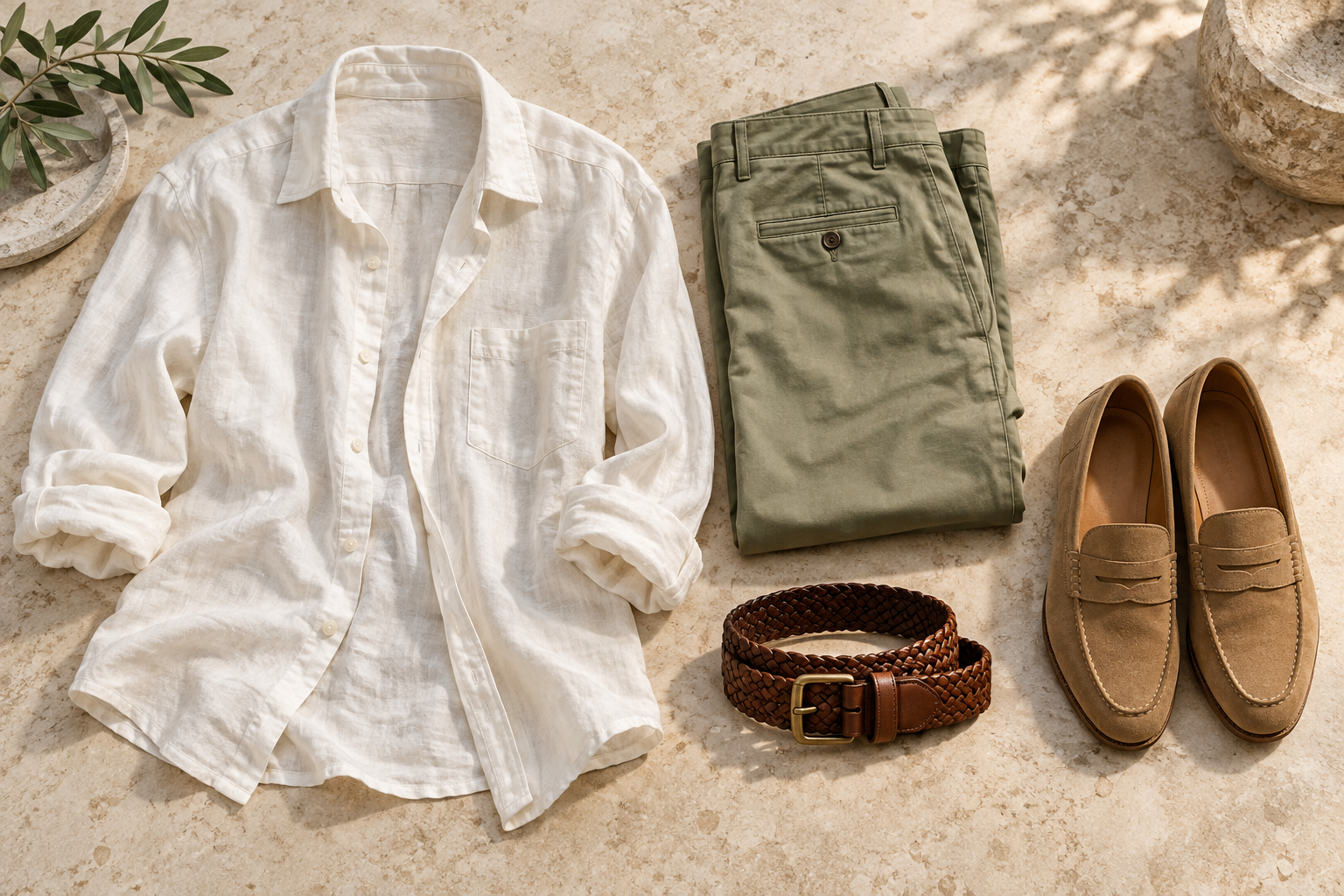
An oatmeal linen-blend wrap with tan flat sandals and a woven tote. Press the cross panels flat before wearing — linen creases, and the front of a wrap is all visible diagonal. Keep jewellery to studs. The flat lay shows the warm-weather palette.
Make an idea your own.
Identify the construction first: panels that tie freely need the full fastening check; a sewn-shut faux wrap needs only a seated comfort check at the waist.
Tie at your natural waist, knot rather than bow, and confirm the panels fully overlap in the mirror before styling anything else.
Run the stand-sit-bend check in the actual dress, and decide on an underlayer from comfort, not from anyone else's coverage standard.
For work, layer the jersey wrap under a longline cardigan; for tailoring, the cropped blazer ends above the tie so it never presses the cross apart.
For a celebration, choose a print or satin-look midi with block heels, and test any pin or tape on an inside seam of the actual fabric first — or leave it out.
For the weekend, let cotton's grip at the cross do the work, with white sneakers and an open denim jacket off the waist.
How to style a shirt dress with or without a belt: the placket and movement checks to make first, how the belted and relaxed versions differ, and the shoe and layer pairings for each.
Sandals, loafers, sneakers and boots compared for shirt dresses, with complete outfits for warm days, work and cooler weather, a walking check and enclosed-shoe substitutes.