A knit dress can work for smart casual when its fit, coverage and styling suit the setting. Check it in daylight and while seated, because the fabric may look different as it stretches — then add the shoes and layer you prefer.
A knit dress can work for smart casual when its fit, coverage and styling suit the setting. Check it in daylight and while seated, because the fabric may look different as it stretches. Then try the shoes and layer you prefer. A slip can change coverage and friction, but a thicker knit is not automatically the better choice.
Knit is the one dress fabric that behaves differently while you wear it: it stretches across the body, relaxes at the seat and changes how much light passes through. That is manageable once you know which properties you are checking. Two minutes of daylight and a seated test settle most of it.
Gauge, weight and stretch: what the words actually mean
Knitwear vocabulary gets used loosely on product pages, so it helps to separate the terms before buying or styling. None of them are good or bad on their own — each changes a different part of how the dress wears.
The opacity and stretch check, in daylight
Mirror light flatters; daylight is what other people see. Run this check with the underlayer you actually plan to wear, because that is part of the answer.
Stand by a window
Face the daylight, not away from it. Look at the fabric across the bust and hip in a full-length mirror.
Stretch the fabric lightly
Pull the knit a little away from your body at the fullest points. If light passes through the stretched fabric, note where.
Sit down and re-check
Seating stretches the knit across the lap and seat. Confirm the coverage still holds in the positions you will actually be in.
Decide on the underlayer
If the stretch test shows light through, a full slip or seamless layer in a matching tone solves it. If coverage already holds, you do not need one.
Myth
Fine-gauge knit dresses cannot be smart casual, and a thicker knit is always the safer choice.
Fact
The register comes from the whole outfit, not the gauge. A fine knit over a full slip under a blazer is one of the sleeker smart casual formulas there is, while a heavy knit in the wrong setting reads purely casual. Choose by recovery, opacity and setting — not by thickness alone.
Three knit dresses, three registers
Each formula balances the knit's texture against structured pieces, because that contrast is what reads as considered. All three work at any gauge once the opacity check has settled the underlayer.
Knit dress formulas by setting
Setting
The outfit
Why the balance works
Office
Fine-gauge knit dress over a full slip, black blazer, black leather pumps, structured tote, hem at or below the knee
The blazer adds the tailoring cue and a second layer over the hip, and the slip lets the fine knit glide instead of gripping
Cold weekend
Mid-weight sweater dress, dark brown tall boots, wool scarf
A knit with real weight — the kind that holds a fold when bunched — keeps the relaxed shape deliberate, and boots ground the volume
The ribs break up the surface so the dress skims, and the denim adds a second texture that keeps the register easy
Belted or unbelted: the bulk question
A belt sharpens a knit dress, but knits are the one fabric where a belt can also add fuss. The decision is mostly about what is happening at the sleeves and waistband.
Belt it when
The dress is a straight, relaxed shape and you want the waist marked
The knit is mid-weight with recovery, so the belt does not rumple the fabric
Skip the belt when
The dress already has shaping or a rib that defines the body on its own
The sleeves are full or chunky — extra volume at the waist can make the sleeve bulk read heavier
The knit is fine and cling-prone, where a narrow belt adds a detail without changing the line
Friction, static and where care answers live
Fine knits can cling or hold static, and a slip changes the friction between the dress and your tights or legs — often for the better in dry winter weather. How any specific dress behaves depends on its fibre blend, which is exactly why the general answer is cautious.
The parent hub for every dress and skirt guide on the site.
Which mood feels like your day?
Find a setting.
6 looks to explore
Ribbed midi with a denim jacket
An ochre ribbed knit midi with a mid-blue denim jacket and white leather sneakers — the ribs break up the surface so the dress skims, and the denim adds a second texture. The illustration shows the knit-and-denim courtyard pairing this look draws on.
Sweater dress with tall boots
A camel sweater dress with dark brown tall boots and a wool scarf. Choose one with real weight — the kind that holds a fold when you bunch it — so the relaxed shape reads deliberate. The image shows a substantial knit worn on an autumn walk, the weight reference for this look.
Fine-gauge dress over a full slip
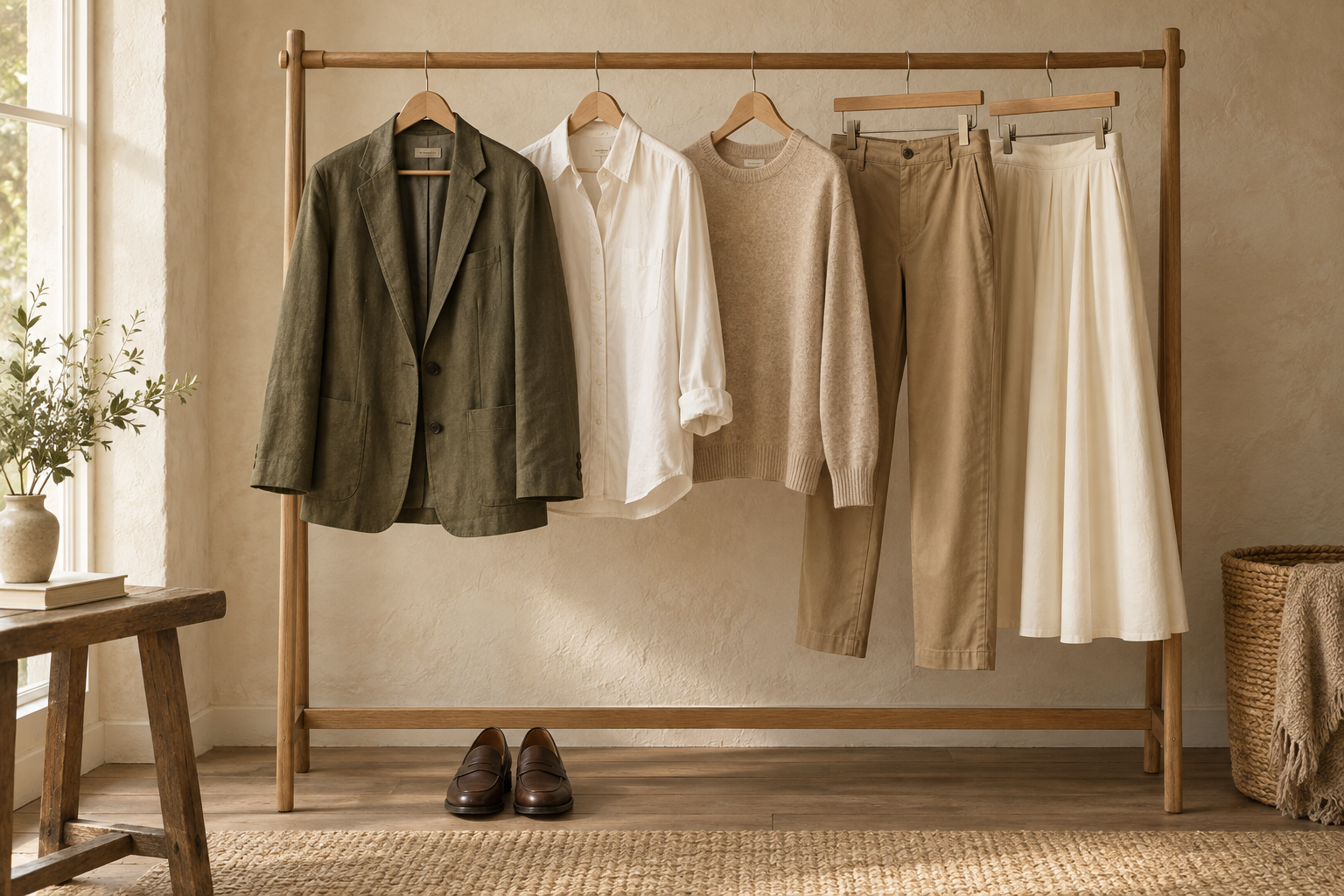
A charcoal fine-gauge knit midi over a full-length black slip, with black knee boots and a long wool coat. The slip lets the dress glide rather than grip and settles any show-through in one layer. The rail image sets the oatmeal-and-charcoal palette for this formula.
Roll-neck knit with a longline coat
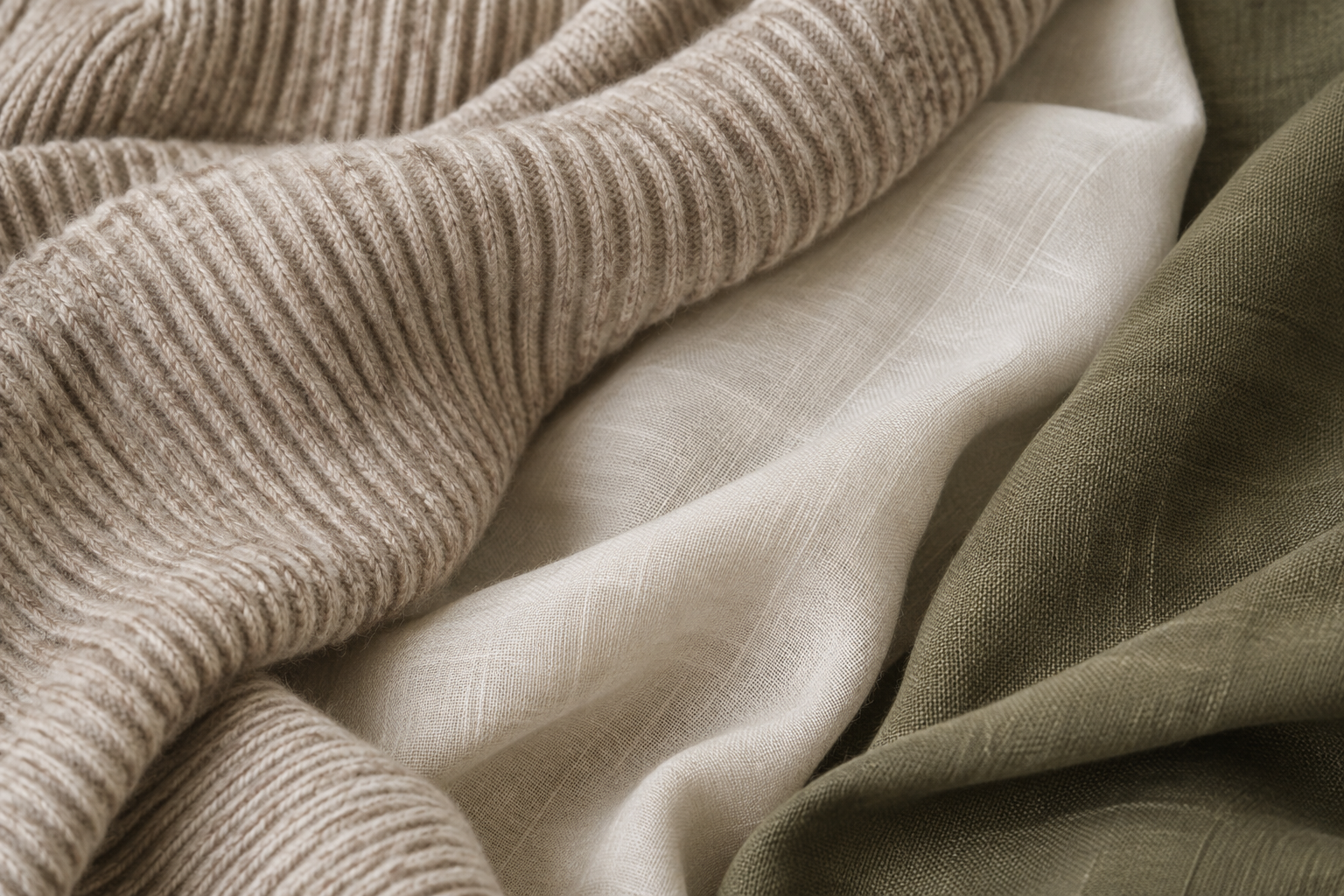
A burgundy roll-neck knit dress with a grey longline wool coat, opaque tights and black ankle boots — the neck removes any jewellery fuss and the coat shields the knit from rain. Read the care label before buying. The close-up shows ribbed knit texture, the stitch this look is built on.
Fine knit dress under a blazer
A navy fine-gauge knit dress with a black blazer, black leather pumps and a structured tote, slip layer as standard and the hem at or below the knee. The blazer adds the tailoring cue and a second layer over the hip. The illustration shows the office tailoring setting.
Knit dress belted over a shirt
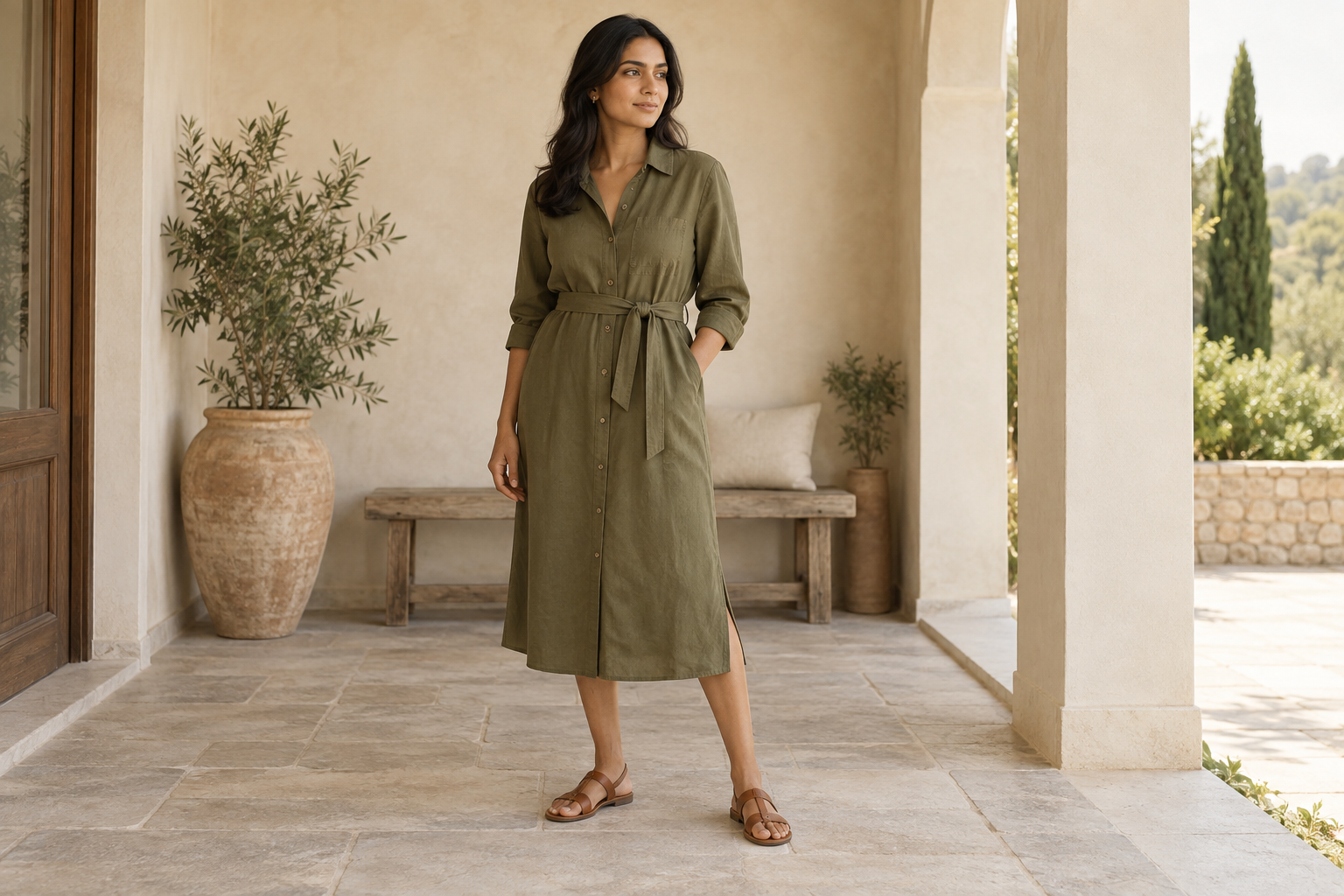
A grey mid-weight knit dress layered over a slim white shirt — collar and cuffs showing — with a narrow belt and loafers. The shirt acts as a built-in slip and the belt keeps the layering sharp in a strictly two-colour palette. The image shows the belted-over-shirt move on a woven shirt dress.
Make an idea your own.
Bunch the dress in your hand first: a mid-weight knit springs back and holds a fold, a light one stays crushed — that tells you which formulas it can carry.
Run the daylight opacity check with your planned underlayer, stretched lightly at the bust and hip, and again seated.
If show-through appears, add a full slip in a matching tone; if coverage already holds, skip it — thickness alone never decides this.
For the office, layer the fine knit over a slip under a blazer with leather shoes; for cold weekends, choose a weighty sweater dress with tall boots.
For autumn, pair a ribbed or chunky knit with white sneakers and a contrast-texture jacket, and belt only when the sleeves and waistband can take the extra detail.
Check the care label for washing and pilling questions, and treat static or cling as a friction question a slip can often settle.
How to style a shirt dress with or without a belt: the placket and movement checks to make first, how the belted and relaxed versions differ, and the shoe and layer pairings for each.
How to style a wrap dress for smart casual: check the overlap and fastening first, then build work, celebration and weekend outfits with cardigan or blazer layers.
Sandals, loafers, sneakers and boots compared for shirt dresses, with complete outfits for warm days, work and cooler weather, a walking check and enclosed-shoe substitutes.