Shoes
Smart Casual Shoes for Women Who Don’t Wear Heels
How to find flat shoes that still read smart casual: judge material, construction and toe shape, then try on with the hem length you actually wear.
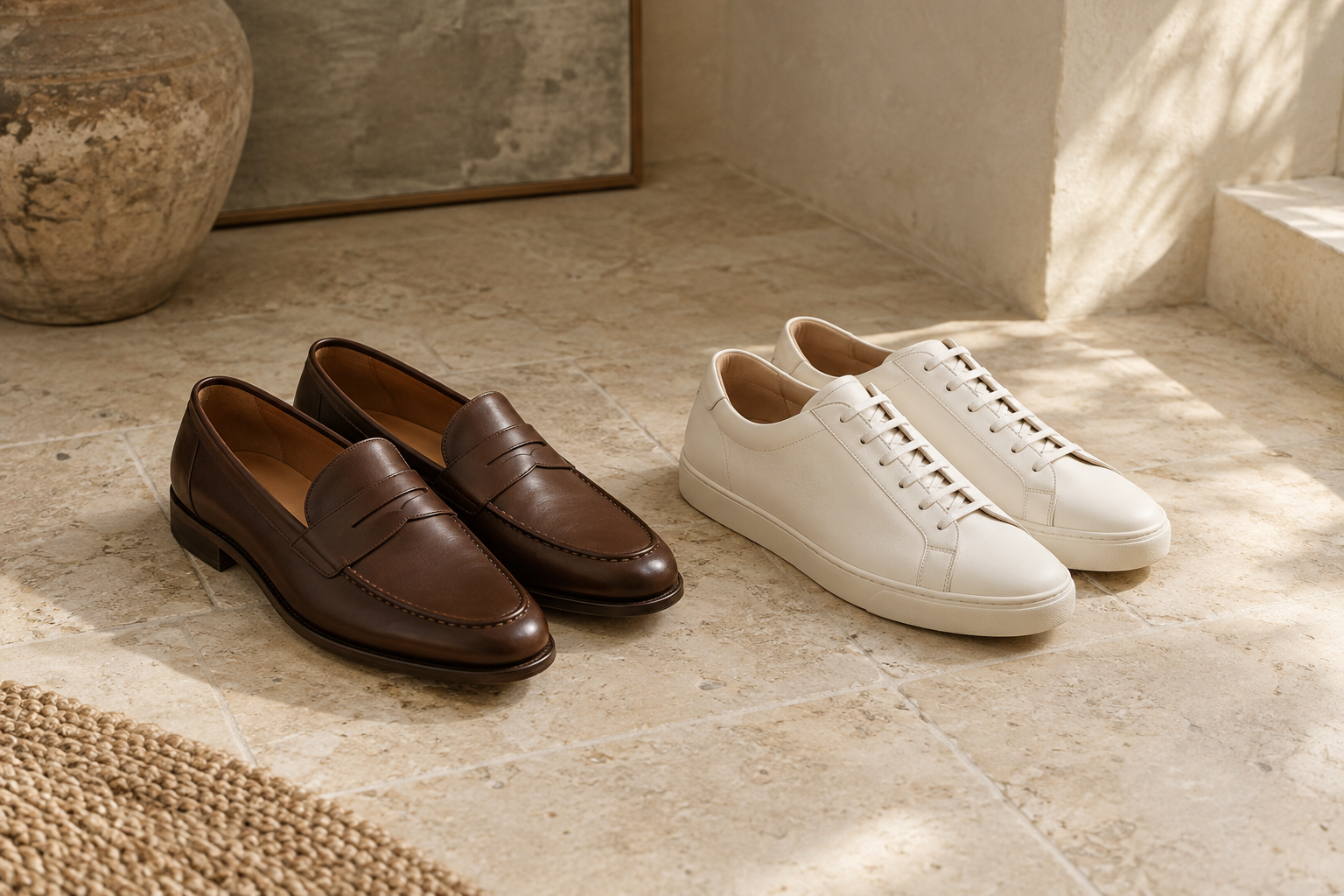
Outfit inspiration
Mary Janes carry a strong point of view for such a simple shoe, so the outfit is built around the ankle line: sock, bare skin, or a heel that changes the proportion entirely.
Begin hereInspiration
Mary Janes can work with trousers, skirts or dresses, with or without a visible sock. Start by checking that the strap fastens comfortably and the shoe stays secure when you walk. Then compare the hem and sock choices you like. A flat pair with trousers and a knit is one starting option; a heel is not required.
A Mary Jane is defined by a strap across the instep, but that strap varies more than most people expect, and the variation changes both fit and styling. Before building any outfit, fasten the strap, walk a few paces on a hard floor, and confirm the shoe holds without pinching or slipping at the heel.
| Variation | How it differs | What it means for outfits |
|---|---|---|
| Single slim strap, flat | One narrow strap at the instep, no heel | The most casual register; reads schoolgirl only when the rest of the outfit copies the costume — with trousers and knits it simply reads neat. |
| Single strap on a block heel | A mid block heel lifts the whole equation | The lifted foot shifts the shoe towards evening; a block keeps it walkable for long dinners. |
| Double strap | Two straps across the instep | More coverage and a stronger visual line; pairs with simpler uppers so the foot is not over-detailed. |
| Chunky or platform sole | Thick sole under the classic strap | Pulls the shoe firmly into weekend territory; balances fuller legs and heavier fabrics. |
Run this fit check before styling anything around the shoe:
Each formula names the whole outfit, because the strap works as a focal point only when the rest of the look has decided what it is doing. Treat them as starting positions and swap in your own equivalents.
| Formula | The outfit | Why it works |
|---|---|---|
| Trouser and knit | Charcoal tapered trousers hemmed just above the ankle bone, a fine-gauge navy crewneck, flat black Mary Janes with a charcoal ribbed sock | Hem, sock band and strap make three deliberate lines; the flat keeps it office-ready and the sock matched to the trouser lengthens the leg. |
| Skirt and shirt | A pleated midi skirt ending mid-calf, an ivory blouse tucked at the waist, flat Mary Janes on a bare ankle | The strip of bare leg between hem and shoe is the proportion doing the work; the tuck defines the waist so the skirt's volume stays deliberate. |
| Dinner dress or tonal trousers | A black camisole with slim black trousers hemmed to the ankle, or a simple midi dress, on a mid block heel | Tonal black-on-black leaves the strap as the only detail; the block heel reads evening while staying walkable for a dinner that runs long. |
With a visible sock
On a bare ankle
One piece of inherited advice does not survive comparison: the idea that everything above the strap must stay quiet for the shoe to work. A patterned skirt, a coloured knit or a statement sleeve can sit above a strapped shoe perfectly well — the ankle is the focal point either way, so the upper half is a taste decision, not a rule.
A visible sock or a loud upper half ruins a Mary Jane outfit; the strap requires everything else to stay quiet.
The strap draws the eye to the ankle regardless of what is above it. Sock weight and colour are proportion choices — heavy sock with heavy fabric, fine sock with fine trouser — and the upper half can be as loud as the wearer likes. What actually fails is a hem that buries the strap or a sock that relates to nothing.
A heel changes the shoe's character more than any styling above it: the same strap reads evening rather than schoolgirl once the foot is lifted. But the flat versions are not the junior varsity — the trouser-and-knit and skirt-and-shirt formulas above are built on flats and lose nothing by it.
Choose by the day, not by a hierarchy. Flats for walking, offices and weekends; a block heel when the setting runs long and dressy. With calf-length hems, note that flat Mary Janes can cut the leg at its shortest point, which is the one situation where the heeled version earns its place on proportion alone.
A last pass in the shoes, not beside them:
Decisions this page feeds
The parent guide, for where strapped shoes sit in the wider shoe wardrobe.
If the bare-ankle looks are not an option in the season, this covers the tights route.
For the dinner-dress formula, the movement checks that keep the hem working with the shoe.
6 looks to explore
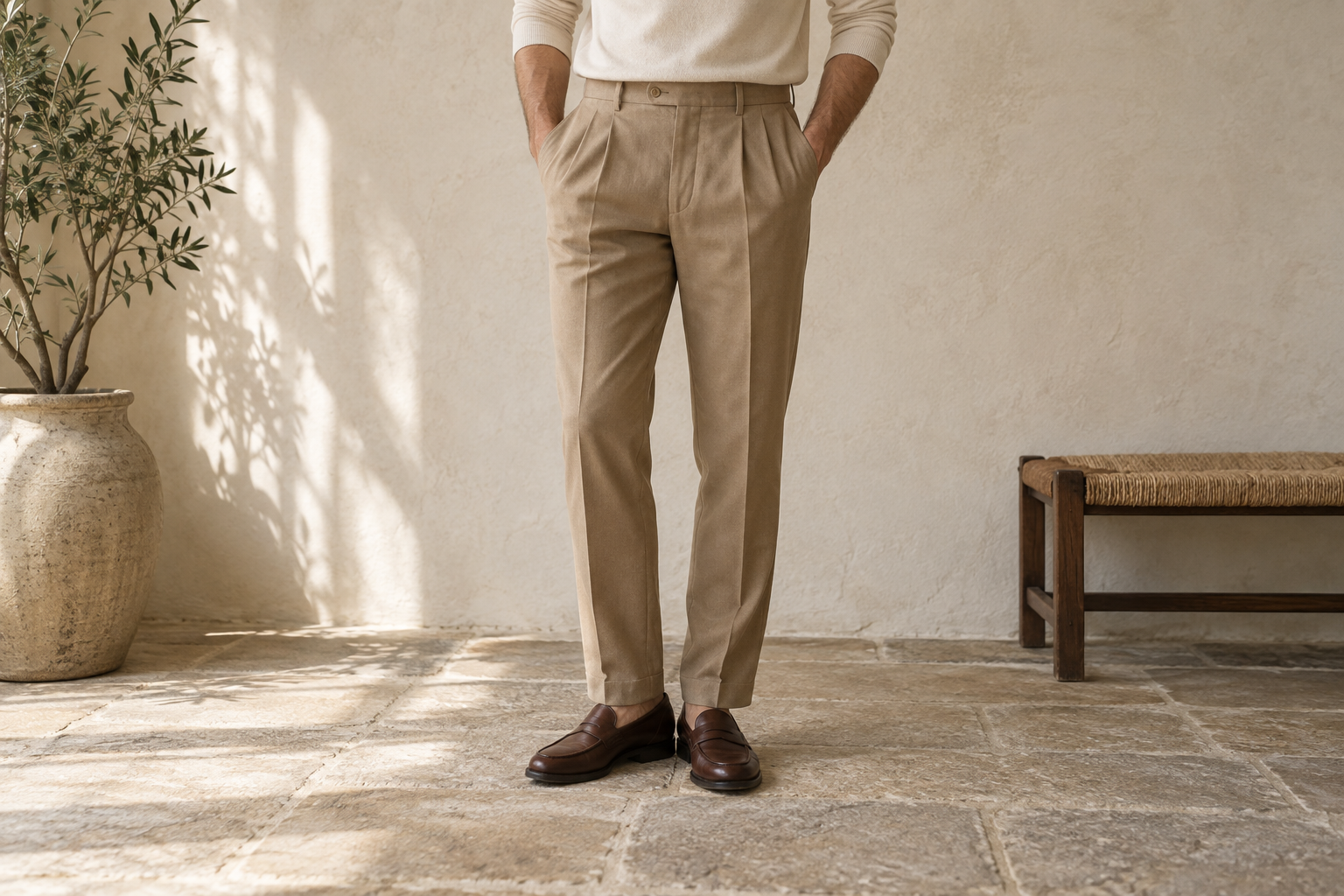
The formula: charcoal tapered wool trousers hemmed just above the ankle bone, a fine-gauge navy crewneck, and flat black Mary Janes worn with charcoal ribbed socks — hem, sock band and strap making three deliberate lines. The illustration shows the trouser-and-knit half of the look with brown loafers, not a strapped shoe; transfer the hem height and sock logic to a Mary Jane unchanged.

The formula: a dark-wash denim midi skirt, a grey marl t-shirt, and black Mary Janes with a thicker cream sock pulled to mid-ankle, so the sock's weight matches the denim's. The illustration shows flat brown shoes with denim and a knit — the casual register is the point; with a strapped pair the heavier sock is what keeps the look weekend rather than costume.
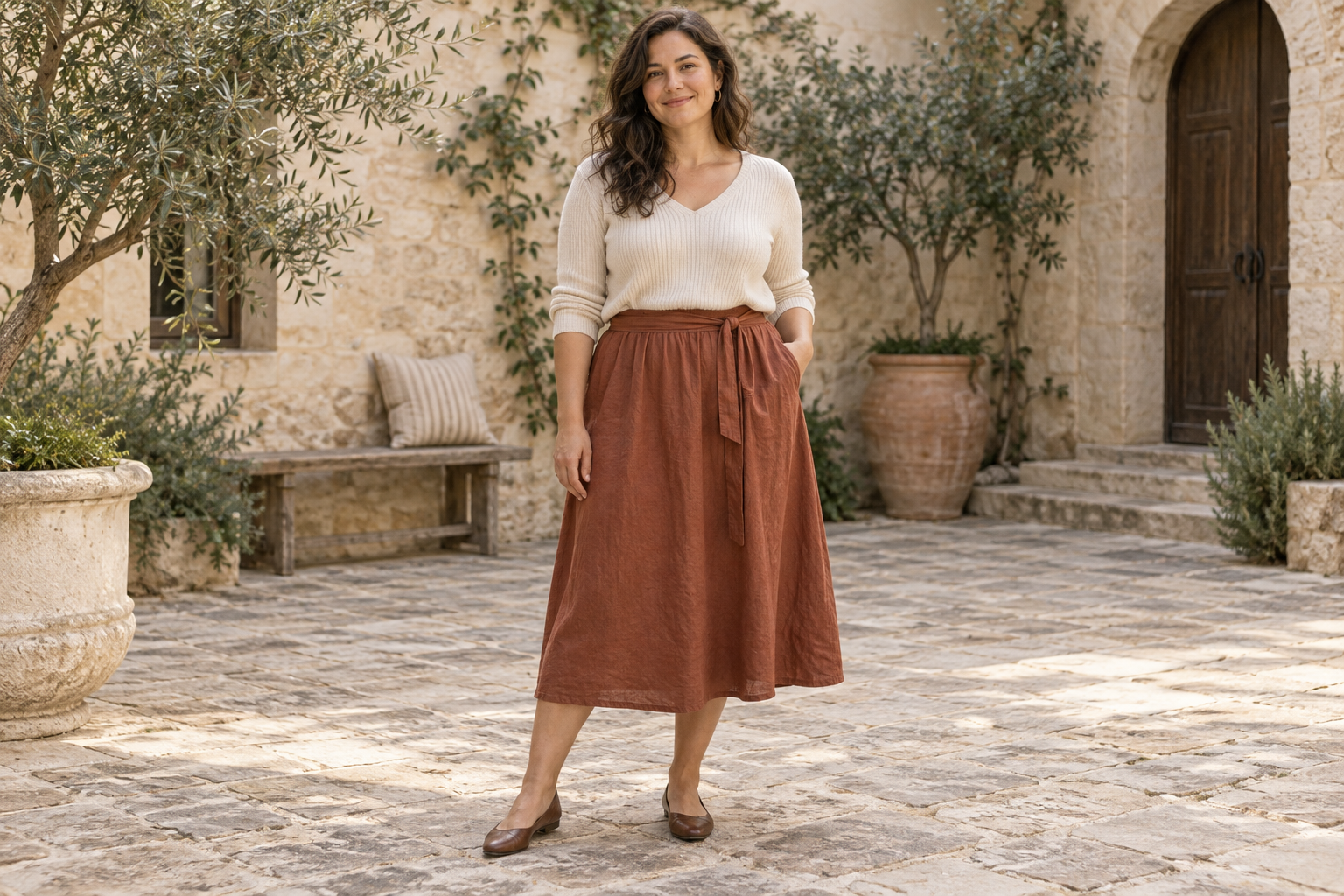
The formula: a burgundy pleated midi skirt ending mid-calf, a tucked ivory blouse, and flat Mary Janes on a bare ankle — the strip of bare leg between hem and shoe is the proportion doing the work. Note honestly: the illustration shows brown flats with no visible strap, so it demonstrates the hem-and-proportion lesson only, not the shoe itself.

The formula: black cropped wide-leg trousers ending a hand's width above the ankle, a white poplin shirt worn open at the collar, and flat black Mary Janes on bare skin. The crop must sit high enough that the shoe stays fully visible below the wide hem — the illustration shows the cropped-wide-leg lesson on loafers, since no strapped-shoe image exists in the library.
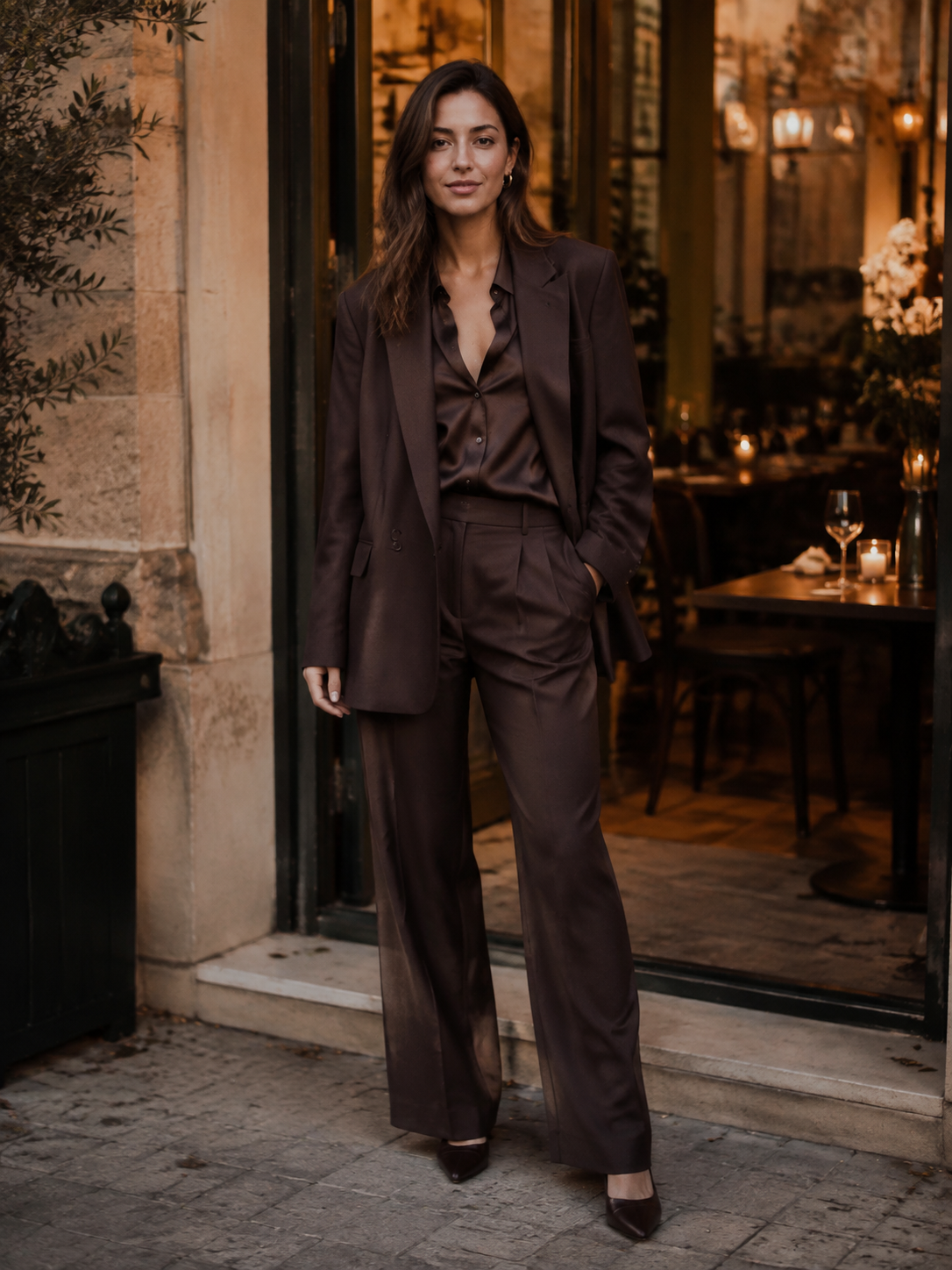
The formula: a black silk-feel camisole, slim black trousers hemmed to the ankle, and black Mary Janes on a mid block heel — tonal black-on-black leaving the strap as the only detail, the block heel keeping it walkable for a dinner that runs long. The illustration shows tailoring in the right register at dinner; apply it to a heeled strapped pair.

The formula: a deep green wrap blouse, a midi skirt in a textured weave, and tan heeled Mary Janes with a slender strap — tan against dark separates moves the shoe from punctuation to feature. The illustration carries the colour-and-texture lesson; the heeled strap itself is the piece to imagine onto it, as no accurate image is available yet.
Shoes
How to find flat shoes that still read smart casual: judge material, construction and toe shape, then try on with the hem length you actually wear.
Shoes
Oxford vs Derby shoes comes down to open versus closed lacing. What the difference is, what it changes for fit and dressiness, and what it does not guarantee.
Shoes
Pair sneakers with tailored trousers by checking the venue, then matching sneaker profile to trouser width and hem. Six profiles, three formulas and the checks that settle it.