Use the Vogue fall 2026 trend report as a set of ideas to compare with your wardrobe, not a shopping list. Choose one suggestion, identify the pieces you already own, and try a small change — a useful result is an outfit you can comfortably wear, and deciding a trend adds nothing is an equally valid outcome. Editorial analysis is not product testing; nothing here involves wear trials or laboratory work, only our assessment of what each suggestion asks of a wardrobe you already own.
01 / THE DEVELOPMENT
The idea in focus.
02 / OUR INTERPRETATION
What it means in practice.
Checked against existing clothes rather than measured in a lab, the report splits cleanly by cost — and that split is our editorial assessment, clearly ours to make and to disagree with. Its lead claim, that styling rather than shopping is the season's engine, costs nothing and matches the runway evidence it cites. The suiting and proportion claims are adaptable through fit and pairing choices already within reach, while the figure-first and evening claims, though well-evidenced on the runways, require new garment categories and so belong to readers with the occasion and the budget.
A seasonal trend list is only as good as the wardrobe it survives: of Vogue's six fall 2026 claims, one costs nothing to try, three cost attention, and two cost money — and reading them in that order is the whole skill.
What the report actually says, and what it cannot show
Vogue published '6 Key Fall 2026 Fashion Trends to Know This Season' on 19 August 2026, by Cortne Bonilla and Laura Jackson — the date and bylines were reopened and confirmed on-page for this article. The piece names six directions and supports each with runway citations. It is an editorial selection, not a measurement of what anyone is wearing.
Sorting the six claims by what trying them costs
The cheapest way to read any trend list is to ask what each claim would cost you to try. Sorted that way, the report splits cleanly: one claim asks for nothing, three ask for attention, and two ask for money. That split — ours, not Vogue's — is the editorial assessment this page is built on.
| Vogue's trend | The claim, with its runway citations | Trying it with clothes you own | Our assessment |
|---|---|---|---|
| The power of styling | The season's looks come from recombining staples — layered basics and unexpected accessories; cites Prada, Loewe, The Row, Celine | Recombine now: cardigan buttoned as a shirt, scarf in place of a tie | Costs nothing; the rare claim that asks for no purchase |
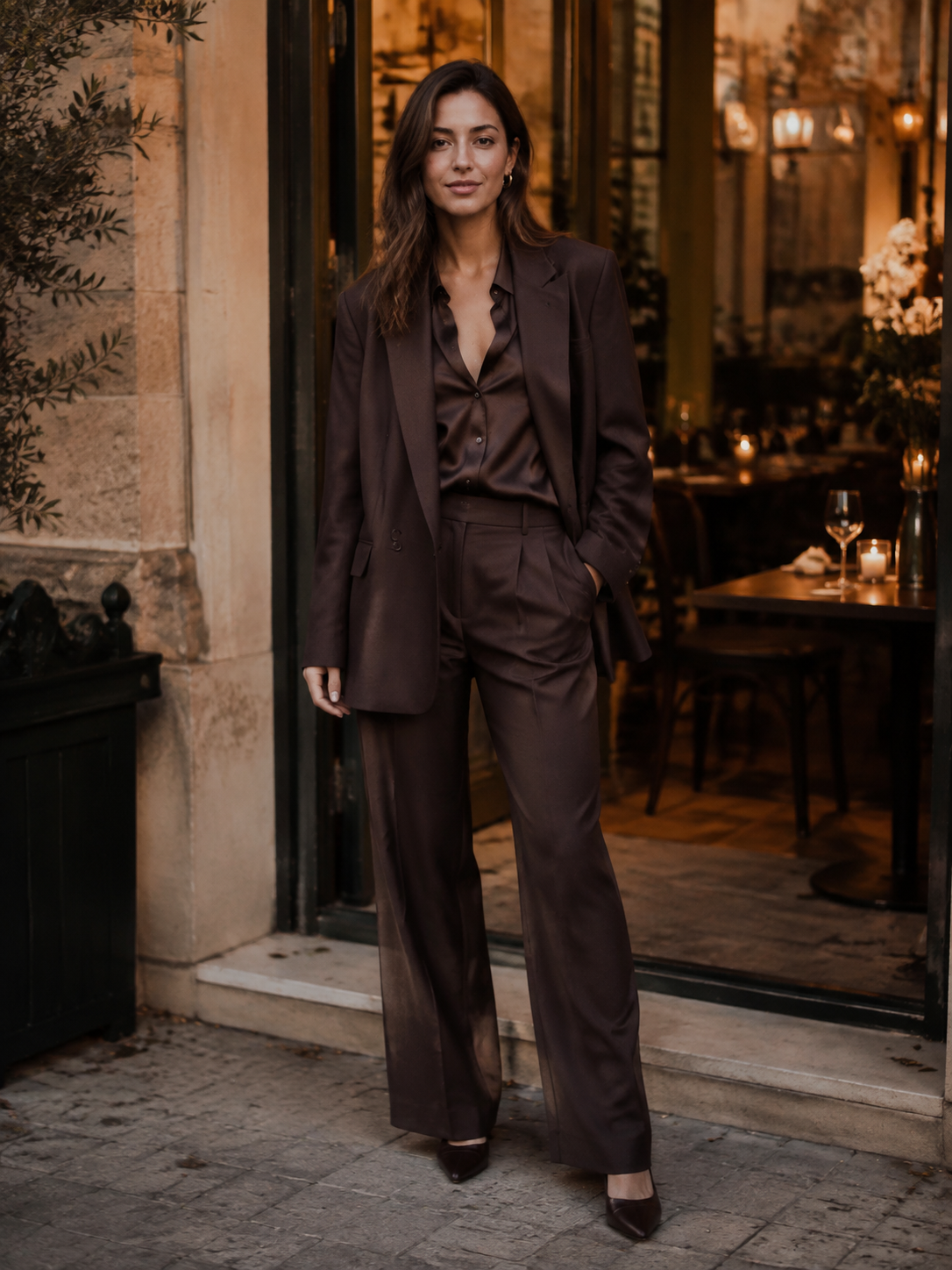
| Updated lady | Power suiting returns with softened structure — sculpted jackets and sloping waists; cites Chanel, Givenchy, Balenciaga | Wear your existing jacket softly: open over a fine knit, cuff turned once | Costs attention; buying a sculpted jacket is optional, not required |
| Playful proportions | Cocoon tailoring, cropped shapes and billowy trousers | Style any volume you own against slimmer pieces | Costs attention — or money if your wardrobe is all straight cuts |
| Down to earth | Plaids, barn jackets and moodier florals | Most autumn wardrobes already check this box | Costs little; closer to a confirmation than a trend |
| Go figure | Body-emphasising dressing: second-skin dresses, sheer layers, lingerie-inspired slips; cites Alaia, Khaite, Valentino | Most wardrobes hold no sheer or slip category to recombine | Costs money; 'piece by piece' still means buying the piece |
| Art Deco evening | Fringe, gloves and opulent evening bags from a 1920s register | No slot in a smart casual wardrobe outside genuine evening events | Costs money and an occasion to match |
Three no-purchase combinations to try first
Each combination below answers one of the report's claims using garments most wardrobes with a jacket and a knit already hold. Try them in front of a mirror and judge honestly; a combination that fails on you is a finding, not a failure. None of this is wear testing — it is styling judgement applied to your own rails.
The cardigan as shirt
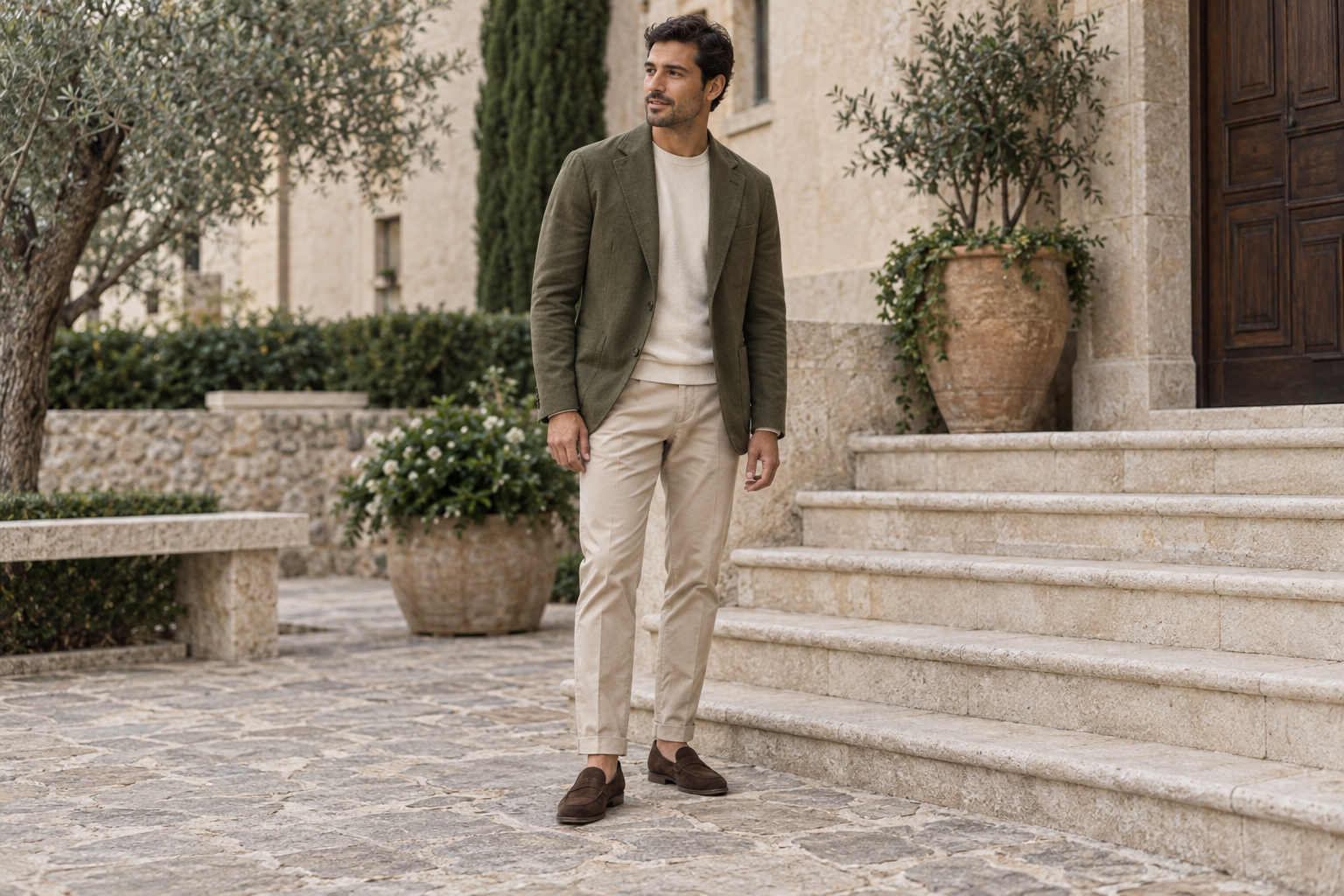
Button a fine cardigan to the collar and wear it under a blazer in place of a shirt, cuffs just showing. This answers the 'power of styling' claim: a new-looking layered outfit from two garments you already own, in about a minute.
The softened suit jacket
Wear your existing suit or blazer jacket open over a fine knit with the sleeves turned back once. This is the wearable core of the 'updated lady' claim — softened structure through styling rather than a sculpted new purchase.
The scarf instead of the tie
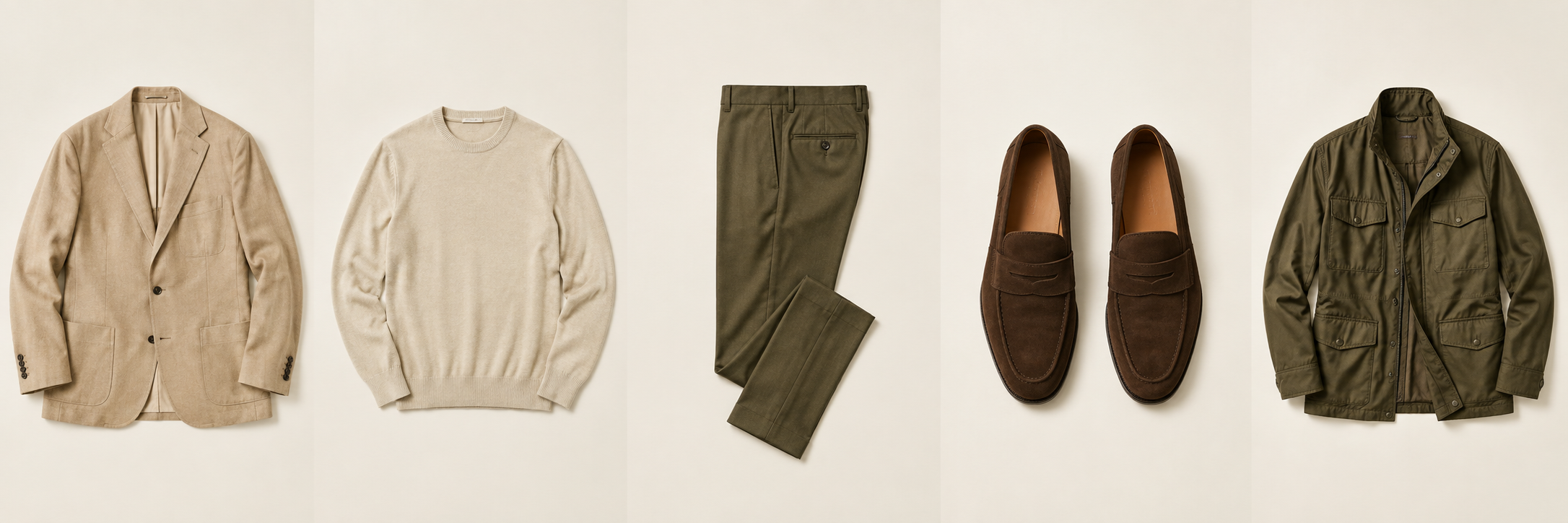
Replace a tie or open collar with a silk scarf, or layer a workwear jacket over flannel trousers instead of tailoring. Both are the report's 'unexpected accessories' and recombination moves, drawn entirely from what you already hang up.
Before adopting anything: comfort, venue and the missing piece
A trend passing the wardrobe check is not the same as it passing your week. Three questions decide whether a suggestion earns its place, and none of them involve a score or a universal verdict. Ask them per outfit, not per trend.
| Check | What to ask | If it fails |
|---|---|---|
| Comfort | Can you wear the outfit for a full working day without adjusting it? | Restyle with pieces you know are comfortable; the trend is not worth a day of fidgeting |
| Venue | Does the result suit the places you actually go — office, school run, dinners? | Sheer layers and deco evening pieces rarely pass this check for smart casual settings; save them for occasions that exist in your calendar |
| Missing-piece cost | Is the outfit complete without buying anything? | If one genuinely missing piece blocks it, price that piece calmly and decide on its own merits — not because a season says so |
Deciding to change nothing is a valid result
The most useful outcome of this exercise may be confirming your wardrobe already works, and that two of the six claims simply ask for purchases you have no slot for. That is not dismissing the report; the runways it cites are real and the selection is coherent. It is declining to treat an editorial selection as instructions.
A named seasonal trend is something your wardrobe should act on this autumn.
The report is an editorial selection from the fall 2026 runways — evidence of direction, not an obligation. Where a claim asks for new garment categories, trying it 'piece by piece' still means buying the piece first, which is a purchase decision to make on your own needs and budget.
Where to go next: the softened-jacket moves above are worked through in full in how to wear a blazer casually, and how to layer a shirt under a sweater covers the collar-and-cuff details that make layered combinations read as deliberate rather than bulky.
Where this fits
- How to wear a blazer casually ↗
The softened-jacket moves on this page, worked through in full.
- How to build a smart casual travel wardrobe ↗
Building a small wardrobe where recombination is the default, not a seasonal exercise.
FROM THE STORY TO YOUR WARDROBE
Take the useful part.
Sources & further context.
- Vogue — 6 Key Fall 2026 Fashion Trends to Know This Season (19 August 2026)
By Cortne Bonilla and Laura Jackson; publication date and bylines verified on-page 9 September 2026. Supports the six trend names, their order and the runway citations (Prada, Loewe, The Row, Celine, Chanel, Givenchy, Balenciaga, Alaia, Khaite, Valentino). Editorial selection; supports no claims about prevalence or suitability.
- Vogue — The Top Fall 2026 Color Trends, From Royal Purple to Juicy Peach (21 August 2026)
By Andrea Zendejas; verified on-page 9 September 2026. Context for the season's palette only; no specific colour claim on this page rests on it.
- WWD — Prada Men's Spring 2027 review (Milan, 21 June 2026)
By Miles Socha; verified on-page 9 September 2026. Covers a different season (men's spring 2027) from the fall 2026 report; cited solely as retrospective context for the styling-led direction — Simons's line that people 'can be individuals with common garments if you rethink how to wear them' — and never as fall 2026 evidence.
- Verification note
All three sources were reopened and read on 9 September 2026; the 19 August 2026 event date, carried in our records as an unverified claim at handover, is now independently confirmed on-page. No wear testing, laboratory work or product testing was carried out for this article — the wardrobe comparisons are editorial assessments, stated as such.