Skip to content

Find your next good read.

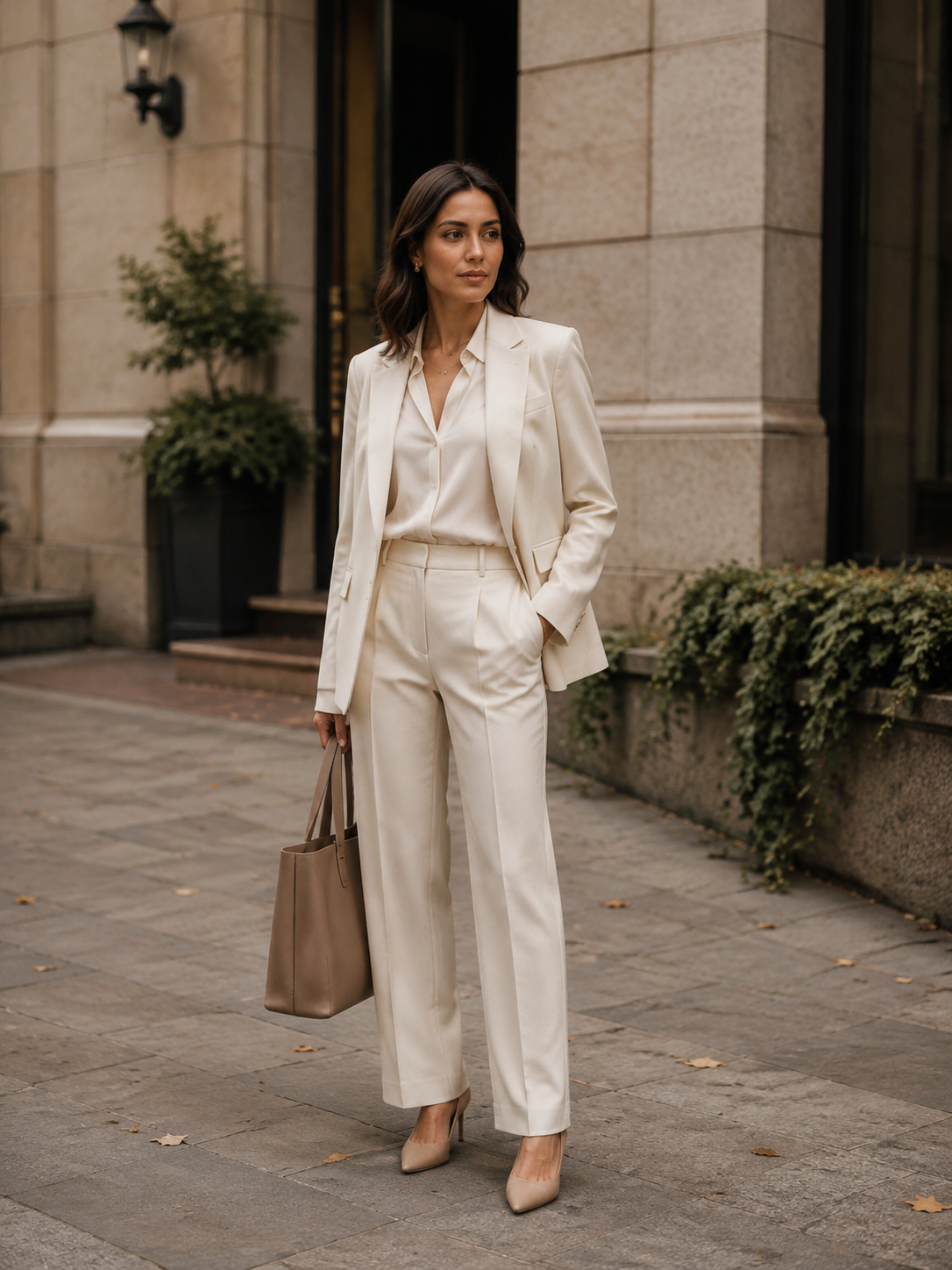
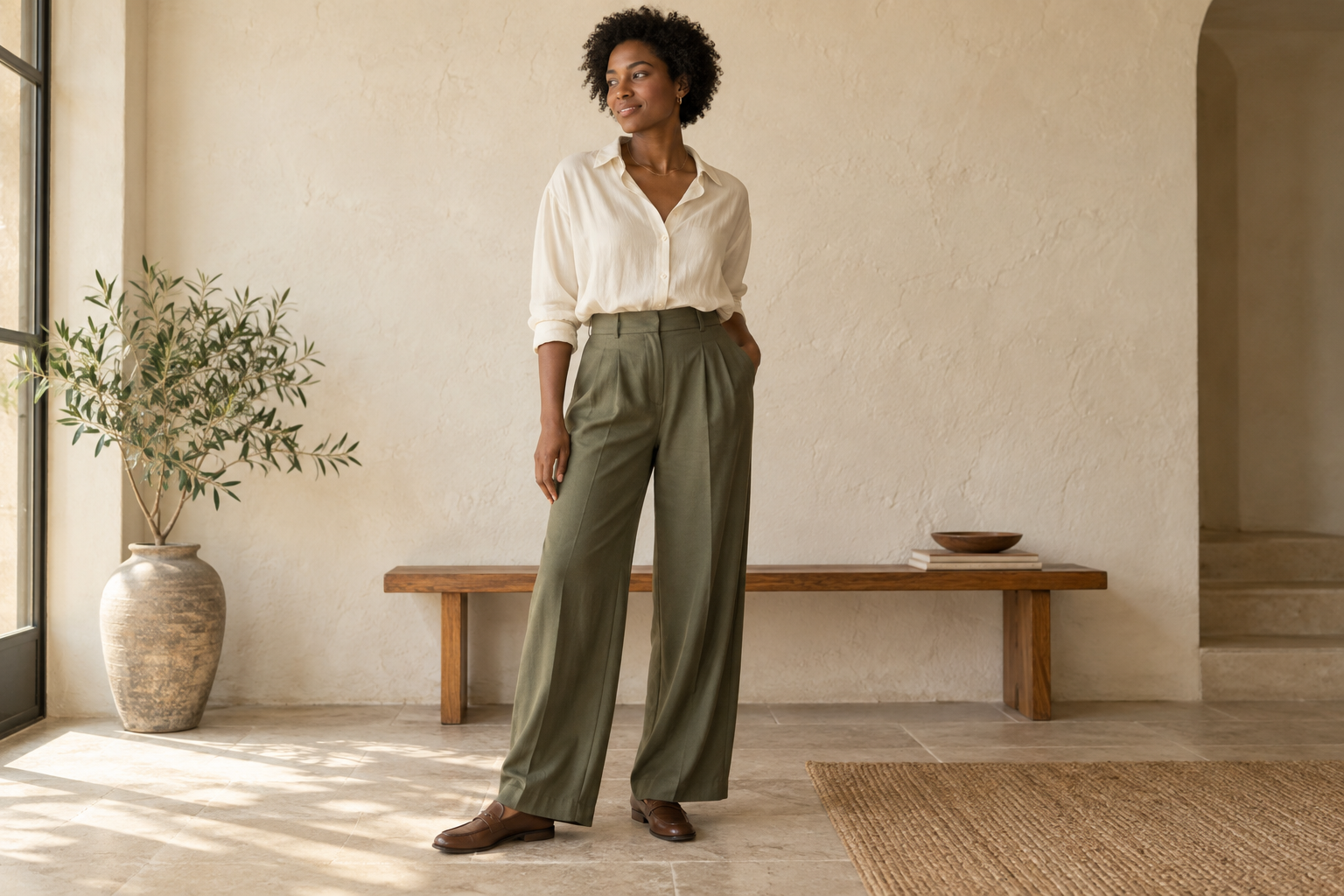
Woman wearing a cream blouse, olive wide-leg trousers and brown loafers in a warm neutral room.

Dress code guide

Can You Dress Smart Casual Without a Blazer?

The plain answer is yes. A blazer is the most convenient structure piece, but not the only one — this page shows what replaces it and which no-jacket outfits fail.

Begin here

Definition / explainer

Smart casual without a blazer

You can dress smart casual without a blazer unless your host or workplace specifically requires a jacket. Start with a shirt, knit or blouse, add suitable trousers or a skirt, and choose shoes that work for the setting. Judge the complete outfit rather than treating a collar as an automatic pass.

Check whether a jacket is actually required

Permission comes before aesthetics. A dress code that says “smart casual” leaves the jacket to you; a venue or host that says “jacket required” does not, and no substitute garment changes that. When the wording is unclear, the guides below give you a short message to send and the context to read the code correctly.

Myth

A smart casual invitation always means a blazer is expected, and arriving without one reads as underdressed.

Fact

Smart casual describes the register of the whole outfit, not a specific garment list. Millions of workplaces and restaurants operate the code with no jacket in sight. What matters is that something in the outfit holds a deliberate line — and that nothing in it is neglected.

Three complete outfits that carry the code

Each route below is a complete outfit, not a single swap for a blazer. Choose the route that matches your wardrobe, then check the condition of every piece before wearing it.

Three jacket-free routes and where the structure comes from
RouteTop halfBottom halfShoesWhat carries the structure
ShirtPressed oxford or poplin shirt, collar neat, tucked or half-tuckedDark chinos or tailored trousersLeather loafers or derbiesThe pressed collar and shirt front
KnitFine-gauge crew or quarter-zip layered over a collared shirtTailored trousers or clean dark jeansChukka boots or loafersThe layered collar at the neck
BlouseCream or plain-coloured blouse with a deliberate frontWide-leg trousers or a midi skirtBrown loafers or low heelsThe pressed front and the tailoring below

The outfit pictured on this page — a cream blouse with olive wide-leg trousers and brown loafers — is an illustrated example of the third route. It shows a complete jacket-free combination, but it is not evidence of fit or fabric content; check both on the actual garments you own.

When a t-shirt works, and when to substitute it

A tee-based outfit can work when

  • The setting is genuinely relaxed — a casual host, a creative studio, a warm-weather gathering.
  • The tee is plain, heavyweight and unworn: no fading, stretching or printing.
  • Everything around it is deliberate — tailored trousers and leather or clean minimal shoes.

Substitute a knit or shirt when

  • The invitation is conservative, or you have never seen the venue or host's norm.
  • The tee needs a second casual anchor to survive — that is the signal it cannot carry the outfit.
  • Photos will be taken or the day matters: the cheap upgrade is swapping the tee for a pressed shirt.

The practical substitution is one garment: exchange the tee for a fine knit or pressed shirt and the same trousers and shoes move up a full register. We test the t-shirt question in detail on its own page.

Test condition and comfort before you go

Without a jacket, small lapses are fully exposed, so garment condition outranks stylistic preference. Run these checks while there is still time to change.

Before leaving:

  • The shirt or knit is pressed, or the knit is free of pilling and stored flat.
  • You have sat down for ten minutes in the full outfit — nothing pulls or rides up.
  • The shoes are clean and broken in; visible wear at the sole reads fast without a jacket.
  • The hem sits where it should, and the waist fits without a belt doing structural work.

Heat, movement and accessories

Hot weather and long days are easier without a jacket, not harder. Choose lighter fabrics and accept movement — none of this costs you the code.

  • Leather is not compulsory: clean suede, canvas or minimal trainers can work once the rest of the outfit is deliberate.
  • Matching accessories are a preference, not a rule; a brown belt with dark shoes goes unnoticed.
  • In heat, a pressed short-sleeve shirt with tailoring below carries the code on its own.

The plain meaning.

Yes — you can dress smart casual without a blazer. The jacket is one way to add structure to an outfit, not the only one: a pressed collared shirt with body, a fine knit layered over that shirt, or a blouse with a deliberate front and tailoring below can each hold the line instead. What the code cannot absorb is the loss of structure altogether, so without a blazer every other choice has to be more deliberate.

What it can look like.

  • A white oxford shirt, buttoned neatly, tucked into charcoal tailored trousers with a dark belt and brown leather derbies — the pressed collar and structured shirt front do the work the lapels would.
  • A fine merino crewneck layered over a white collared shirt, with the collar and hem showing, straight black trousers, and black leather ankle boots — the knit-over-shirt layer replaces a jacket's structure with softness that still reads deliberate.
  • A navy fine-gauge quarter-zip over a light blue button-down, dark straight-leg jeans in a clean wash, and dark suede chukka boots — the layered collar keeps the outfit smart while the knit keeps it easy.
  • A knee-length knit dress in a mid-weight fabric with a belted or seamed waist, worn with low leather loafers — the defined waistline gives the outfit its shape without any tailoring.
  • A crisp white poplin shirt half-tucked with pleated dark trousers and clean minimal leather sneakers — the shirt's pressed front holds the smart half, and only one casual anchor (shoes or the half-tuck) stays loose.

What it does not mean.

  • All-relaxed pieces stacked together — a soft jersey polo with light joggers and canvas slip-ons — because no single item carries structure, and removing the jacket leaves nothing holding the smart half of the code.
  • A hoodie layered under or over otherwise good pieces — the hood, drawstrings and sweatshirt fleece pull the whole register down, and no trouser choice below recovers it.
  • Every item individually casual — a faded t-shirt, faded jeans and worn trainers — each might pass as the one relaxed anchor elsewhere, but together they leave no formal counterweight.
  • A wrinkled or limp shirt as the structure substitute — a collared shirt only replaces a blazer when it is pressed and holds its shape, because the code reads condition first.

The parts that matter.

A structured substitute
Something at the top must hold a line: a pressed collared shirt with body, a fine knit over that shirt, or a blouse with a deliberate front. The test is simple — laid flat, does the garment hold a shape or collapse into a soft square?
Intentional trousers
Without a jacket drawing the eye upward, the trousers carry more of the outfit. Tailored trousers, dark chinos or clean dark jeans all work if they are pressed, fit at the waist and break cleanly at the shoe; joggers and elastic cuffs read as the one relaxed anchor at best.
Elevated shoes
Shoes matter more jacket-free because nothing signals intent from across the room. Leather loafers, derbies, chukka boots or low heels say the outfit was chosen; minimal, clean trainers are the edge case, and never alongside a second casual anchor.
Condition and fit
With no jacket to impose a shape, fit and condition are fully exposed. Press shirts, keep knits pill-free and stored flat, and keep grooming tidy — the code reads the overall impression, and a shirt-and-knit combination cannot disguise the lapses a blazer can.

Keep exploring.

Dress Codes

Can a T-Shirt Work for Smart Casual?

A T-shirt can work for smart casual when the setting allows it and the complete outfit suits the occasion. How to check the tee and what to wear instead when it does not pass.
Dress Codes

How to Clarify an Unclear Dress Code

When a dress code is unclear, ask the host one specific question before buying anything. Classify the uncertainty, rank the evidence, send a usable question script, and plan a reversible fallback.

Work & Dress Codes

Smart Casual vs Business Casual: What Changes?

Smart casual vs business casual: the two codes overlap, and context decides which one applies. Compare jackets, shirts, shoes, denim and knitwear, and learn what actually settles the choice.