Shirts & Tops
How an Untucked Shirt Should Fit
A practical fit guide for untucked shirts: hem length, shoulder seam, sleeve length and room to move, with simple checks for each.
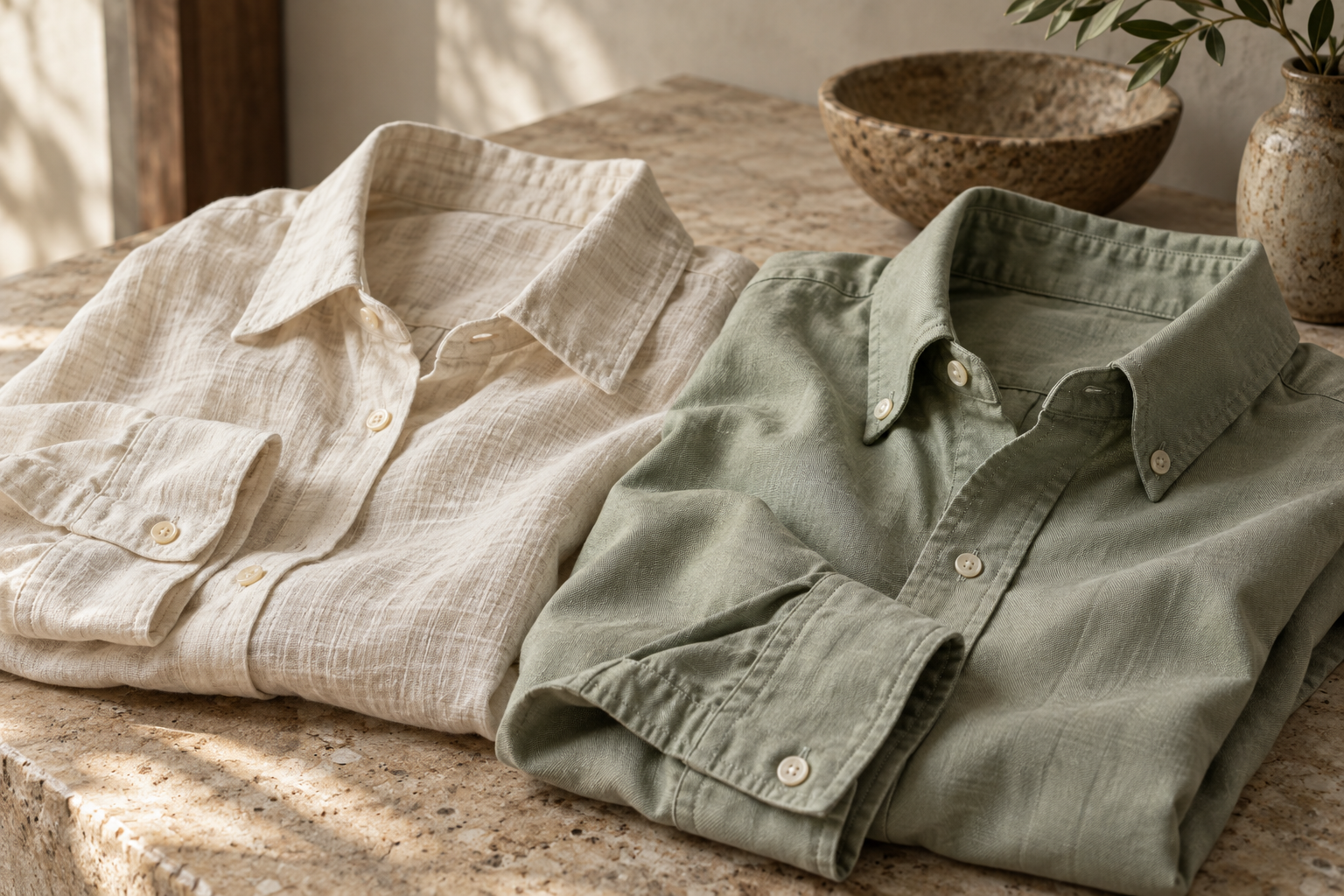
Shirt fit guide
A short-sleeve shirt should let you move comfortably and give the coverage you want at the sleeve and hem. Here is how to check one, seated as well as standing, before you wear it out.
Begin hereHow-to
A short-sleeve shirt should let you move comfortably and give the coverage you want at the sleeve and hem. Try it with your intended trousers and check it seated as well as standing. A fitted woven shirt and a relaxed camp-collar shirt are designed differently, so judge the cut before applying conventional shoulder or sleeve markers.
There are universal numbers: the shoulder seam may drop no more than one inch, the sleeve hem must end at mid-bicep, and the shirt hem must end by mid-fly.
Those markers describe one traditional fitted cut. Relaxed and camp-collar shirts are often designed with dropped shoulders, wider sleeve openings and different hem lengths on purpose. Judge movement, button strain and whether the coverage suits the outfit — the intended cut sets the markers, not a single rule.
The whole check takes about five minutes in front of a mirror:
You can judge any short-sleeve shirt — camp collar, vacation shirt, or plain woven cotton — by its intended cut, and know whether the shoulder, sleeve, chest, hem and collar actually work for you before wearing it out.
Before judging any marker, work out what the shirt was designed to do. A fitted woven shirt follows conventional lines: shoulder seam at the bone, sleeves trimmed to the arm. A relaxed camp-collar shirt is often cut with a straighter body, a lower-set sleeve and a wider armhole on purpose. Some designs drop the shoulder seam well down the arm as a deliberate style choice.
Check: Read the maker's size and design information, then confirm with the garment: a seam set off the shoulder bone plus a straight hem usually signals a relaxed cut, which you judge by whether the drop looks intentional, not by how close it sits to the bone.
Raise both arms overhead, then reach forward as if shaking hands or steering. The sleeve should not drag up sharply, cut into the arm, or flare into a wide bell when you move. The opening should stand slightly off the arm — enough to let air move, which is the point of short sleeves — without gaping so wide that the sleeve reads oversized on a fitted cut.
Check: Through a full reach, the sleeve stays roughly where it started, the opening does not pull or balloon, and the armhole does not restrict your shoulder on a fitted cut.
Button the shirt fully and face the mirror. The placket should lie flat with no horizontal strain lines between the buttons, and there should be no pulling across the fullest part of the chest. On a relaxed cut, expect the body to stand slightly away from you; on a fitted cut, the fabric should skim without clinging. Excess cloth that billows at the sides is a short-sleeve shirt's most visible flaw, since no jacket will tidy it away.
Check: The front lies flat with even spacing between buttons, and crossing your arms or leaning forward does not drag the placket or pull across the back.
Wear the shirt with the intended trousers. For untucked wear, the hem should cover the waistband at the front and sides at rest, and still cover it after you raise your arms and after you sit. Some lift is normal; a hem that exposes your midriff or belt with a normal reach is too short for how you plan to wear it. Deliberately cropped or long cuts are different: judge whether the coverage they give suits the outfit, not whether they hit a single standard length.
Check: Standing, seated and after a normal arm raise, the hem still covers the waistband the way you intended — or, on an explicitly cropped design, the coverage is one you chose knowingly.
Camp-collar and other open-collar shirts are cut to be worn with the top buttons undone, and the collar should sit cleanly against the chest when it is. A placket cut too short opens the V further than you may want; one ending near the sternum frames the neck without exposing more than planned. Button-down collars on traditional short-sleeve shirts should lie flat rather than standing or curling. Try any shirt buttoned to the top once — some camp styles are not built to close, and that is fine as long as you know before the day.
Check: Worn as intended, the collar sits flat against the chest, the open V ends where you are comfortable, and the points do not curl or stand away from the body.
Sit down in the chair and look at what the shirt does. Seated, the body shortens: a hem that just cleared the waistband standing may ride above it, and excess fabric gathers at the sides into folds that were invisible standing. The shoulders should stay in place rather than pulling backward, and the sleeve should not ride far up the arm. A shirt that passes standing and fails seated will fail in real life too.
Check: Seated, the hem still covers the waistband, the shoulder stays on the shoulder, and you are not tugging the hem back down every time you move.
Shoulder fit is the hardest thing to alter on a shirt, so if the shoulders are right and only the length is off, a tailor can often shorten the hem cleanly — worth asking about for a shirt in a fabric you love. As an interim measure, a careful front tuck shortens the visible body without the bulk of a full tuck. If the hem flares badly when tucked, the shirt is likely cut for tucking rather than untucked wear.
Re-check the cut before blaming the sleeve: a dropped-shoulder design moves the whole sleeve down the arm by design, and that is not a fault. On a fitted cut, a sleeve that rides up sharply or binds at the opening usually points to an armhole that is too tight — a sizing or cut problem rather than a tailoring one. A too-wide opening on an otherwise good shirt is the least fixable; resist rolling or tucking the sleeve edge, which rarely stays put on a knit-bound hem.
Usually the culprit is proportion rather than fit: a boxy short-sleeve shirt over wide, long trousers stacks volume on volume, and the same shirt over a slimmer leg looks deliberate instead. Try it with a different bottom half before replacing it. Fabric matters too — a crisp woven holds the shape you cut it in, while a soft rayon or viscose drapes and will read looser than the fitting-room mirror suggested, so judge those slightly closer.
Shirts & Tops
A practical fit guide for untucked shirts: hem length, shoulder seam, sleeve length and room to move, with simple checks for each.
Shirts & Tops
How polos and button-down shirts differ in fabric, collar behavior, and formality, plus fit checks specific to each so either one sits right on you.
Shirts & Tops
How to test a white shirt for opacity before and after buying: weave density, fabric weight, weave types, underlayers, fit, and the daylight window test.