A SIMPLE STARTING POINT
Ease, with intention.
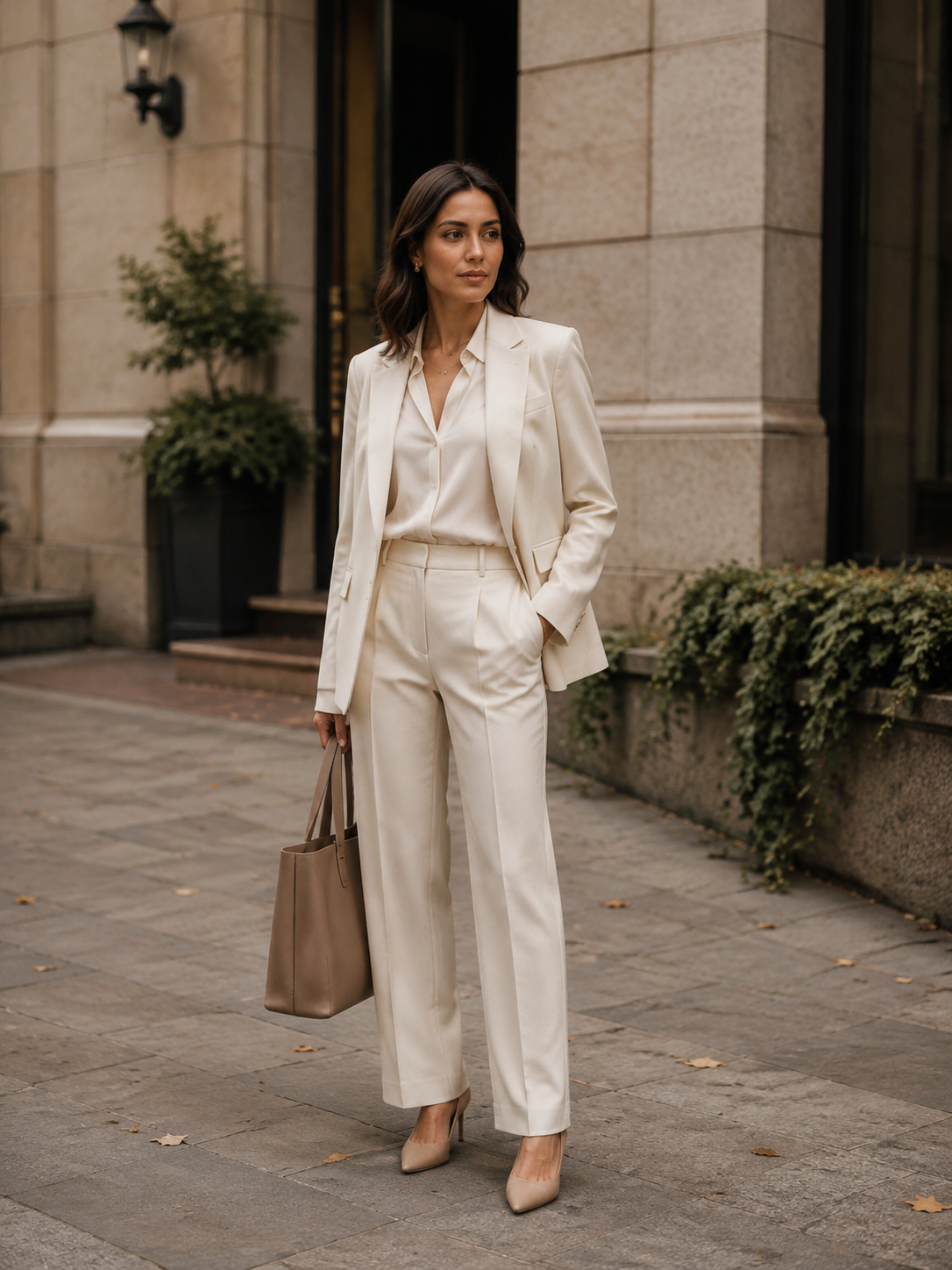
Smart casual for women can start with trousers, a skirt or a dress suited to the occasion, comfortable shoes and any needed layer. A blouse with trousers and loafers is one route; a knit with a midi skirt and flats is another. The dress code and your plans matter more than whether you wear heels or a jacket.
This guide gives you a repeatable way to get dressed. Read the short version of each step here, then follow the deeper guides when you want more detail.
01
Start with the occasion, not the outfit
The invitation, the venue, the temperature and how much walking you will do decide the outfit before any garment does. Read those constraints first, then choose a route. Shoes you can wear comfortably all day beat formal shoes you take off at dinner.
THE SHORT VERSION / 5 STEPS
Read the invitation, venue and forecast before choosing anything.
Choose the bottom — or the dress — first, since it determines how far the outfit can travel in either direction.
Add a top in a fabric with some drape or weight, so it holds its shape rather than clinging.
Match shoe formality to the piece and to how much walking you will do.
Check the whole look in a full-length mirror and swap the single piece that looks out of place, if any.
02
Three routes: trousers, a skirt or a dress
Trousers with a blouse, a knit with a midi skirt, and a dress with a layer are the three routes that cover nearly every smart casual invitation. Each is complete once the footwear suits the setting, and flats belong in every route. Choose between them by occasion and preference, not by rule.
| Route | Core pieces | Footwear that works |
|---|---|---|
| Trousers route | Straight or wide tailored trousers, a blouse or fine knit, a blazer or structured jacket | Loafers, ballet flats, ankle boots or low block heels — all clean and in good condition |
| Skirt route | A structured midi or A-line skirt, a fitted fine knit, a belt or cardigan to finish | Flat boots, loafers or ballet flats; block heels when the occasion leans formal |
| Dress route | A shirt dress, wrap dress or matte midi dress, with a jacket, wrap or belt if the shape needs it | Ballet flats, loafers or flat sandals for relaxed settings; heeled boots to dress it up |
Smart casual for women requires heels.
It does not. Loafers, ballet flats, flat boots and clean flat sandals all sit inside the code, and comfort usually reads better than height. Heels are simply one swap that raises the formality of the whole outfit when the setting calls for it.
THE SHORT VERSION / 4 STEPS
Pick the route that matches the occasion: trousers, skirt or dress.
For the dress route, check the fabric carries weight — a shirt dress, wrap dress or matte midi works, while sheer panels and high-shine party fabrics sit outside the code.
Keep the dress and trouser routes separate in your planning: a dress replaces the top-and-bottom decision, so the layer and shoes do the adjusting instead.
Finish with footwear suited to the setting, flats included.
03
Move formality with one swap at a time
Formality concentrates in fabric, structure and shoe choice: woven trousers read dressier than denim, a blazer dressier than a cardigan, a heeled boot dressier than a flat. Change one element at a time, because two swaps in the same direction usually overshoot. Stop once the outfit reads deliberate — the code rewards balance, not maximum effort.
To dress it up
- Swap jeans for tailored trousers, or the cardigan for a blazer — one change is usually enough
- Trade flats for low block heels
- Add simple jewelry with presence rather than more pieces
- Swap the dress for a midi in a more structured fabric
To dress it down
- Remove the blazer and wear the fine knit alone
- Trade the blouse for a quality fitted tee under the jacket
- Choose clean flat boots or loafers, and let the trousers or skirt carry the smart signal
- Swap the midi skirt for dark straight jeans where denim is permitted
If you cannot tell whether the occasion is smart casual or business casual, dress to business casual: tailored trousers or a pencil skirt, a blouse, leaner shoes. You will rarely be underdressed, and one removal — the blazer, the heels — brings the look back to smart casual.
THE SHORT VERSION / 4 STEPS
Read the occasion: venue, invitation wording, and whether hosts or guests will be dressed up.
Pick the one piece in your base outfit furthest from that level.
Swap that piece only, then re-check the shoes, which anchor the whole read.
Stop adjusting once the outfit reads deliberate.
04
Tucked, cropped or loose: silhouette is a choice
Tucked, cropped and loose silhouettes all work within smart casual; the code asks for clothes that fit and look deliberate, not for any particular body shape. Proportions matter more than prescriptions, so balance volume on one half of the outfit with a straighter line on the other. Choose what you can comfortably stand, sit and move in.
- A front tuck neatens a loose blouse over wide trousers without a full tuck.
- A cropped jacket shortens the torso over wide-leg trousers; a longline cardigan suits a slim base layer.
- A belt defines a shirt dress — or leave it unbelted for a looser line; both are within the code.
- Tone-on-tone dressing reads deliberate with either a tucked or a loose top.
Smart casual requires a defined waist.
No. Belted, cropped, tucked and loose silhouettes all appear in smart casual settings, and comfort is part of the code's intent. Fit at the shoulder and hem matters more than showing any shape.
THE SHORT VERSION / 3 STEPS
Try the outfit seated as well as standing; a silhouette that only works standing will not last the event.
Balance one voluminous piece with one straighter piece.
Ignore any advice that ties the silhouette to your body type rather than the outfit's proportions.
05
Season, weather and the small capsule
The formula holds year-round while the fabrics change: lighter weights and open shoes in heat, fine layers and hosiery in cold. A capsule of six to eight pieces in a tight palette covers the whole code. Start with the bottoms and shoes, which are the hardest to fit and to substitute.
- Warm weather: linen-blend trousers or a cotton shirt dress, flat sandals with leather straps, a light jacket for the evening.
- Cool weather: wool trousers or a heavier midi skirt, a fine knit under the blazer, tights or hosiery as needed.
- Rain: leather and rubber-soled shoes hold up better than suede, so check the forecast before choosing the pair.
- Capsule contents: two bottoms, one dress, three tops, two layers — in two neutrals and one accent.
Before buying anything new, audit what you already own.
- Every bottom is tailored, pressed, and free of distressing or visible wear
- Each top holds its shape, with no stretched necklines or pilling
- You own one dress or one skirt route that works with flat shoes
- Every new purchase has been tested against at least two existing pieces
- Nothing in the rotation only works in a single combination
THE SHORT VERSION / 4 STEPS
Keep the silhouette constant across seasons: considered bottom, considered top, one finishing layer when needed.
Swap fabric weights rather than outfit shapes as the temperature changes.
Choose a palette of two neutrals and one accent, and test every new purchase against it.
Move anything that only works in one combination out of the smart casual rotation.
SEE THE IDEA AT WORK
The one outfit that covers most occasions
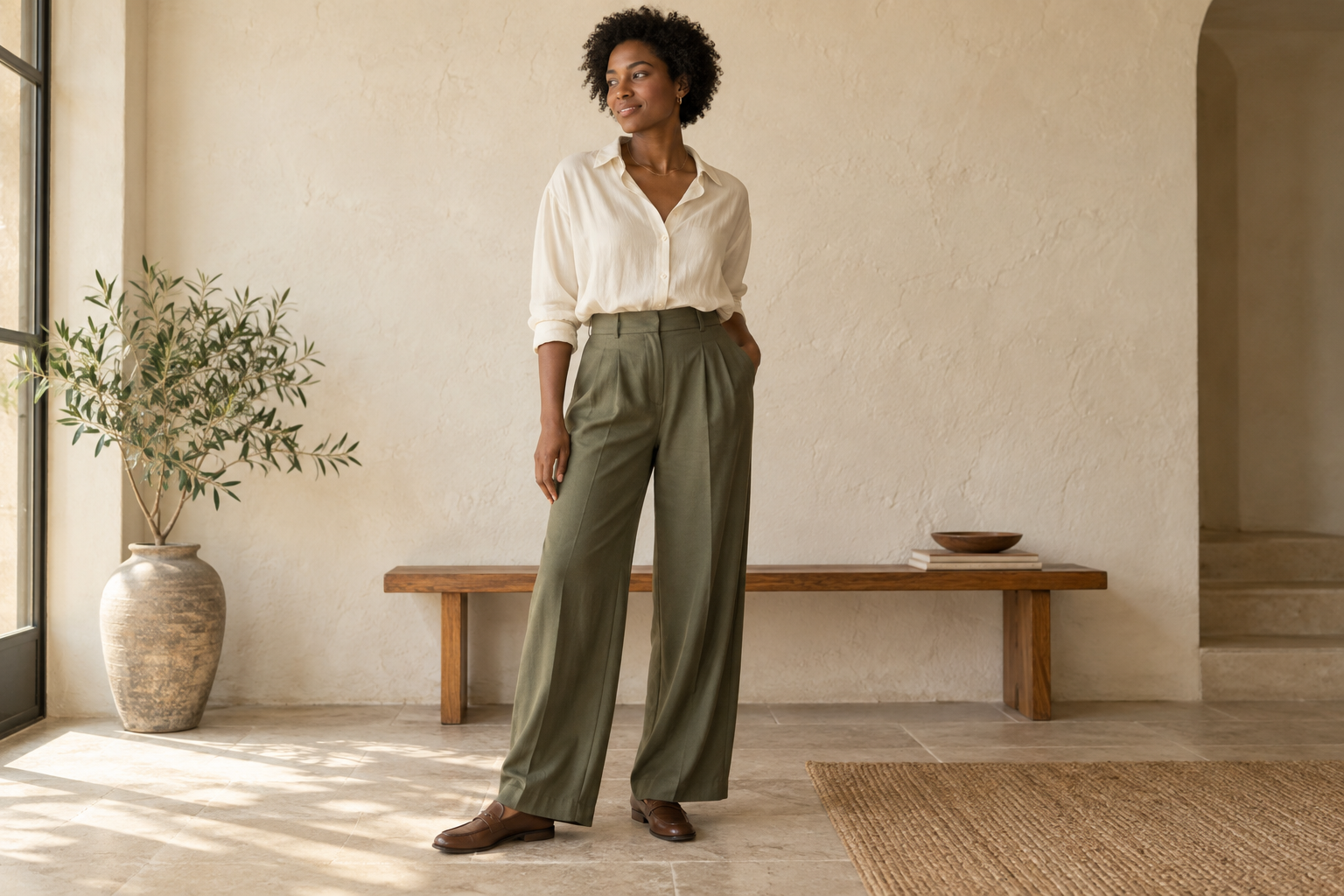
An illustrative example, not an expert-tested outfit. It sits in the middle of the code, works across most of the year, and every piece has one clear substitution that moves the look up or down a notch.
- Charcoal or black tailored trousers with a straight or wide leg — dressier than denim, softer than suiting.
- Ivory or soft-white blouse with some drape, tucked or worn out depending on the hem.
- Grey or navy blazer that finishes the shoulder line and carries the smart signal.
- Black leather loafers or low block heels — flats work equally well, chosen for the setting.
- Fine navy knit to wear instead of the blouse in relaxed settings, under the same blazer.
| Setting | Easy outfit | One change to dress it up |
|---|---|---|
| Office with a relaxed code | Black tailored trousers, ivory blouse, grey blazer, black loafers | Swap the loafers for low block heels |
| Casual Friday | Dark straight jeans, fine navy knit, longline cardigan, ankle boots | Swap the jeans for wool trousers |
| Dinner at a good restaurant | Pleated midi skirt, fitted fine knit, low block heels | Swap the knit for a satin-feel blouse and add the blazer |
| Drinks with friends | Wide trousers, quality fitted tee, structured jacket, flat sandals or loafers | Trade the tee for a blouse and add simple gold-tone jewelry |
| A gallery or daytime event | Cotton shirt dress, belt, white sneakers or ballet flats | Swap the flats for heeled ankle boots |
| A wedding invite marked smart casual | Midi dress in a matte fabric, low block heels, a wrap or jacket for the ceremony | Add the blazer or a dressier layer, and check the invitation for any stated dress guidance |
A last look in the mirror.
A MOMENT BEFORE YOU GO
0 of 8 ready
SMALL ADJUSTMENTS
When it feels almost right.
Reading smart casual as an excuse for weekend clothes on both ends?
The code fails quietly when every piece is slightly too casual: soft jersey, faded denim, and flat canvas shoes. Balance requires at least one element — the trousers, the layer, or the shoes — that clearly reads smart.
Treating any dress as automatically smart casual?
Cut and fabric decide, not the garment type. A bodycon party dress or a flimsy sundress sits outside the code, while a shirt dress or structured midi sits comfortably inside it. Check the fabric weight first, then the shape.
Dressing for the venue's most formal possible interpretation?
Overshooting reads as clearly as undershooting. If you suspect the occasion is relaxed, make one smart swap — heeled boots instead of flats, a blouse instead of a tee — rather than rebuilding the outfit around a formal piece.
Still wondering?
Can you wear jeans for smart casual?
Yes, if they are dark, straight, and free of rips or heavy fading. Jeans sit at the relaxed end of the code, so pair them with a blouse or fine knit and a structured layer, and choose leather shoes rather than canvas when the occasion is at all uncertain.
Are flats acceptable for smart casual?
Yes. Ballet flats, loafers, and flat leather boots all work provided they are clean and in good condition. Heels raise the formality of the whole outfit, so they are the simpler swap when you need to dress a flat-based look up.
What should you avoid wearing for smart casual?
Athletic wear, anything sheer without a layer under it, high-shine party fabrics, and visibly worn shoes. The common thread is intent: pieces that read as gym, nightlife, or weekend-only pull the outfit out of the middle ground the code asks for.
How is smart casual different from business casual for women?
Business casual keeps more of the office in it: tailored trousers or a pencil skirt, a blouse, and leaner shoes. Smart casual widens the range to include dark jeans, softer knits, dresses with relaxed shapes, and flat shoes. When unsure which applies, dress to business casual and you will rarely be underdressed.