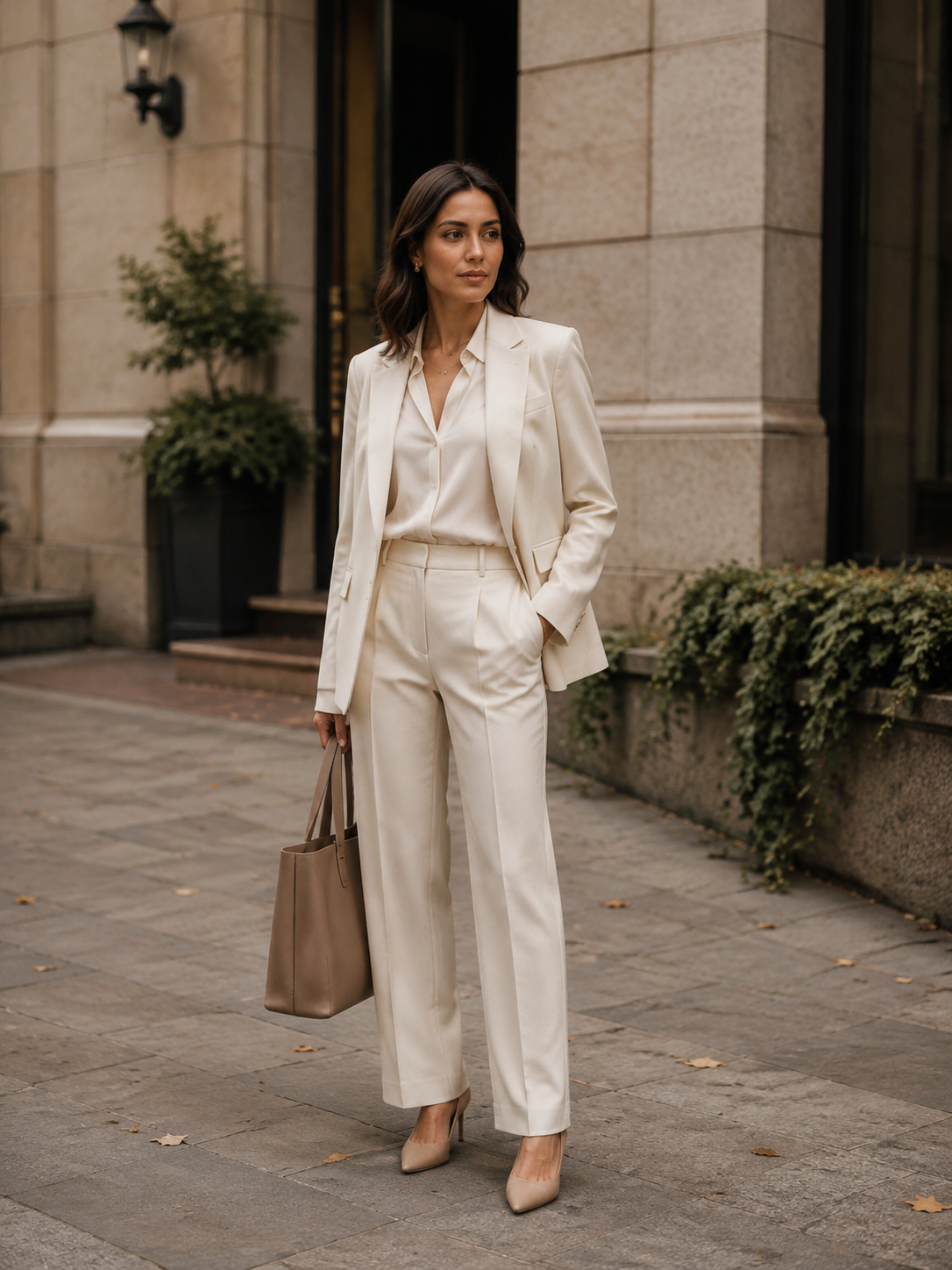
A SIMPLE STARTING POINT
Ease, with intention.
For a smart casual menswear outfit, start with trousers or permitted jeans, a shirt or knit and shoes suited to the setting. Add a jacket when it serves the dress expectation or the weather. Check the complete combination rather than treating any one garment as automatically smart casual, and use pieces you can sit and move in comfortably.
This guide gives you a repeatable way to get dressed. Read the short version of each step here, then follow the deeper guides when you want more detail.
01
Build the base: shirt, knit, chinos or denim
Most smart casual menswear outfits come from one of three bases: a shirt with chinos, a knit with tailored trousers, or a shirt with dark, clean denim. Choose the base that matches the invitation, then build around it. Each base is complete once the footwear suits the setting.
| Base | Where it fits | Footwear that completes it |
|---|---|---|
| Shirt and chinos | Relaxed offices, dinners, daytime events | Dark leather derbies or loafers; clean minimal sneakers only where the code is clearly relaxed |
| Knit and tailored trousers | Client meetings, good restaurants, anything leaning formal | Dark leather derbies or loafers, belt in the same tone |
| Shirt and dark denim | Casual Fridays, galleries, drinks with friends | Clean leather sneakers, suede derbies or loafers |
THE SHORT VERSION / 5 STEPS
Choose the trousers first, since they set the floor for how formal the outfit can go.
Add a collared shirt or fine knit in a color that clearly contrasts with the trousers.
Add a layer — an unstructured blazer, chore jacket or overshirt — when the setting or weather calls for one.
Finish with shoes suited to the setting and a belt in the same tone family.
Look in a full-length mirror: if one piece looks like it belongs to a different outfit, swap that piece, not the whole look.
02
Adjust one variable, not the whole outfit
Formality in menswear concentrates in fabric and structure: wool reads dressier than cotton, a blazer dressier than a knit, polished leather dressier than suede or canvas. Change one of these at a time and the outfit stays balanced. Two swaps in the same direction usually overshoot the code.
To dress it up
- Swap chinos for wool trousers
- Add a blazer over the shirt you are already wearing
- Replace a knit with a pressed collared shirt
- Choose derbies or loafers instead of sneakers
To dress it down
- Remove the blazer and wear the fine knit on its own
- Swap the shirt for a knitted polo
- Choose dark, clean minimal sneakers — the trousers and top keep the outfit smart
- Wear a wool overshirt or chore jacket instead of the blazer
A blazer and leather shoes are compulsory in every smart casual setting.
Neither is automatic. In relaxed settings a well-cut chore jacket or overshirt does the same job at the shoulder, and clean minimal leather sneakers can be the right read. Where the occasion involves a host or a stated code, the blazer and leather shoes become the safer choices.
If one piece looks like it belongs to a different outfit, swap that piece — not the whole look.
THE SHORT VERSION / 4 STEPS
Decide where the occasion likely sits, using the venue, the invitation wording, and what hosts will wear.
Identify the one piece in your base outfit that is furthest from that level.
Swap that single piece, not the whole outfit.
Re-check the shoes, since they anchor the read and are the most common mismatch.
03
Read the setting before you keep the trainers
Where you are going decides more than any rule of thumb. A host, a booked table or a stated dress code all pull the outfit toward tailoring; a gallery or a relaxed office leaves room for denim and clean sneakers. When the code might be business casual rather than smart casual, dressing to business casual rarely leaves you underdressed.
- Signals that raise the floor: a stated dress code, a reservation at a good restaurant, clients or hosts present, an evening start.
- Signals that leave room to relax: a casual office, a daytime or outdoor venue, friends' gatherings, invitations that name smart casual without further guidance.
- If you cannot tell, make one smart swap — loafers instead of sneakers, a shirt instead of a polo — rather than rebuilding the outfit.
Smart casual and business casual overlap, but they are not the same code. Business casual keeps more of the office in it: tailored trousers, a collared shirt, leaner shoes. Smart casual widens the range to dark jeans, knitwear as the top layer and cleaner sneakers.
THE SHORT VERSION / 3 STEPS
Read the venue, the invitation wording and what hosts or other guests will likely wear.
Place the occasion on the relaxed-to-formal range before choosing the base.
Pick the base and footwear that match that position, then stop adjusting.
04
Adjust for heat, cold and rain
The formula holds year-round; the fabrics and weights change. In warm weather, lighter cloths and shorter sleeves keep the same structure without the heat, and linen earns its place despite the creasing. In cold weather, you add depth through layers rather than formality.
- Warm weather: cotton or linen-blend trousers, a short-sleeve oxford or knitted polo, loafers or clean sneakers.
- Cool weather: wool trousers, an oxford shirt under a merino crew, a blazer or overshirt on top, derbies with heavier socks.
- Rain: smooth leather and rubber-soled shoes hold up better than suede, so check the forecast before choosing the pair.
Visible creases always ruin a smart casual outfit.
Fabric matters. Linen creases by design, and pressed linen reads intentional while crumpled linen reads careless — press what the care label allows before you leave. For cotton and wool, pressing does most of the work of looking deliberate.
THE SHORT VERSION / 4 STEPS
Keep the same silhouette across seasons: mid-weight trouser, considered top, one layer when needed.
Swap fabric weights rather than outfit shapes when the temperature changes.
In summer, let the loafers or clean sneakers carry the smart signal while the top half stays light.
In winter, add warmth with a knit under the layer rather than a heavier outer shape.
05
Audit fit and build from what you own
You do not need many clothes to cover smart casual — you need a small set where everything works together. Six to eight core pieces in a tight palette of two neutrals and one accent will produce more combinations than a wardrobe twice the size. Buy the trousers and shoes first, since they are the hardest to fit and the hardest to substitute.
- Two trousers: one wool or cotton tailored pair, one dark jean or heavier chino.
- Three tops: one white or light oxford shirt, one mid-tone shirt, one fine merino crew.
- Two layers: an unstructured blazer in navy or charcoal, plus a wool overshirt or chore jacket for casual settings.
- Two shoes: dark derbies or loafers, and clean leather sneakers for relaxed occasions.
Before buying anything new, audit what you already own against this list.
- Every existing trouser option is pressed, the right length, and free of distressing or drawstrings
- Each top works with at least two of your bottoms
- You own at least one layer that fits over a shirt without pulling at the shoulder
- Your shoes are clean, suit at least two bases, and match a belt in tone
- Everything sits within one palette of two neutrals and one accent
THE SHORT VERSION / 4 STEPS
Pick a palette of two neutrals and one lighter shade, and hold every purchase against it.
Buy the shoes and trousers first, then build tops around them.
Test each top with each bottom and each layer before buying anything new.
Retire anything that only works in one combination, or move it to weekend-only wear.
SEE THE IDEA AT WORK
The one outfit that covers most occasions
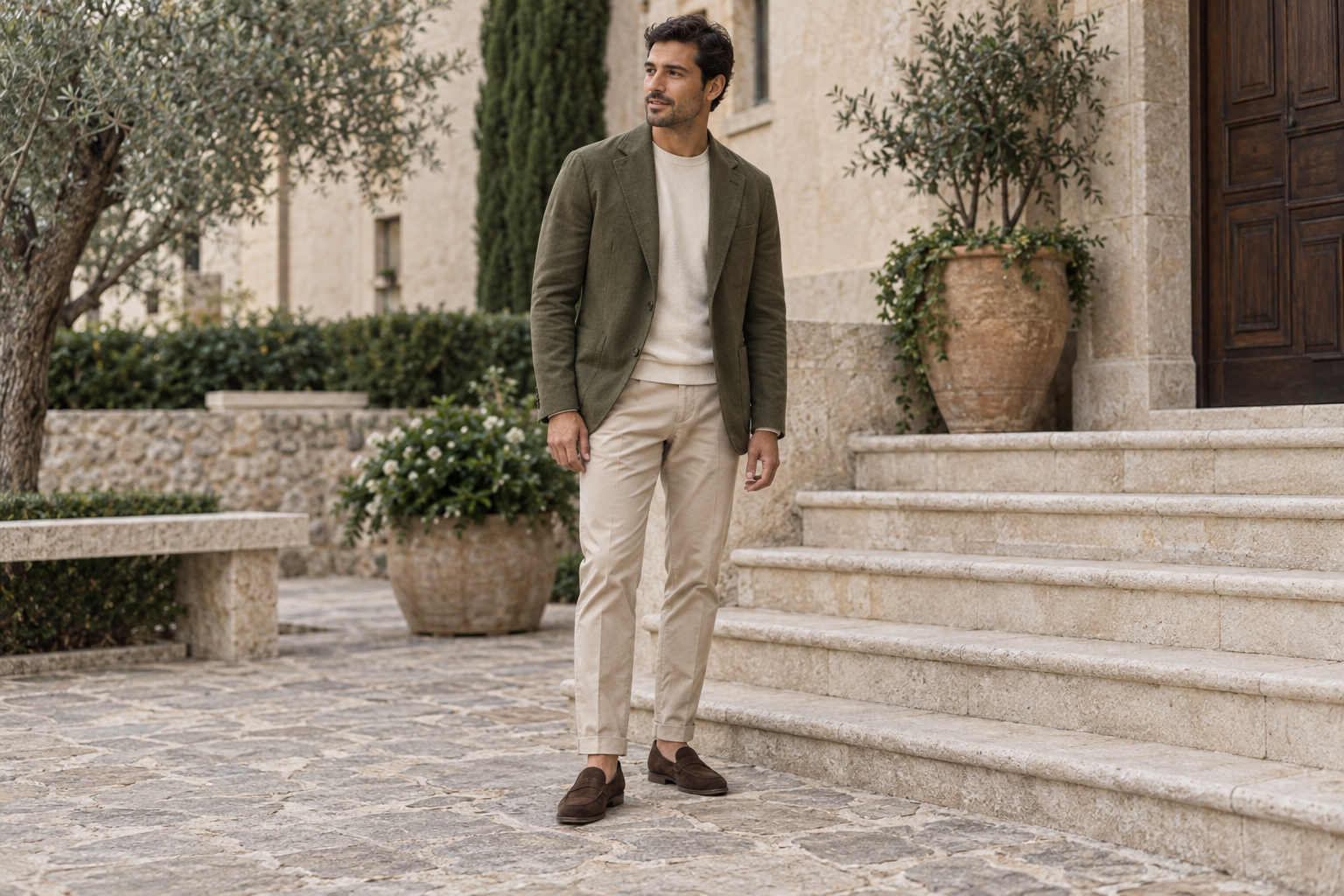
An illustrative example, not an expert-tested outfit. It sits in the middle of the dress code, and every piece has one clear substitution that moves it up or down a notch without changing the shape of the look.
- Charcoal wool-blend tailored trousers — dressier than chinos, softer than a suit trouser.
- Light-blue oxford shirt, buttoned to the second button, worn tucked or untucked depending on the hem.
- Navy unstructured blazer — the layer that carries the smart signal at the shoulder when the setting calls for one.
- Dark brown leather derbies, with a belt in the same tone.
- Fine grey merino crew to wear instead of the blazer in relaxed settings, over the same shirt.
| Setting | Easy outfit | One change to dress it up |
|---|---|---|
| Office with a relaxed code | Dark chinos, light-blue oxford shirt, navy blazer, dark brown derbies | Swap the chinos for charcoal wool trousers |
| Casual Friday | Dark straight jeans, white oxford shirt, wool overshirt, clean leather sneakers | Replace the sneakers with loafers |
| Dinner at a good restaurant | Charcoal trousers, fine merino crew, dark leather loafers | Add a pressed white shirt under the knit |
| Drinks with friends | Olive chinos, knitted polo, clean minimal sneakers | Swap the polo for a collared shirt and add the blazer |
| A gallery or daytime event | Dark jeans, mid-tone brushed-cotton shirt, chore jacket, suede derbies | Swap the chore jacket for the unstructured blazer |
| A summer wedding invite marked smart casual | Light cotton trousers, short-sleeve oxford, loafers | Add a lightweight blazer in a mid-tone, and check the invitation for any stated dress guidance |
A last look in the mirror.
A MOMENT BEFORE YOU GO
0 of 8 ready
SMALL ADJUSTMENTS
When it feels almost right.
Wearing one formal piece with a casual outfit that has no support?
A suit jacket over a graphic tee and light jeans reads as a mismatch, not a balance. Formality needs at least two pieces pulling the same direction, so pair the blazer with tailored trousers and a collared shirt rather than a single formal gesture.
Treating clean trainers as always acceptable?
Minimal leather sneakers work in relaxed smart casual settings, but they lower the whole outfit's ceiling. If the occasion involves a host, a meal booked in advance, or anyone dressed up, leather shoes or loafers are the safer read.
Building the outfit around the shirt instead of the trousers?
The trousers set the formality floor, and no shirt can lift a pair of worn or ill-fitting ones. Choose the trousers first, check they are pressed and the right length, and the rest of the outfit becomes much easier to get right.
Still wondering?
Can you wear jeans for smart casual?
Yes, if they are dark, straight, and free of rips or heavy fading. Jeans sit at the relaxed end of the code, so pair them with a collared shirt and a structured layer, and choose leather shoes rather than trainers when the occasion is at all uncertain.
Do you need a blazer for smart casual?
Not always, but you need something considered at the shoulder when the setting leans formal. A wool overshirt or a well-cut chore jacket can do the same job in relaxed settings. If the occasion involves a client dinner or a venue with a stated code, the blazer is the more reliable choice.
What shoes are not smart casual?
Athletic trainers, worn canvas shoes, and anything with visible wear at the sole or heel sit outside the code. The test is condition and intent: a clean leather sneaker reads deliberate, while a running shoe reads like you dressed for the gym.
How is smart casual different from business casual for men?
Business casual keeps more of the office in it: tailored trousers, a collared shirt, and leaner shoes. Smart casual widens the range, allowing dark jeans, knitwear as the top layer, and cleaner sneakers. If you are unsure which applies, dress to business casual and you will rarely be underdressed.