Rain in the forecast
Switch to leather shoes with treated or grippy soles, darker trousers so splash marks do not show, and a compact rain shell over the knit. Leave suede at home; a folded umbrella keeps the outfit presentable better than a hood.
Occasion guide
A footwear-first plan for a day with lots of walking: start from shoes you already find comfortable, build the smart casual outfit around the route and the venues, and test the complete outfit before the day.
Begin hereOccasion advice
For a day with lots of walking, start with shoes you already find comfortable on similar outings. Build the smart casual outfit around them and the places you plan to visit. Check the route, weather and carrying needs, then test the complete outfit rather than judging it only in a mirror.
A mile between stops and a ten-mile loop are different problems, so sketch the day first: rough distance, surfaces (pavement, stone, parkland, stairs), and how often you will actually sit down. Mark any stop with its own dress expectation — a smarter restaurant or gallery — because that stop shapes the top half of the outfit and possibly the shoes.
The forecast matters at the extremes, not the average. Morning chill, afternoon sun, and wind between buildings all land on the same outfit, which is why the plan leans on removable layers rather than one perfect weight.
The most reliable predictor of a comfortable shoe is your own history with it. Pick the pair that has already done a comparable day without complaint, and retire anything still under break-in; blisters arrive at the worst hour of the day, not the first.
Socks are the quiet half of the decision. Smooth seams, a height that clears the shoe edge, and a fabric that stays comfortable when damp are what you are checking for — the same test you would give the shoes. If you have recurring foot or leg pain, that is a question for a qualified professional rather than a wardrobe guide; nothing here replaces individual advice.
Fashionable shoes cannot be genuinely comfortable, so a walking day means sacrificing the look entirely.
Plenty of clean leather sneakers, flat loafers on rubber soles, and sturdy boots look deliberate and have already earned your trust on previous outings. The rule is evidence from your own wear, not a style tax.
| Piece | Cooler, changeable day | Warmer, dry day |
|---|---|---|
| Shoes (proven, not new) | Leather sneakers on a cushioned sole | Suede or canvas low trainers — only if rain is truly absent |
| Socks | Mid-calf merino or cotton blend, smooth seams | No-show socks that still cover the heel |
| Trousers | Straight cotton chinos with room to stride | Relaxed tapered chinos, lighter weight |
| Top and layer | Plain tee, fine-knit or loopback sweatshirt, light wind-resistant jacket | Heavyweight plain tee, unlined overshirt that folds into a bag |
| Bag | Cross-body or small backpack worn across the body | Same, kept lighter: water, one layer, pockets for the rest |
Both outfits read smart casual because each layer is a proper garment, not athletic wear. If one stop is dressier, swap the top half — a fine knit or Oxford shirt replaces the sweatshirt — and keep the proven shoes unless the stop genuinely refuses them.
Before the day, check the parts of the outfit that move with you:
A dressier stop does not have to sink the walking day, but it may demand an honest trade. The cheapest answer is a top-half upgrade: the Oxford shirt and a crease-forgiving blazer carried folded, over the same trousers and proven shoes.
If the venue will not accept the walking shoes, decide which it is changing: the shoes or the plan. A packed second pair adds weight and a change point midday; moving the reservation closer to your base, or choosing a room that matches the day, sometimes costs less. Either decision, made in advance, beats discovering it at the door.
Nothing in a walking-day outfit rewards endurance. A two-minute adjustment at the first warning usually prevents the kind of afternoon that ends a day early, and the schedule should bend to that before the body does.
Keep reading
Every weekend dressing guide on the site.
The broader weekend wardrobe these outfits draw from.
When the walk is the gap between tables, not the day itself.
BEFORE YOU CHOOSE
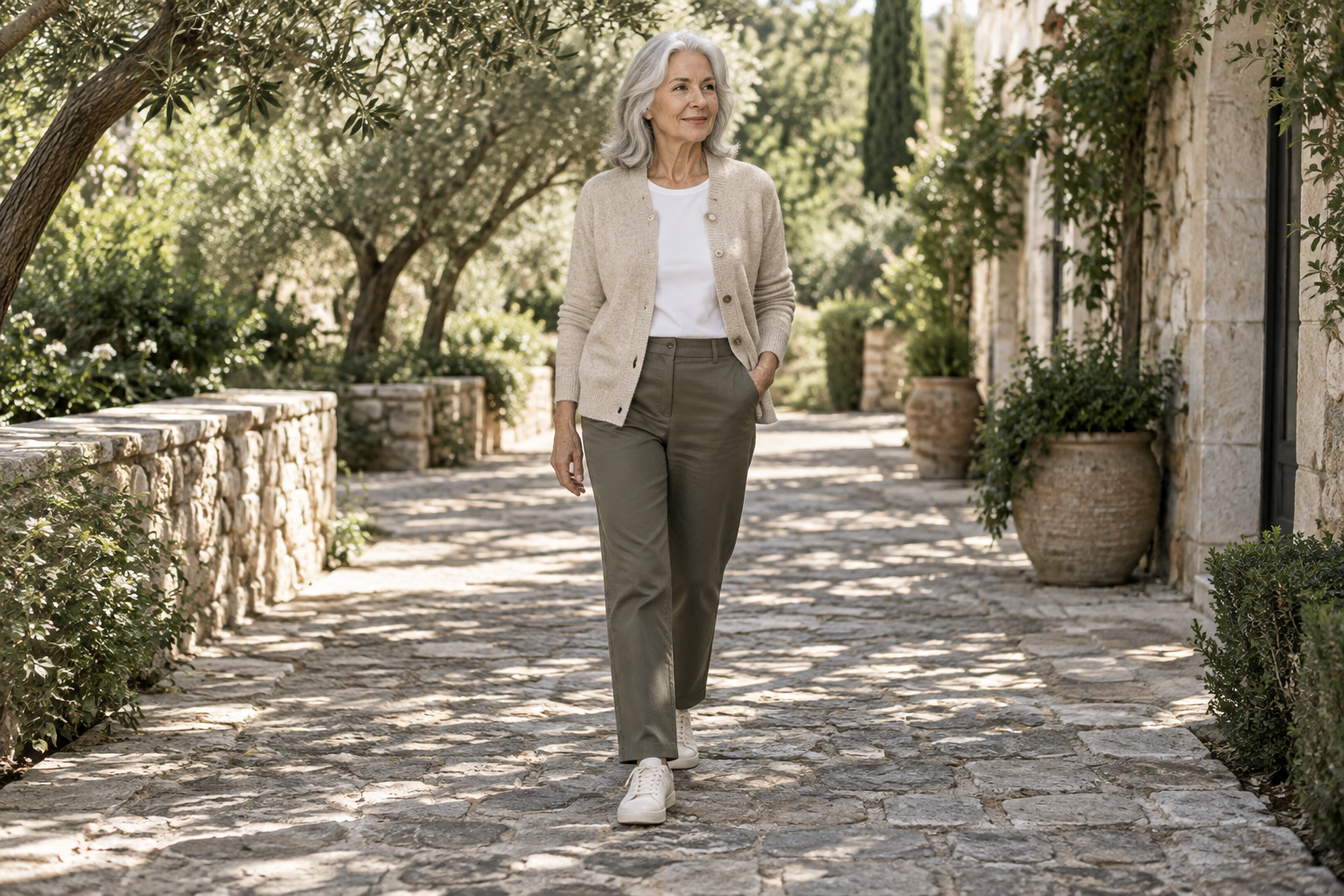
An oatmeal cardigan over a white top, olive trousers with room to move, and cream sneakers already proven on similar outings — a stone path underfoot rather than a pavement, which is exactly the surface check to make in advance. The photograph shows the full outfit and footwear; it is an illustrative scene and proves nothing about cushioning or distance tolerance.
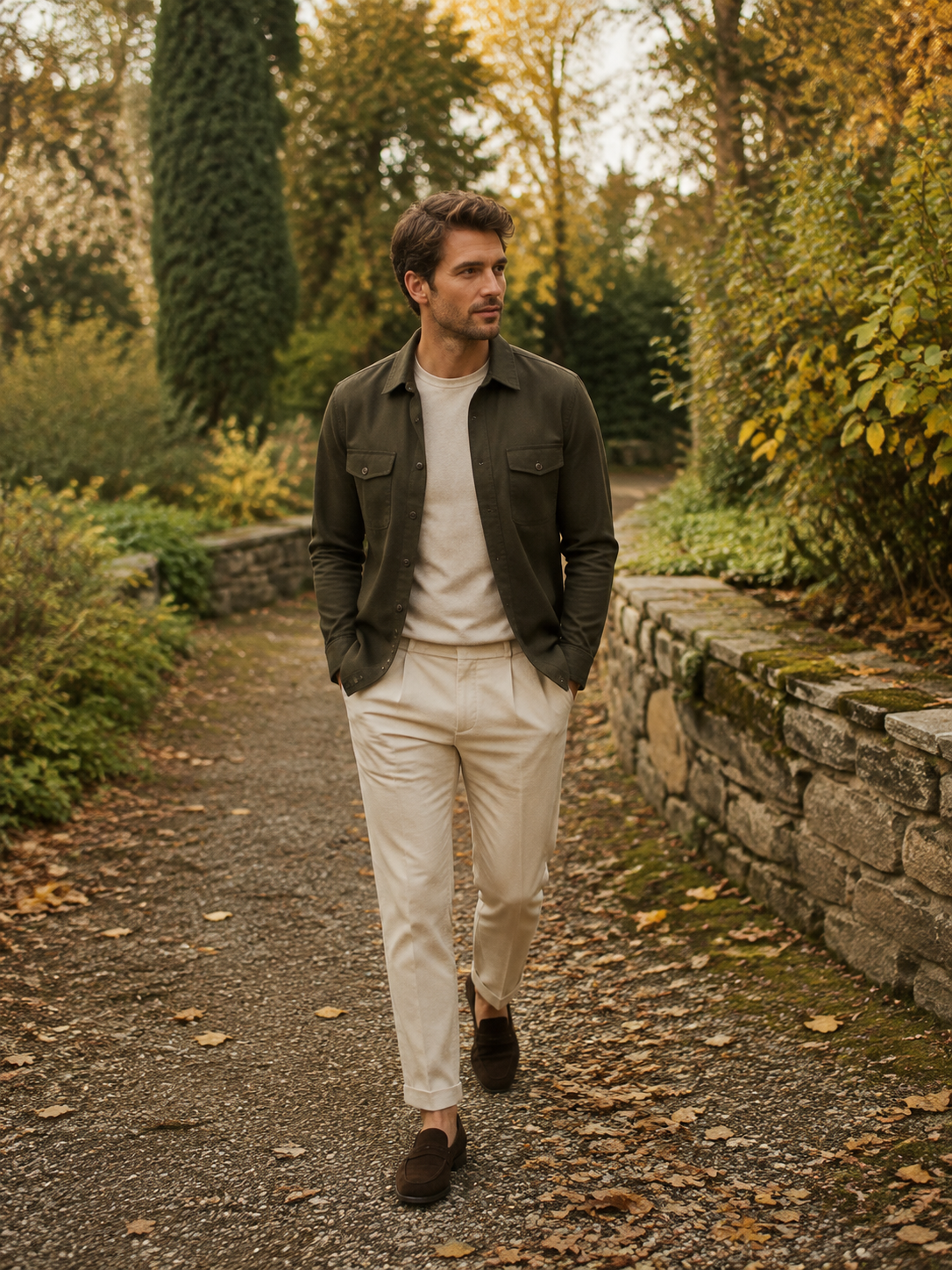
An olive overshirt worn open over a cream top and cream-coloured trousers, with brown leather shoes proven comfortable. The overshirt reads as a proper layer at every stop and folds into the bag at the warmest hour. Swap in the fine knit underneath if a stop is smarter or the wind picks up.
Switch to leather shoes with treated or grippy soles, darker trousers so splash marks do not show, and a compact rain shell over the knit. Leave suede at home; a folded umbrella keeps the outfit presentable better than a hood.
Layer under rather than over: a fine merino base beneath the shirt does more than a heavy coat that comes off indoors anyway. Keep the outer layer walkable — a parka turns a brisk pace into a workout.
Build the smart half in from the start: dark trousers, a proper shirt, and a crease-forgiving jacket carried folded. Upgrade the shoes only if the distance allows; otherwise let the shirt and jacket carry the formality.
A small backpack with a sternum-friendly fit shifts weight to the hips, but empty it of anything rigid before the day starts. Wear it on both shoulders in crowds and re-check the straps at the first sign of digging.
Everyday & Weekend
What to wear to a smart casual brunch: read the venue first, choose an outfit that survives any plans afterwards, and run a seated-comfort check before you leave.
Everyday & Weekend
Smart casual weekend outfits built around what you will actually do: three complete activity-led looks, the function checks that keep them wearable, and the one-piece swaps that take them to dinner.
Everyday & Weekend
What to wear for errands and meeting friends: map the day, build one outfit that handles both, and make the five-minute upgrade with a layer that fits the bag you already carry.