A smart casual brunch outfit starts from the venue and the rest of the day: a base of shirt or knit with trousers, a layer for the weather, and shoes chosen for whatever comes after the table.
For a smart casual brunch, check the venue and choose an outfit that works for any plans afterwards. A shirt or knit with trousers is a useful starting point; a dress with comfortable flats is another. Add a layer for the weather and test the outfit while seated before leaving.
Which kind of brunch is it? Three venues, three levels
Brunch has no single dress code — the venue sets it. Check the restaurant's website, photos, or booking notes, and place it in one of three groups before choosing anything.
The same code stretches across three venues. Choose the row that matches your booking, not a generic brunch standard.
Venue
What it asks for
A safe outfit
Casual cafe with counter service
Clean, plain, well-fitting — nothing more
Quality plain tee or fine knit, dark jeans, minimal leather sneakers, one structured layer
Restaurant stating smart casual
A collar or knit, leather or suede shoes, no gym wear
Collared shirt or fine knit, tailored trousers or dark jeans, loafers or clean leather sneakers
Celebration or hotel brunch
One notch up; photographs likely
Shirt and blazer or a dress, tailored trousers, leather shoes or dressy flats
Three outfits that work, with swaps for shoes and layers
Each outfit below is complete as written, and the swaps keep it useful without extra purchases. Pick the one closest to your venue and adjust once.
Cafe look: mid-wash straight jeans without distressing, a white oxford shirt or fine knit, a chore jacket or overshirt, and clean leather sneakers — swap the sneakers for loafers if the group runs dressy.
Stated-code look: tailored chinos or a midi dress, a collared shirt or knit, an unstructured blazer or cardigan, and loafers or flat block-heel shoes — swap the trousers for dark jeans only where denim is clearly welcome.
Celebration look: a dress with comfortable flats, or pressed trousers with a shirt and blazer, leather shoes, and one quiet accessory — swap the layer for a trench or wool coat as the season demands.
If the day adds a walk, change the shoes, not the wardrobe
Plans after brunch are optional and unknowable in advance, so plan for movement without redesigning the outfit. The whole adjustment is footwear: shoes already broken in, with soles that handle pavements, replace anything chosen for looks alone. Trousers and layers that work at the table work on a walk.
Myth
A brunch outfit needs to be planned around shopping, strolls, and a full afternoon of standing.
Fact
You cannot know the afternoon when you dress. Choose walkable shoes and a removable layer, and the outfit handles whatever the day turns out to be — no separate planning required.
Run the seated-comfort check before you leave
Sit for five minutes
Waistbands and waist seams read differently seated than standing. Anything that digs or pulls shows up within five minutes at a table.
Bend and reach
Check sleeve length and layer drape against a coffee cup and a menu. Sleeves that swallow the hand annoy you for the whole meal.
Judge the layer on a chair
A blazer or cardigan that looks sharp standing can bunch badly seated. If it does, choose the finer knit instead.
Adjust for indoors, outdoors and the forecast
Brunch often starts outdoors — a queue, a patio, a walk between places — so the layer is part of the outfit, not an afterthought. A knit, chore jacket, or trench that works open indoors and closed outdoors covers the transition. In high summer, the layer becomes a linen-blend shirt worn over a tee; in winter it becomes the outfit's main event over a simple base. Check the forecast for the whole window, not just the morning.
Before you leave, confirm:
The venue's actual level — checked from its site, photos, or booking notes.
Shoes are broken in and suitable for any walking the day might add.
The layer matches the forecast for the whole afternoon.
The outfit passes the seated test: waist, sleeves, and layer drape.
Any later plans are covered by the shoes and layer, not by hope.
When the walking becomes the plan rather than the add-on.
BEFORE YOU CHOOSE
Read the room. And the invitation.
The venue sets the level, and it varies more than people expect: a counter-service cafe, a restaurant that states smart casual, and a celebration booking ask for different things, so check before choosing.
Brunch happens in daylight, which flatters lighter textures and clean denim. The same pieces read differently at dinner, so judge the outfit in natural light, ideally near a window.
Season decides the layer more than the outfit. A knit, chore jacket, or trench that sheds a queue and a patio covers most weather between the door and the table.
Company sets the pitch. Family, a first date, a birthday group, and a work-adjacent table sit at slightly different points on the same code, and one notch in either direction is the whole adjustment.
A useful outfit formula.
Base: a collared shirt, fine knit, or quality plain tee with tailored trousers or dark, clean jeans — or a dress in a stable fabric with comfortable flats.
Layer: an unstructured blazer, chore jacket, overshirt, or cardigan, chosen to work open indoors and closed outdoors.
Shoes: clean leather or suede sneakers, loafers, or flat block-heel styles, all broken in enough for an unplanned walk.
Finishing: a belt and bag in the same tone family as the shoes, daylight-safe fragrance, and everything pressed.
Two starting points.
The denim-permitted cafe look
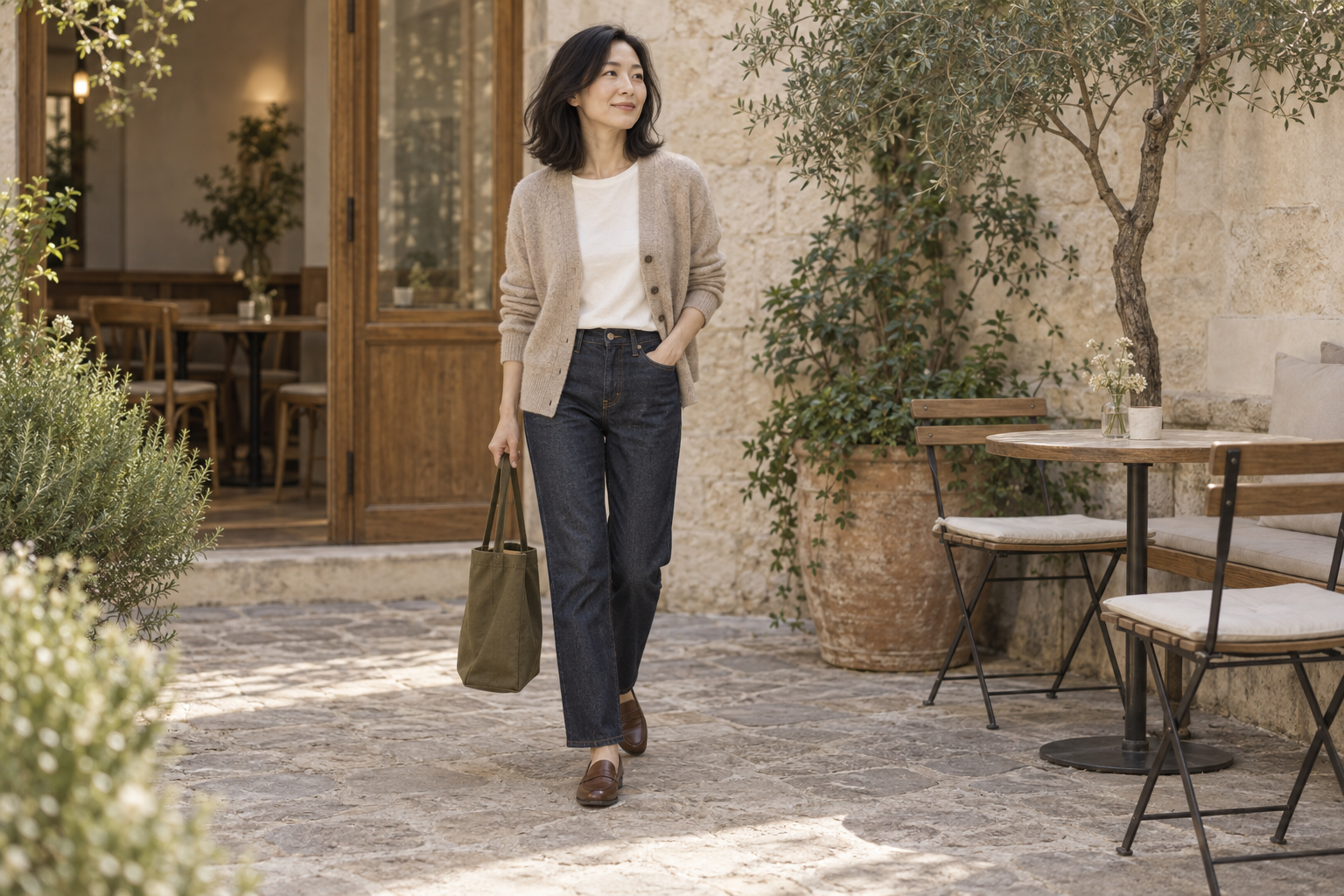
An oatmeal cardigan over a simple top, dark straight jeans, and brown loafers, with an olive tote that swallows the layer if the sun comes out. This is the right pitch for a cafe where denim is clearly welcome; the photograph shows that outfit in a courtyard setting.
The stated-code patio look
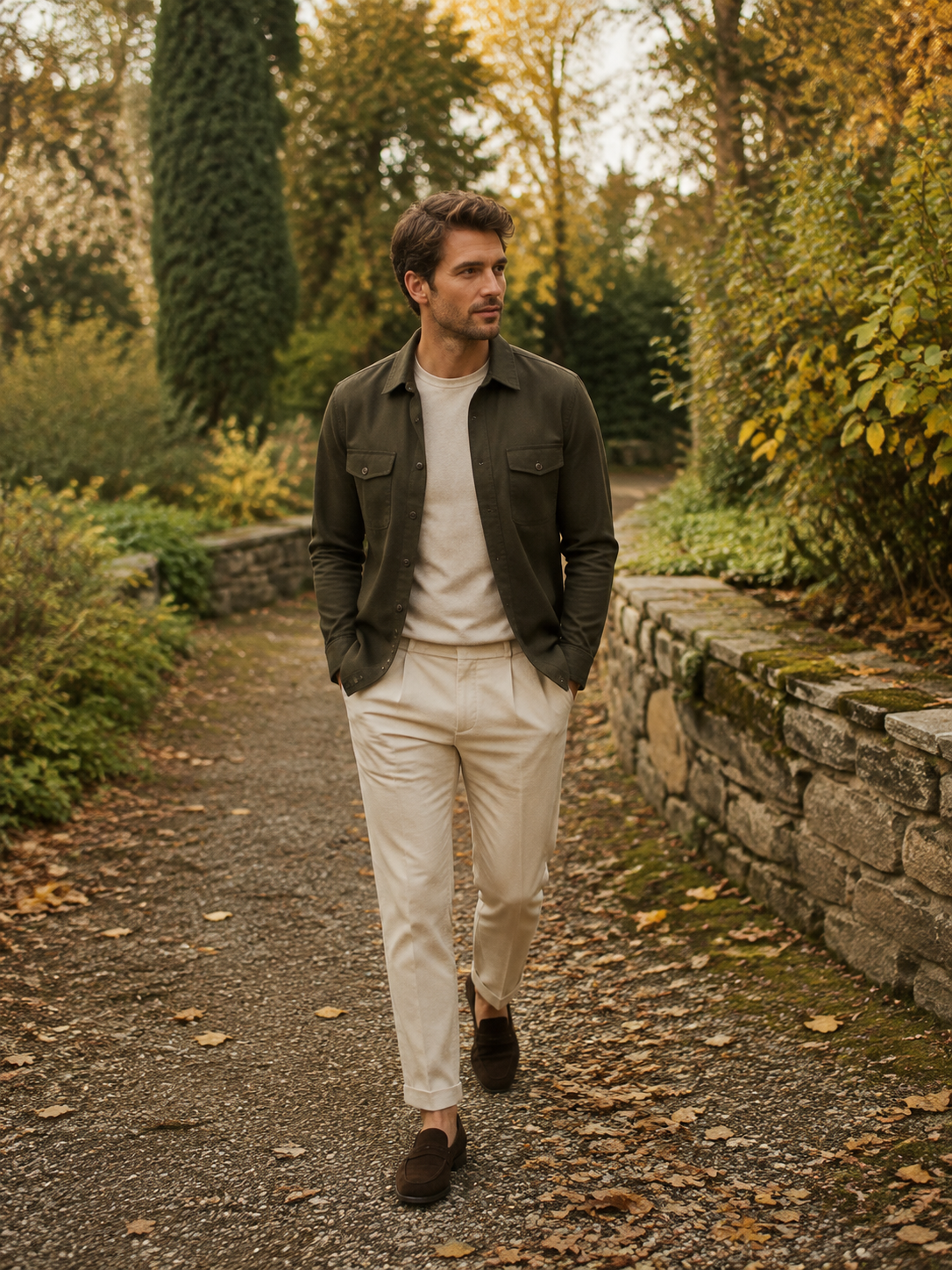
An olive overshirt worn open over a cream top and cream-coloured trousers, with brown leather shoes. The overshirt reads as a proper layer at a table that states smart casual, and buttons up for the walk afterwards. The photograph shows this layering in autumn light.
Adjust for the day.
Counter-service cafes
The code floats down: a quality plain tee or fine knit, clean dark jeans, and minimal leather sneakers all pass easily. Keep one structured element — a chore jacket or a good bag — so the outfit reads chosen rather than defaulted.
Hotel and reservation brunches
These sit a notch up: tailored trousers or a dress, a collared shirt or fine knit, and leather rather than canvas. Denim can still appear in its darkest, cleanest form, but the layer should be a blazer or structured cardigan.
Seasonal shifts
In summer, short sleeves with structure — a linen-blend shirt and loafers — and expect the meal to move outdoors. In winter the layer becomes the outfit: a wool coat or chunky knit over a simple base, with boots that handle the walk to the door.
Celebration tables
Birthdays and bookings with photographs reward one notch of effort: a dress with dressy flats, or pressed trousers with a blazer. Keep the shoes walkable anyway, since celebration brunches are exactly the ones that drift into an afternoon.
Leave these assumptions behind.
Assigning brunch one universal dress code. A counter-service cafe and a hotel dining room are different occasions, and the venue — not the meal — decides which end of smart casual applies.
Dressing as if for dinner. Heavy dark tailoring and polished formal shoes read as effortful in daylight; lighten the palette and let the layer do any formal work.
Choosing shoes that only work seated. Whatever the afternoon brings, the shoes decide whether the outfit survives it, so broken-in leather beats anything unworn.
Ignoring the seated test. A waistband or sleeve that fails at the table fails for the whole meal, and the check takes five minutes at home.
Plan a smart casual outfit around walking comfort: test shoes you already know, build the outfit around the route and the stops, and adjust at the first sign of discomfort.
Smart casual weekend outfits built around what you will actually do: three complete activity-led looks, the function checks that keep them wearable, and the one-piece swaps that take them to dinner.
What to wear for errands and meeting friends: map the day, build one outfit that handles both, and make the five-minute upgrade with a layer that fits the bag you already carry.