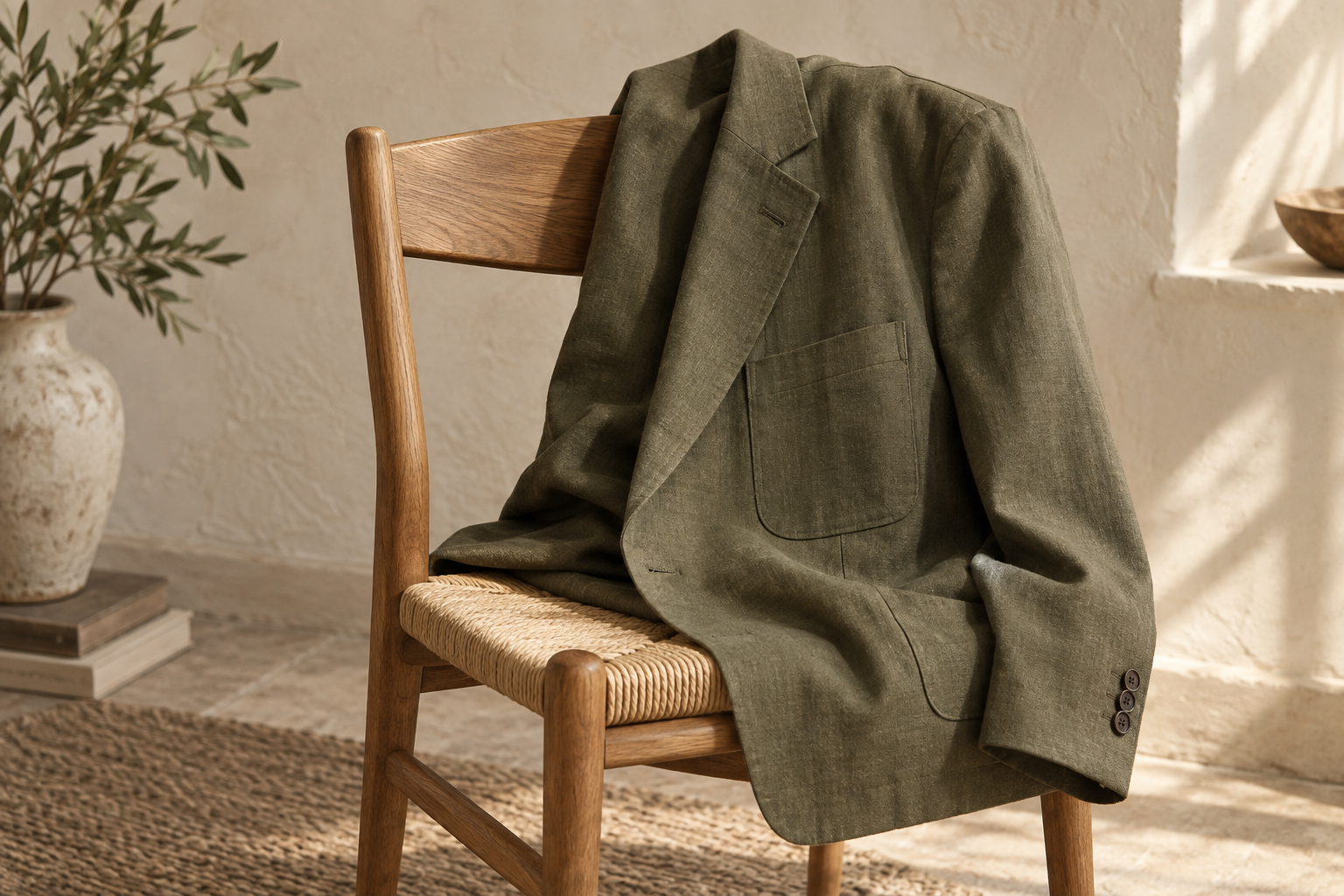
Jackets & Blazers
Blazer vs Sport Coat vs Suit Jacket: How to Tell
Matching trousers, fabric and construction are the useful tells. Compare blazers, sport coats and suit jackets — and learn which works with odd trousers.

Outfit inspiration
A trench coat reads smart casual almost automatically, but how you wear it changes the register. Belted and buttoned it behaves like tailoring; worn open it relaxes into weekend territory. These six complete outfits show each approach, with the proportion calls that keep them deliberate.
Begin hereInspiration
Style a trench coat either open over your outfit or fastened with its belt adjusted comfortably. Try both before deciding, because the layers and weather may favor different choices. For a simple combination, use a knit, trousers and practical shoes. Check the coat's actual weather specification rather than assuming every trench keeps rain out.
How you close the trench sets the register, and none of the three options is the correct one. Belted snug, the coat takes on a tailored silhouette and behaves like part of the outfit. Loosely fastened with the belt tied at the back, it keeps a front line without waist shaping. Worn fully open and unbelted, it frames the layers like an oversized shirt jacket.
A trench coat must be belted at the waist — worn open, it looks unfinished.
Worn open, a trench reads more relaxed and works exactly because it is not trying to shape anything — several looks below use it that way deliberately. The belt is one register among three, chosen per outfit, not a rule the garment enforces.
Belt it when
Leave it open when
The trench adapts to whatever you already own, as long as the layers pull in the same direction. Each formula below is complete — coat, top, trousers, shoes — and each is one of the six looks in the collection.
Layering is where trench comfort actually fails, so test it standing and seated. Put on the intended underlayer, close the coat the way you plan to wear it, then sit down: the front should not strain, and a belted waist should not dig or pull across the hips.
Before committing to the combination, check:
The trench shape is not a waterproof rating. Classic cotton gabardine is a dense, tightly woven twill that shrugs off drizzle, but it is water-resistant rather than waterproof, and it will saturate in sustained rain unless the maker states otherwise.
So before trusting any trench in rain, read the coat's own specification or care label: some modern versions carry a water-repellent treatment or coated fabric, and that claim — not the collar, storm flap or belt — is what earns wet-weather duty. If the coat has no stated protection, treat it as fair-weather outerwear and plan a different coat for genuinely wet days.
| Feature | What it actually tells you | Rain verdict |
|---|---|---|
| Cotton gabardine fabric | A dense twill weave that resists drizzle and light rain | Water-resistant at best; saturates in sustained rain unless treated |
| Storm flap, belted front, long hem | Design heritage and coverage — shape sheds water momentarily | Styling features, not a waterproof rating |
| Maker-stated water-repellent treatment or coating | A specific performance claim for that garment | The only basis for calling a trench rain-ready — and still check its limits |
| Care label instructions | How the fabric handles water and cleaning in practice | A useful cross-check; dry-clean-only finishes often limit re-proofing |
Where to go next
Every jacket guide on the site in one place.
If your layers include a blazer, the layered fitting test comes first.
The footwear decision several of these outfits lean on.
6 looks to explore
A stone cotton-gabardine trench, belted at the waist over a white poplin shirt, charcoal wool trousers and black leather derbies. The belt is what pulls the coat into the outfit rather than over it — cinched snug, it gives the shoulder line intent — and the shirt collar sitting above the coat collar keeps the layers reading as tailoring rather than weather gear.
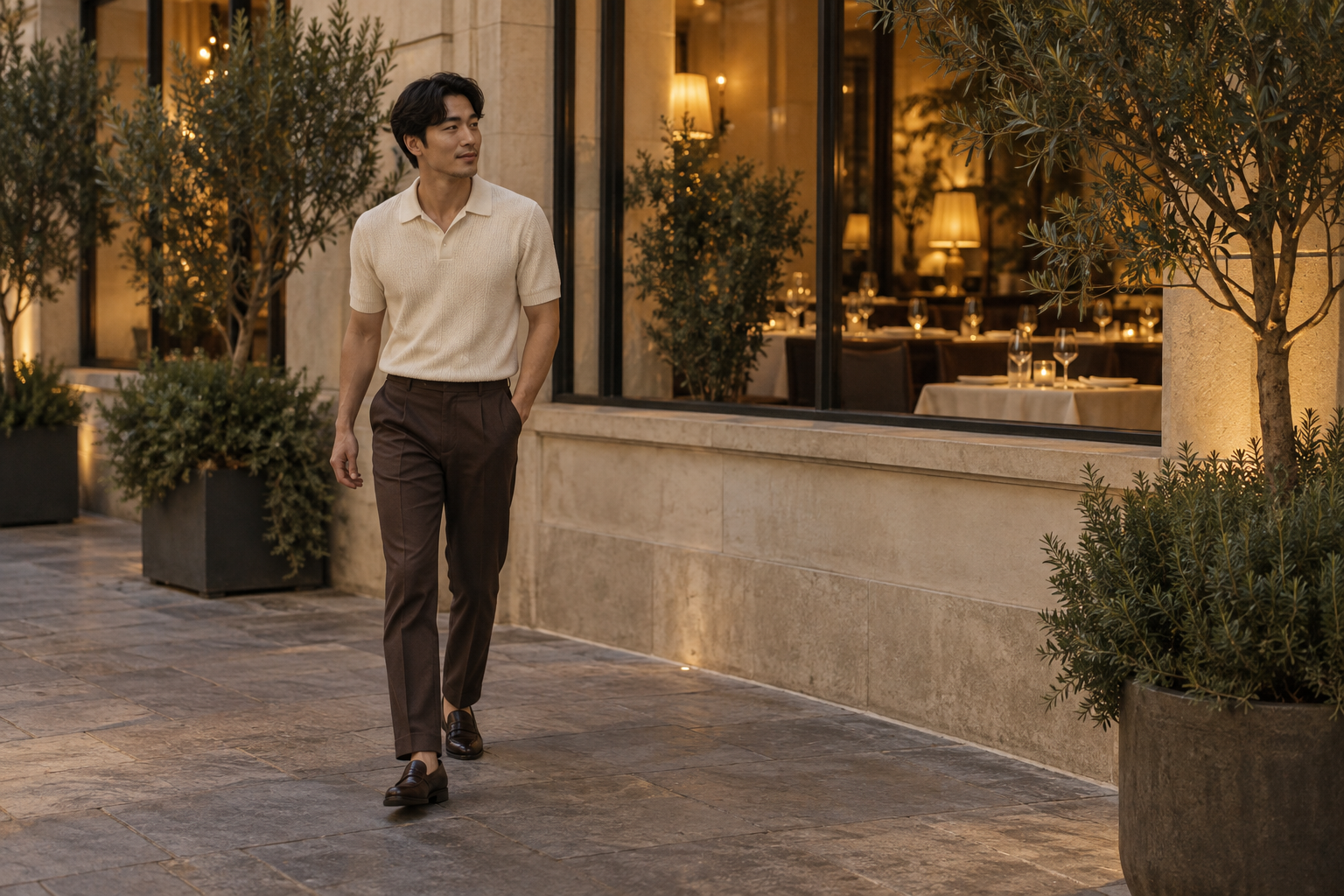
A classic khaki trench belted over a fine merino rollneck, dark straight jeans and black Chelsea boots. The rollneck fills the neckline so the belted front reads as a considered silhouette rather than a coat thrown shut, and swapping trousers for clean dark jeans plus polished boots is what tips the whole thing from office into dinner without changing the coat.
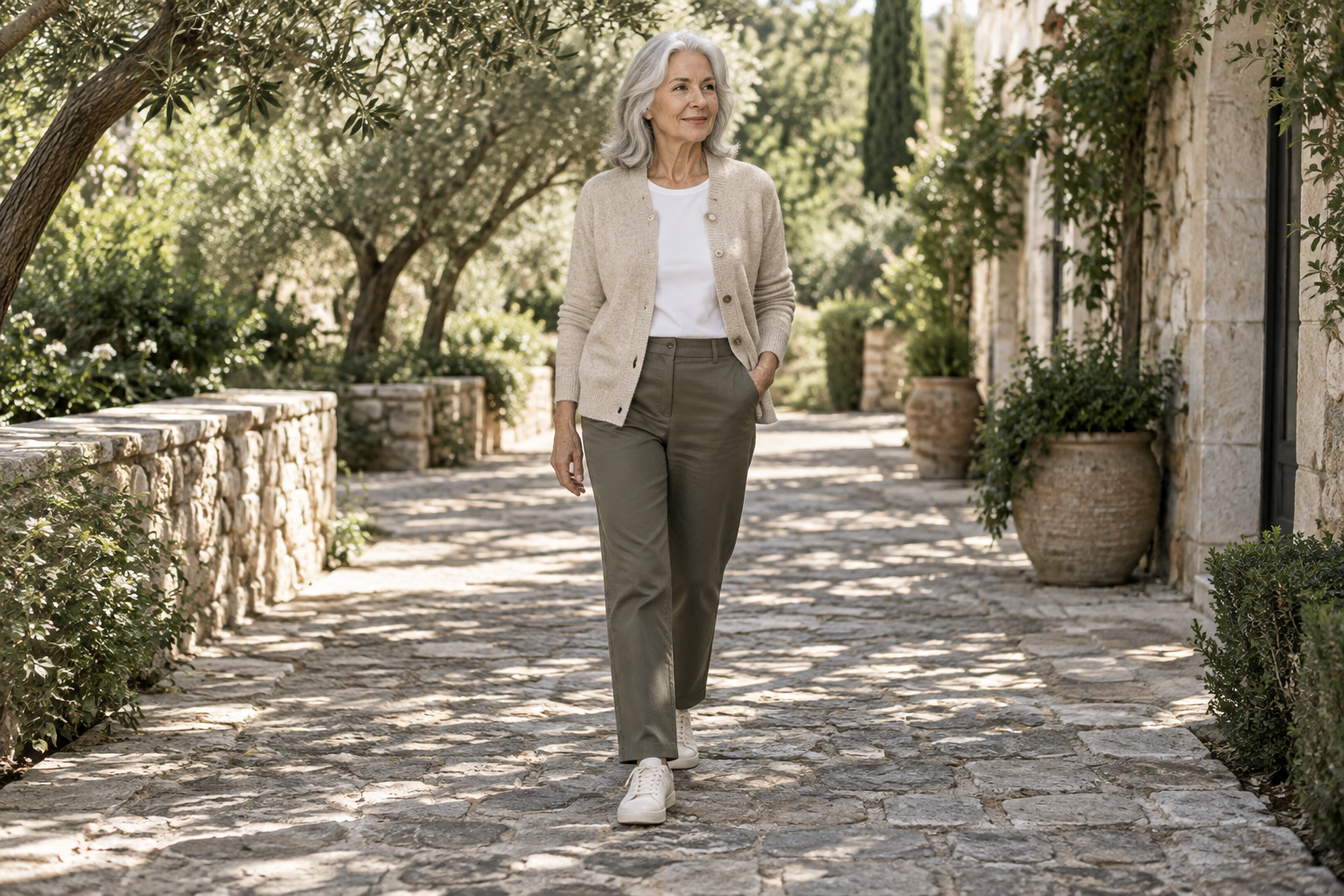
The same khaki trench worn fully open and unbelted over a grey marl crewneck, mid-blue straight jeans and white leather sneakers. Open, the coat frames the outfit instead of shaping it — the vertical lines of the front panels lengthen the body — and the relaxed knit and denim beneath are what stop the trench from over-formalising a simple weekend walk.
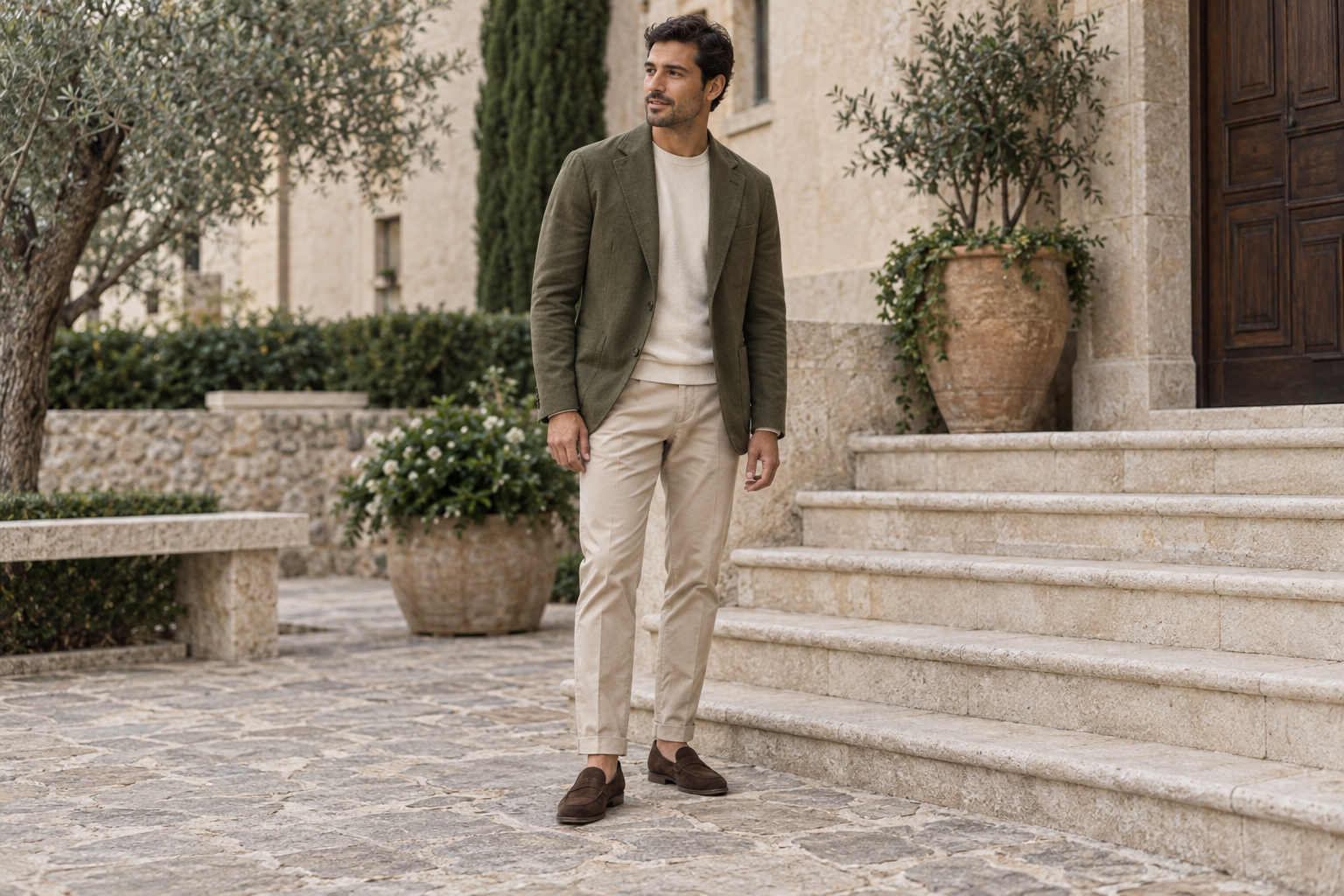
A slightly oversized stone trench worn open over a navy cotton hoodie, wide charcoal trousers and chunky suede trainers. This is the most modern reading: the drape of the oversized coat answers the volume in the trousers, and the hoodie underneath makes the trench deliberately casual — the whole outfit works because nothing in it is trying to be sharp.
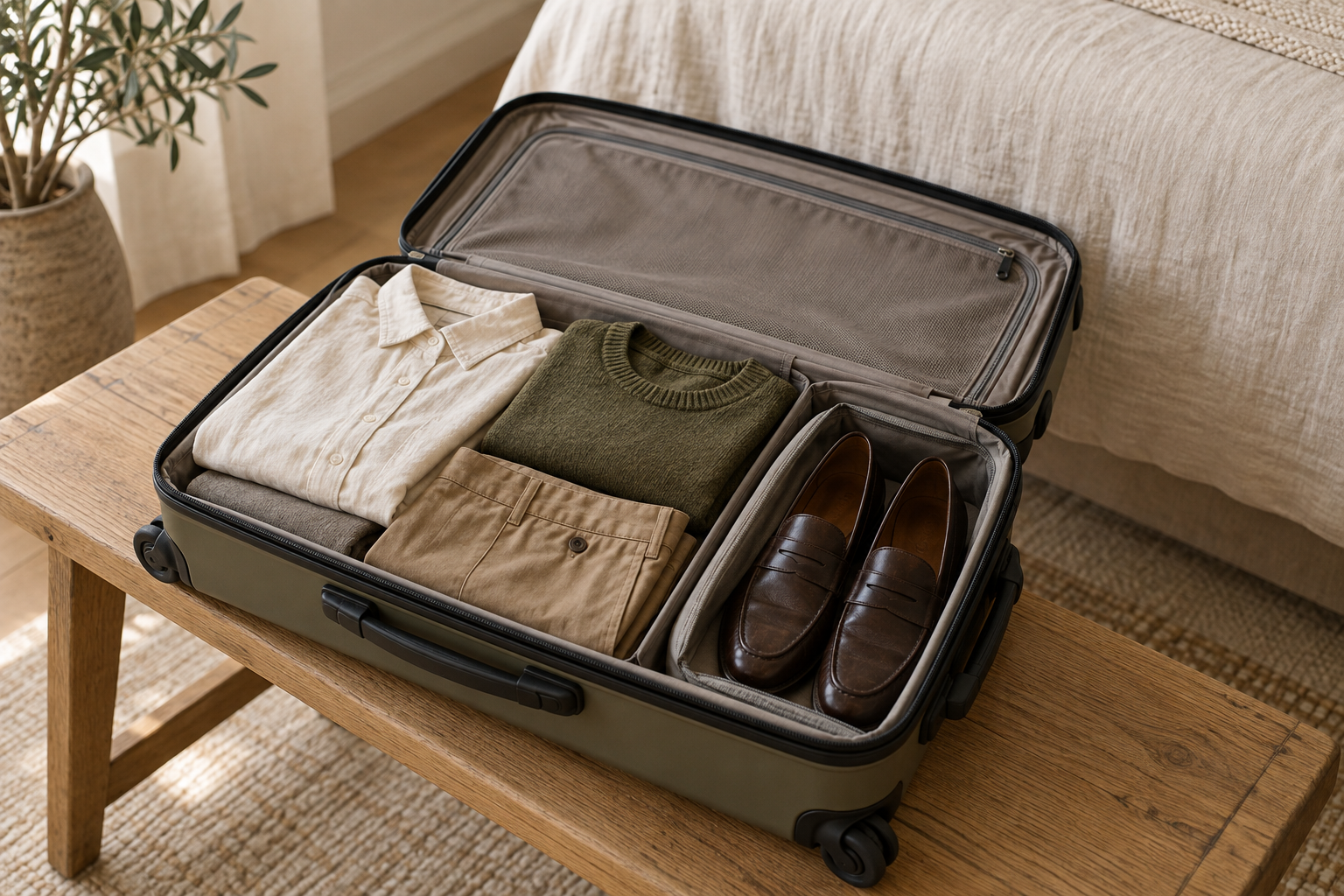
A cotton-blend trench with a hem that clears the knee, worn over a navy fine-gauge knit, dark slim trousers and leather derby boots — but only called rain-capable if the maker's specification states water resistance for this exact coat. The longer hem and a front that closes to the collar keep the outfit presentable through drizzle; without that stated protection, save the combination for a dry day.
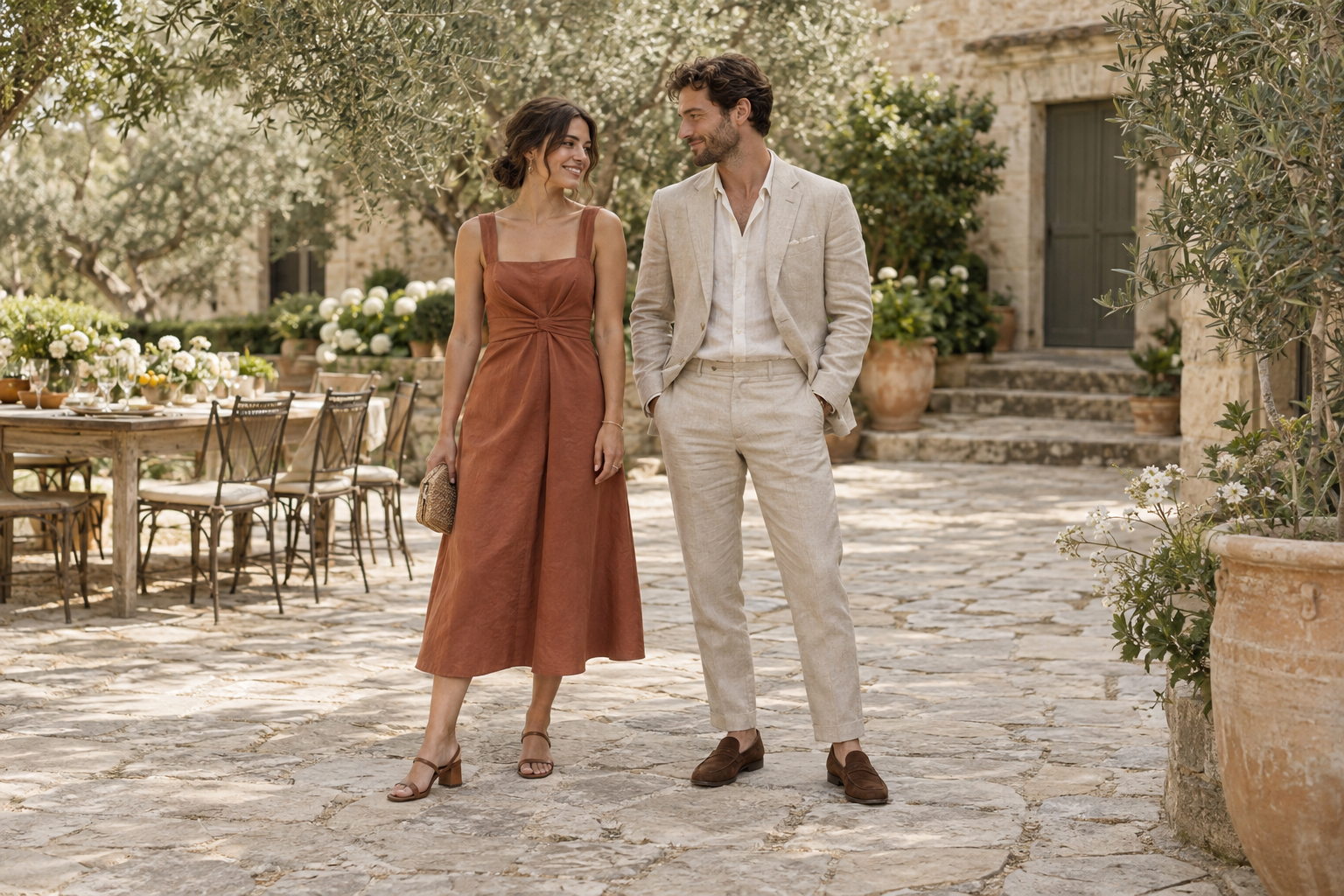
A pale olive trench buttoned to the collar over a pale blue oxford shirt, stone chinos and dark brown suede loafers — the loafers spared from the ground by a dry day regardless. A quiet colour and a closed front let the coat do light wet-weather work, but only where the care label or product page states a water-resistant finish; the silhouette alone guarantees nothing.
Jackets & Blazers
Matching trousers, fabric and construction are the useful tells. Compare blazers, sport coats and suit jackets — and learn which works with odd trousers.
Jackets & Blazers
A fitting method for coats worn over tailoring: shoulder and sleeve room, length, fabric weight, and the movement test done with the blazer on, not off.
Jackets & Blazers
How to wear a blazer casually: knit, shirt and relaxed-layer combinations built around complete outfits, with the swaps and checks that make each one work.