Errands run longer than planned
A foldable layer tolerates hours in a tote; a structured blazer does not. Re-roll sleeves cleanly at the sink rather than mid-task and the outfit holds.
Occasion guide
An errands-to-friends day needs one outfit that does both jobs: shoes and fabrics that cope with the tasks, and a removable layer that upgrades the look in the five minutes before you arrive.
Begin hereOccasion advice
For errands followed by meeting friends, choose clothes that suit both the practical tasks and the place you are meeting. Keep comfortable shoes and add a removable layer if it helps. You may not need to change anything; the useful goal is an outfit you can carry on wearing.
The right outfit depends on what the errands physically involve and where the meetup actually is. A pharmacy stop and a farmers market ask different things of your clothes, and a cafe bench asks something else again.
Before you dress, answer four quick questions:
Each combination below is a complete outfit, not a mood board. Pick the row that matches your day rather than assembling pieces from different rows.
| Combination | Why it copes with errands | Why it passes at the meetup | What carries your shopping |
|---|---|---|---|
| Oatmeal cardigan, dark jeans, brown loafers (pictured below) | The cardigan moves with you and the jeans and loafers survive walking, lifting and crouching | Dark denim with a knit and leather shoes reads as a considered cafe outfit | An olive tote — its real capacity depends on the bag you own, so check it holds a fold-flat layer |
| Light-blue Oxford shirt, charcoal chinos, dark chore jacket | Cotton shirt rolls its sleeves for work; chinos take car seats and counters without creasing badly | The chore jacket comes off at the door and the shirt stands on its own | A canvas tote during errands that still reads as an intentional bag |
| Fine merino crew neck, dark chinos, wool overcoat | The coat does the outdoor work and a knit shrugs off car seats and carrying | The coat comes off indoors to reveal a knit that looks deliberately smart | Coat pockets plus a slim cross-body for wallet, keys and phone |
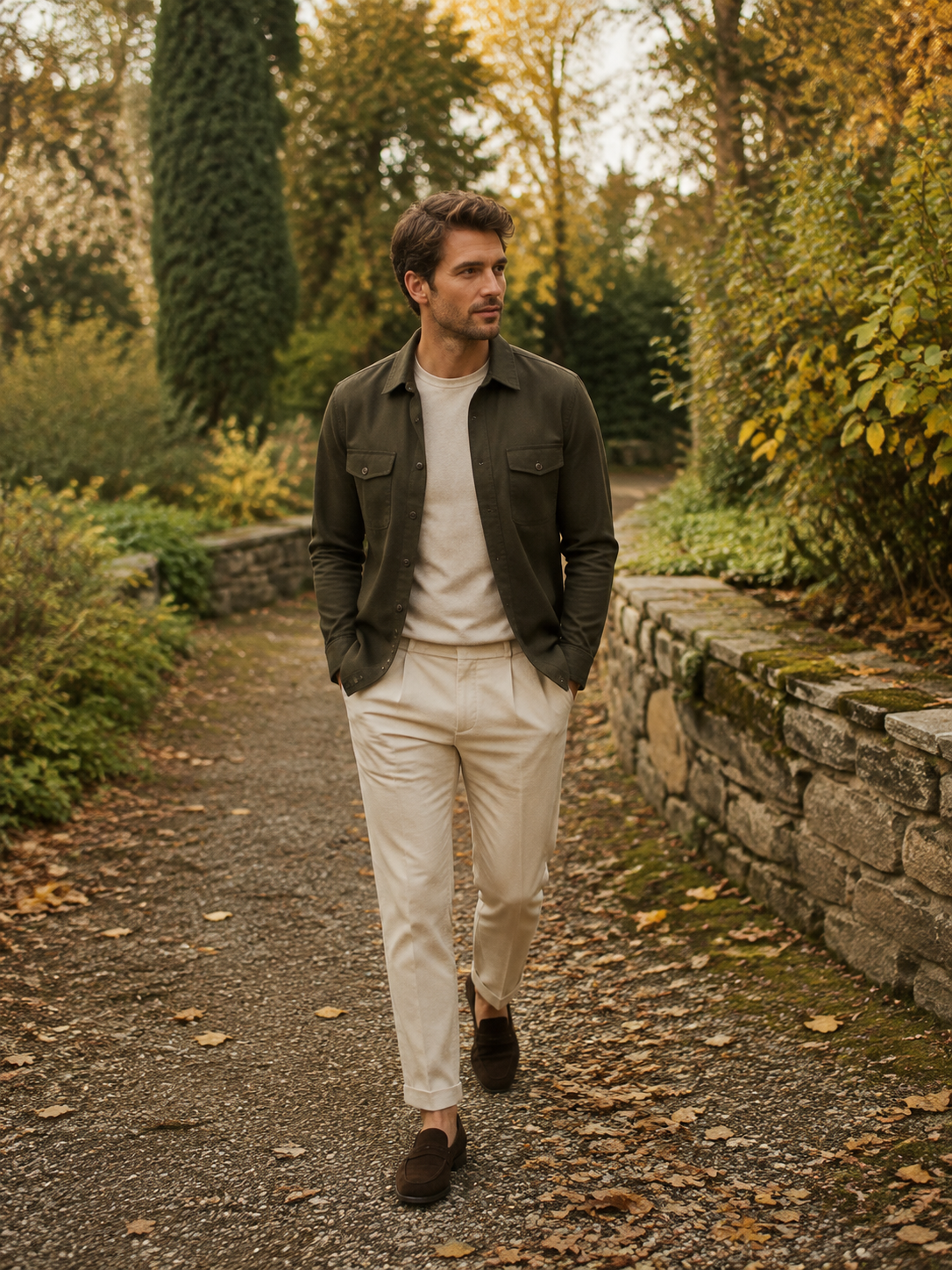
The illustration shows the first combination: an oatmeal cardigan over dark jeans with brown loafers and an olive tote, in a cafe courtyard. It is the easiest of the three to wear all day because nothing in it needs protecting from the errands.
An unlined overshirt, a fine cardigan or a merino knit emerges from a tote looking fine. A structured blazer creases and is the wrong tool for this job.
A cafe washroom or the car seat is enough. The layer goes on (or comes off) in one movement — that is the whole reason it was chosen.
Straighten the collar, re-roll the sleeves cleanly, run a comb through your hair. Small resets close most of the visible gap between the errands and the arrival.
Move keys, phone and receipts into one pocket or pouch so you are not rummaging a shopping bag at the table.
Errands demand careless clothes, so you must dress down first and change later to look presentable.
The errands themselves rarely damage clothes — sitting, walking and carrying do not require running shorts. Starting one level smarter than the errand strictly needs means there is nothing to fix later except a layer.
Most errand outfits fail on practicality, not style. Three checks catch the common failures before you leave.
Rain changes the shoes and the hem before anything else. If the day looks wet, swap to footwear with grip and a denser outer layer — our rainy weekend guide covers the full decisions.
At the sink, in the car, or outside the door:
Where to go next
Every weekend occasion guide in one place.
When the errands-then-friends day gets wet.
The daylight version of meeting friends.
BEFORE YOU CHOOSE

An oatmeal cardigan over dark jeans with brown loafers and an olive tote, as pictured above. Nothing in the combination needs protecting from the errands, and the knit-and-denim pairing reads as deliberate at a cafe or a bar. If the plan turns smarter than expected, the shirt-and-chinos row of the table carries you instead.
A foldable layer tolerates hours in a tote; a structured blazer does not. Re-roll sleeves cleanly at the sink rather than mid-task and the outfit holds.
If the setting is a restaurant rather than a cafe, the shirt-and-dark-trousers base already carries you — add the jacket and change nothing else. If in doubt, loafers swap over in a minute.
The upgrade becomes a lightweight unlined shirt worn open over a plain tee: off for errands, on for the meetup, no extra heat. Keep everything else plain and dark.
A tote or backpack that folds flat handles accumulating bags, and a cross-body keeps essentials off the counters. Decide which bag is the outfit bag before you leave.
Everyday & Weekend
What to wear to a smart casual brunch: read the venue first, choose an outfit that survives any plans afterwards, and run a seated-comfort check before you leave.
Everyday & Weekend
Smart casual weekend outfits built around what you will actually do: three complete activity-led looks, the function checks that keep them wearable, and the one-piece swaps that take them to dinner.
Everyday & Weekend
Plan a smart casual outfit around walking comfort: test shoes you already know, build the outfit around the route and the stops, and adjust at the first sign of discomfort.