Warm rain
Shorten the layers: a breathable shirt, unlined lightweight trousers, and the lightest shell you own. The shell lives in your bag between showers.
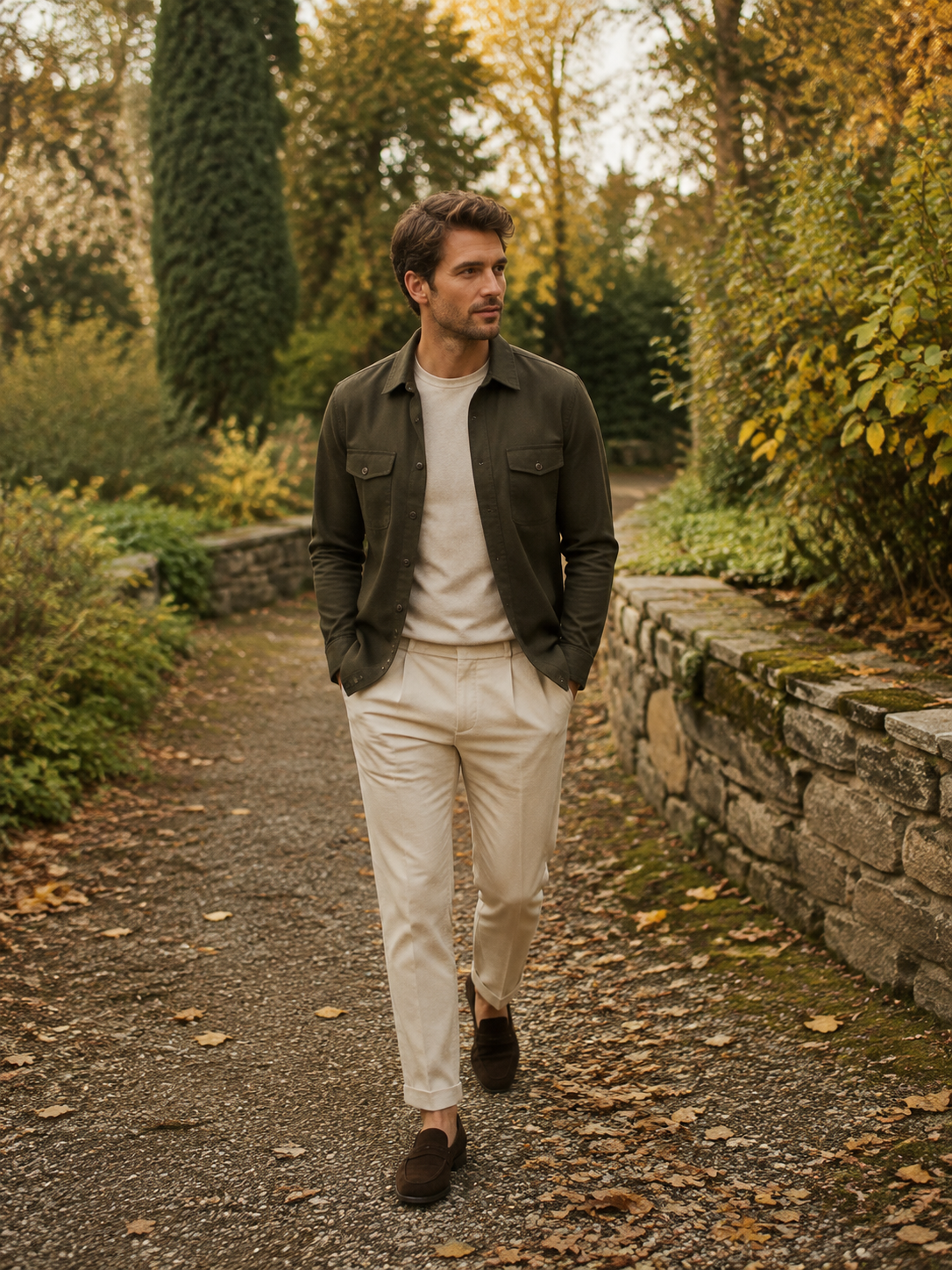
Occasion guide
Rain changes the plan before you leave the house. This guide covers reading the forecast, choosing footwear and hems that cope, carrying wet outerwear indoors, and drying everything according to the care label.
Begin hereOccasion advice
For a rainy smart casual weekend, plan the outer layer, shoes and trouser or skirt hem together. An umbrella does not protect against every splash or gust. Check the forecast and your garments' care guidance, then choose an outfit that still works when you remove the rain layer indoors.
A 40% chance of drizzle and a 40% chance of a windy downpour ask for different outfits. Before dressing, run through the shape of the day.
Check before you choose:
Manufacturers generally use water-resistant for fabrics that shed light rain for a while — typically tightly woven or coated faces — and waterproof for constructions that also seal or tape the seams. Neither word is a guarantee on its own.
The practical habit is to check the garment's own specification or care label rather than trusting either word on a hangtag, and to be honest about what a piece is for. A wool overcoat and a rain shell answer different questions.
Any jacket described as water-resistant will keep you dry through a full day of walking in real rain.
Water-resistant typically means the face fabric sheds light rain temporarily; sustained rain eventually wets through unless the construction — seams included — is built and rated for it. For a wet full day, check the maker's specification rather than the label word.
Both outfits below keep hems clear of the ground and put the grip in the footwear. The difference is how smart the indoor half needs to look.
| Piece | City-day wander | Dinner reservation |
|---|---|---|
| Footwear | Dark rubber-soled boots with visible tread; check the maker's guidance on wet exposure for the upper | Dark smooth-leather derby shoes; carry or wipe them rather than wearing them through puddles |
| Trousers | Charcoal mid-weight cotton, hemmed clear of the ground so it cannot wick from puddles | Wool blend, full length but not dragging |
| Base layer | Navy merino crew neck — mid-tones hide splash lines better than pale colours | Fine-gauge roll neck in a dark tone |
| Outer layer | A coated or tightly woven jacket; confirm on the label what the maker claims it resists | A darker overlayer you can leave at a cloakroom if there is one, or hang at the table |
| Carrying | A wipe-clean bag with socks packed in a separate pouch | A compact umbrella and a bag that stands up off the wet floor |
The illustration on this page shows the dry-weather base layer of the city-day outfit: an oatmeal cardigan and white top over olive trousers with cream sneakers, on a dry stone path. That base is what stays on indoors once the rain layer comes off.
Some cafés and restaurants have a rail, hooks or a cloakroom; ask rather than assuming either way. A wet jacket draped over a chair back is the fallback, not the plan.
Ten seconds of shaking at the door keeps most of the water outside where it belongs.
If the jacket must go in your bag, fold the damp face inward so it dries against itself and your other belongings stay dry.
Hang the layer, don't leave it balled in the bag between stops — trapped damp is what turns into smell and mould.
There is no universal heat treatment for wet clothes. The garment's care label and the maker's instructions are the reference; the steps below are the ordinary starting point for most weekend pieces.
Sometimes the honest answer is that the planned outfit is not built for what is falling from the sky. Switch to a genuinely technical shell with a hood, footwear whose maker states it handles wet conditions, and trousers you accept might get wet — then resume the smart casual outfit when the worst has passed.
Fighting the weather with fashion outerwear usually fails in both directions: the coat gets soaked and the look inside suffers anyway. Better to look underdressed for an hour in the right gear and arrive dry.
Where to go next
Every weekend occasion guide in one place.
The dry-weather foundations this page builds on.
When the indoor stop of a rainy day is a long one.
BEFORE YOU CHOOSE
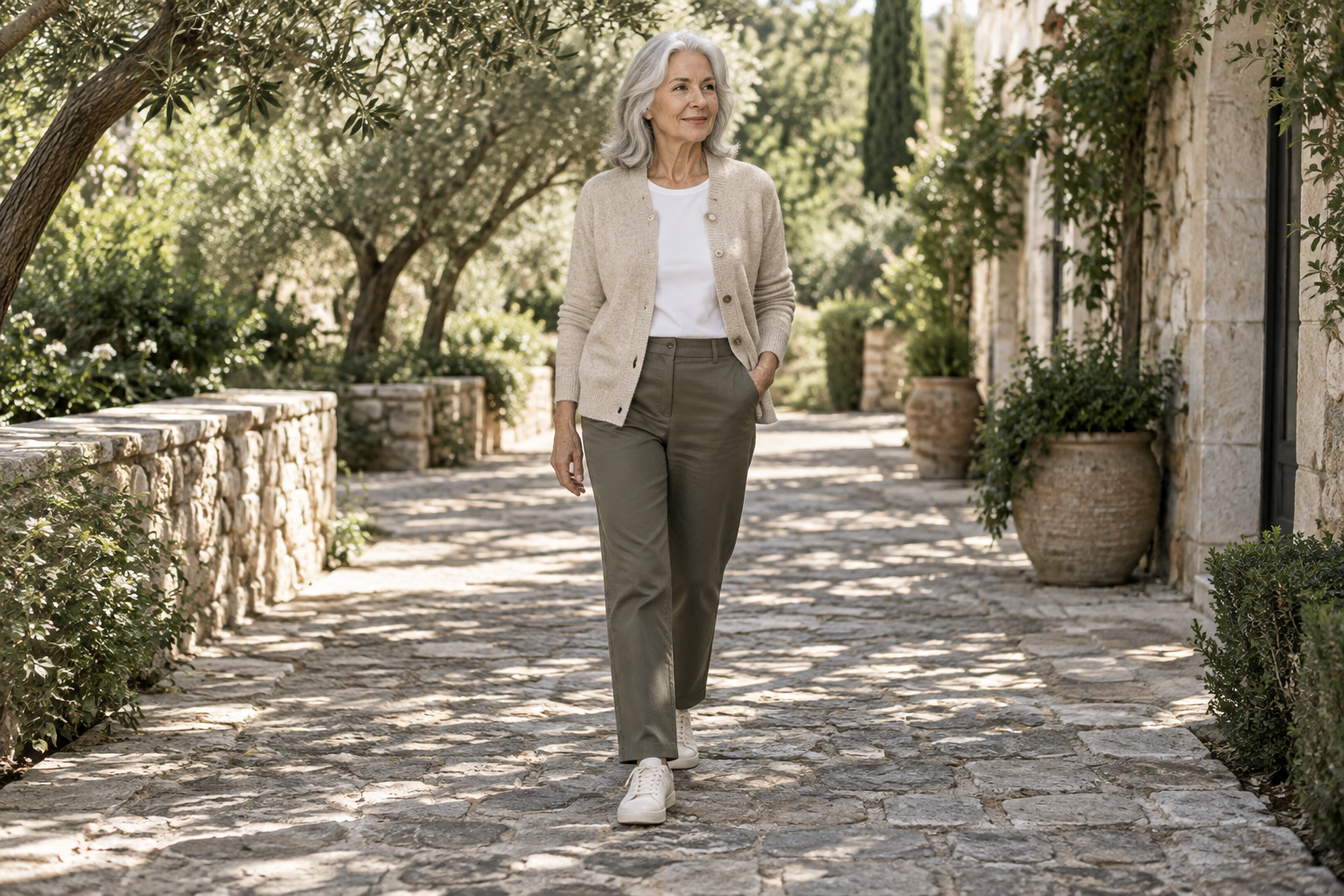
The pictured outfit — oatmeal cardigan, white top, olive trousers, cream sneakers — is the base that stays on indoors once the rain layer comes off. It is shown in dry conditions on purpose: this image is not a rain test, and whether the sneakers tolerate damp is a question for their maker's guidance, not this photo. The coated or tightly woven jacket from the table goes over it outdoors.
Shorten the layers: a breathable shirt, unlined lightweight trousers, and the lightest shell you own. The shell lives in your bag between showers.
Add a dense wool knit under the outer layer and keep trousers full-length. A wool or synthetic beanie handles damp better than felt or straw.
Build the outfit so it works with the jacket off — a considered shirt-and-knit pairing means you are not underdressed the moment the rain pauses.
Pack spare socks and a folded light layer in a wipe-clean bag. Changing socks mid-afternoon does more for comfort than any other single move.
Everyday & Weekend
Smart casual weekend outfits built around what you will actually do: three complete activity-led looks, the function checks that keep them wearable, and the one-piece swaps that take them to dinner.
Everyday & Weekend
What to wear to a smart casual brunch: read the venue first, choose an outfit that survives any plans afterwards, and run a seated-comfort check before you leave.
Everyday & Weekend
Plan a smart casual outfit around walking comfort: test shoes you already know, build the outfit around the route and the stops, and adjust at the first sign of discomfort.