The useful question about the Uniqlo and JW Anderson Oxford shirt is not whether the collaboration name makes it essential, but how its actual cut fits your wardrobe. Compare the garment measurements with a shirt you already wear — especially the length if you plan to tuck it in. And check the relevant regional UNIQLO listing before relying on launch details or availability.
01 / THE DEVELOPMENT
The idea in focus.
02 / OUR INTERPRETATION
What it means in practice.
The story is less about novelty than about confirmation: a mass-market collaboration still bets its headline piece on the Oxford shirt, which says the staple has outlived every cycle that predicted its retirement. The useful takeaway is that staples come in cuts, not categories. A traditional-length Oxford and a cropped boxy one answer different questions, and owning one of each covers more of a year than owning two of either.
When a collaboration re-cuts a staple, what you are really buying is one new decision about where the hem ends — make that decision with a tape measure, not the campaign imagery.
What launched, and what the coverage flagged
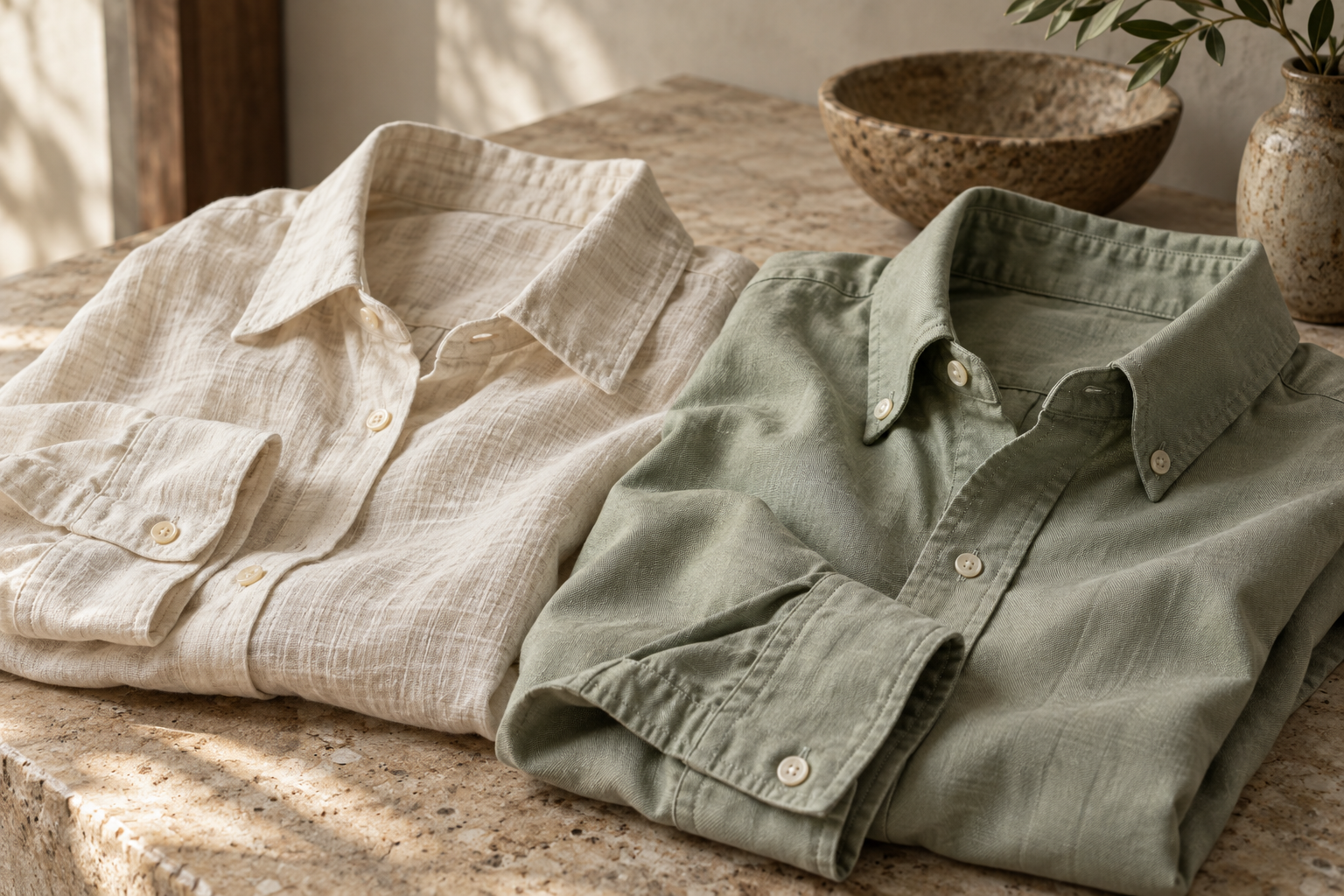
The SS26 collection, themed around British watersports and collegiate prep, was reported as reaching the UNIQLO website on 26 February 2026 with about 31 items. Hypebae's campaign coverage reported that the fan-favourite Oxford Shirt and straight jeans returned with new patterns and colourways, quoting Jonathan Anderson on adding a new interpretation to traditional British prep with spring-summer lightness. Hypebeast's release coverage called out the standout version: a cropped, boxy Oxford shirt in six colours including soft yellow and pink, with the collaboration's small logo embroidery at the front hem.
Separate the weave from the silhouette
An Oxford shirt is defined by its basketweave fabric, not by any hem length. The traditional version is cut long so it stays tucked through a workday, which is why it has anchored smart casual dressing for decades. The cropped, boxy version keeps the weave but inverts that logic: it is designed to be worn untucked, ending at the hip, with the flat hem and side seams doing the neatening that a tuck used to do.
| Aspect | Traditional-length Oxford | Reported cropped, boxy cut |
|---|---|---|
| Fabric | Oxford basketweave | Same weave family — the fabric is not the change |
| Hem | Long, curved; made to stay tucked | Straight, ending at the hip; made to sit untucked |
| Body | Trim through the waist | Boxier; more room over a tee or under a knit |
| Best worn | Tucked into trousers or under a blazer | Untucked, over a tee or open under a knit |
| Weak spot | Can billow when untucked | Too short to hold a tuck through movement |
A new collaboration version means the classic Oxford shirt has been reinvented.
The weave is unchanged. What the collaboration re-cuts is the silhouette — the hem length and body shape — which changes how you wear the shirt, not what it is made of.
Compare the documented dimensions with a shirt you own
The most reliable check costs nothing: measure the shirts you already wear and compare them with the product page's size chart. Lay your favourite untucked shirt flat and note the back length, chest width and shoulder width. Then read the collaboration's listed measurements for the same size and see where the cropped cut actually ends on a body like yours.
Measure a shirt you wear
Lay it flat and record back length from the shoulder seam, chest width across the body, and sleeve length. Two minutes with a tape measure beats guessing a size.
Read the size chart, not the photos
Campaign photos are styled and cropped for effect. The garment measurements on the regional product page are the only numbers that transfer to your wardrobe.
Check length against your tuck plan
If you intend to tuck the shirt, add the hem-to-fly allowance you need when seated. A cropped hem that ends at the hip will not survive a workday of sitting and reaching.
Compare prices against a plain Oxford
Price the collaboration against an ordinary Oxford from the same shelf. If the embroidery and colour are the difference, be honest that the colour is the point.
Work through tucked, untucked and movement before deciding
Decide how the shirt will actually be worn, because the cropped cut removes the traditional Oxford's main fallback. Untucked over a straight trouser it reads intentional; over a wide trouser it can shorten the whole line. Tucked into tailored trousers it starts at a disadvantage — there simply is not enough length to stay down through a day of sitting, bending and reaching.
The cropped cut suits
- Worn untucked over a straight or slim leg
- Layering open over a tee, or under a knit or chore jacket
- Warmer months when a lighter, shorter shirt is comfortable
It strains against
- Tucking into tailored trousers or under a blazer worn closed
- Wide, high-rise trousers that shorten further with a high hem
- Settings that expect a shirt to stay tucked through movement
If you can try the shirt in store, sit, bend and raise your arms before judging it. A hem that looks right standing often rides up at the hip the moment you move. Note what happens at the back hem especially, because that is where a short shirt gives itself away.
Return, care and the keep-your-current-shirt option
Collaboration hype and wardrobe value are different tests, so settle the practical questions before the design persuades you. Check the return window and whether sale or collaboration items are excluded from it. Check the care label too — the collection is built around lightweight layering pieces, and a light Oxford wrinkles and shows through sooner than a midweight one.
Before a collaboration shirt earns its place:
- Confirm the return terms for collaboration items in your region before ordering.
- Read the care label: lightweight Oxfords layer well but crease and show through faster than midweight versions.
- Test the boxy body over your usual trousers — it flatters a straight or slim leg and can look truncated over wide ones.
- If you choose soft yellow or pink, plan the outfit around it; pale colours pair most easily with navy, grey and neutral layers.
- Ask honestly whether a plain Oxford you already own answers the same question — the strongest option is often keeping your current shirt.
Go deeper on the fundamentals
- Oxford vs Poplin Shirts: Fabric Differences Explained ↗
What the weave itself contributes — separate from any collaboration cut.
- How an Untucked Shirt Should Fit ↗
The length and hem checks that apply to any shirt worn out, cropped or not.
FROM THE STORY TO YOUR WARDROBE