Skip to content

Find your next good read.

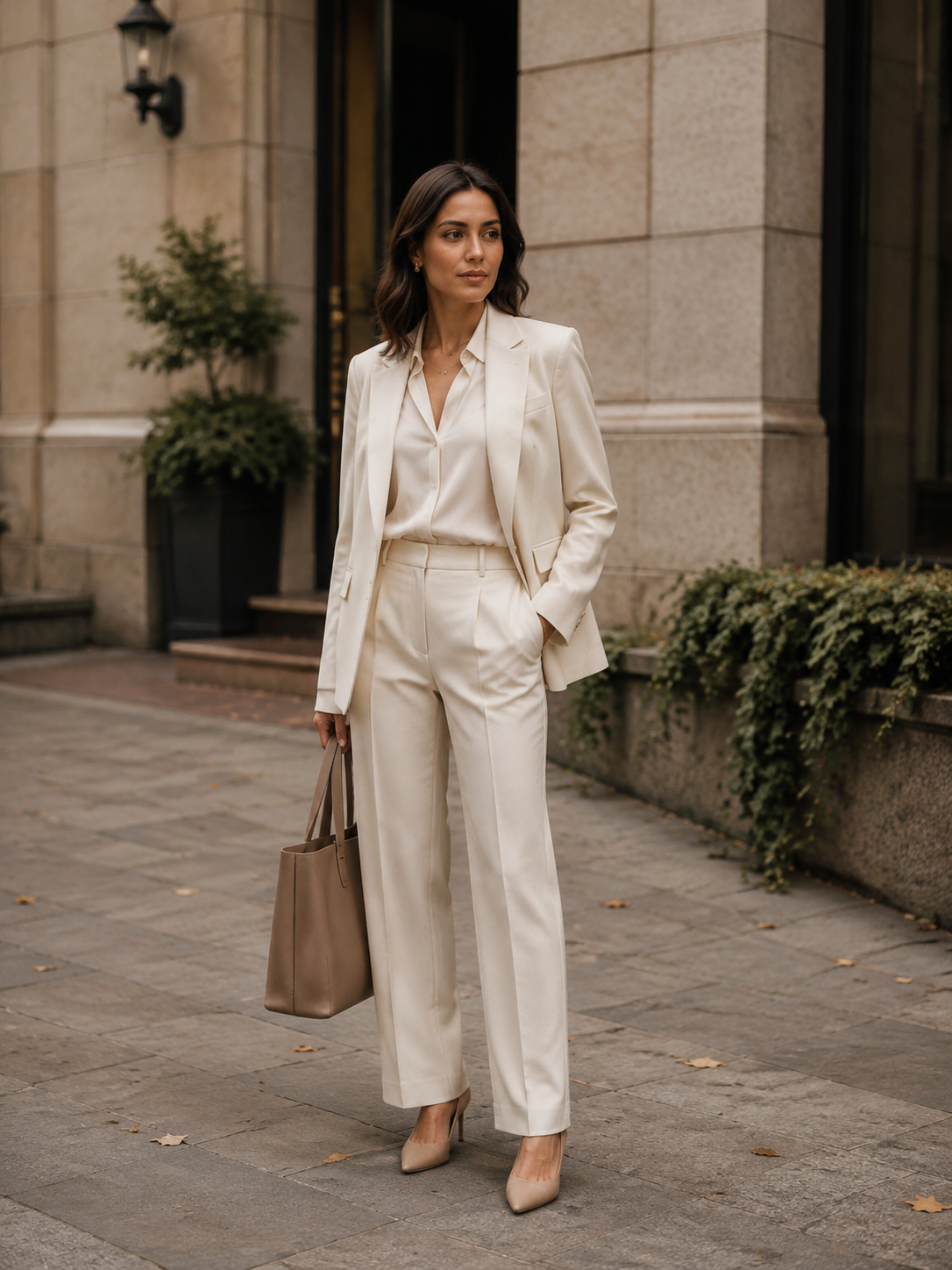
Cream tailored suit with relaxed trousers and a canvas tote

Occasion guide

Smart Casual Networking Outfits That Work Standing Up

Networking events blur office and social dress. How to read the invitation and the venue, build an outfit that survives hours of standing with a name tag on it, and adjust for bars, offices and straight-from-work timings.

Begin here

Occasion advice

Smart casual networking outfits that work standing up

For a smart casual networking event, check the invitation and choose clothes that feel comfortable while standing and talking. A shirt or knit with trousers is one starting point; a dress with flats is another. Keep your bag manageable and confirm any separate venue rules before relying on jeans or trainers.

Myth

A bar venue allows denim and an office tower does not — the architecture decides.

Fact

Venue type is a weak hint at best. A rooftop charity reception can ask for tailoring and a co-working space can run fully casual; the organiser's dress note and recent event photos are the evidence to check.

Passes the carrying test

  • A bag that closes and sits hands-free across the body
  • A badge spot on a sturdy placket, knit or lapel
  • Shoes you have stood in for two hours before
  • A coat plan confirmed with the venue or left at the office

Rethink before you leave

  • A delicate silk front that fights adhesive badges
  • A coat you will have to drape over your arm all night
  • A new pair of shoes straight from the box
  • Pockets so loaded they distort the silhouette

Do the pocket and handshake test before you leave

A two-minute pre-event check covers the parts that end evenings early.

  • Shoes worn standing for two hours before — not new tonight
  • A smooth, sturdy spot on the front of your top for the badge
  • Bag closes and sits hands-free with phone, cards and keys inside
  • One pocket test: can you get your phone out one-handed?
  • Coat plan confirmed — venue rack checked or a lighter layer worn

BEFORE YOU CHOOSE

Read the room. And the invitation.

  • The invitation is the brief. An organiser's dress note, the event page and photos from previous editions tell you more than the words smart casual ever will — confirm rather than assume.
  • You will stand, not sit. Networking is two to three hours on your feet, shifting weight and holding a glass at chest height, so shoe and waistband comfort decides whether you stay for the useful conversations.
  • The name-tag reality is unglamorous. Something will be stuck to your chest, often with weak adhesive, so a smooth, sturdy front panel — a shirt placket, a knit, a lapel — takes a badge far better than delicate silk.
  • Your hands will be full. Drink in one hand, bag and coat in play, so a closing crossbody bag that sits hands-free is worth more than extra accessories.
  • Timing changes how much you can adapt. Straight from the office means your daywear sets the tone; going home first gives you room to soften one piece.

A useful outfit formula.

  1. Top: a pressed shirt, fine-knit or dress with a sturdy front — the badge goes here, so skip delicate fabrics and busy prints across the chest.
  2. Bottoms: dark tailored trousers or chinos are a safe choice at almost any venue. Jeans and trainers only when the event's own guidance or recent photos show them.
  3. Layer: a blazer, structured knit or overshirt that reads deliberate on arrival and comes off if the room runs warm — choose one you are happy to carry.
  4. Shoes: leather shoes, loafers, boots, flats or smart sneakers you have already stood in for two hours. Polished but cushioned is the brief.
  5. Finishing: a belt that matches your shoes, a bag that closes, and a coat plan — check whether the venue has a rack rather than assuming one will be free.

Two starting points.

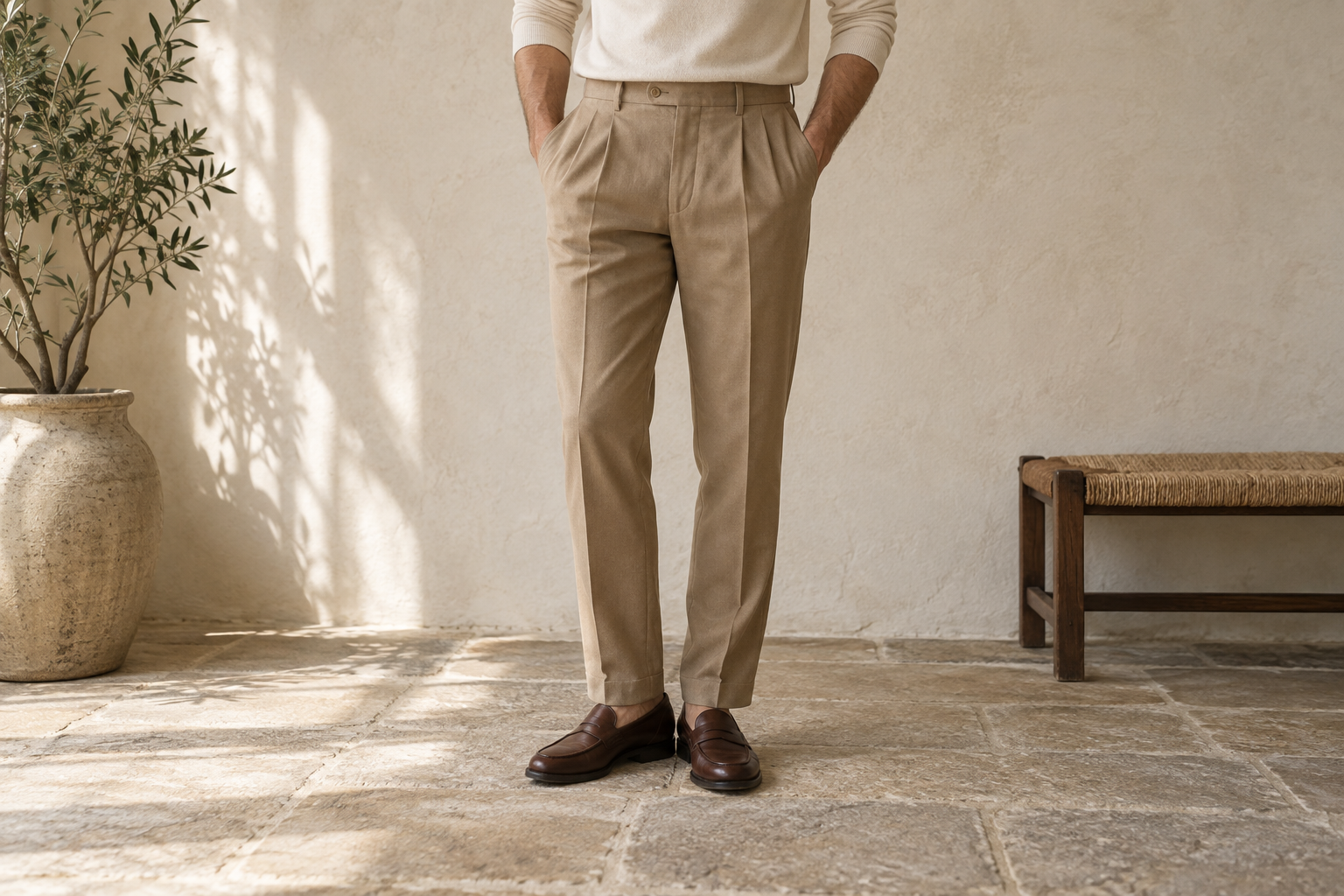
Tan pleated trousers worn with a cream knit top and brown loafers.

The jacket-optional starting point

Tan pleated trousers with a cream knit and brown loafers, as in this catalogue look. Add a blazer for a corporate room or wear it over your arm; either way the base reads complete.

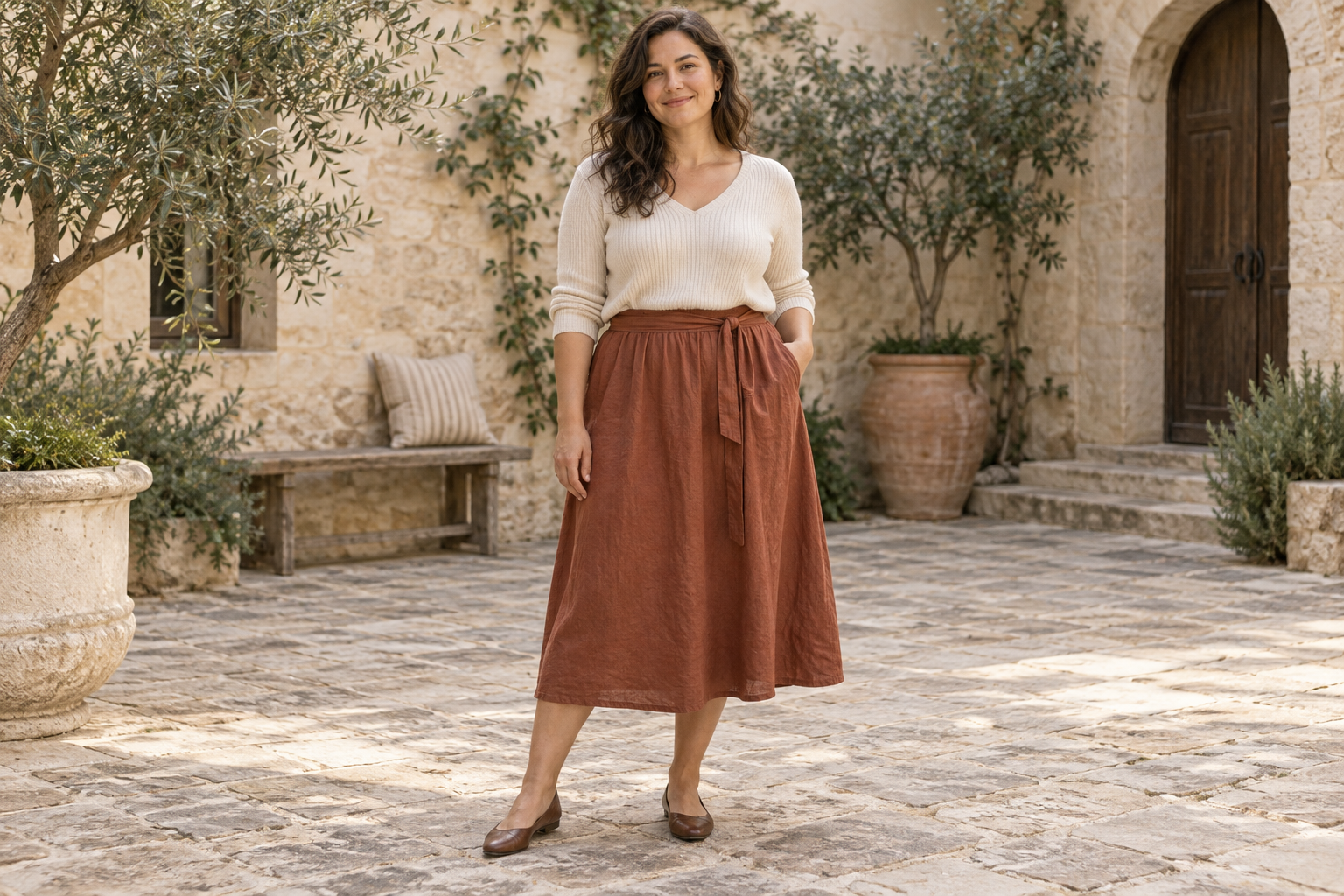
Woman in an ivory knit top, rust midi skirt and brown flats in a stone courtyard.

The skirt and dress route

An ivory knit with a rust midi skirt and brown flats — a shape that works standing, sitting on the odd stool, and holding a glass. Flats are a feature at a standing event, not a compromise.

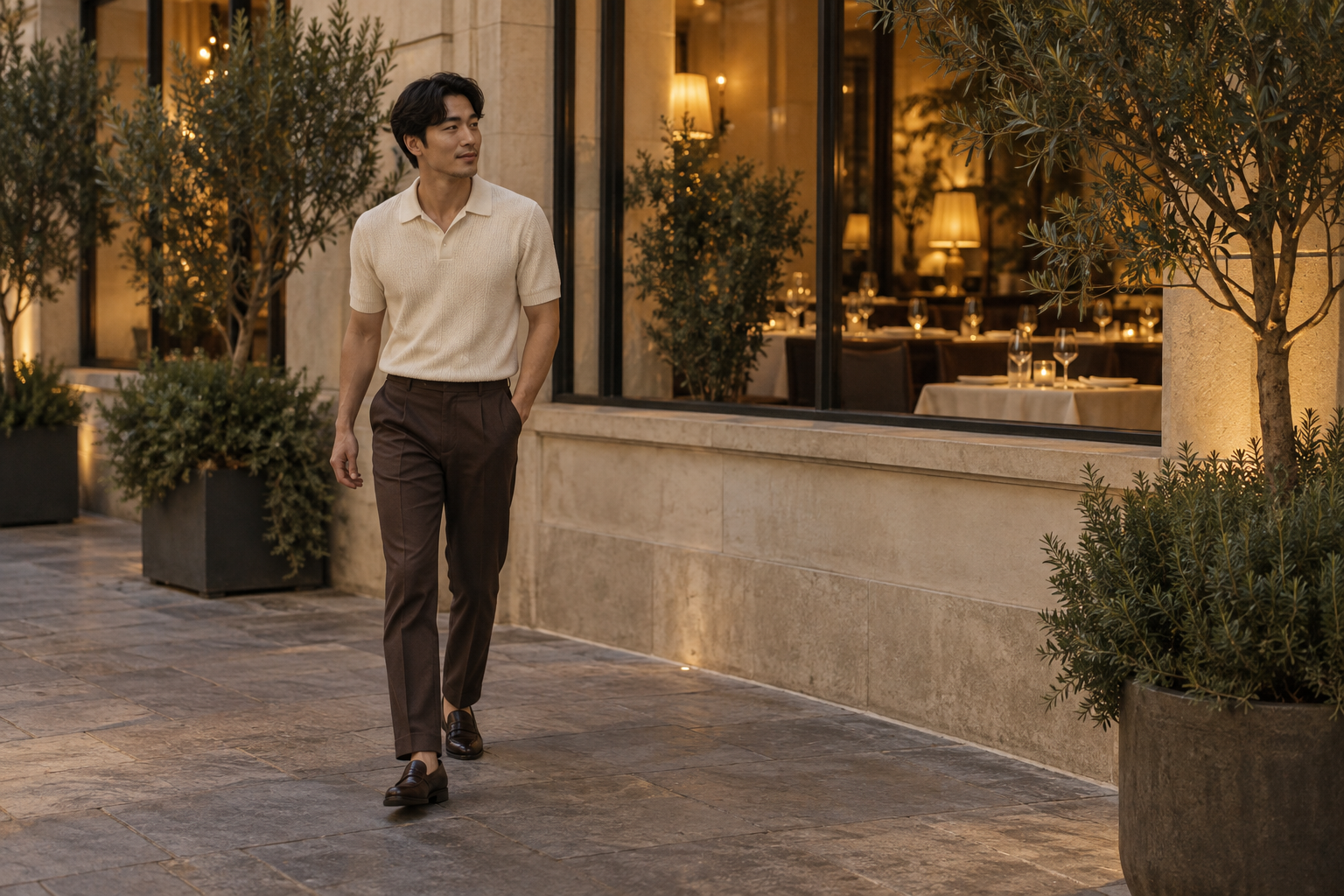
Man in a cream knit polo and dark brown trousers walks beside a warmly lit restaurant.

A smart evening version

A cream knit polo with dark brown trousers and leather shoes, shown here as an outfit illustration outside a restaurant rather than at an event. This register suits evening receptions that roll into dinner.

Adjust for the day.

Corporate and formal-leaning industries

At finance, law and consulting events, smart casual usually means removing the tie, not the structure — but check the organiser's note rather than assuming. Tailored trousers, a jacket and polished leather shoes are the safe floor.

Startup, tech and creative scenes

These rooms often run more casually, though it varies by organiser, so look at their past events before you commit. Dark, well-fitted trousers or jeans, a plain good knit and clean minimal sneakers land well when the photos show them.

Straight after work with no time to change

Build the day's outfit to convert with one swap: a shirt and knit that look intentional without the jacket, and shoes you would happily wear to a bar. Roll the sleeves, open the collar, and treat the blazer as your option.

Outdoor arrivals and warm interiors

Check the forecast for the walk between transport and the door, and let a removable layer handle the indoors — packed rooms often warm up within half an hour. A cotton or linen-blend shirt pressed that morning survives both better than a heavy knit.

Leave these assumptions behind.

  • Wearing a delicate or slippery top that fights the name tag all night — adhesive dots peel off silk and leave marks, and you will spend conversations re-sticking it instead of talking.
  • Choosing style over standing time. Beautiful shoes you have never worn for two hours straight will have you checking the exit before the room is even full.
  • Guessing the register from the venue type or industry instead of checking the invitation, the event page or photos from the last edition.
  • Arriving with no coat plan. A heavy coat you have to carry or guard all evening complicates every conversation — confirm the venue's rack or wear a lighter layer you can live with.

Keep exploring.