Costume Art offers a way to look at clothing alongside other images of the body. The useful wardrobe question is what a familiar garment communicates in a different setting or pairing. That is our interpretation of the exhibition, not a rule from its curator — and this page keeps the two apart while working through what the museum actually shows.
01 / THE DEVELOPMENT
The idea in focus.
02 / OUR INTERPRETATION
What it means in practice.
The exhibition's documented structure — juxtaposition instead of chronology — makes a quiet argument we find useful: meaning lives partly outside the garment. For anyone dressing smart casual, that is permission to stop asking only whether a piece is current and start asking what context it needs to read the way you intend. This is our reading of the show, not the curator's stated thesis, and it stops at the wardrobe door.
A garment on a timeline is a fact; a garment beside a painting is an argument. Your wardrobe works the same way — context is the exhibition you hang it in.
The garment taken off its timeline
Costume Art is documented as a show of garments from the Met collection hung beside the museum's paintings and sculpture, organised into thematic body types rather than a chronological march. The Met's own page and three outlets we checked agree on that much; the reading below is ours, not the curator's.
A conventional retrospective places a garment on a timeline: here is 1954, here is what came after. The documented structure of Costume Art does the opposite, and that is what makes it useful to a dresser. Hung beside a painting, a structured jacket stops being a point in the history of tailoring and becomes an image of the shoulders a period wanted.
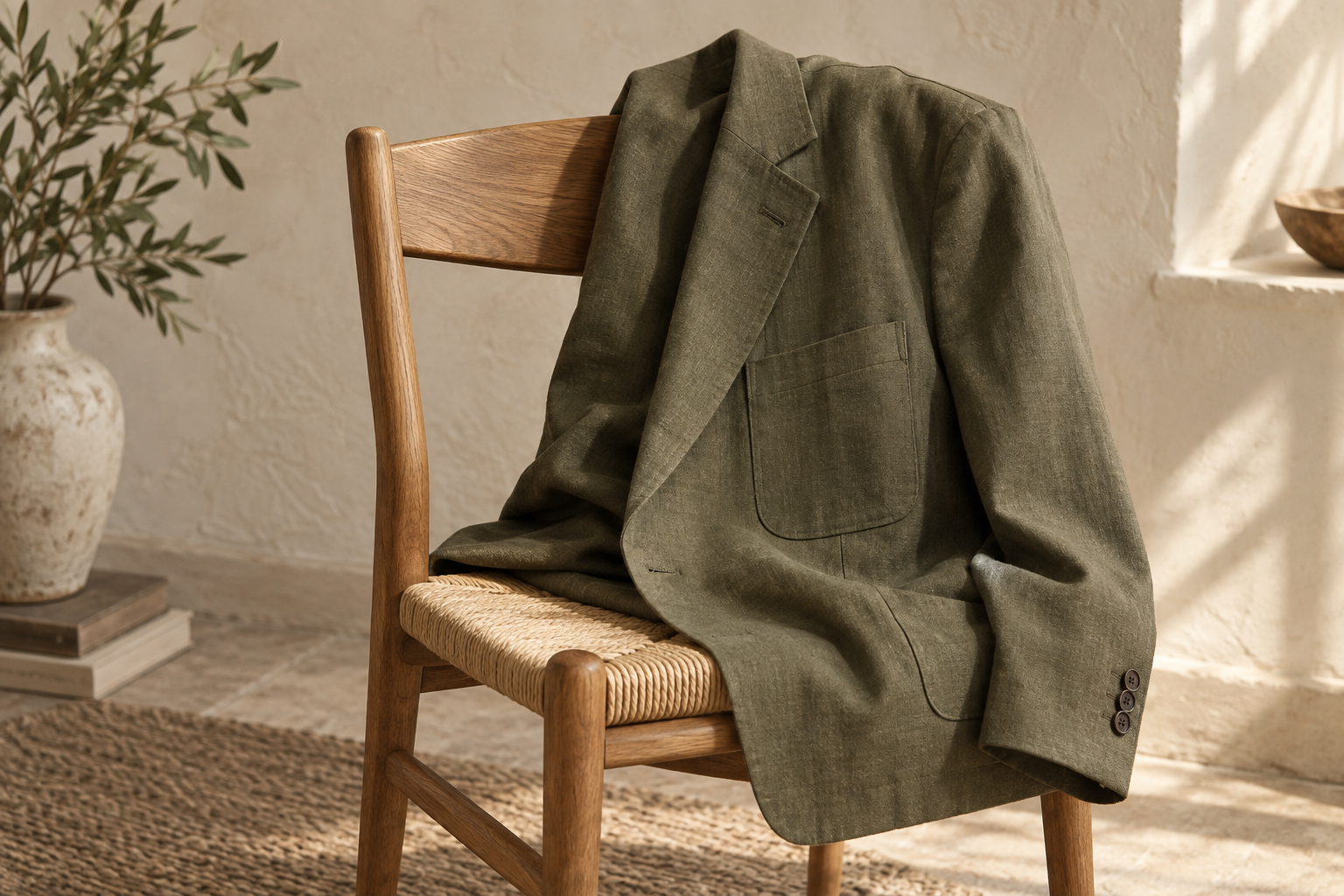
The practical transfer is that context, not the garment, decides the read. The same blazer reads as authority in an office, as costume at a garden party and as a decision at the beach — nothing about the cloth changes, only the frame around it. The museum proves the principle with centuries of clothing; your wardrobe runs the same experiment weekly.
Two documented pairings, description and interpretation apart
The teaching value of the show lives in its pairings, so this page works only from pairings that are actually documented — one credited on the Met's own exhibition page, one reported across the coverage we checked. For each, the description comes first and the interpretation is labelled as ours.
A pairing the Met itself documents
Description: the Met's exhibition page credits a John Galliano autumn/winter 2020–21 Artisanal ensemble for Maison Margiela, shown beside Rafaelle Monti's marble sculpture The Veiled Woman (1854). Both objects appear on the museum's official page, so the pairing is documented by the institution itself.
Interpretation (ours): the pairing asks you to read the garment as an image of a veiled, draped body rather than as a fashion timeline entry. What transfers is the method — place a garment beside an unexpected neighbour and its deliberate choices (drape, concealment, moulded shape) become visible. We cannot know from the credit line what Bolton intended by it.
A pairing structure documented through coverage
Description: coverage by the New York Times and Artnet describes the show's organisation by body type rather than decade — opening with The Naked and Nude Body, and including a Reclaimed Body section featuring designers who push against classical ideals. The Guardian reported the same thematic structure.
Interpretation (ours): a corset read against the nude-body section shows itself as shaping technology rather than vintage curiosity; read against the reclaimed-body section, the same object becomes a site of resistance to an ideal. The garment never changed. The section it hangs in did — which is exactly the wardrobe experiment below.
| Claim | Status | What it supports |
|---|---|---|
| Garments paired with paintings and sculpture, organised by thematic body types | Documented on the Met's exhibition page | The reframing itself — juxtaposition over timeline |
| Galliano ensemble shown with Monti's The Veiled Woman | Credited on the Met's exhibition page | One concrete, institution-documented pairing to analyse |
| Nearly 400 objects; opened 10 May 2026; Naked/Nude and Reclaimed Body sections | Reported by the Guardian, NYT and Artnet; not independently re-verified | Scale, date and section names, always attributed to coverage |
| What the pairings teach a wardrobe | Our interpretation | This page's argument only — not curatorial intent |
One blazer, two pairings: run the museum's move
You can run the exhibition's juxtaposition on a single jacket you already own. Pair it two ways, name what changes, and you have the museum's whole method in miniature.
The blazer with jeans
- The shoulder and lapel read casual-first: the jacket becomes a rugged top layer
- The trouser's texture and bulk pull the eye downward and soften the jacket's line
- The combination signals ease and weekend intent, even when the jacket is formal
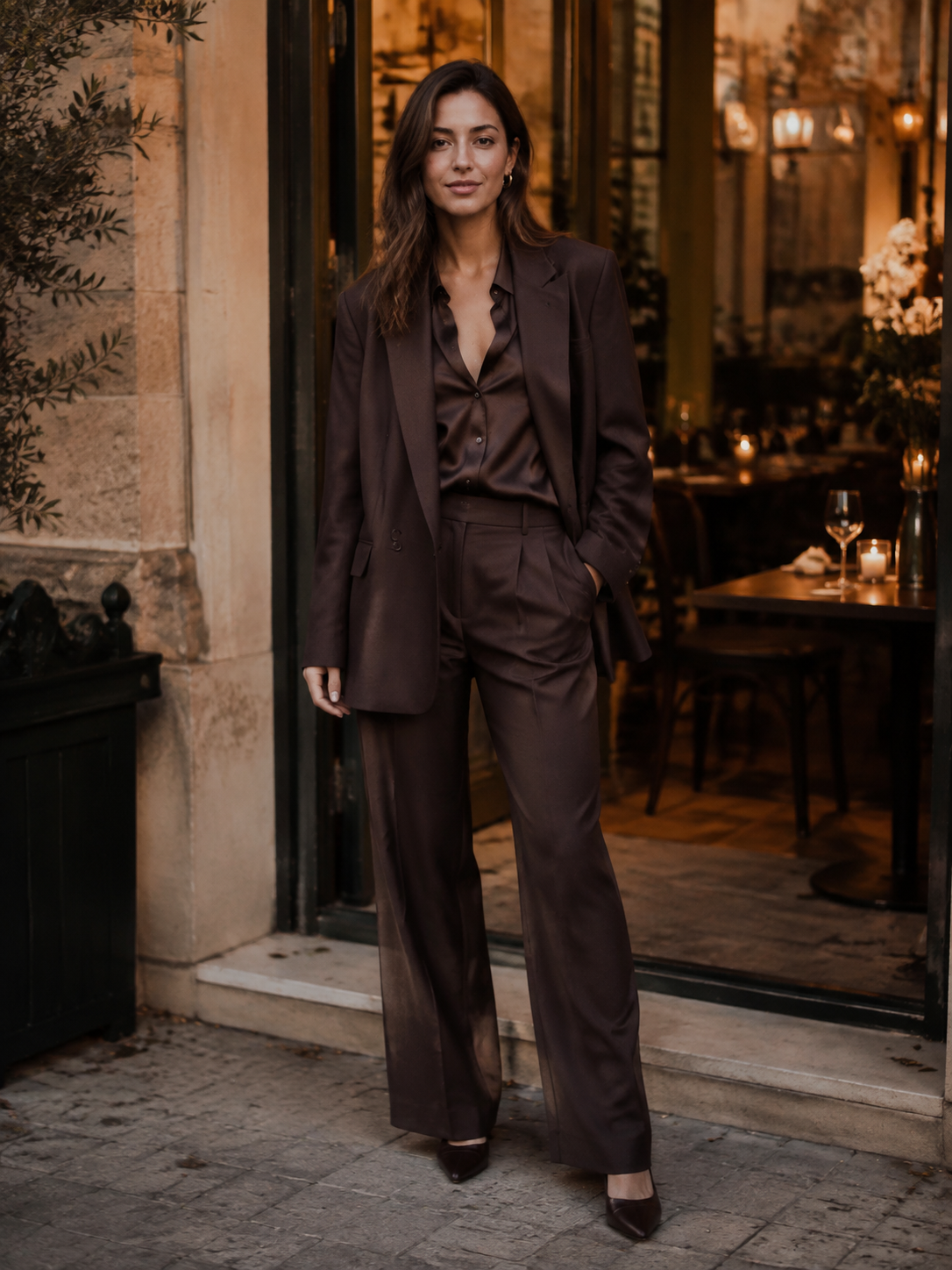
The blazer with matching-value trousers
- The same shoulder reads structured: the jacket becomes the outfit's authority
- A continuous line from waist down makes the jacket's tailoring the visible subject
- The combination signals deliberateness — closer to a suit's grammar than to denim's
Observable differences, named: the trouser fabric changes the jacket's apparent formality, the colour relationship decides whether the eye reads one line or two, and the shoes tip the final register. The jacket contributes the same cloth and cut in both pairings. Everything that changed — authority, occasion, intent — was contributed by the context you hung it in.
Before you diagnose the jacket itself
- Blazer vs Sport Coat vs Suit Jacket: How to Tell ↗
If the two-pairing test keeps failing, the garment's construction category — not its context — may be the issue.
A no-purchase exercise in five questions
The museum re-pairs objects it already owns; so can you, without buying anything. Take one familiar piece this week and answer five questions before you reach for a new one.
- Which garment am I about to give up on — and have I actually seen it beside at least two different pairings this month?
- If I hang it beside a different neighbour — different trouser, different shirt, different setting — what specifically changes: line, formality, or nothing?
- Which qualities live in the garment itself, and which were only habits of the context I always wear it in?
- Does the read I want come from the garment, or can the context supply it more cheaply?
- If two honest pairings both fail, is the problem the garment — or the third element (shoes, shirt, setting) neither pairing changed?
The exercise is diagnostic, not dogmatic. Sometimes the honest answer is that the garment was the problem and a purchase is justified; the point is to check the frame before convicting the object. That is the one move Costume Art makes at museum scale, and it costs you ten minutes.
Related, but a different story
- The Met Gala's Fashion Is Art Code, Revisited After the Carpet Cleared ↗
Our separate analysis of the gala side of the Costume Institute's season — the red carpet, not the gallery.
FROM THE STORY TO YOUR WARDROBE