Trousers & Pants
Chinos vs Dress Pants: Choosing Smart Casual Trousers
How chinos and dress pants differ in fabric, sheen, crease and care, and how to tell which one a given smart casual setting actually calls for.
Outfit inspiration
Black trousers drift toward formal when every other piece — fabric, top, shoes — plays along with the suit reading. Six looks that interrupt that reading with texture, knitwear and matte shoes.
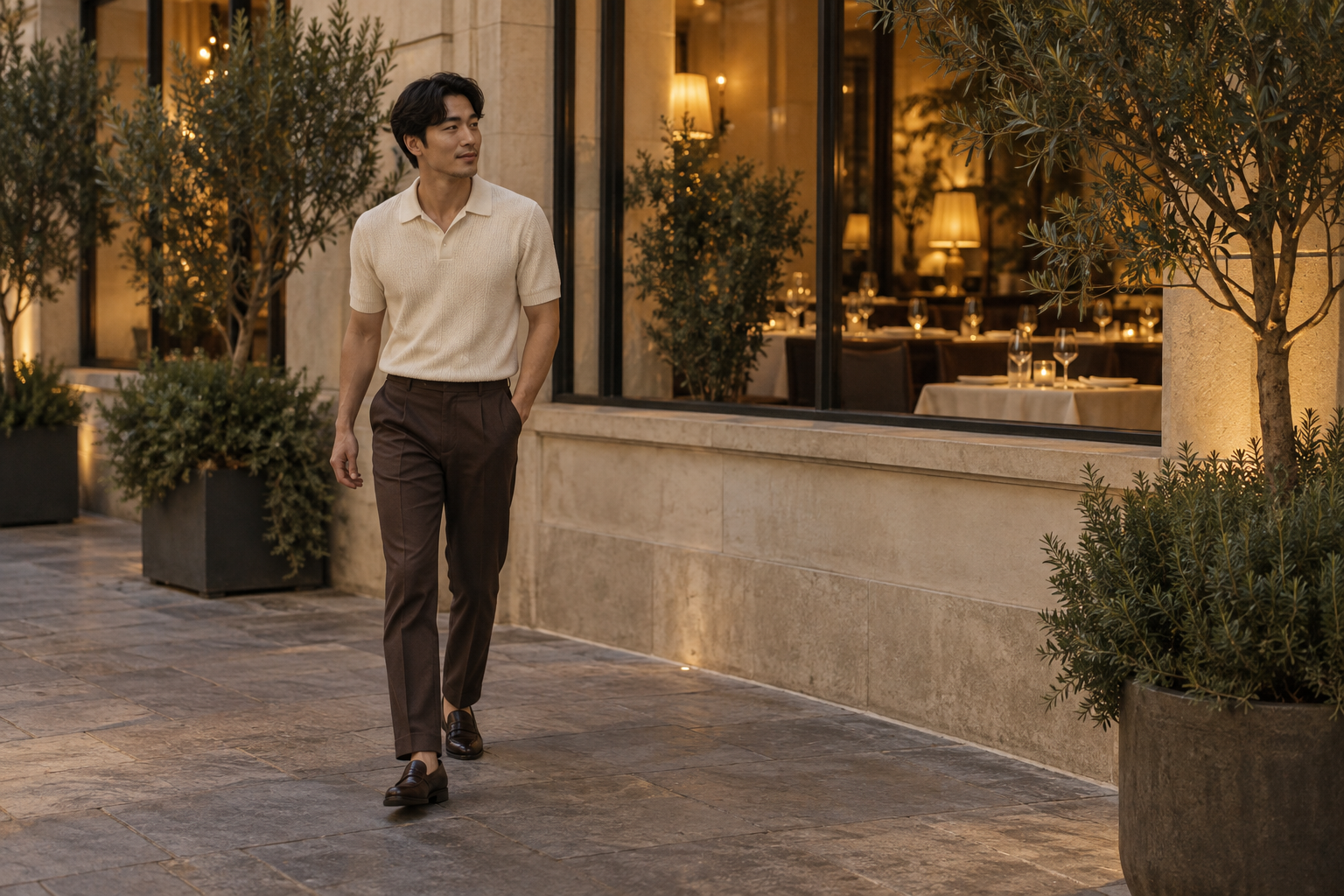
Begin hereGenerated illustration, not fit or fabric evidence: the trousers in this scene are dark brown, not black, so treat it as dinner-setting context only. The outfits below pair real black-trouser formulas with the same kind of setting.
Inspiration
To make black trousers feel more relaxed, try a knit, casual shirt or overshirt and compare the effect with your usual formal top. The trouser fabric and cut matter as much as the colour. Black cotton trousers with a grey knit and simple sneakers create a different result from matching suit trousers, a crisp shirt and polished shoes.
The first check is what your black trousers are actually made of, because that decides how much work the rest of the outfit has to do. A matching suit separate starts closest to formal; a textured or brushed cotton weave starts much further away.
| Trouser type | Where it starts | What the rest of the outfit must do |
|---|---|---|
| Matching suit separates | Closest to formal: the flat, slightly shiny suiting weave reads as half a suit | Top and shoes both need to be clearly casual — a knit and matte shoes, not a shirt and polish |
| Black cotton chinos or twill | Neutral: casual fabric, formal colour | One relaxed move is usually enough, such as a knit or white sneakers |
| Black denim | Already casual on fabric | Keep the top smart-casual so the outfit does not slide past the dress code in the other direction |
| Textured weave: hopsack, corduroy, flannel | Furthest from formal — the surface breaks the suit reading on sight | You can afford a crisper shirt above without tipping back toward office formality |
Black is inherently the most formal trouser colour, and black trousers carry funeral or eveningwear associations that decide the outfit no matter what you wear with them.
Colour is one signal among several, and it is not decisive on its own. What makes a black trouser read formal is the combination of a smooth suiting fabric, a tailored cut, a dress shirt and polished shoes — remove or replace any one of those and the outfit reads differently. Corduroy, denim and flannel all come in black and are not formal fabrics in any setting.
The fastest way to learn what is formalising your outfit is to isolate the levers. Wear the trousers with your usual formal top, then swap one element and compare. Two levers matter more than the rest.
Swap the top half
Swap the shoe finish
Do both and the outfit lands clearly smart casual; do one and you can judge exactly which change moved it. If the trouser is smooth and black, make both the top and the shoe clearly casual. If the trouser is already textured, a crisper shirt above is safe.
Casualising an outfit and meeting a dress code are two different jobs. A relaxed black-trouser outfit suits a casual dinner, a smart casual office or a weekend booking; it does not convert into formalwear by subtraction. Check the venue or invitation rather than assuming the trouser colour settles it.
Before you leave the house, check the outfit from the shoe up.
Where this decision goes next
For the shoe swap specifically: choosing between brown, tan and black finishes against any trouser colour.
The biggest single step down, done properly: which sneakers work when the trouser stays tailored.
6 looks to explore
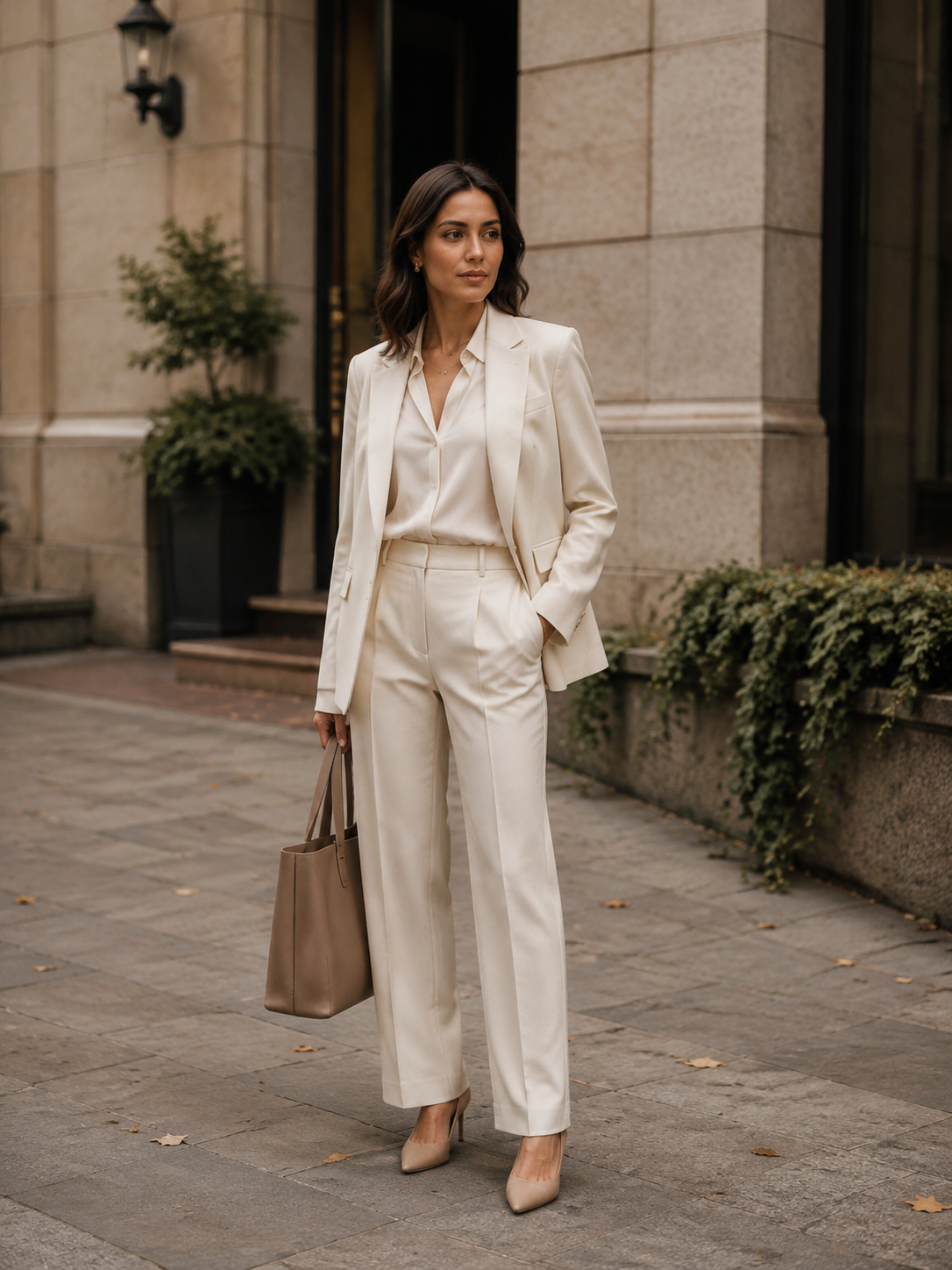
Black trousers in a wool-blend hopsack or visible twill weave, a mid-grey merino crewneck worn untucked, and dark brown suede chukka boots. The textured weave catches light unevenly, which stops the trouser reading as suiting material, and the matte suede boot skips the polish that a suit outfit would call for. Grey next to the face lifts the whole outfit away from black-on-black severity.
Black fine-wale corduroy trousers, a white oxford shirt worn open-collar and untucked, and dark brown leather loafers. Corduroy is the easiest texture win: the ribbed pile makes the trouser unmistakably casual no matter the colour, so the shirt can stay crisp without tipping the outfit into office formality. The brown loafers matter — polished black leather is the one piece that would pull the look back toward a suit.
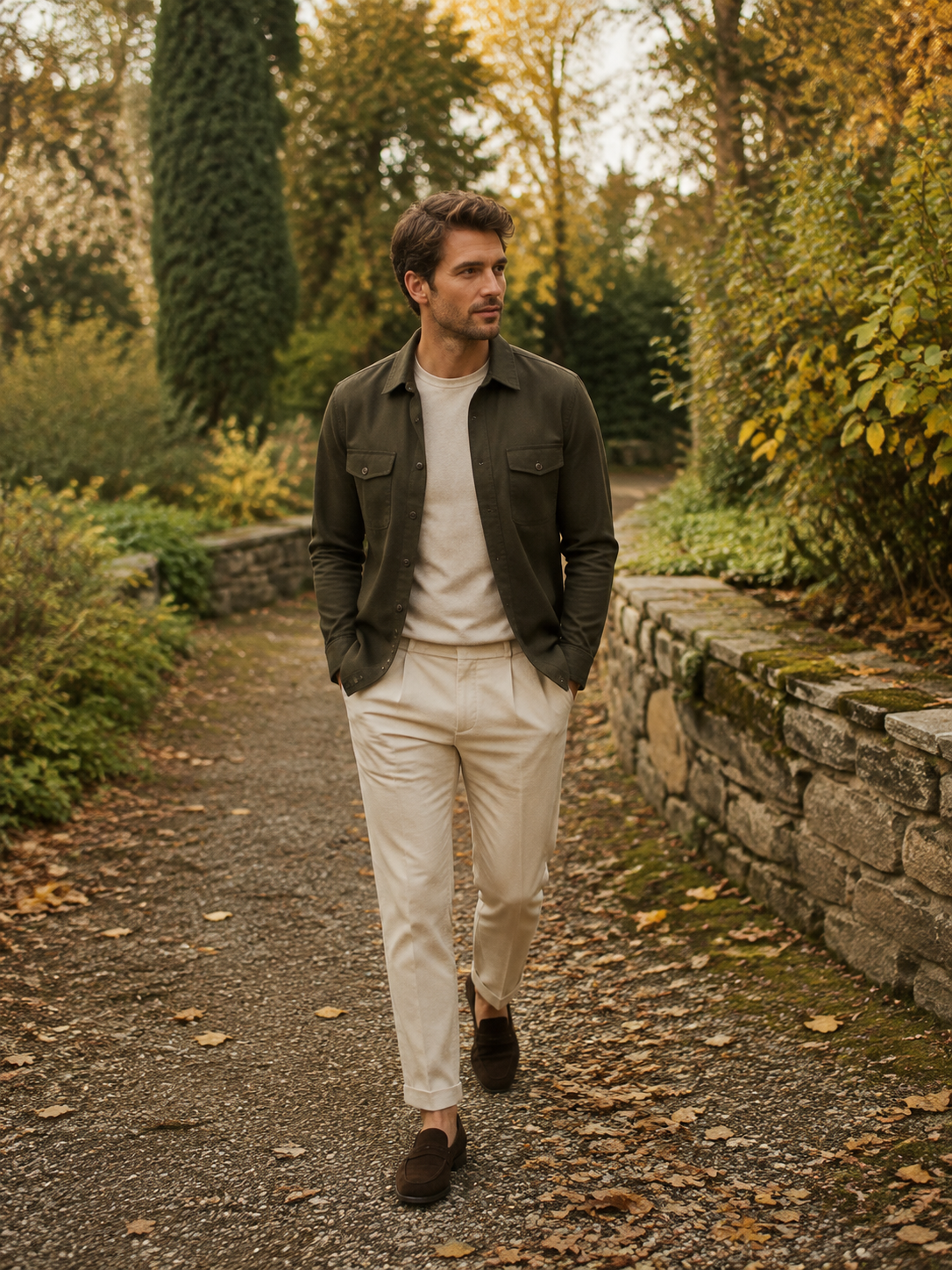
Black cotton-twill trousers, a grey marl crewneck sweatshirt, and clean white leather sneakers. The heathered grey does two jobs at once: it breaks up the black column and its jersey texture is unambiguously casual, so the trousers stop reading as half a suit. White sneakers are the final step down — nothing about a white rubber sole belongs in formalwear, which is exactly the point.
Black relaxed-fit trousers, a navy-and-white breton top, and a mid-blue denim jacket, with white canvas low-tops. Here the top half is so openly casual that the black trousers read as the smart half of the outfit rather than a suit trouser gone astray. The blue denim jacket is doing deliberate work: it introduces a second colour at volume, which stops the black from dominating the whole silhouette.
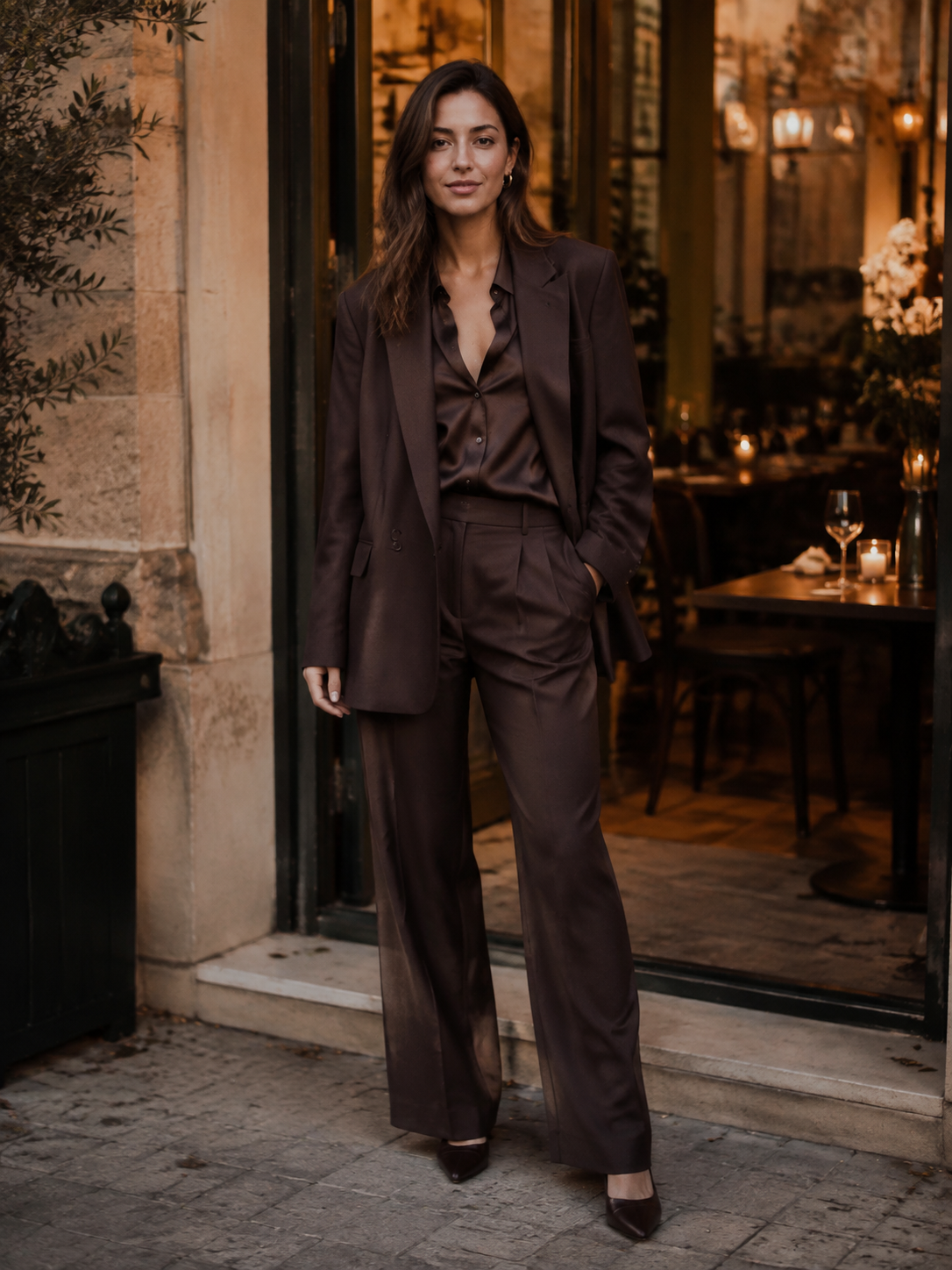
Black trousers in a soft flannel finish, an oatmeal rolled-neck knit in a chunky gauge, and dark brown leather derby boots. Knitwear is the most reliable formality lever: a chunky knit's bulk and hand-feel contradict what a tailored trouser usually implies, so the pairing lands as smart casual rather than eveningwear. The oatmeal colour adds the contrast that all-black outfits lack, and brown boots keep every shoe decision matte.
Black brushed-cotton trousers, a white tee under an olive wool overshirt worn open, and dark brown suede loafers. The overshirt replaces a blazer at a clear step down: same layered shape, none of the tailoring. Olive against black is a quiet colour pairing that reads considered rather than default, and the tee underneath keeps a casual layer next to the skin no matter how smart the trouser finish is.
Trousers & Pants
How chinos and dress pants differ in fabric, sheen, crease and care, and how to tell which one a given smart casual setting actually calls for.
Trousers & Pants
How pleated and flat-front trousers differ in construction, drape, room and formality, and how to compare the two fronts on an actual try-on.
Trousers & Pants
Choose shoes for wide-leg pants by checking the hem first: flats, trainers, loafers and heels each work, with the hem-to-shoe proportion explained.