What to Wear
Stretch Dress Pants: A Buyer's Guide to Performance Tailoring
Stretch dress pants decoded: what elastane percentages and four-way stretch actually do, the knee-bagging test, honest wool comparisons and care rules.
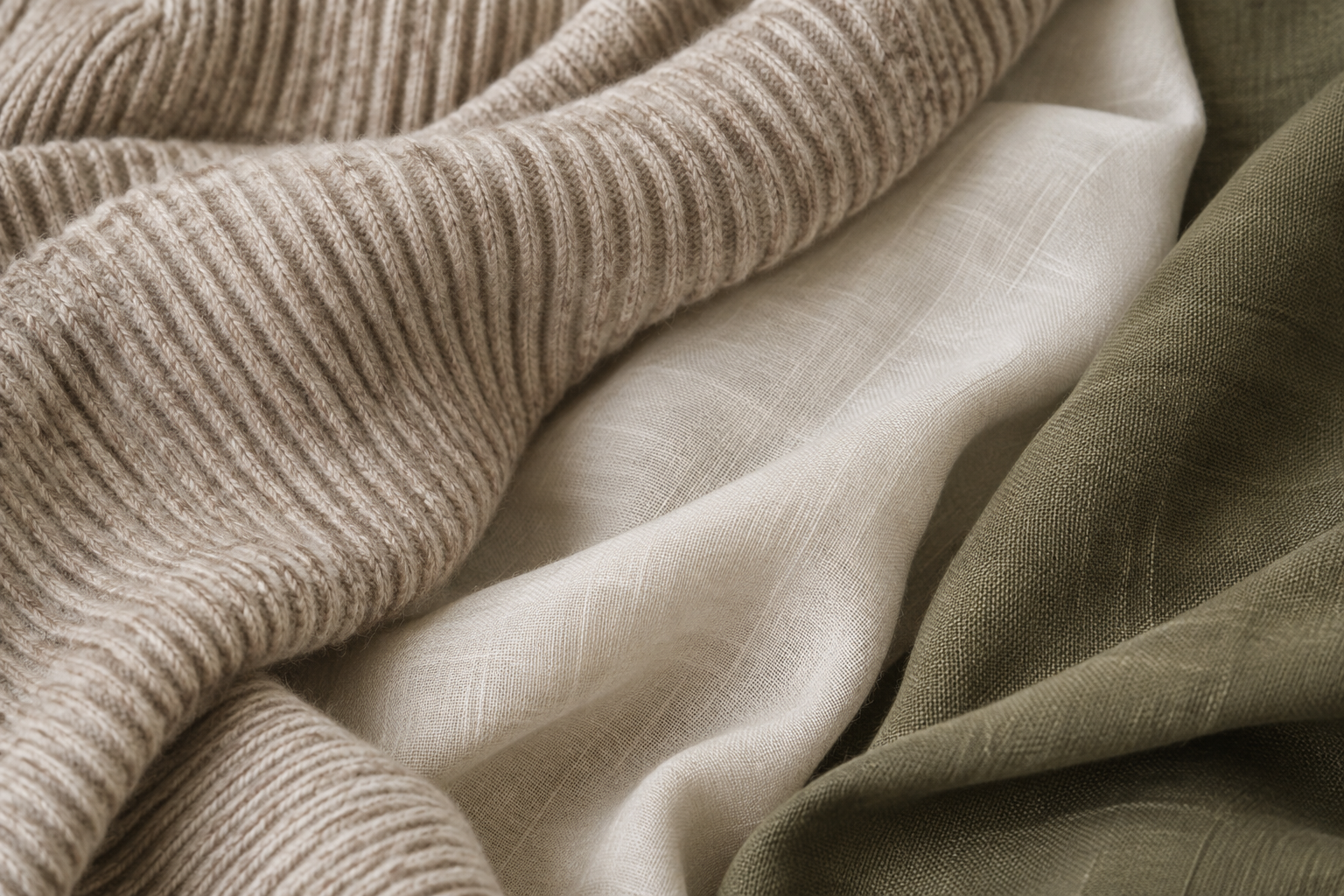
Fabric guide
Product listings keep saying gsm and almost nothing tells you whether 180 gsm is heavy or light. Fabric weight explained in one lookup table: find the number, match the band, buy for the right season.
Begin hereInspiration
GSM means grams per square meter — the weight of the fabric per area — and it is the only verifiable weight clue you get when shopping online. Each look below is built around a garment in its correct weight band, so you can copy the outfit and the number together.
| Garment | Lightweight | Midweight | Heavyweight | Season read |
|---|---|---|---|---|
| Shirt | 110–140 gsm | 140–180 gsm | 180-plus gsm | Light for summer, mid year-round, heavy is flannel territory |
| Knit | 160–240 gsm | 240–330 gsm | 330-plus gsm | Fine under jackets, mid for autumn, chunky for winter |
| Trousers | 220–290 gsm | 290–380 gsm | 380-plus gsm | Light creases more; heavy blocks wind |
| Blazer cloth | 230–290 gsm | 290–380 gsm | 380-plus gsm | Light for summer events, mid is the all-rounder |
Brands use summer, all-season and resort loosely, and the same garment type gets marketed at wildly different weights. When you cannot touch the fabric, the gsm number is the only claim that can be checked — which is why fabric weight explained properly starts with the number, not the label. Marketing terms decode roughly like this: featherlight and resort usually mean the lightweight band, midweight and classic mean the middle, and heavy or heritage mean the top band.
Weight is not the whole story, because fibre changes what a number feels like: warmth comes from fibre loft and weave, not weight alone. That is why the number works best alongside the fibre guides — the best fabrics for smart casual pillar ranks the fibres themselves.
For the fibre side of the hot-weather equation, the linen fabric guide and merino wool guide cover the two warm-weather workhorses, and the hot and humid smart casual guide puts them into full outfits. Cotton weaves get their own treatment in the cotton weights guide, and layering strategy lives in the layering system guide. When a listing hides the number entirely, the online sizing strategy guide covers what to ask a brand and how to handle the return.
What does gsm mean in clothing? Grams per square meter — the weight of the fabric per area, and the standard way mills describe weight.
What gsm is good for summer? Shirts around 110–140, trousers at the 220–290 light end, and knits no heavier than the fine band.
What gsm should a sweater be? Fine gauge 160–240 reads smartest and layers, midweight 240–330 is the standalone autumn sweater, and 330-plus is chunky casual.
Is higher gsm better? No — higher means warmer, not better. The right weight matches the garment, the season and how many months a year you will wear it.
6 looks to explore
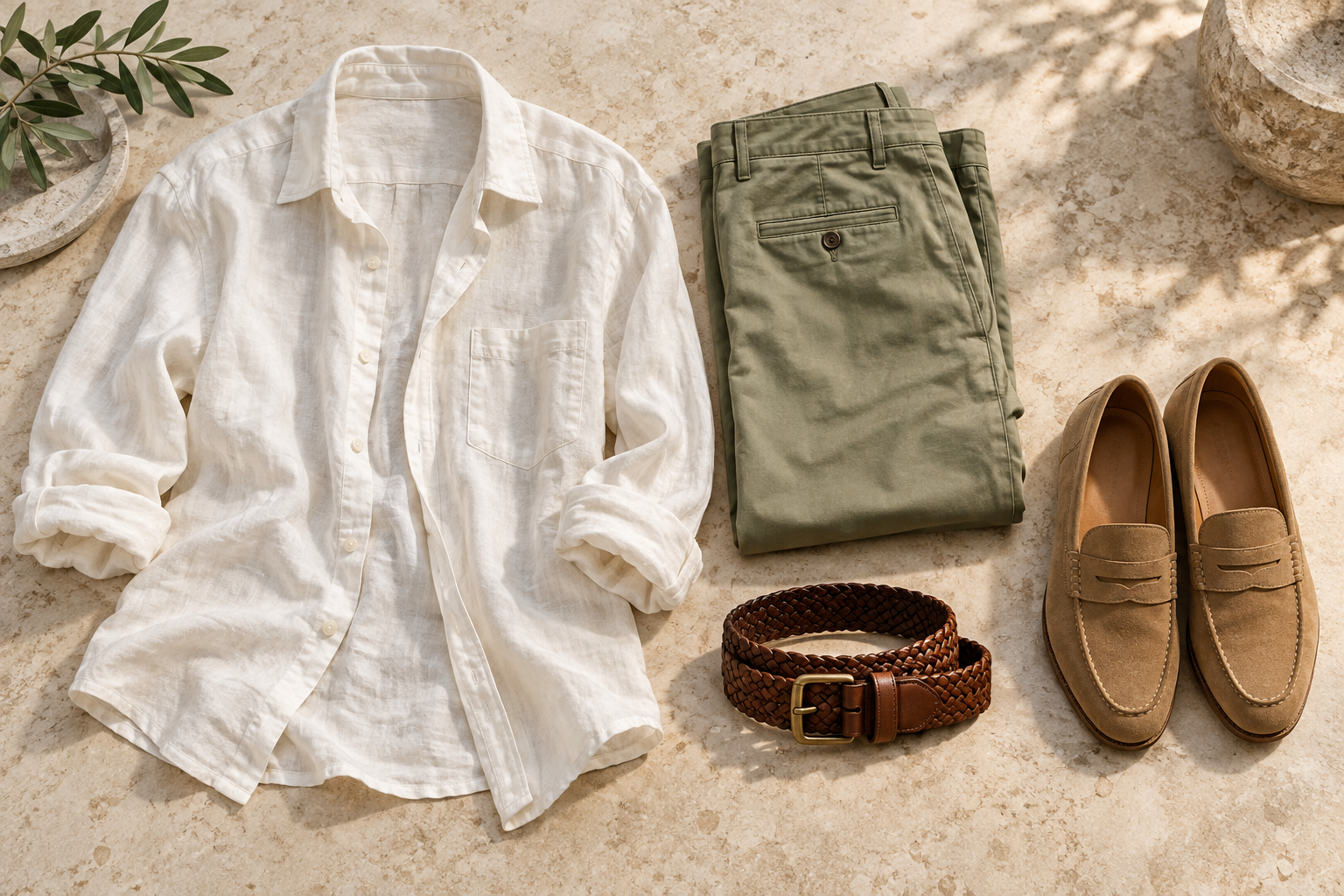
A lightweight poplin shirt around 110–140 gsm with linen-blend trousers at the lighter end of the trouser band. Breezy but opaque enough if you run the see-through check against your skin tone first.
A fine merino tee near 180 gsm handles heat and hides sweat better than cotton of the same weight, because the fibre behaves differently even at identical numbers.

A merino crew in the fine band, roughly 160–240 gsm, worn under a jacket in September. This is the smartest-reading knit weight — under layers, evenings and transitions are its home.

Wool trousers near 280–320 gsm are the wardrobe default: enough drape for the office, enough body to resist creasing, and they work nine months a year.

The everyday office shirt band: 130–170 gsm gives opacity and structure without heat. An oxford at 170-plus adds texture and relaxes the formality.
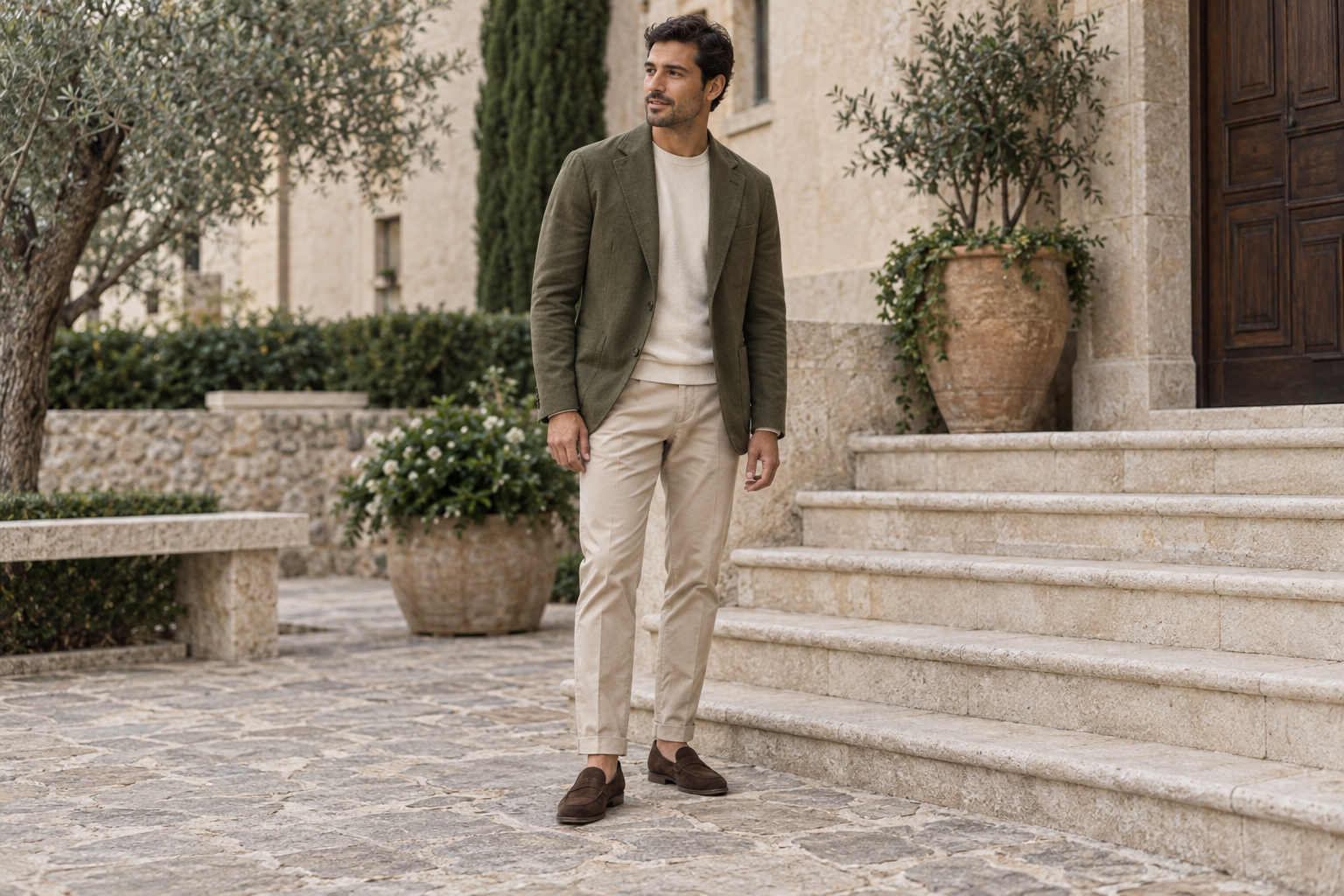
A chunky knit at 330-plus gsm over flannel trousers at 320–400 gsm. Weight plus weave is the cold-weather formula — no giant coat required on top.
What to Wear
Stretch dress pants decoded: what elastane percentages and four-way stretch actually do, the knee-bagging test, honest wool comparisons and care rules.
What to Wear
The best denim wash for smart casual is dark indigo. The jeans formality scale, denim weight in ounces, raw versus washed, and keeping dye dark.
What to Wear
Suede vs leather shoes compared: which looks smarter for smart casual, which survives rain and salt, what each demands in care, and which to buy first.