What to Wear
Transition Season Outfits: What to Wear in September and March
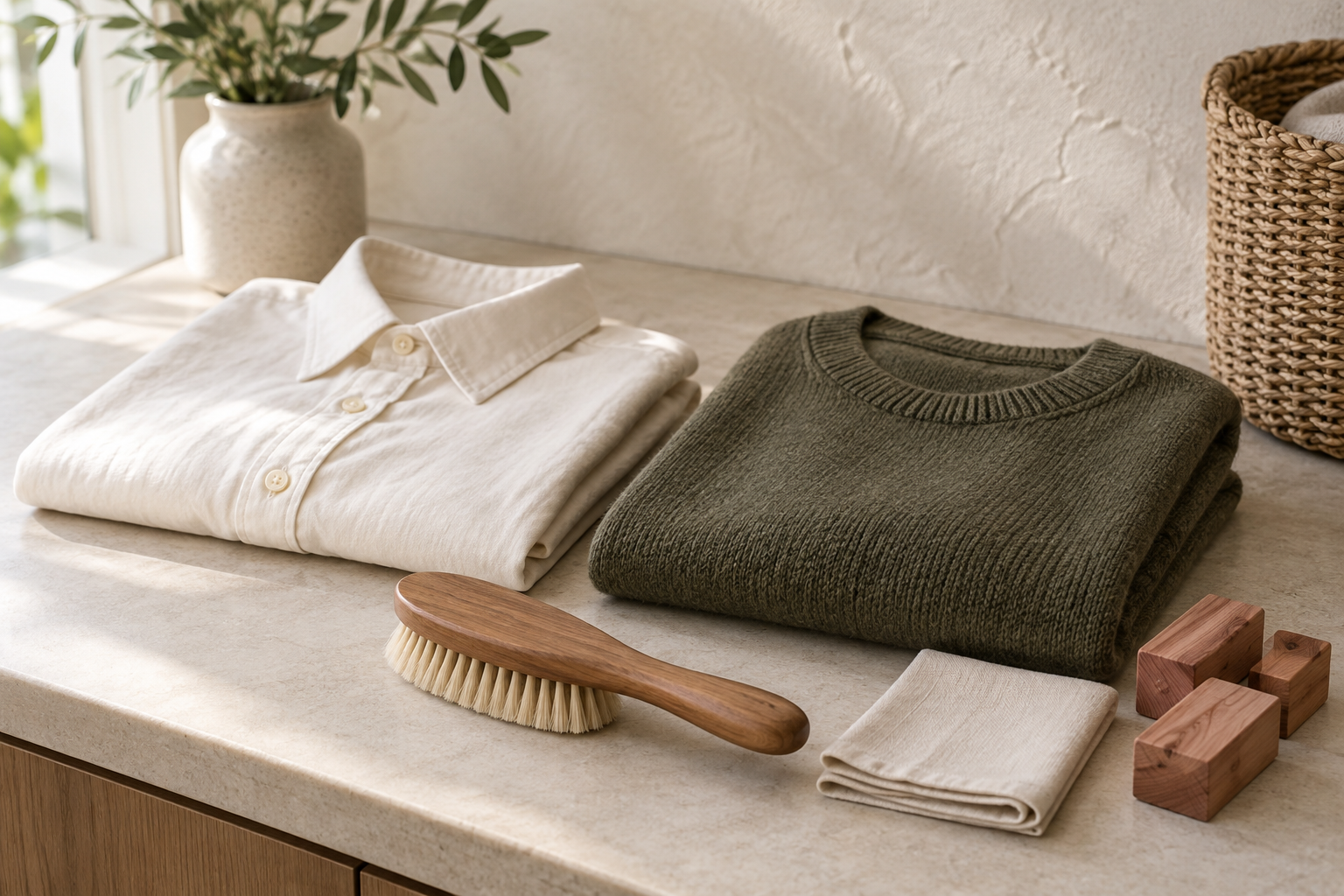
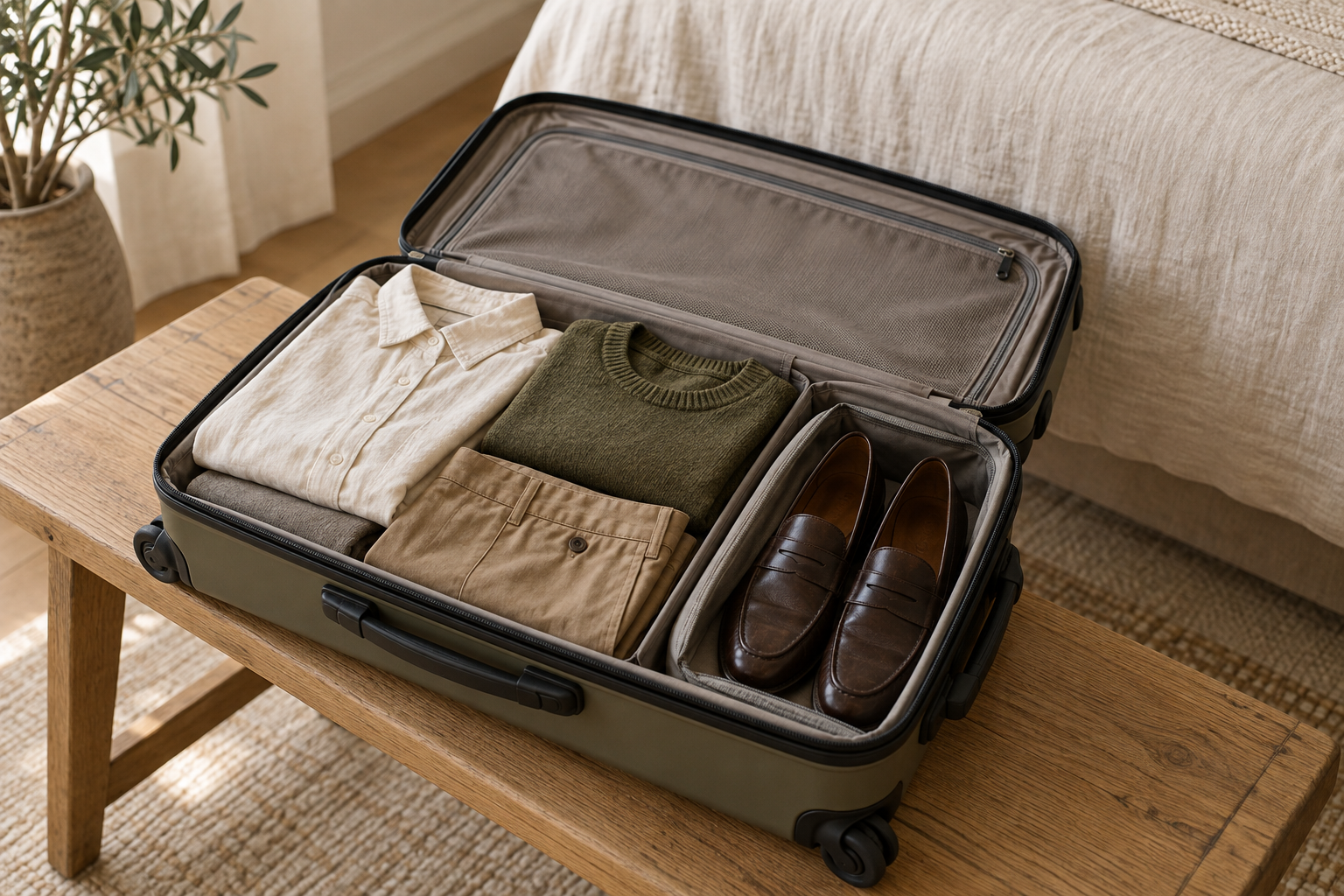
Transition season outfits: dress for the afternoon, layer for the morning. The swap-five-pieces rule, the layer-on layer-off timeline, and a 10-piece list.
Cold-weather system
Layering is three jobs, not three sweaters: one layer manages sweat, one keeps you warm, one blocks the weather. Get the order right and you stay warm on the walk without overheating at the desk — or looking bulky in either place.
Begin hereDefinition / explainer
How to layer clothes comes down to a fixed order: a base layer against the skin that manages moisture, a mid layer that insulates and does most of the style work, and an outer layer that blocks wind and rain. In smart casual, the mid layer is usually the piece people see indoors, so it is the one worth spending on. The system exists for door-to-door days — cold street, heated office, cooler evening — where one warm coat alone either cooks you inside or underdresses the room.
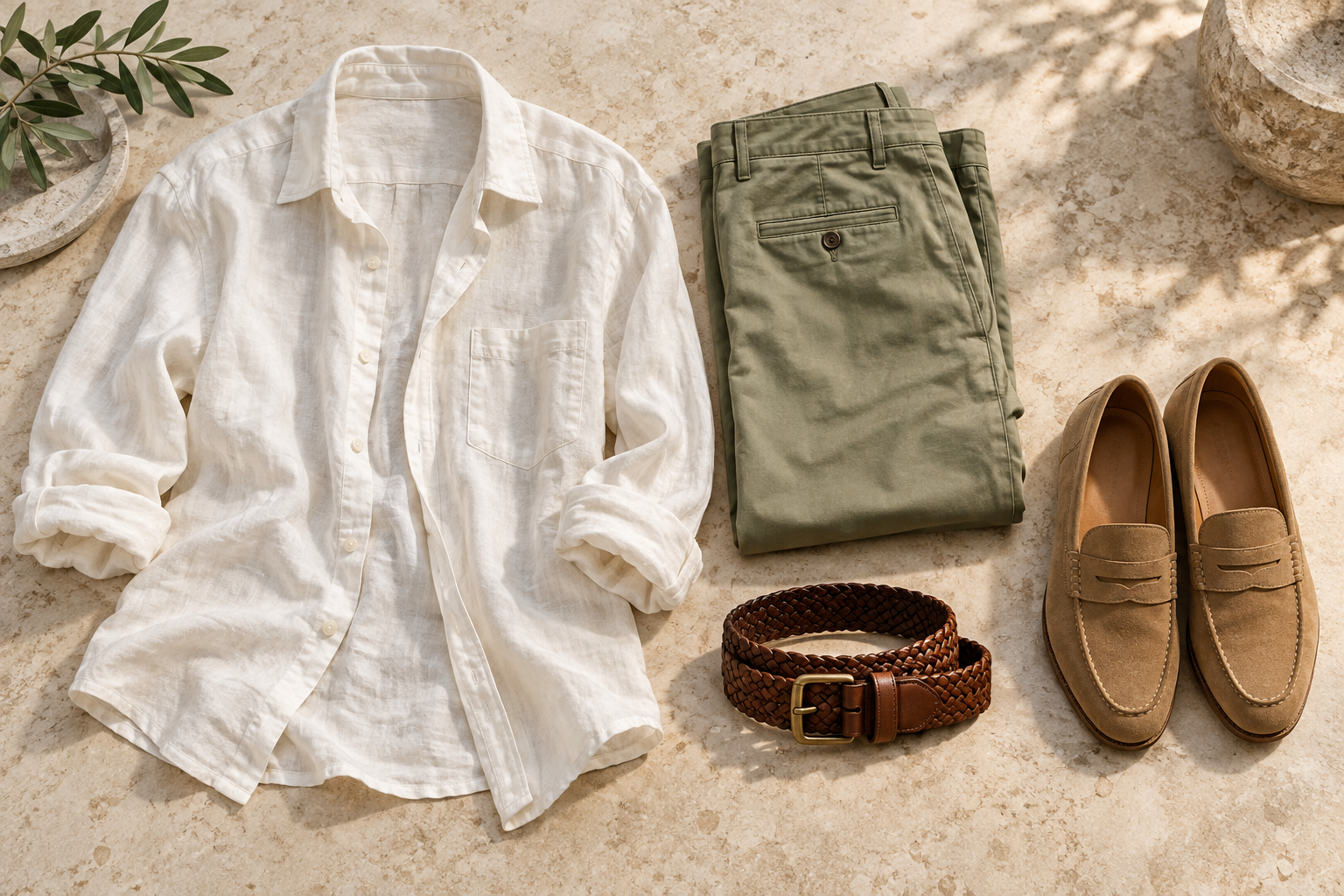
The classic smart-casual stack runs: merino or fine cotton shirt as base, knit or blazer as mid, overcoat or casual jacket as outer. The order holds because fabric weight and structure increase outward — a soft layer cannot sit over a structured one without bulging, and the weather-facing layer has to be the toughest.
The one common variation is knit plus blazer as a double mid layer for genuinely cold days: fine knit under the jacket, overcoat on top. Beyond that, resist adding a fourth insulating piece. If two mid layers and a coat still leave you cold, the coat is the wrong coat.
Below about 5 degrees, or on walks longer than twenty minutes, a thermal base layer earns its place. Silk-weight merino or synthetic tops vanish under a shirt, and thermal leggings disappear under trousers — nobody at the office will know, which is the point. They let your visible layers stay office-appropriate instead of escalating into chunky knits.
Merino is the easiest thermal to live with because it manages odor between wears; the details are in the merino wool guide. Wash thermals on a wool or cool cycle — the wool and merino care routine covers the whole process in five minutes of effort.
Pick the row that matches the morning low, not the afternoon high — you can always carry a layer, but you cannot add one you left at home.
| Temperature | Base | Mid | Outer |
|---|---|---|---|
| Around 15 degrees | Oxford or flannel shirt | None | Overshirt or chore jacket |
| Around 10 degrees | Shirt | Fine-gauge knit | Carried, not worn |
| Around 5 degrees | Merino or wicking base | Knit or blazer | Overcoat or quilted jacket |
| Below 0 degrees | Thermal base plus leggings | Knit and blazer, or one heavy knit | Insulated overcoat |
Dress for the walk, shed for the day. Wear the coat, carry the blazer if the walk is long, and let the base layer handle the sweat so the office layers stay fresh. Layers designed to come off gracefully — a cardigan over the chair, the coat on the hook — are what make the system work; thermals should never be the layer you are seen in.
Rain changes the outer layer's job rather than the stack — waterproofing becomes the priority and warmth comes from what is underneath. The rainy weather guide covers that shift, and cold-climate smart casual takes the sub-zero version further. For a full seasonal build, the men's autumn winter guide applies this system piece by piece.
The base-mid-outer system is identical for women; the difference is which pieces do each job. A fine turtleneck or silk-weight thermal under a blazer replaces the bulk of a heavy knit and disappears at the office — the same invisible-thermal logic as above, just worn as the visible base rather than hidden under a shirt.
That structure rule is the one most layering advice skips: Denise's fix for the marshmallow effect is not fewer layers but one anchored point — a defined waist or a crisp collar — around which the soft layers arrange themselves.
Three plus a coat is the practical ceiling: base, mid, outer. When you find yourself wanting a fourth insulating layer, the answer is a warmer coat, not more layers — each added layer restricts movement, traps sweat and multiplies the bulk at the waist.
What do you wear under a blazer in winter? A fine merino knit or an oxford shirt, with a silk-weight thermal beneath both below about 5 degrees. Do thermals work under dress shirts? Yes — thin merino or synthetic tops are cut to disappear under a tucked-in shirt.
How do you layer without looking bulky? One substantial mid layer, textures varied between layers, and an outer sized for the mid layer rather than the bare body. Get those three right and even a four-piece stack reads tailored.
Layering for smart casual means dressing in three ordered jobs: a close-fitting base layer (merino or wicking synthetic) that moves sweat off the skin, a mid layer (fine knit, blazer or cardigan) that insulates and carries the outfit's style, and an outer layer (overcoat, chore or quilted jacket) that blocks weather. Each layer must fit over the one beneath, and the outfit must still look complete when the outer layer comes off.
What to Wear
Transition season outfits: dress for the afternoon, layer for the morning. The swap-five-pieces rule, the layer-on layer-off timeline, and a 10-piece list.
What to Wear
Rainy day smart casual: the wet-commute protocol, raincoats that pass at the office, rain shoes that survive, and the recovery that saves the outfit.
What to Wear
Resort smart casual decoded: what casual elegant means at hotels and cruises, packing lists for warm dinners, and the outfit fails that get turned away.