What to Wear
Poplin vs Oxford: Cotton Weights and Weaves Explained
Poplin vs oxford, twill vs poplin, flannel: the four cotton weaves mapped to formality, season and care, with the GSM bands that tell you what you buy.
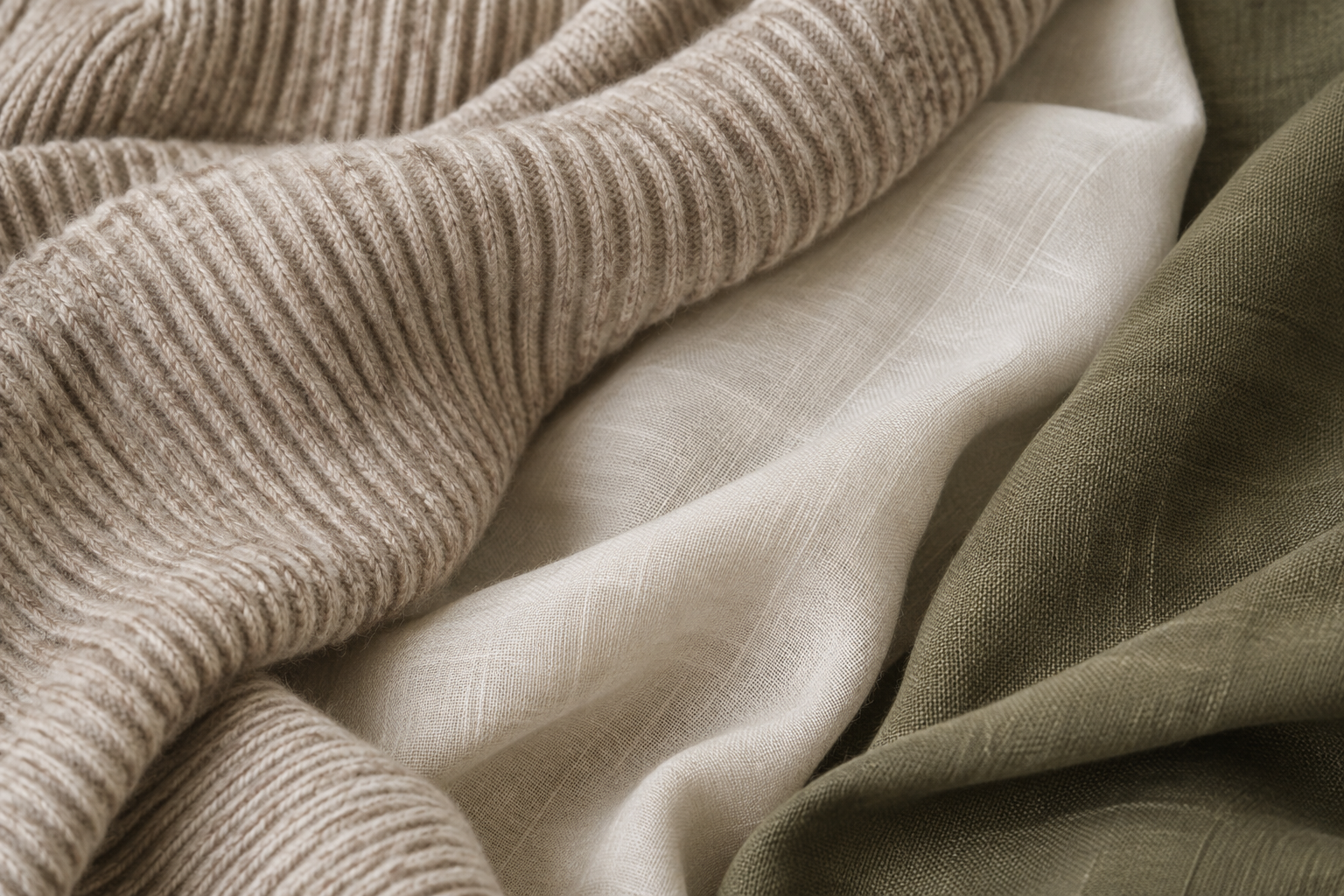
Fabric guide
Trousers that look smart but survive the commute exist — you just need to tell genuine technical fabric from marketing. Here is the label decoder, the buyer's checklist, and the honest limits.
Begin hereInspiration
Stretch dress pants are tailored trousers made with elastane blends or technical poly-wool fabrics engineered for movement, wrinkle recovery and breathability. They are genuinely worth it if you commute, sit for hours, cycle, or work in heat — and genuinely the wrong choice as a formal-only trouser, where traditional wool still wins on drape and longevity. Pick your commuter look below, then use the checklist before you buy.
Browse the looks below as starting points — each one keeps the tailored read while leaning on fabric stretch instead of stiff structure for comfort. The filters group them by setting.
The fabric tech is simple once you ignore the marketing. Elastane percentage is the honest headline: one to two percent gives subtle give that preserves a crisp tailored line, three to five percent delivers full sitting-and-cycling comfort, and the trade-off at the top of that range is a softer, shinier, less formal read.
Four-way stretch means the fabric stretches both along and across the body. What actually matters for sitting and cycling is crosswise stretch plus recovery — the fabric's ability to return to shape after you fold yourself into a train seat. Technical blends fall into three proven camps: poly-viscose-elastane work trousers (cheap, durable, washable, slightly shiny), stretch wools (wool with a few percent elastane — the premium option that keeps wool's look), and Tencel blends (soft drape, good breathability, less structure). Laminated commuter suits with bonded membranes sit at the hype end: real technology, but breathability claims deserve skepticism.
A genuine commuter suit changes three things: stretch built into the lining, machine-washability claims, and hidden comfort details such as an action-back and soft shoulders. The washable-wool versions use polymer-treated wool fibres that resist felting, which is real, established technology rather than a gimmick — though the finish is never quite identical to traditional wool and cold washing matters.
Know where wear shows first if you walk or cycle: thigh and seat pilling from fabric-on-fabric friction, bagging behind the knee, and cuff fray where a trouser catches a bike chain or shoe heel. Inspect those zones monthly and de-pill early. Spills on the commute are their own subject — the outfit rescue guide covers the before-you-leave fixes.
| Factor | Stretch technical | Traditional wool |
|---|---|---|
| Look and formality | Good, with a slight shine risk at close range | Best — the formal ceiling is higher |
| Comfort while sitting | Excellent — built for exactly this | Fine, but hot and restricting in summer |
| Wrinkle recovery | Very good — a train seat barely registers | Good, but creases set on long sits |
| Breathability | Mixed — poly blends run warm; Tencel better | Excellent natural temperature control |
| Longevity | Consumable — pilling and recovery fade in a few years | Multi-year with proper care |
| Typical price | Lower at every tier | Higher, especially for stretch wools |
The failure modes are symmetrical: wool creases and costs more upfront, while stretch poly shines and pills. Neither is the wrong fabric — buying the wrong one for your week is the wrong decision.
Are stretch dress pants worth it? Yes for commuters, frequent sitters and hot climates; no as a formal-only trouser, where wool's drape and ceiling win.
Do stretch trousers bag at the knees? The ones with poor recovery do. The snap-back test in the shop predicts it — slow recovery in the store is baggy knees in a month.
Is four-way stretch good for dress pants? It is useful, but recovery matters more than direction: crosswise stretch with strong snap-back is what survives sitting and cycling.
Can you machine wash a suit? Polymer-treated washable wools genuinely tolerate it on cold, gentle cycles; bonded laminate commuter suits vary, so treat the claim as unproven until the care label agrees with the marketing.
6 looks to explore

Charcoal stretch trousers, light blue oxford shirt, minimal white leather sneakers. The trouser's matte finish and clean crease keep it tailored; the elastane is invisible until you sit.
A stretch-wool swatch next to a poly-viscose-elastane blend: the wool keeps its heathered, matte character while the blend reads smoother and slightly shinier. That sheen difference is the formality gap.
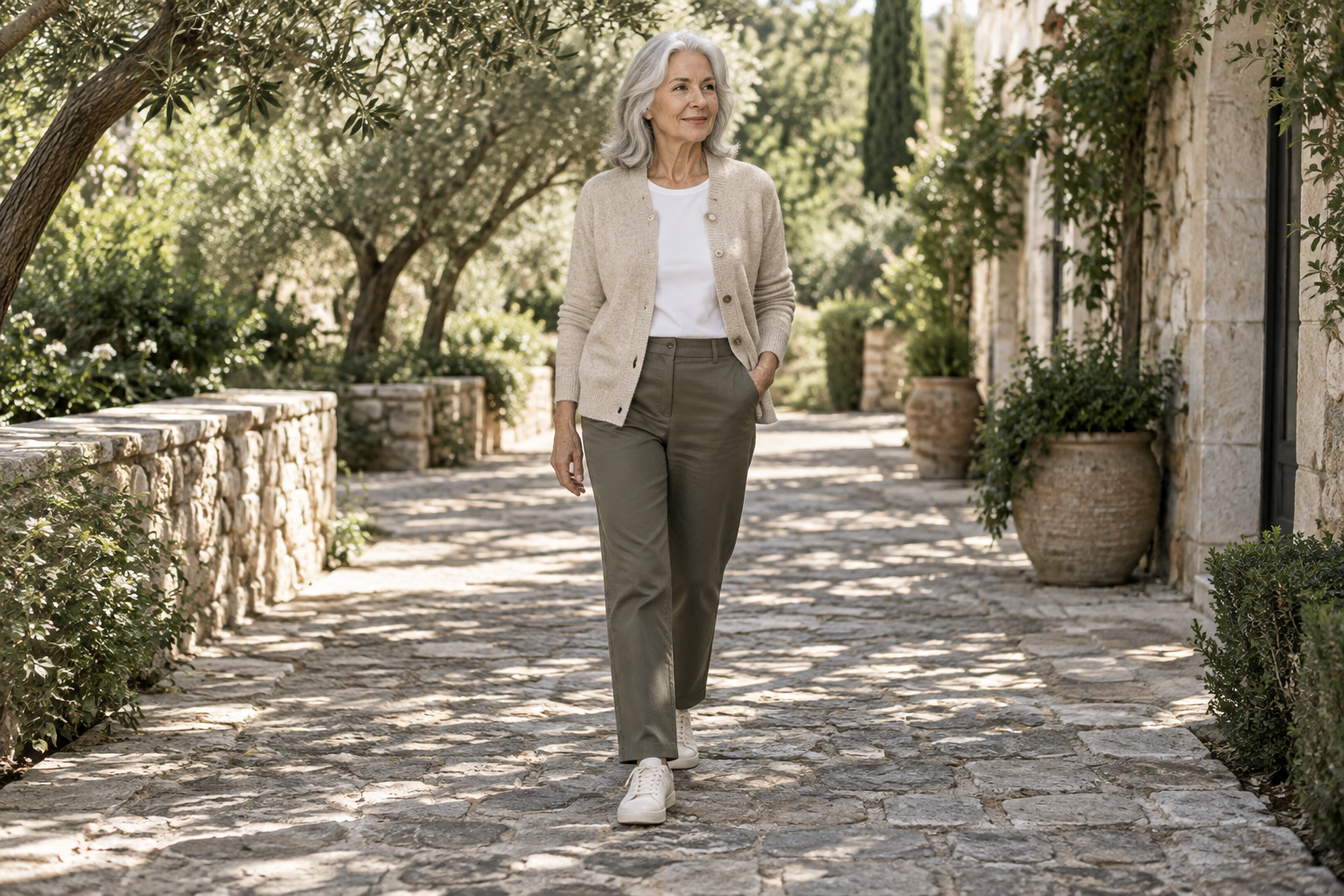
Navy stretch trousers with a gusseted crotch, tapered below a hidden ankle cuff, worn with a knit polo. On the bike it moves; at the restaurant nobody sees the engineering.
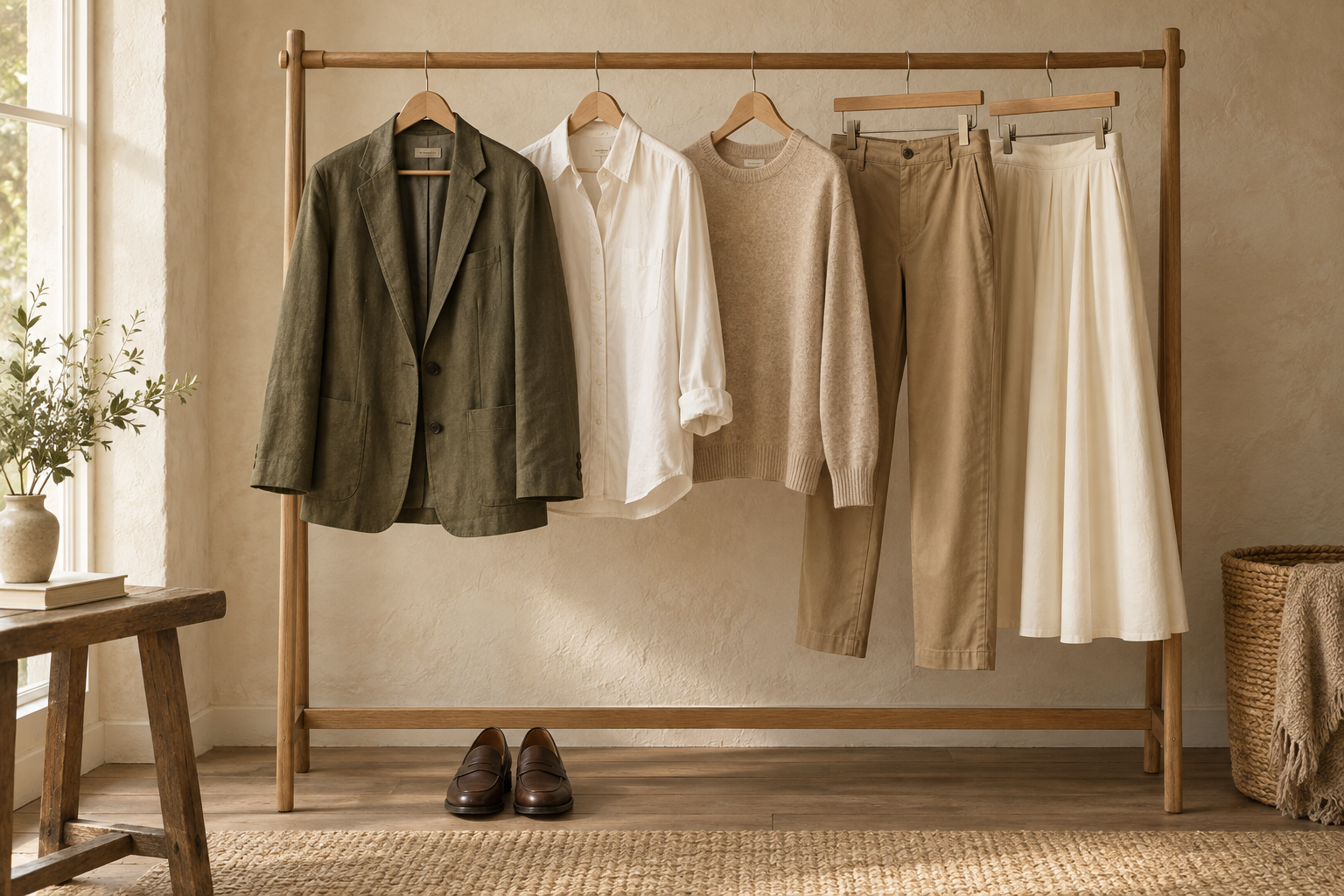
A stretch-lined jacket over matching trousers, soft shoulders, action back. Worn open-collar with loafers for the train-to-desk day, dressed up with a shirt for the meeting.
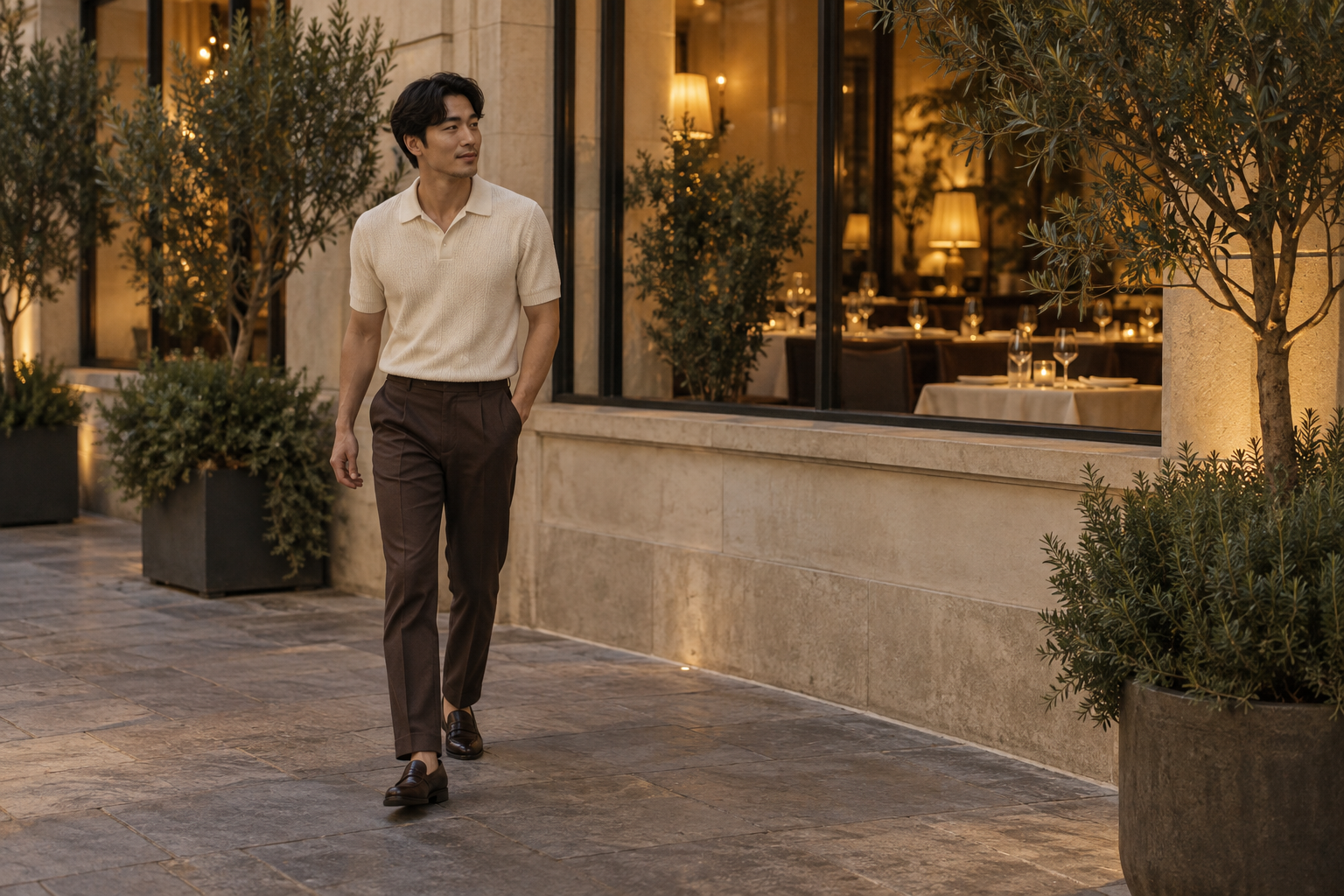
Mid-grey stretch trousers, black fine-knit polo, dark loafers. The wrinkle recovery that survives the commute is the same property that survives the evening — no change needed.
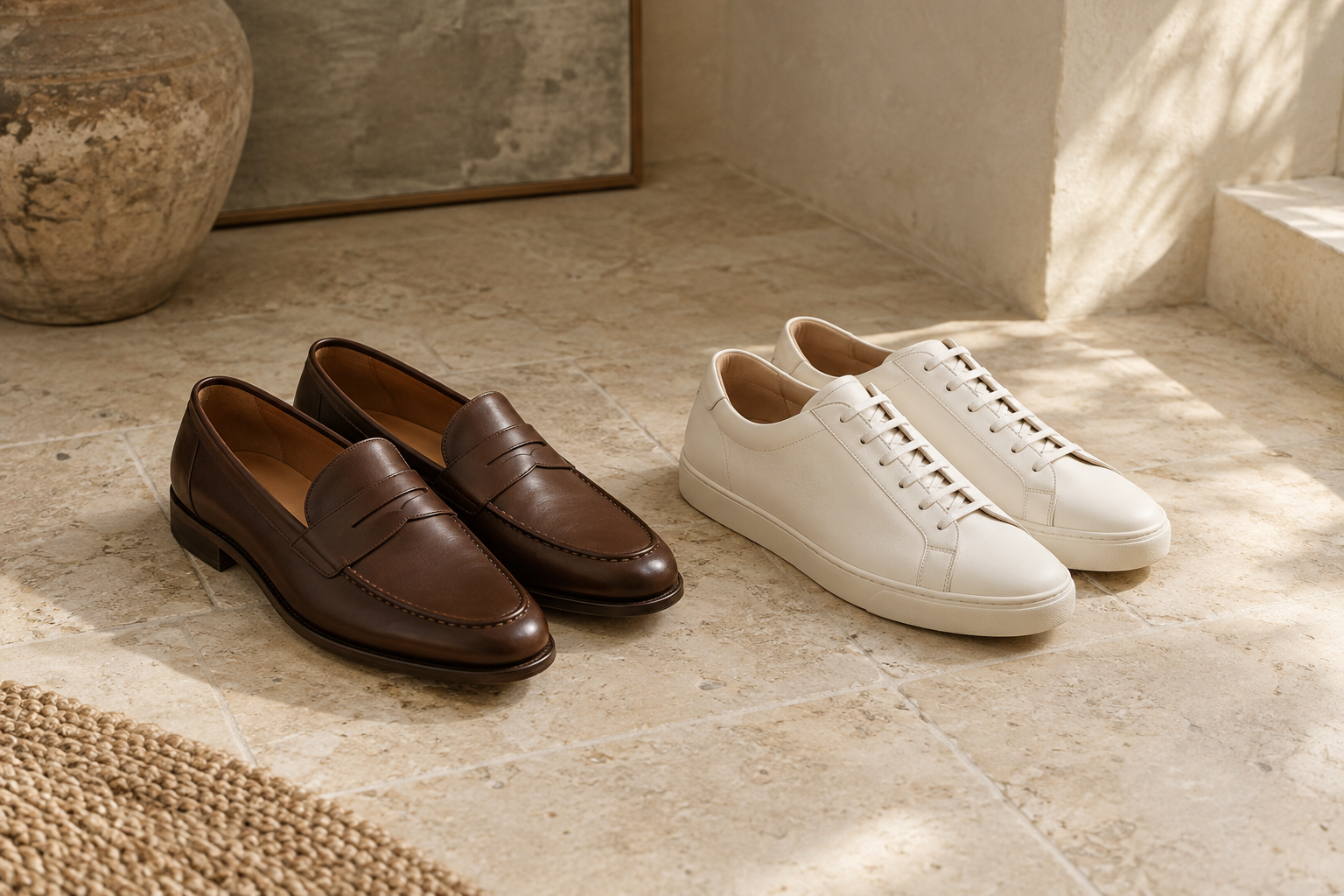
Higher-elastane trousers in deep navy with a heavier sneaker and a chore jacket. Comfortable enough to forget, and honest about being smart casual rather than tailoring.
What to Wear
Poplin vs oxford, twill vs poplin, flannel: the four cotton weaves mapped to formality, season and care, with the GSM bands that tell you what you buy.
What to Wear
What gsm means in clothing, plus a lookup table of fabric weight bands by garment and season, and how to use the number when buying online.
What to Wear
Suede vs leather shoes compared: which looks smarter for smart casual, which survives rain and salt, what each demands in care, and which to buy first.