Occasion advice
Smart casual color combinations: the system that never fails
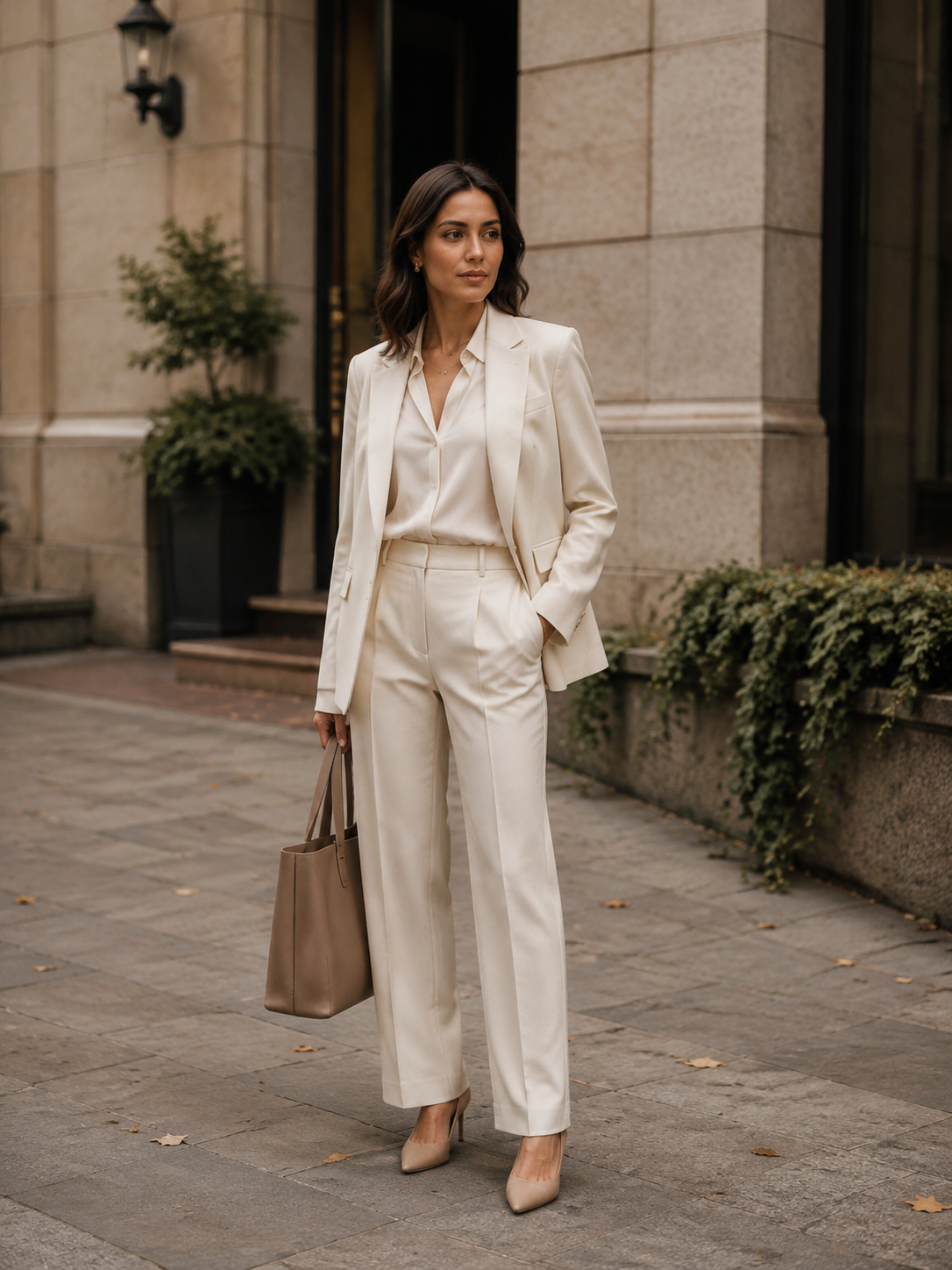
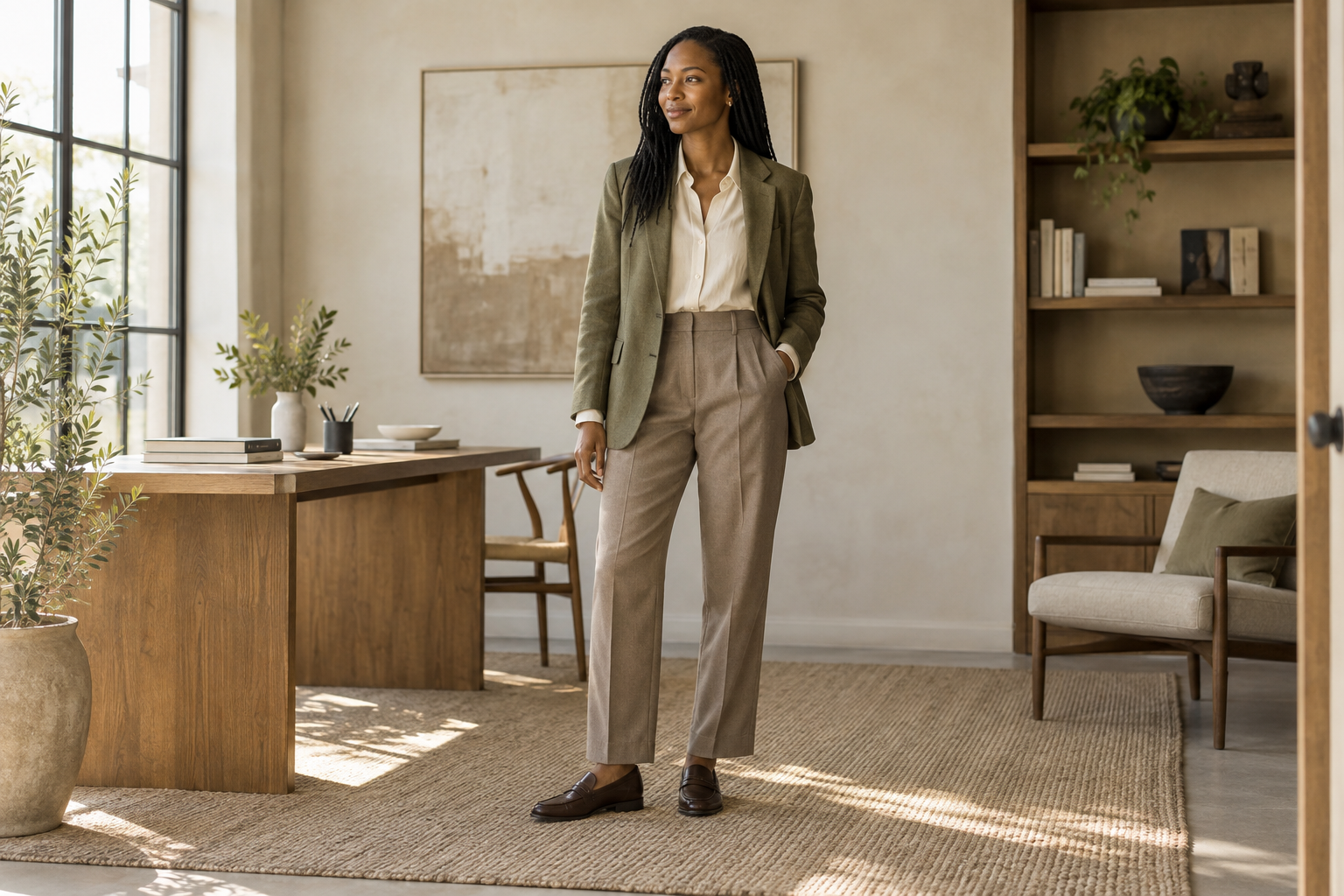
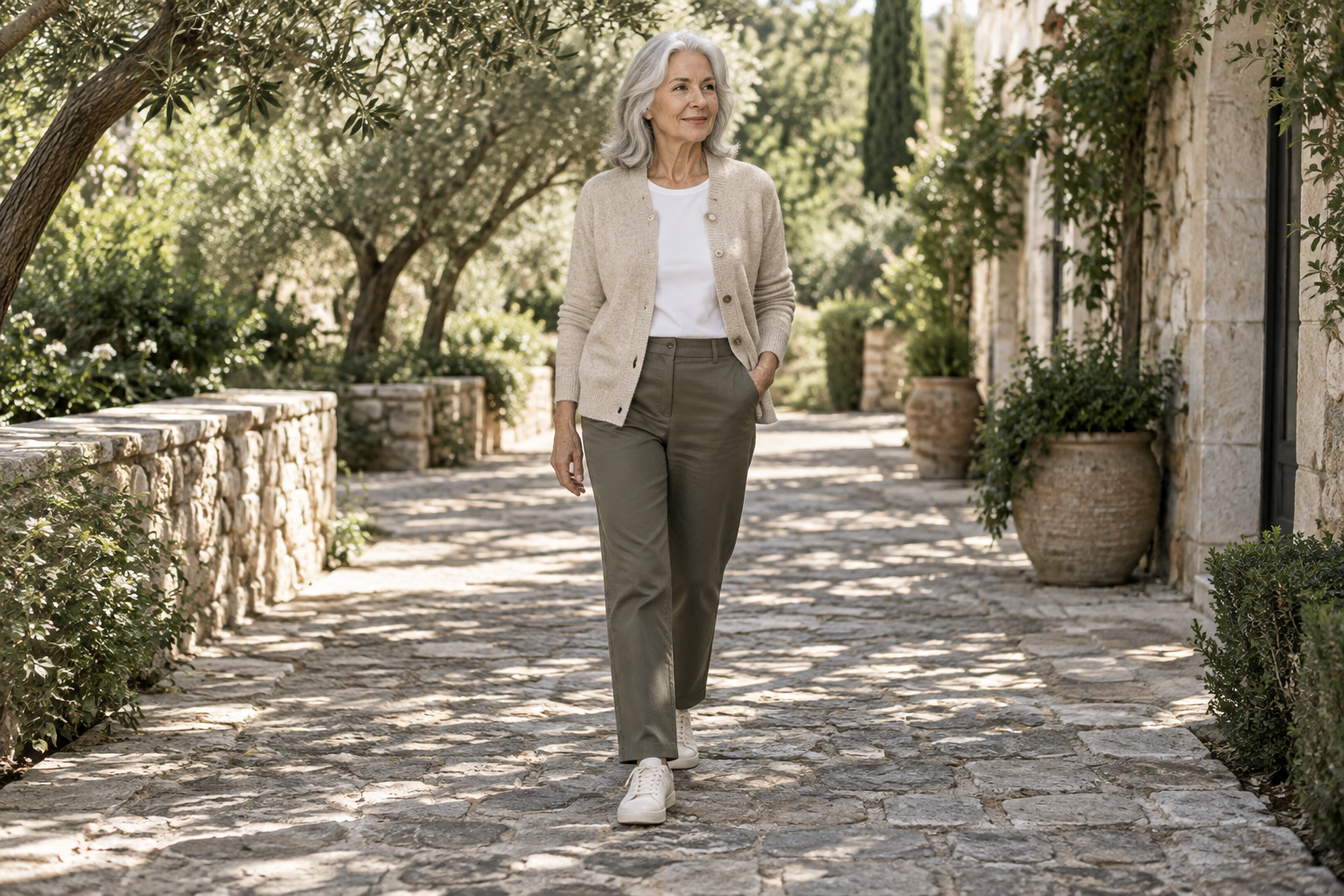
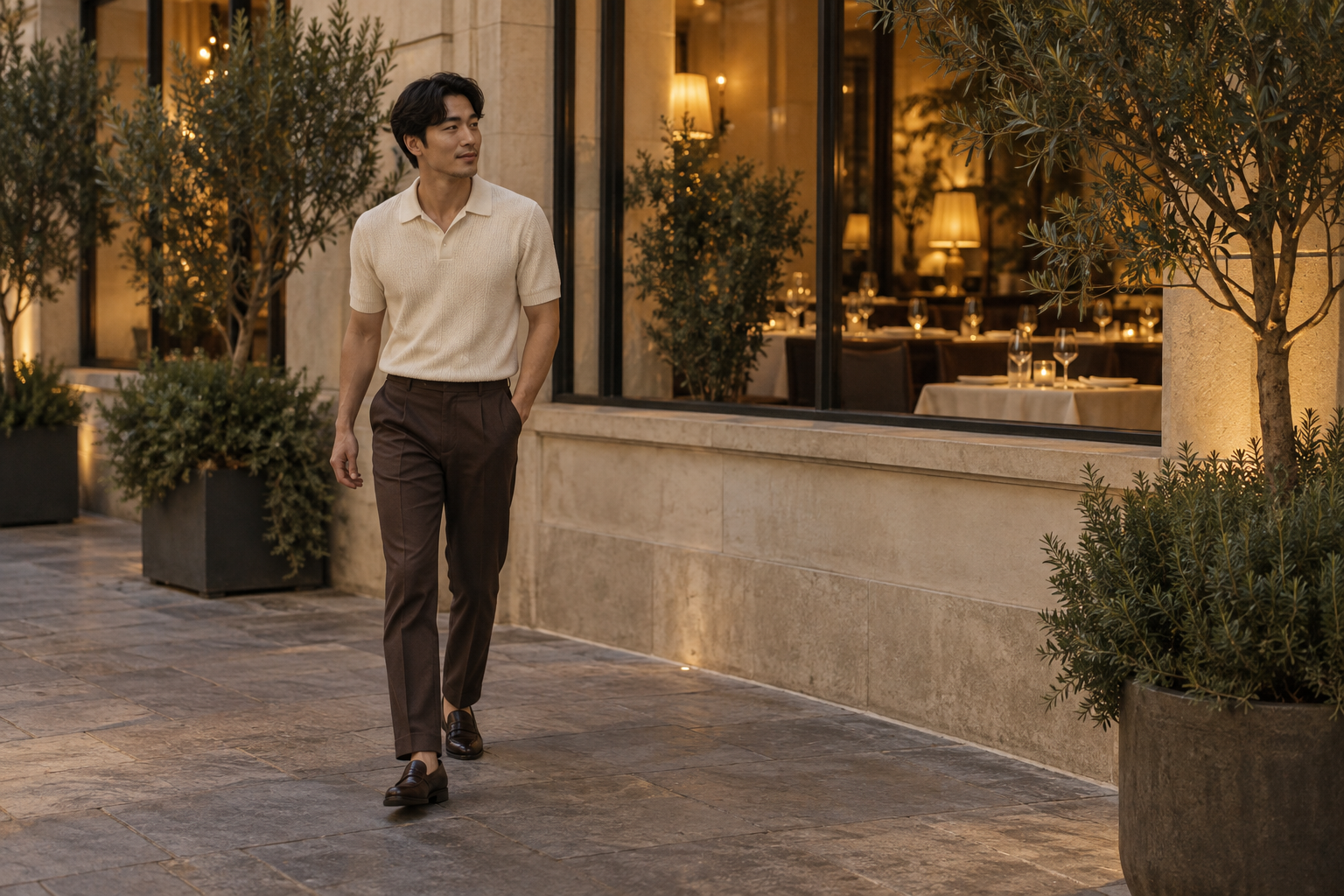
Most colour mistakes at smart casual level are not about picking the wrong hue — they are about wearing three competing colours at once. The fix is a simple formula: one neutral base, one supporting neutral, and at most one accent. Learn it once and every outfit you own becomes easier to build.
What color combinations are appropriate for smart casual?
Almost all of them — that's the surprise. Smart casual does not ban colours the way formal dress codes do. What it judges is saturation and finish: a brick-red knit reads considered, a neon-red windbreaker reads like a crossing guard.
So the working rule is not a list of approved hues. It is the formula: neutral base, supporting neutral, one accent. Every pairing below is that rule wearing different clothes.
The two-colour rule: why three colours punish you
Count colour units, not colours. Shoes and belt are one unit. Two shades of the same family — denim blue and navy, charcoal and light grey — count as one. Under that counting, most good outfits are two units plus at most one accent.
The classic failure is three mid-saturation units fighting for attention: navy blazer, olive chinos, burgundy loafers. The fix is to demote the loudest piece — brown shoes turn it back into a two-unit outfit with burgundy nowhere in sight, or keep the loafers and go grey on top.
A useful split borrowed from design: roughly 60 percent base (trousers, outer layer), 30 percent supporting colour (shirt or knit), 10 percent accent (small doses like socks or a watch strap). Nothing about this needs measuring — it just explains why the accent belongs in small doses.
When is three colours fine? When two of them are the same family, or when one lives in a tiny dose. Navy blazer, light blue shirt, burgundy socks passes because the socks barely register.
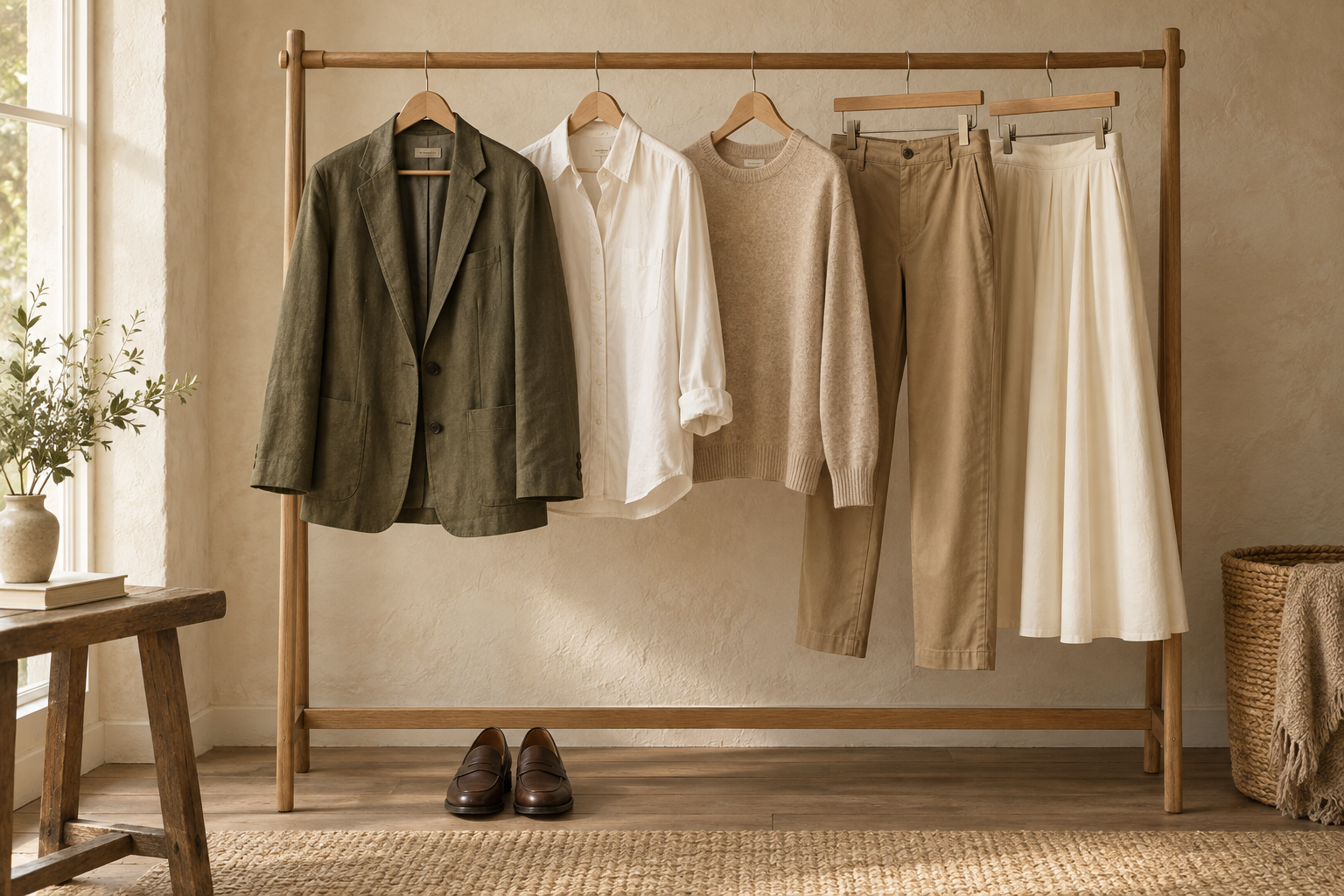
The neutral five: navy, grey, camel, white and olive
Build your base from these five and any accent colour becomes wearable, because neutrals exist to absorb whatever you put on top. They also cover both warm-leaning and cool-leaning wardrobes, so nobody is locked out.
- Navy pairs with grey, camel, cream, white and olive — the most connective neutral there is.
- Grey pairs with navy, white, burgundy and forest — cool and quiet.
- Camel pairs with navy, cream, brown and olive — warm and softening.
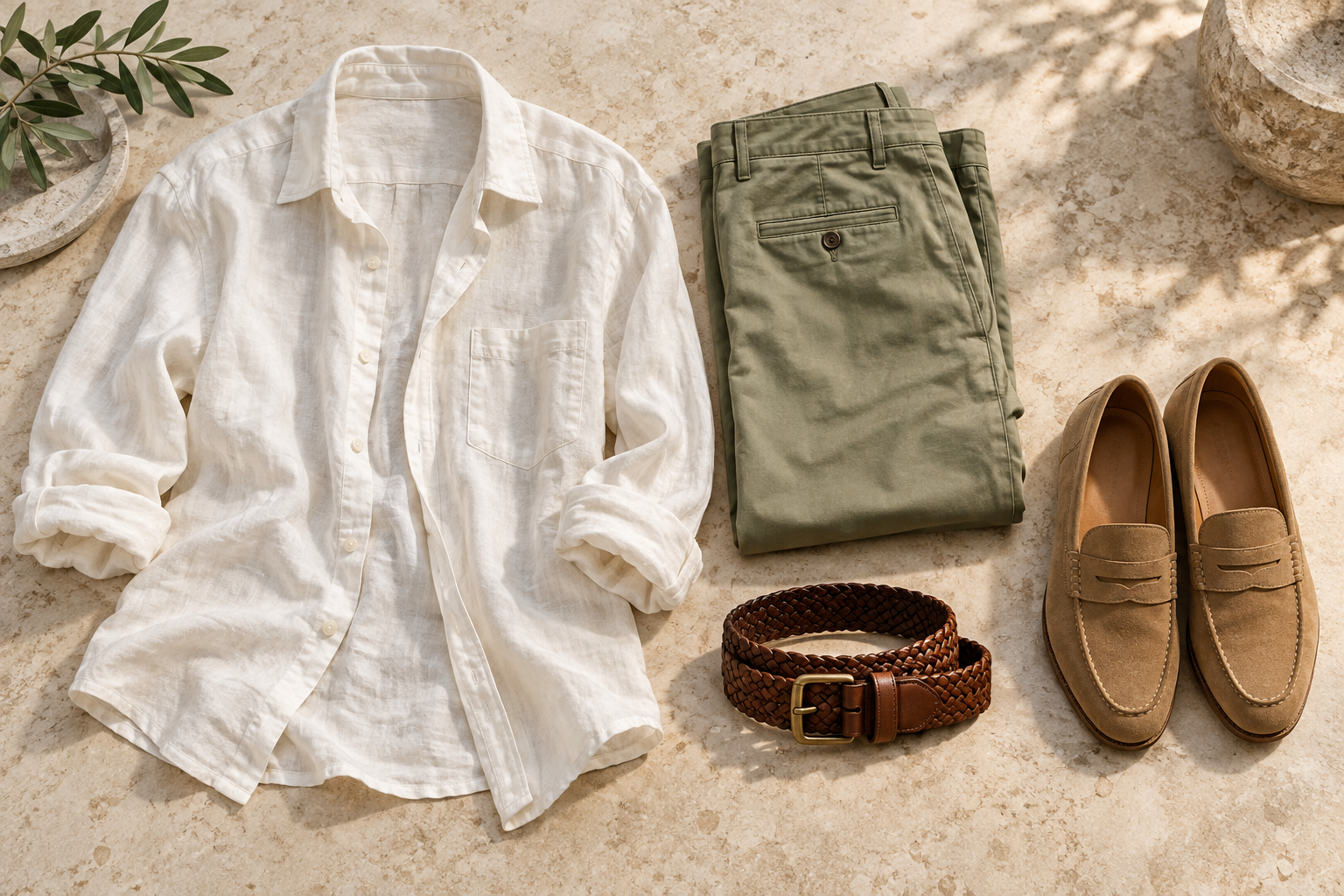
- Olive pairs with navy, tan, cream and stone — the casual one that still behaves.
- White pairs with all of them, which is why a white shirt or tee is never the wrong top.
The maths is the point for anyone on a budget: four neutral staples generate around eight acceptable combinations before you have bought a single coloured item. Buy the neutral five first and every later purchase multiplies, see the men's staples checklist.
One warning: cool grey next to warm camel can look mismatched on paper. In practice texture saves it — a flannel grey against a smooth camel works because the fabrics differ. When in doubt, put white between them.
Navy and grey: the default, explained
Charcoal trousers under a navy blazer is the office version; light grey trousers relax it a notch for everything else. Dark brown shoes beat black here because the combination is soft, and black hardens it back toward business.
Two builds from the same pairing: for the office, a light blue shirt and dark brown derbies; for the evening, a fine-gauge burgundy or cream knit instead of the shirt. Same colour logic, different formality. Swap the blazer for a mid-blue chambray shirt and the pairing survives, just more relaxed — the full case for the base colour is in navy: the smart casual workhorse.
Working one accent into the outfit
There are three legal placements for accent colour. The top layer — a coloured knit or knit polo, the boldest option. A small dose — socks, pocket square level, barely-there. Or the shoes — suede in burgundy or rust, never patent.
- With grey bases, use burgundy or forest — both warm the coolness up.
- With navy bases, use rust, cream or light blue — all sit comfortably inside its depth.
- With camel bases, use olive or brown — staying in the warm family keeps it calm.
For the office specifically, one strong accent top with neutral everything else is the lowest-risk colour there is — the whole method is in the colour at work guide. Repeat the accent once if you like (a belt stitch, a watch strap), and never put accent colour and pattern in the same garment zone.
Combinations with jeans and chinos
Dark indigo jeans take three top colours best: white, grey marl and navy. A black tee with black shoes flattens the denim's blue and drags the outfit toward night-out territory.
Chinos follow the same rule per colour: stone chinos love navy and white tops with brown shoes; olive chinos love navy and cream; navy chinos love white and light blue. The grey case has its own page at what to wear with grey trousers.
Light-wash denim is the one casual colour that needs help: because it reads so relaxed, everything else has to dress up — a blazer or structured knit, proper shoes, pressed shirt. Light wash with a worn tee is a weekend, not smart casual.
When patterns join the outfit
Treat a visible pattern as one of your colour units. A checked shirt's base colour is the one you match to the trousers; its secondary colour is decorative and can be ignored.
One line covers scale: if one pattern is large, any second pattern must be clearly smaller. The easiest compliant outfit is a striped shirt, solid trousers and a textured rather than patterned knit — you get visual interest without a second pattern to reconcile.
Skin tone and contrast, briefly
If a colour wears you rather than the other way round, lower its saturation instead of banning it: bright red becomes brick, cobalt becomes slate blue. The full seasonal system lives in personal colour analysis for smart casual — the short version is contrast: dark hair against lighter skin carries stronger pairings, while lower-contrast colouring suits tonal looks.
Colour combinations to avoid at smart casual
Black shirt with black trousers reads night-out, not smart casual — the fuller reasoning is in the black at smart casual guide. Neon and high-vis accents overwhelm every neutral near them. Red and green together reads seasonal whether you mean it or not.
And all-grey everything is legal but invisible — the fix costs nothing, because one cream or white piece near the face restores contrast instantly.
The 30-second decision table. Start from your hardest fixed item — usually trousers or shoes — and build backwards.| You're starting from | Safe partners | Accent options |
|---|
| A navy blazer | Charcoal or light grey trousers, cream chinos | Burgundy, rust or light blue in the knit or socks |
| Grey trousers | Navy, white, black-adjacent charcoal on top | Burgundy or forest in the knit layer |
| Stone or camel chinos | Navy, white, olive tops | Olive or brown accents, mid-brown shoes |
| Olive chinos | Navy, cream, white tops | Tan suede shoes do the accent work for you |
| Dark indigo jeans | White, grey marl or navy tops | Skip the accent — the denim texture is enough |
| Brown suede shoes | Navy, grey, stone, olive everything | Echo the brown in the belt and stop there |
Colour combination questions
What color combinations are appropriate for smart casual? Nearly any hue — the rule is one neutral base, one supporting neutral and at most one accent, with saturation kept moderate.
Can I wear brown shoes with navy trousers? Yes, and dark brown beats black here — it keeps the softness navy brings while black sharpens the outfit back toward business formality.
Is white always safe? For tops, genuinely yes. Below the waist, white trousers and jeans need the rest of the outfit smart and a realistic care plan, since white shows everything.
What colours go with everything? Navy, grey, camel, white and olive — which is exactly why they should be the first five pieces you buy.