What to Wear
Is Cashmere Worth It? Grades, Prices and Care Explained
Is cashmere worth it? Judge grade from ply, fiber length and knit density, see when budget cashmere is fine, and what care really costs.
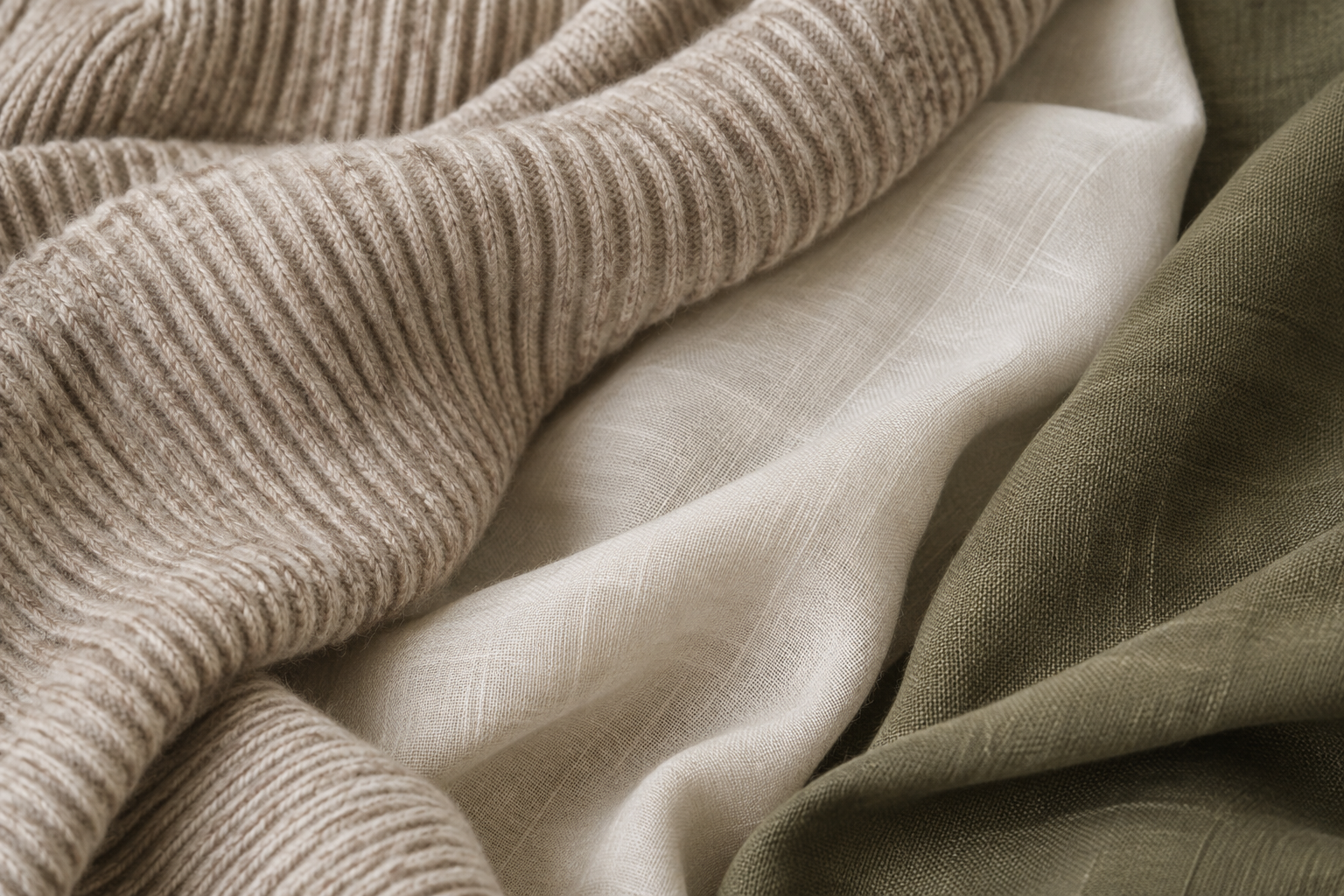
Fabric guide
Linen passes smart casual almost everywhere in warm weather — what fails is creased, lightweight linen paired with casual everything else. Here is the formality rule, the blends that help, and the wrinkles to stop fighting.
Begin hereInspiration
The fiber never decides formality — the garment and the company it keeps do. These six looks show linen reading smart and reading sloppy, and the difference is always structure, weight and what sits next to it.
No — in warm weather, linen passes smart casual almost everywhere the question comes up. The formality lever is not the fiber, it is the garment structure around it. Tailored linen trousers with a pressed linen shirt is smart; linen shorts with espadrilles is beach. The hesitating searcher is usually worried about the wrong variable.
There is a short skip list, and it is worth stating plainly: formal evening dress codes, conservative funerals, and genuinely cold days. Everywhere else — summer weddings as a guest, hot offices, dinners on holiday — the right linen garment is not just acceptable, it is the most comfortable honest option in the room.
Linen wrinkles because of how the fiber is built: it has almost no elastic stretch, so any bend — elbows, seat, the fold of a packed bag — sets a crease instead of bouncing back. Nothing makes pure linen wrinkle-proof, and any product claiming to is selling fabric softener.
That is the reframe: crisp-but-creased linen signals a natural fiber and a summer intention. Embracing wrinkles in practice means three habits — press before leaving the house, accept the creases that come from sitting, and never wring or crush the garment in transit. A shirt that looks slept-in and a shirt that looks worn-in are different things, and the difference is those habits.
| Situation | Linen verdict | Best linen garment |
|---|---|---|
| Summer wedding guest | Yes | Linen-wool suit, or linen trousers with a matching jacket |
| Office in a heatwave | Yes | Linen-cotton blend shirt, tucked, with tailored trousers |
| Beach dinner on holiday | Yes | Pure mid-weight linen shirt, pressed, sleeves down or rolled once |
| Business formal meeting | No | Wool instead — the creases read as carelessness in a formal room |
| Conservative funeral | No | Smooth wool or blend; linen rarely clears the solemnity bar |
| Resort or long-haul travel | Yes | Pure linen shirt and trousers, rolled in the bag, pressed on arrival |
Yes, and each blend trades a different thing. Linen-cotton softens the sharp creases and presses easier, at the cost of a little breathability — the office-friendly choice. Linen-viscose and linen-Tencel drape softer and resist creasing, but check the sheen, because viscose adds shine that pure linen never has. Linen-wool is the tailoring answer: it holds a pressed line through a long day, which is why it is the summer wedding-guest suit.
Blend percentages matter more than the label order: at roughly a 50/50 split the second fiber changes how the fabric behaves, while at 80/20 linen it is still mostly a linen garment with help. Read the content label, not the marketing word on the front.
Mid-weight, in practice. Ultra-light linens — under about 150 grams per square meter — are semi-sheer and crease fastest, so they belong in relaxed settings or over an undershirt. Mid-weights suit trousers and unstructured jackets, and heavy linens drape best and wrinkle least of all. The full numbers live in the fabric weight and GSM guide.
What you pair with linen decides the final read. Leather loafers, a structured bag and a pressed collar hold the smart line; rope soles and canvas bags dissolve it. The shoe pairing rules in shoes with different trousers apply doubly here.
You manage it, you do not stop it. Wash cool on a gentle cycle — hot water sets creases and shrinks the fiber — then line dry and press while still damp, which is the ten-minute routine that prevents the slept-in look. Never wring it and never tumble-dry hot: crushed, over-dried linen looks older than worn linen.
For packing, roll rather than fold and press on arrival. The full washing and storage routine lives in the linen care guides, and if the wrinkles are already an emergency, the no-iron wrinkle fixes page handles the rescue.
Yes, as a guest at a summer or warm-destination wedding: a linen-blend suit or linen trousers with a jacket is entirely correct, and no tie is the norm. The exceptions are formal evening ceremonies and any dress code that says black tie or formal — there, linen is the wrong tool regardless of the weather. The full guest outfit is built out in a men's summer wedding outfit, and if you are weighing linen against the obvious alternative, the head-to-head is in linen versus cotton shirts.
6 looks to explore

The summer wedding guest answer. Linen-wool tailoring holds a pressed line through a ceremony, and the open collar with loafers keeps it guest, not groom.

The hot-climate office formula. The cotton in the blend softens the creases, the tuck and tailoring do the formality work, and clean sneakers or loafers finish it.
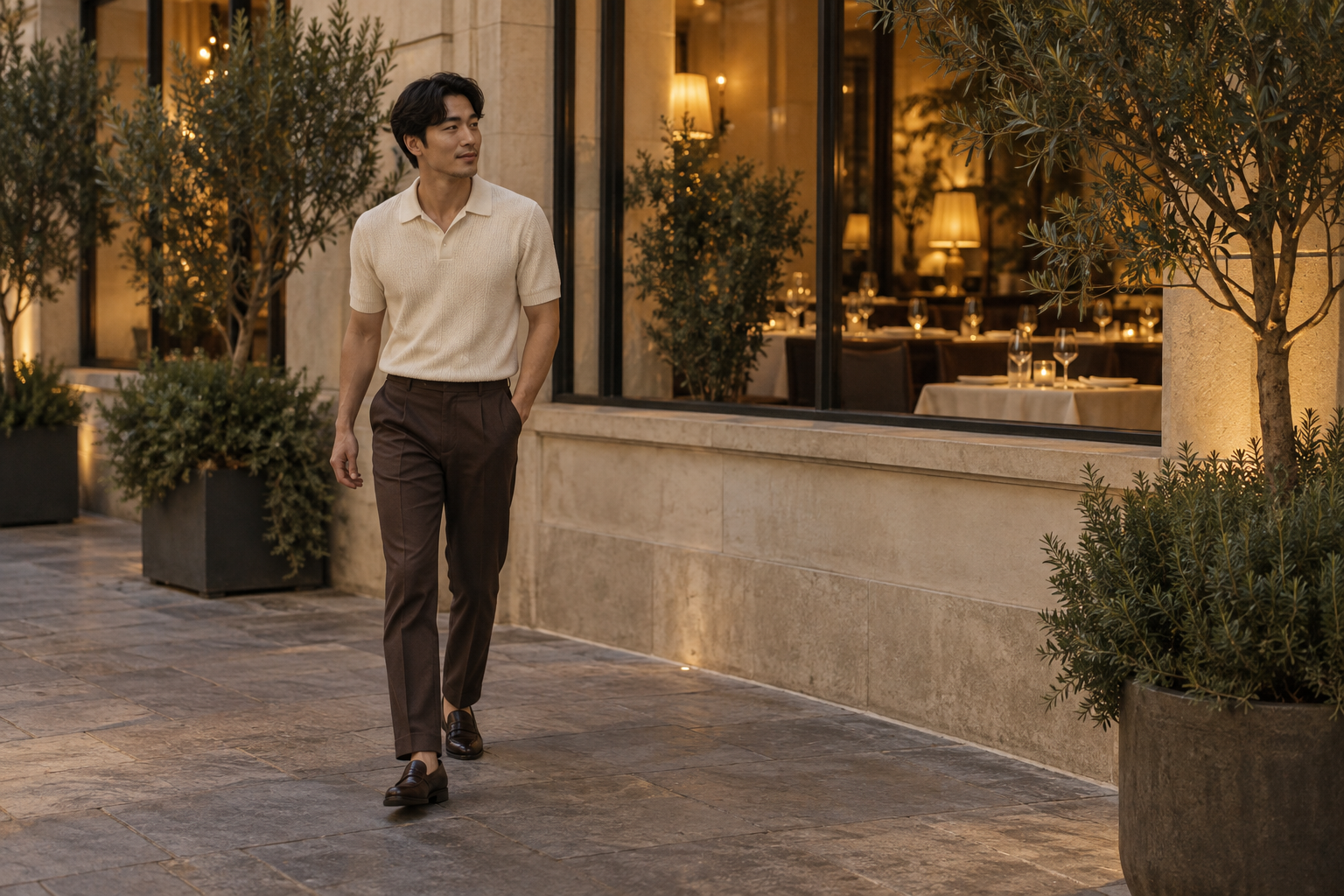
Evening linen. A darker colour hides seat creases, mid-weight fabric drapes instead of crumpling, and ten minutes with an iron before leaving does the rest.

The beach boundary. Linen shorts plus rope-soled shoes is a legitimately great look — it is just not smart casual. Know which one you are dressed for.
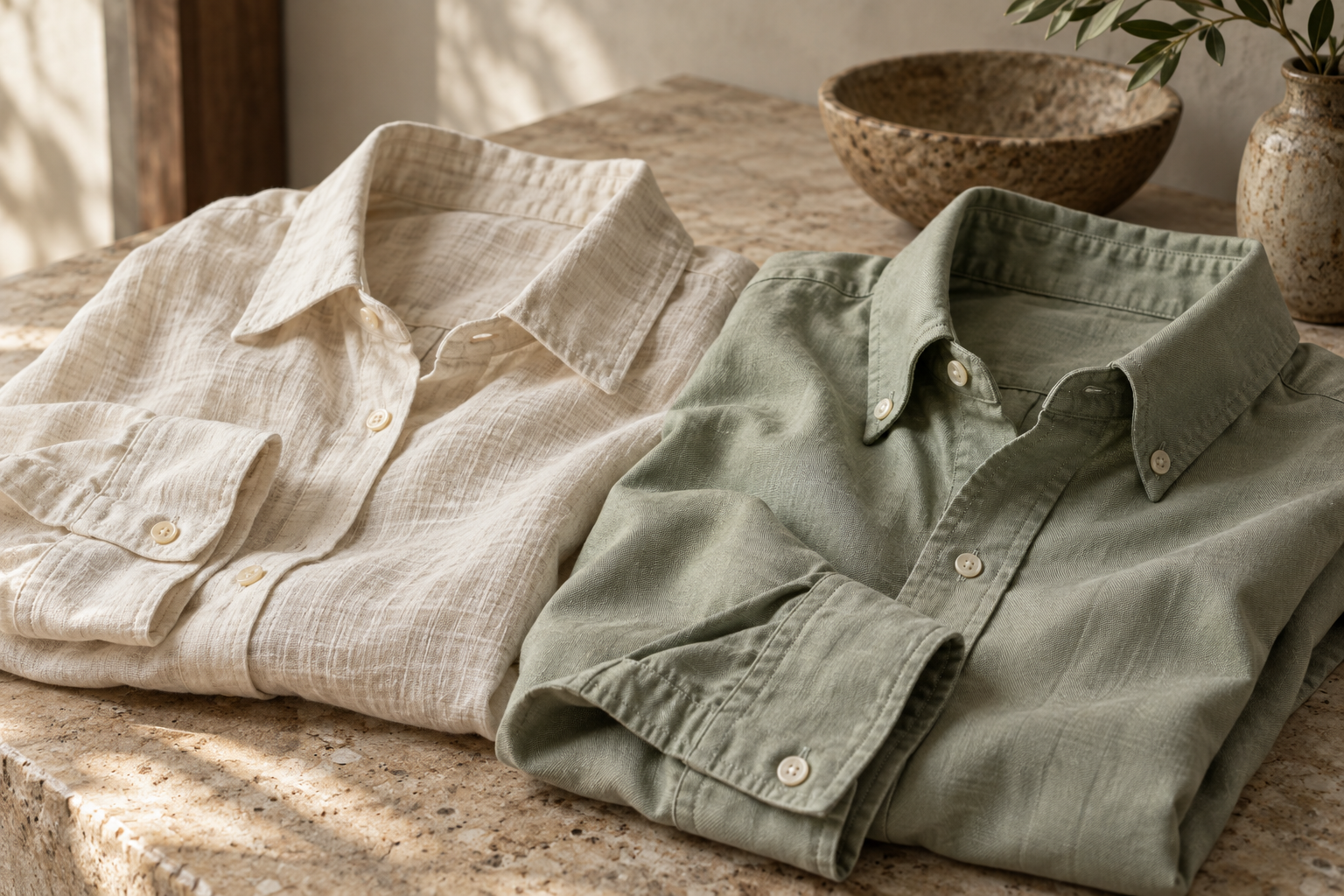
The relaxed smart answer. An unstructured linen blazer creases with the wearer instead of against them, and a knit polo keeps the collar deliberate.
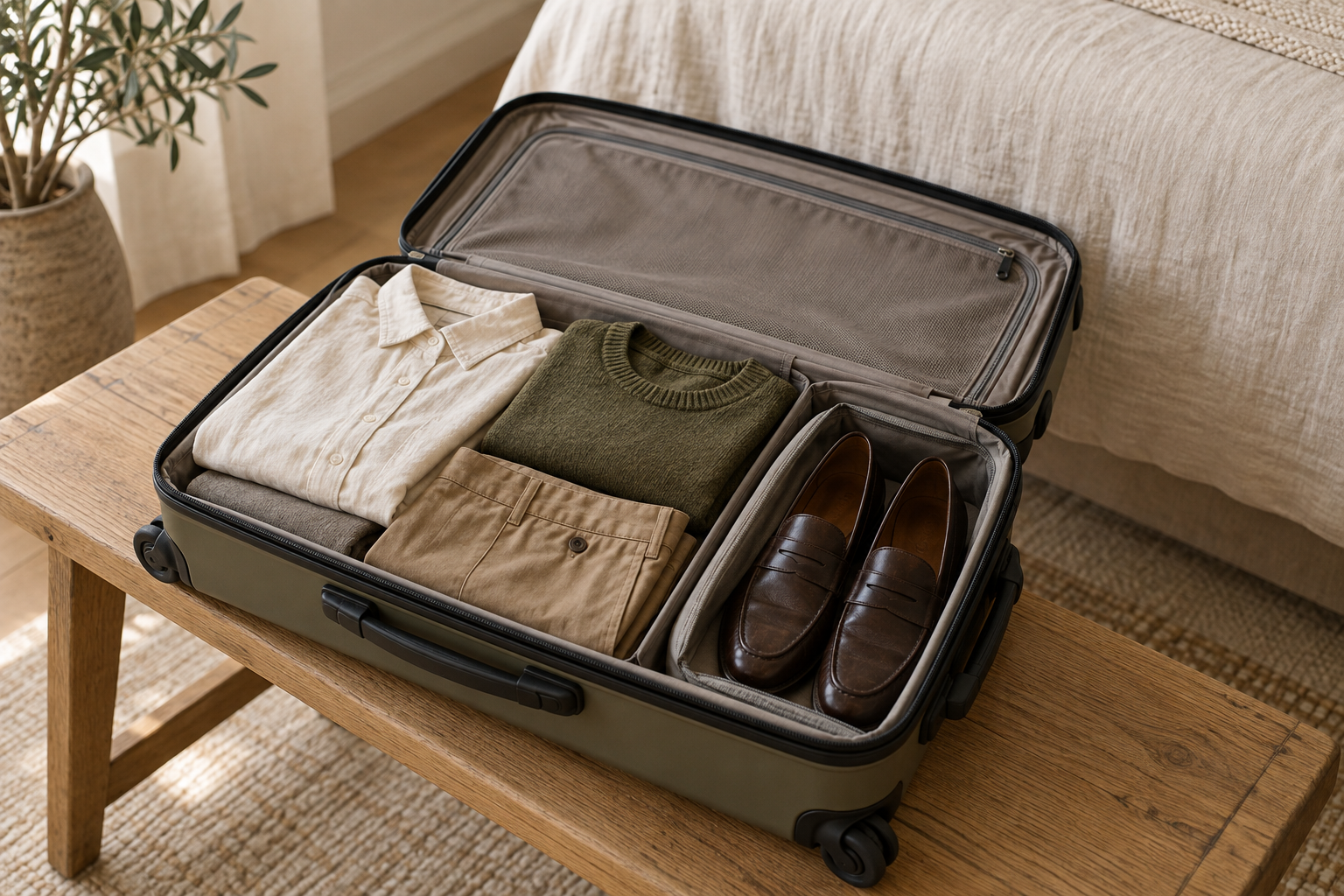
Linen is the correct answer for resort and travel heat. Rolled in the bag and pressed on arrival, it beats every synthetic that shines after one wear.
What to Wear
Is cashmere worth it? Judge grade from ply, fiber length and knit density, see when budget cashmere is fine, and what care really costs.
What to Wear
Is polyester bad? Not in principle — but shine, heat and pilling are real. The accept-or-avoid verdict for viscose, rayon and poly, by garment.
What to Wear
Poplin vs oxford, twill vs poplin, flannel: the four cotton weaves mapped to formality, season and care, with the GSM bands that tell you what you buy.