What to Wear
Is Linen Too Casual for Smart Casual? When It Works and When Not
Is linen too casual? Not in warm weather — the garment decides. When linen works, which blends stay smart, what weight to buy, and care that keeps it neat.
Fabric guide
Synthetics dominate most budgets, so the label needs a verdict system. Here is what polyester, viscose and rayon do well, where they fail, and which garments to buy them in.
Begin hereInspiration
Is polyester bad? No in principle — performance wear exists — but the label alone is not the verdict, because two polyester garments can behave nothing alike. What actually decides whether a fabric reads cheap or smart is sheen, weight and where it sits on your body, and every look below is chosen by those three checks.
The cheap read has a mechanism: high-sheen filament weaves mimic satin badly and announce a low price from across the room. The fix is matte. Matte-finish polyesters, brushed and flannel-textured weaves, and technical blends designed to kill sheen all read considerably more expensive than they are.
Run the light test in store: hold the fabric under the brightest light in the shop and look for glare. Fabric that reflects a sheet of light will do the same under office fluorescents and dinner candles. Fabric that absorbs the light and shows texture passes the ten-pace test that actually matters.
Polyester absorbs almost no moisture, so sweat sits on the skin side of the fabric and bacteria settle in — fine at the gym where you wash immediately, risky in a long meeting. This is the honest reason a poly shirt can smell fine out of the wash and sour by mid-afternoon.
Where polyester is genuinely fine: cool dry offices, outer layers that never touch skin directly, and showerproof jackets where the fiber's water resistance is the point. Where to avoid it: hot climates, long days, and anything worn close to skin daily. The hot-weather rule is natural fibers or purpose-built moisture-managing blends for shirts — the workarounds are in smart casual for hot, humid weather. Viscose is the contrast case: highly breathable and cool, but weak when wet.
Viscose and rayon are the same fiber with two names, and modal and lyocell are their upgraded cousins — all regenerated from wood pulp, all semi-synthetic. Their strengths are real: beautiful drape, a cool hand-feel, and a matte finish that often makes them the best-looking fabric at a budget price.
The weaknesses come with the structure: the fiber loses strength when wet, shrinks if washed hot, pills with friction, and bags at knees and elbows over a day. Head-to-head against cotton — drape, care, durability, price — the comparison runs in the cotton guide; start with cotton weights explained to see what you would be trading.
A small percentage of elastane in trousers and shirts — two to five — is worth accepting everywhere: comfort with no visible downside. One care note applies: hot washes and hot dryers kill stretch recovery, so the blend demands cool washing to stay good.
Poly-cotton blends are the sweet spot for easy-care work shirts, with roughly two-thirds cotton keeping breathability and the poly third adding wrinkle resistance. There is an honest case for blends beating one hundred percent natural: they resist wrinkles, cost less, and wash without ceremony — exactly what a starter wardrobe needs when the alternative is a shirt you must press after every wear.
| Garment | Verdict | Why |
|---|---|---|
| Dress shirts | Prefer cotton or matte poly-cotton | Worn at the skin all day; breathability and matte finish decide |
| Blazers | Avoid shiny poly; accept viscose blends | Structured layers sit away from skin, but sheen shows at dinner distance |
| Trousers | Accept poly with 2-5% elastane in tailoring | Recovery and comfort with no visible cost if washed cool |
| Knitwear | Avoid 100% acrylic; accept cotton or merino blends | Acrylic pills and shines fast at cuffs and collars |
| Outerwear | Poly shell is fine | Never touches skin; weather resistance is the job |
| Dresses and skirts | Accept viscose and lyocell blends | Drape is the entire look; just mind wet-weakness and bagging |
Read any label against that table and the decision takes seconds. A label reading polyester sixty-two, cotton thirty-five, elastane three on a pair of tailored trousers is a yes. Viscose one hundred on a floaty midi dress is a yes with care instructions attached. Polyester one hundred on a shiny shirt is the no that started the question.
Cheap polyester pills because short fibers work loose from a loose knit and tangle into bobbles at friction points — cuffs, sides, bag straps. Viscose fails differently: it bags at the knees and elbows as the weakened fiber stretches and does not spring back.
Thirty seconds in store predicts most of it. Stretch-and-release: the fabric should snap back with no bubble. Knit density: hold it to the light — a loose, open knit pills first. Seam twist: tug a seam gently; twisting means a shortcut somewhere else too. Longevity expectations differ sharply between a cheap poly blouse and a solid cotton one at double the price, and the gap shows after a season of washes, not on the hanger.
Machine washable, quick drying, and often no ironing at all — many poly-blend shirts come out of a cool wash ready to wear. That is a real advantage over cotton shirts that need pressing after every wash, and it is the honest low-effort lane for anyone who hates an ironing board.
Travel is the other win: wrinkle resistance and spill resistance make poly-blend trousers and knit blazers the low-stress packing choice, and the packing lists in the capsule guides lean on exactly this. Fabric choice is always a trade — the full landscape of options is mapped in the best fabrics for smart casual.
Is polyester bad for skin? It does no harm — the problem is breathability, which makes it a poor daily choice in heat and long days.
Does polyester look cheap? Only when shiny. Matte finishes and textured weaves kill the cheap read at any price point.
Is viscose a good fabric? Great drape and coolness with two caveats: it weakens when wet and bags at stress points over time.
Is viscose better than polyester? Depends on the job: viscose wins drape and breathability, polyester wins durability and easy care — which is why the verdict is per garment, not per fiber.
What percentage of polyester is okay? Two to five percent elastane blends and roughly two-thirds-cotton poly-cotton shirts are the safe thresholds; beyond that, judge by sheen and where the garment sits. Hot-weather wardrobes need stricter rules — see the hot-humid guide — and stretch-heavy tailoring is covered separately in stretch and performance tailoring.
6 looks to explore
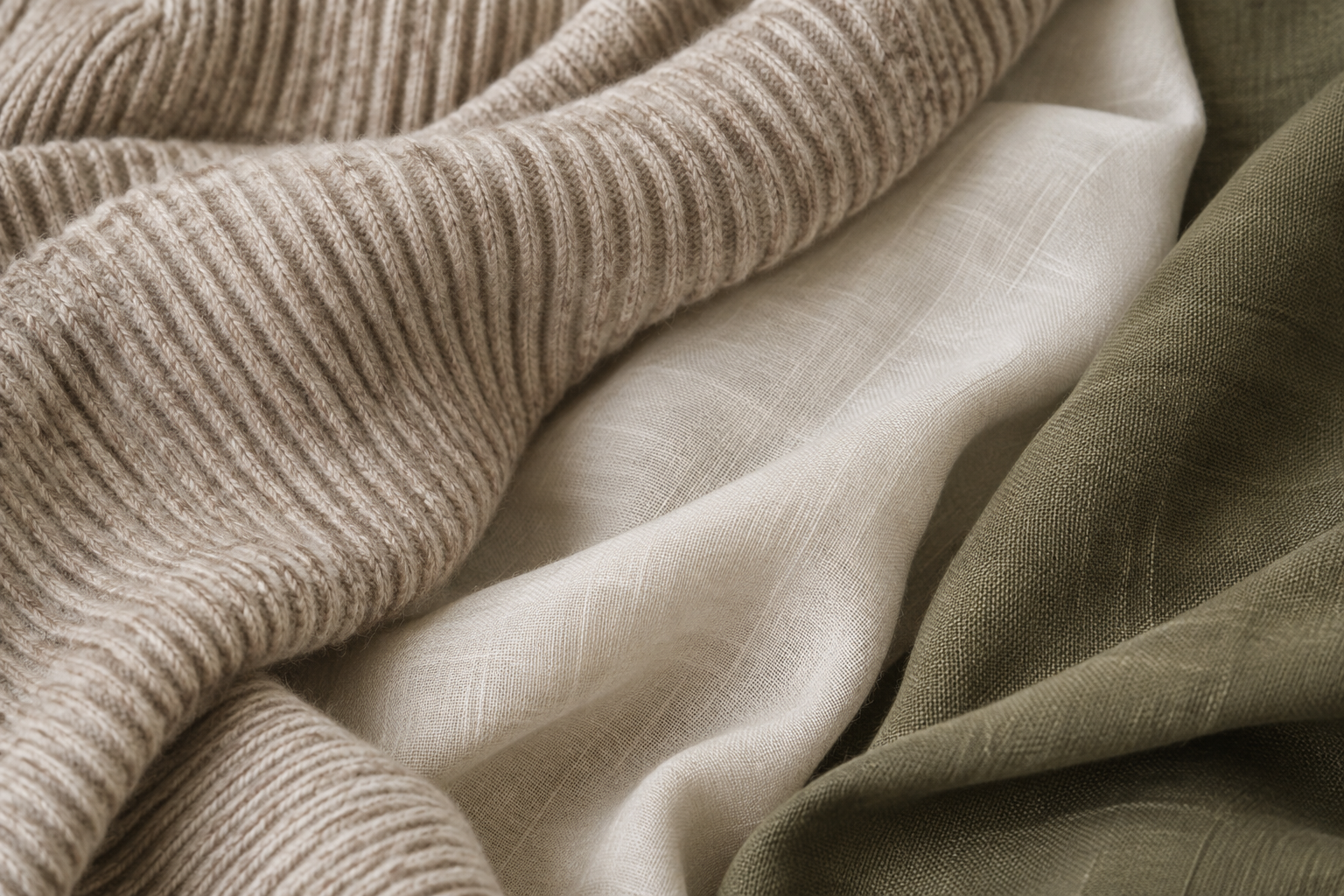
The acceptable polyester: a flat, light-absorbing texture that reads considered under shop lights. This is what the light test is looking for.
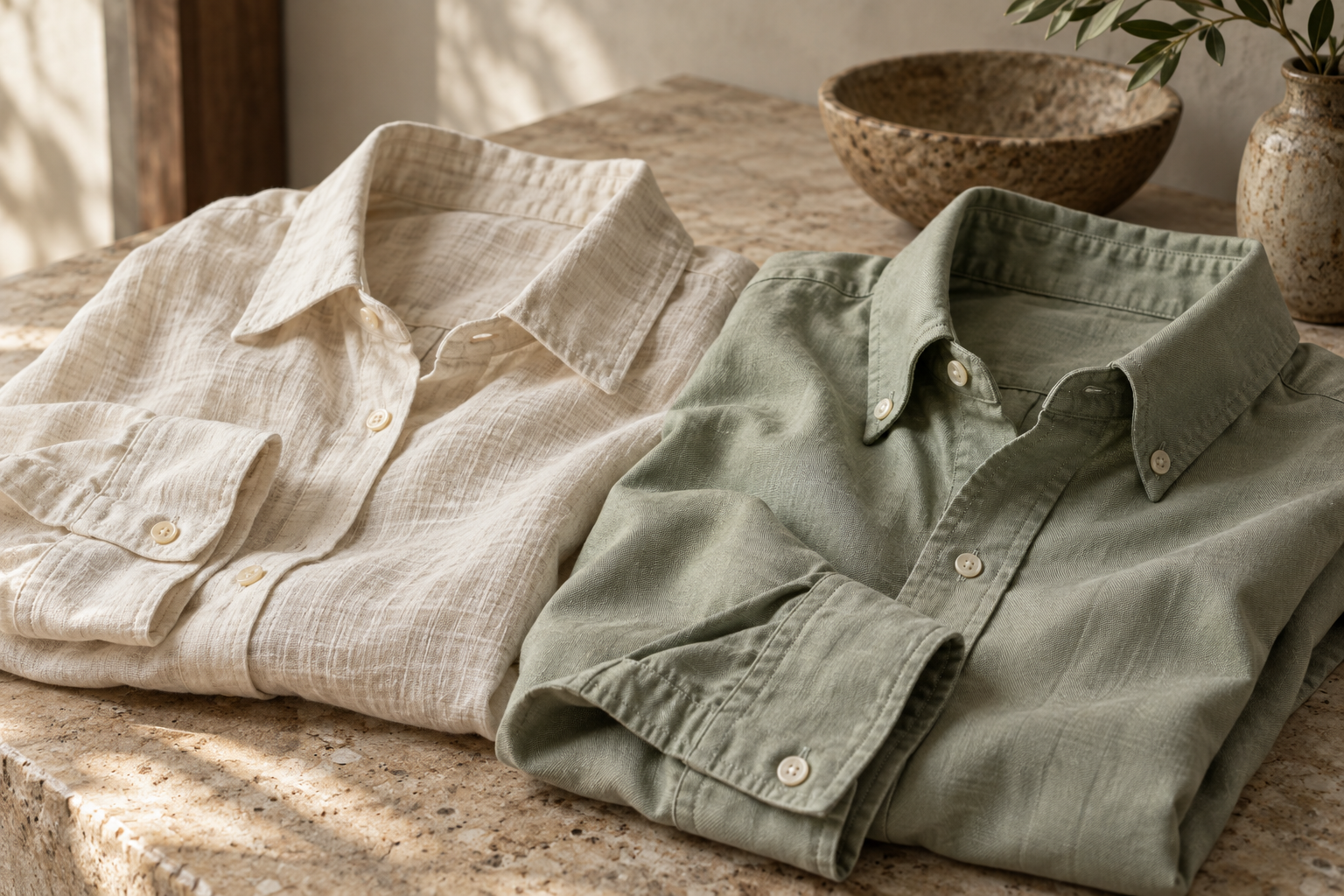
A high-sheen poly shirt reflecting a sheet of light — the cheap read at ten paces, whatever the price tag says. The one fabric failure no styling rescues.

Tailored trousers with a touch of stretch: the accept verdict. Crisp line on the hanger, comfort in the commute, provided the wash stays cool.
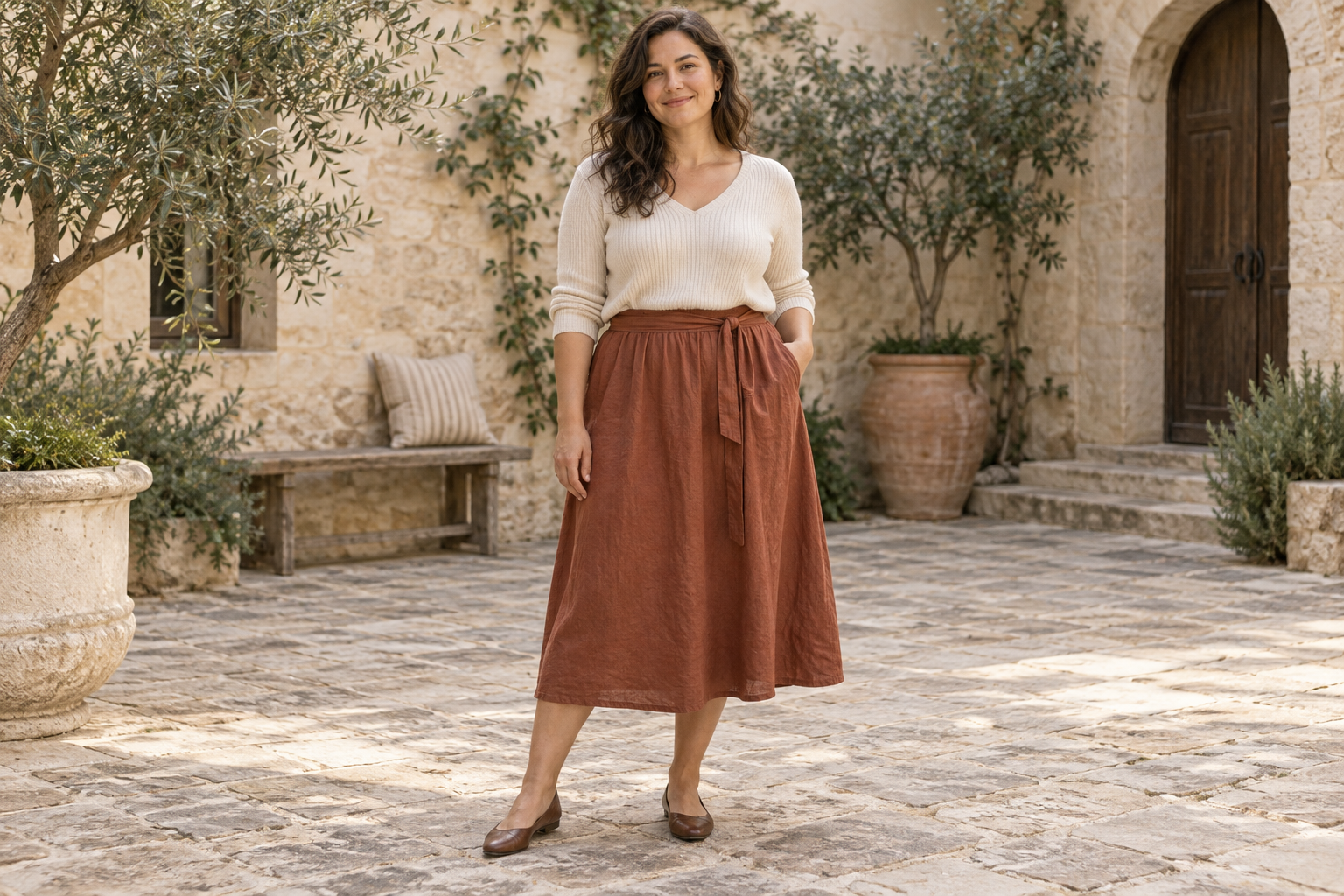
The fluid fall that makes viscose the best-looking budget fabric. The same drape is why it bags at the knee — beauty and weakness share a structure.
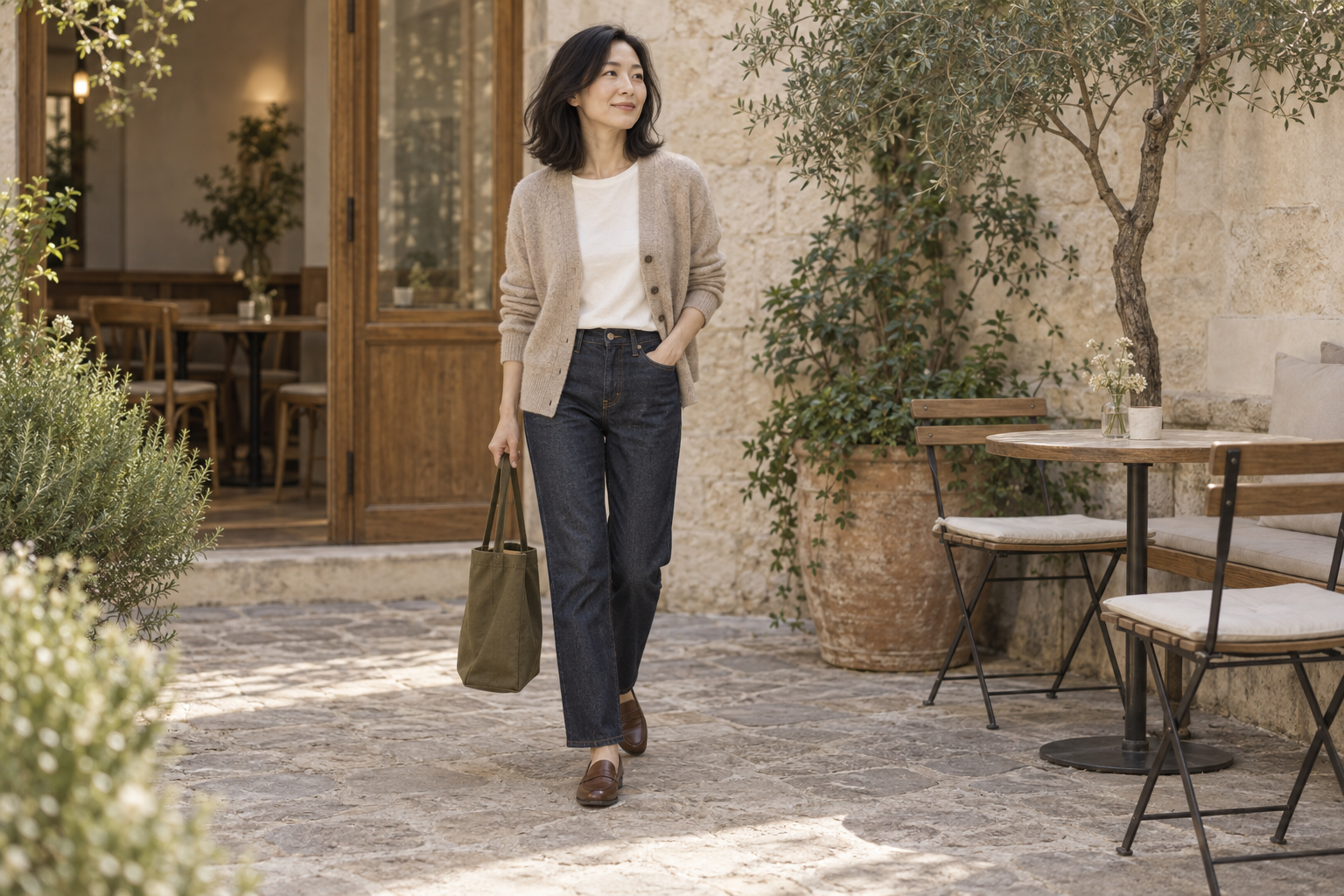
A pilled acrylic cuff next to a clean cotton-merino blend. Knits are where cheap synthetics fail fastest and most visibly.
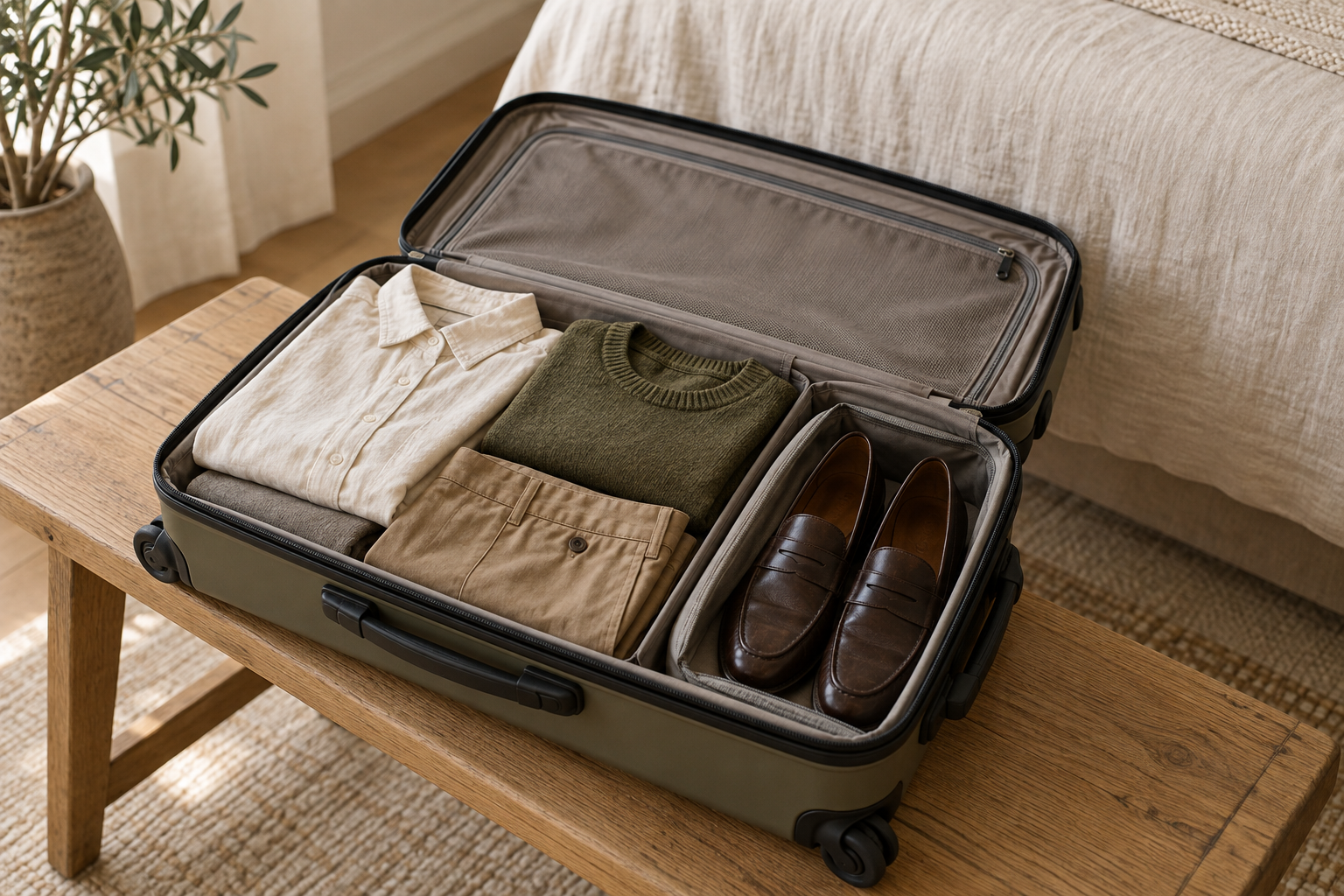
A polyester outer layer over natural layers — synthetic where it belongs: away from skin, doing a weather job, packed without wrinkles.
What to Wear
Is linen too casual? Not in warm weather — the garment decides. When linen works, which blends stay smart, what weight to buy, and care that keeps it neat.
What to Wear
Poplin vs oxford, twill vs poplin, flannel: the four cotton weaves mapped to formality, season and care, with the GSM bands that tell you what you buy.
What to Wear
Stretch dress pants decoded: what elastane percentages and four-way stretch actually do, the knee-bagging test, honest wool comparisons and care rules.