Problem-solving
Look presentable at 38°C without melting
Smart casual in 38c+ weather is a different problem from ordinary summer dressing: humid heat defeats fabric the way dry heat does not, and sweat shows up no matter how carefully you chose the shirt. The fix is structural — in genuine heat, smartness comes from garment structure and fabric rather than layers, plus a sweat strategy that is prep, not repair.
Fabrics that actually keep you cool
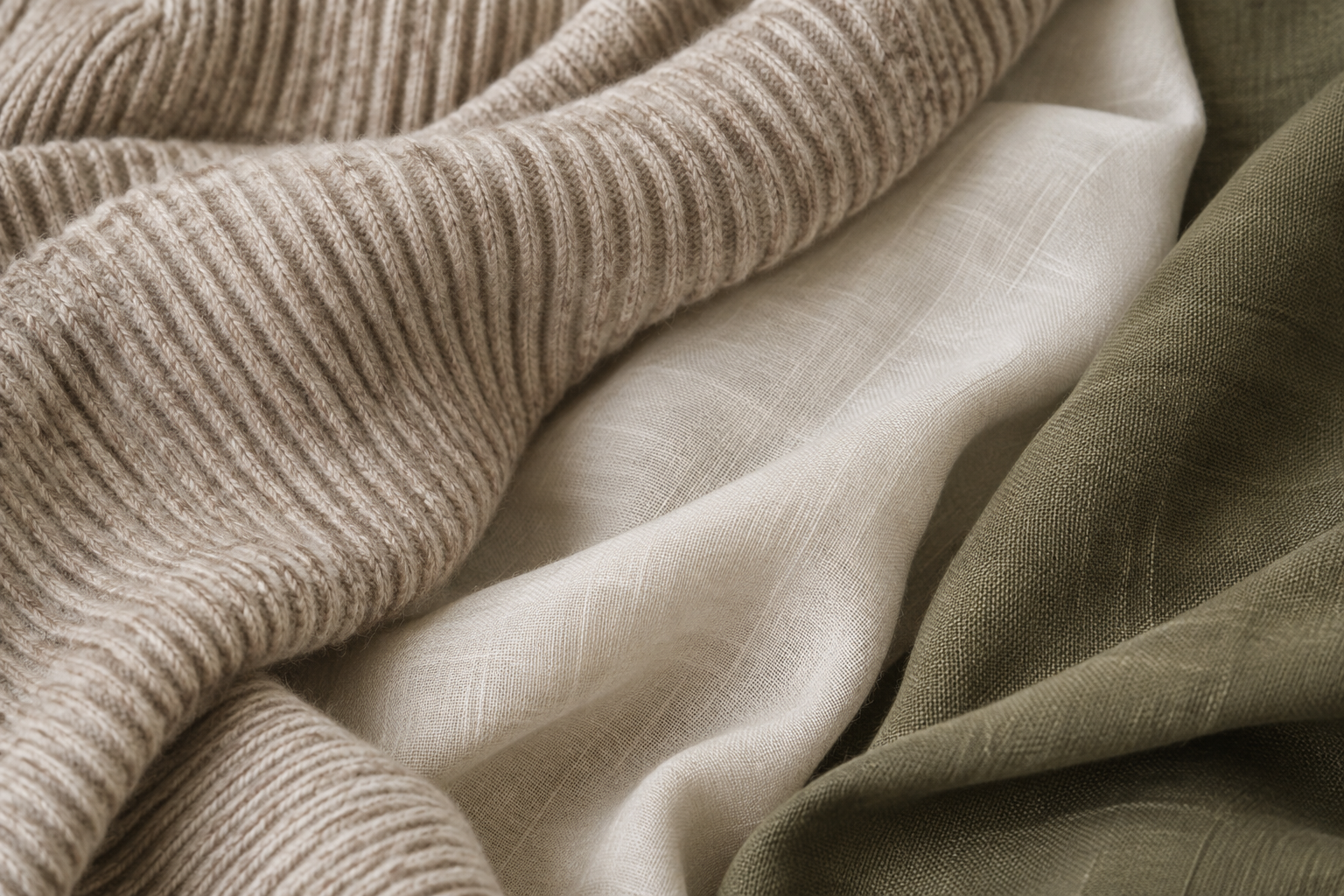
Ranked for humid heat: linen first for airflow despite the creases, cotton poplin for a dressier look that dries fast, seersucker for its crinkled weave that holds fabric off the skin, tencel or lyocell for a fluid drape that stays cool, and lightweight merino, which sounds like winter but is genuinely breathable in thin gauges. What to refuse in heat: polyester linings, heavy denim, thick knits, and anything marketed as athletic moisture-wicking that still traps heat in a tailored cut.
Fit matters as much as fibre: the rule is drape, not tightness. Skin-tight clothes glue to sweat; shapeless baggy ones read sloppy. Loose-but-structured — cut so air moves, tailored so the lines are clean — is the smart-hot-weather look. More on choosing the base layer in linen fabric guide and the wider best fabrics for smart casual rundown.
Colours that hide the marks
Quick rules: light solids and busy small patterns hide sweat; big mid-tone plain panels show it. Underarms and upper back are the zones to move into pattern or darker tones where the outfit allows. The full treatment, including why white and mid-grey behave differently than people expect, lives in fabrics that hide sweat.
Humid-climate workwear that survives the commute
For men: short-sleeve structured shirts, lightweight wool or cotton trousers, and the no-jacket office formula — in genuinely hot countries the jacket on the hanger, not on you, is the office norm, and the blazer appears only for meetings. For women: breathable midi dresses and wide-leg linen trousers carry most days, with the sleeveless-plus-light-cover strategy for conservative offices and a sweat-proof underlayer doing quiet work underneath.
The contrast problem is its own puzzle: 38°C street, 18°C office. The answer is a foldable layer that lives at the desk — a fine merino crew or a light blazer kept in the drawer, never worn on the commute.
Five copyable looks for 30°C+ days. Fabric does the work; each keeps one structured element.| Occasion | The look | Why it works |
|---|
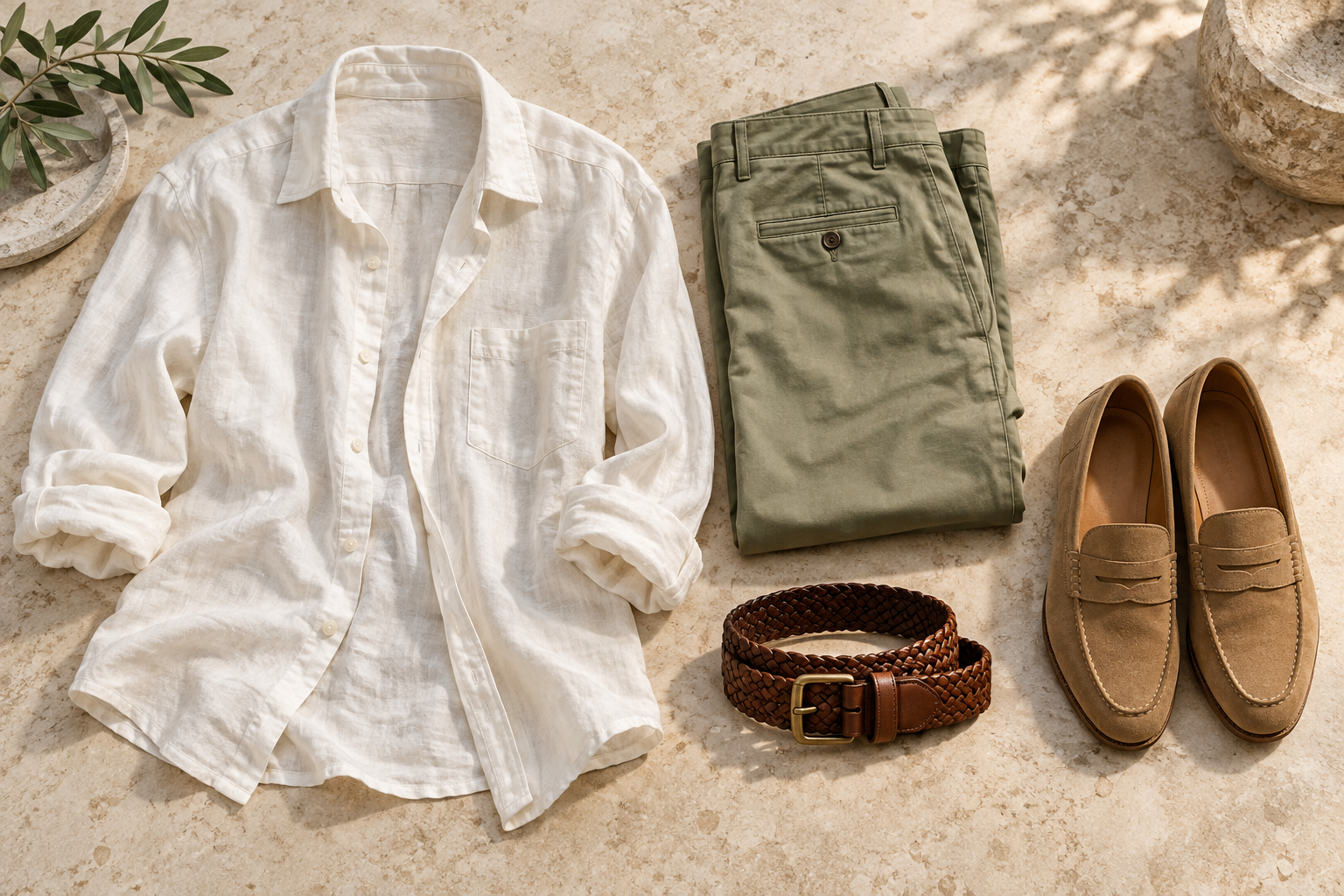
| Office, men | Pale linen shirt, stone lightweight trousers, loafers with no-show socks | Collar and trouser crease carry the formality the jacket usually would |
| Office, women | Sleeveless wrap midi in tencel, leather slide sandals, structured bag | One-piece dressing means no stuck layers, and the wrap keeps shape |
| Outdoor event | Patterned short-sleeve shirt, tailored shorts or trousers, smart espadrilles or loafers | The pattern hides marks and the tailoring stops it reading as beachwear |
| Wedding in heat | Unlined light-colour suit or separates, open collar, arrive-cool plan with the jacket over the arm | Fabric substitutions keep the formality; the jacket appears only for the photos |
| Dinner after sunset | Dark short-sleeve knit or camp-collar shirt, dark trousers, loafers | Evening light changes the palette — darker tones read deliberate again |
When the dress code will not bend
Weddings, interviews and client meetings keep their formality in heat through substitutions, not removals: linen or linen-blend instead of wool, open collar instead of tie, loafers instead of oxfords, lighter colours throughout. Before an interview, time the journey so you arrive fifteen minutes early and cool down somewhere air-conditioned — a sweat-soaked first impression costs more than any outfit decision.
Ask the host or venue the two questions that change everything: is it outdoors, and is there air conditioning? An outdoor ceremony in the sun argues for separates and loafers; a ballroom at 20°C argues for the jacket after all. The polite way to ask is covered in asking the host about the dress code, and hot-climate norms get a fuller treatment in Australian smart casual.
Mistakes that make heat outfits look sloppy
- Gym wear passed off as smart — athletic fabrics in a tailored cut still trap heat and never read formal
- Massive logos, which are the first thing people see once the jacket is off
- Wrinkled linen that was never pressed — texture is fine, neglect shows
- Damp patches ignored at arrival — ten minutes of cooling and a blot before you walk in fixes most of it
- Humidity hair chaos — one product and a cut that suits the climate beat a daily fight; the grooming hub covers the rest
Hot weather questions
What is smart casual in 38 degree weather? The no-jacket formula: a breathable structured shirt, a tailored lightweight trouser, and proper shoes — smartness carried by fabric and structure, with a jacket added on arrival only if the code demands it.
How do you look smart in humid weather? Drape beats tightness, every outfit keeps one structured element, and everything is pressed — heat forgives warmth, never wrinkles.
Do you have to wear a jacket for smart casual? Not in genuine heat — below about 35°C the no-jacket formula stands; for strict codes, use the arrive-cool strategy instead of suffering through the commute.
For the milder end of the warm months, the spring and summer smart casual guide covers the shoulder seasons, and resort smart casual covers the holiday version of the same problem.
Open the symptom that matches. Start there.
Sweat marks before you even arrive
Possible cause: Tight synthetic layers hold moisture against the skin, and mid-tone plain fabrics show every wet patch the moment it forms.
Try first: Apply antiperspirant the night before so it can block the ducts properly, wear a thin merino or micro-mesh undershirt as a buffer, and move the sweatiest zones into pattern or darker tones where the outfit allows.
The outfit looks sloppy by lunchtime
Possible cause: Heavy or lined fabrics sag, crease and trap heat, and wrinkled linen that was never pressed gets read as neglect, not texture.
Try first: Swap to unlined, loose-weave pieces in linen, cotton poplin, seersucker or tencel, and press everything the night before — the linen excuse does not cover actual creases.
Jacket on, dignity gone
Possible cause: A lined jacket in humid heat turns the commute into a sauna, and taking it off reveals a shirt that was never designed to stand alone.
Try first: Use the no-jacket formula below for anything under 35°C, and for strict codes use the arrive-cool strategy: travel in the lightest layer, add the jacket on arrival, blot and breathe for ten minutes first.
Feet cooked by mid-morning
Possible cause: Synthetic linings and closed cells trap heat and moisture, and dark socks with sandals make it visible as well as uncomfortable.
Try first: Loafers or driving-shoe styles with no-show socks, leather sandals at the casual end where the code allows, and a rotation with cedar trees overnight so no pair starts the day damp.