Fabrics and Colours That Hide Sweat (Stay Smart in the Heat)
Visible sweat is a fabric and colour problem before it is a clothing problem. Which materials and shades hide marks, which constructions make it worse, and the stack that keeps you smart at high temperatures.
Stop sweat showing: fabrics, colours, construction
Sweat marks are not a hygiene failure — they are light bouncing off wet fabric. Change what the light hits and the problem mostly disappears: the right fabric, the right colour, and a barrier layer where it counts. Here is the ranking, the chart, and the order of operations.
Merino in heat: the counterintuitive champion
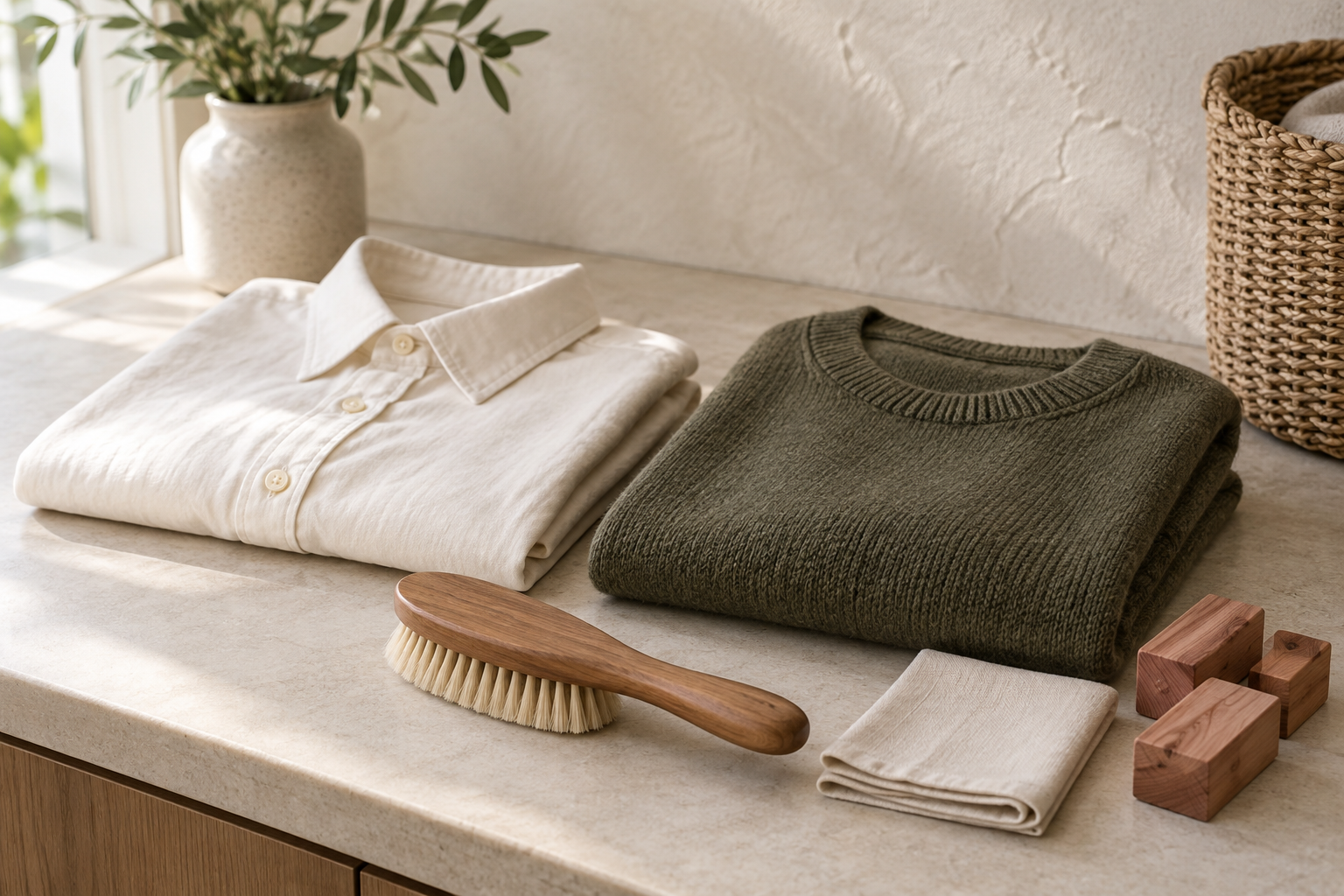
Merino works in hot weather because it moves moisture off skin as vapour, buffers temperature, and resists odour so a shirt lasts multiple wears on humid trips. The rule: ultralight garments only — fine-gauge knits and featherweight tees, never mid-weight winter pieces.
The honest drawbacks: price, delicacy, and slower drying than linen. On a budget or in a downpour, cotton or linen beats it. If you switch to merino, the hot and humid smart casual guide covers the full-weather outfit around it.
Construction beats labels
Weave and weight — gauzy breathable fabric can cling and show more; mid-weight with drape hides better than thin.
Fit — tight sleeves press fabric to skin and wick marks outward; a looser sleeve keeps air moving.
Undershirts — thin merino or micro-mesh absorbs first; skip them when the temperature alone is the problem, because they add a layer of heat.
Performance sportswear — moisture-wicking gym fabric reads wrong for smart casual and often shows marks worse; keep it at the gym.
The antiperspirant plus clothing stack, in order
Night one: apply clinical antiperspirant at bedtime — it needs dry skin and hours to work; morning application on damp skin mostly washes off.
Layer two: barrier undershirt or sweat pads for big days — the layer that takes the moisture instead of your shirt.
Layer three: outer shirt in a safe fabric and safe colour — merino, linen or loose cotton in white, black or textured weave.
Mid-day rescue: blot rather than rub, cool down under a hand-dryer, and keep a spare shirt in the bag for the worst days.
Sweat-mark decisions at a glance. Results vary with dye and weave — test with water on a hidden hem before trusting a garment.
If sweat shows at...
Fabric to pick
Colour to pick
Extra layer
Underarms
Linen or loose-weave cotton
White, black, small print
Pads or dress shield
Back
Lightweight merino
Black or very dark navy
Barrier undershirt
Chest
Merino or tencel, mid-weight
Very light shades, textured knit
None — keep it loose
Whole body
Linen, open weave
White or pale neutral
Skip layers, manage timing
Outfit formulas for high-sweat situations
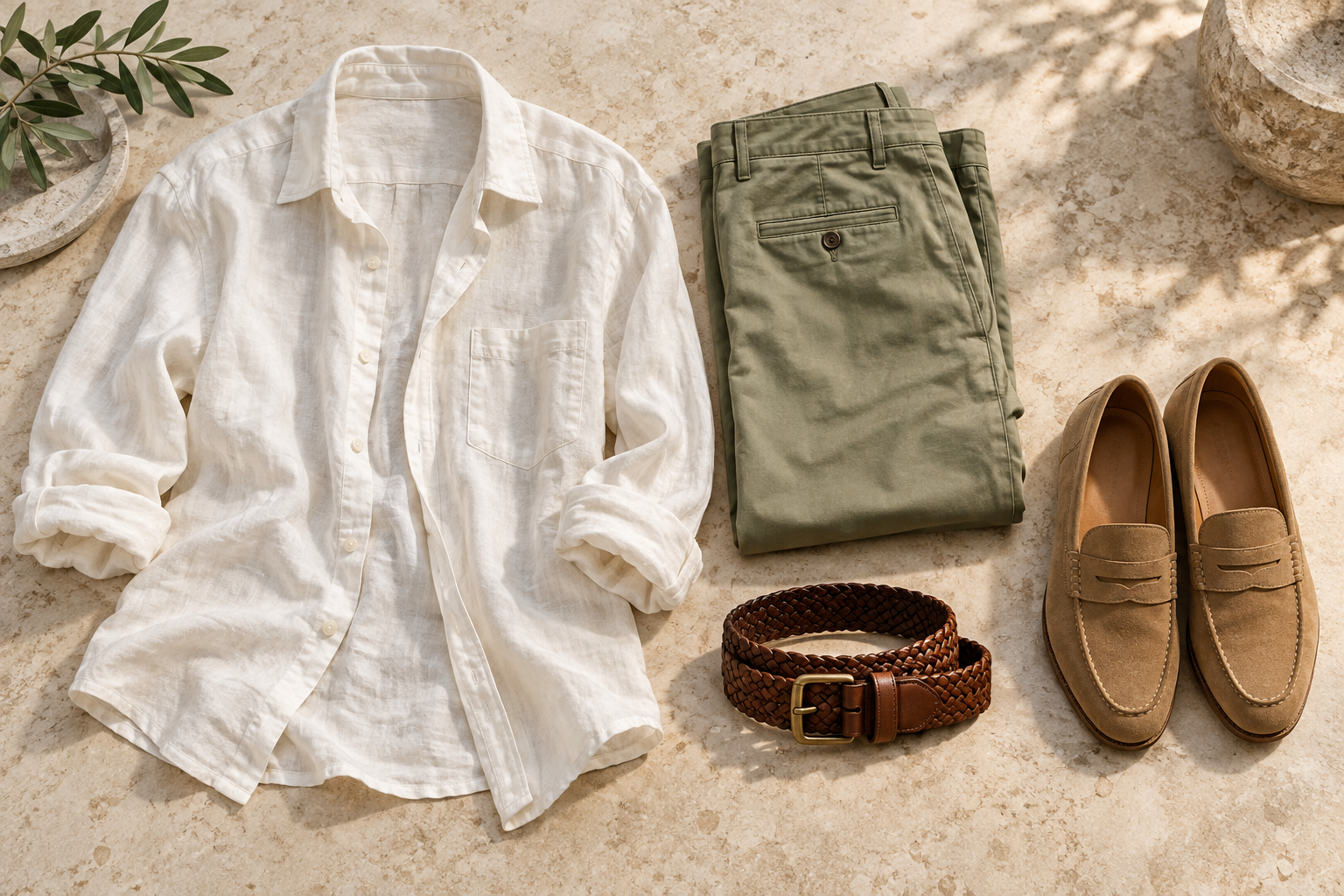
The very hot office day: merino or linen shirt in a safe colour, loose tailored trouser, spare shirt folded in the bag — arrive early, cool down, then walk in.
Wedding or interview in heat: darkest safe palette, barrier undershirt, and timing — arrive cool, sit before you have to stand.
Everyday hot-climate template: breathable midi or wide-leg trousers, a patterned top that hides marks, and structured layers cut so they do not touch the underarm zone.
Sweat and clothing: quick questions
What colour shows sweat the least? White and black, then the very lightest and darkest shades. Light grey and mid-tones are the worst offenders.
Does merino wool work in hot weather? Yes, in ultralight weights — it wicks and resists odour, feeling drier than cotton at the same temperature.
What fabric dries fastest? Linen first, then lightweight merino; heavyweight cotton is slowest, and tight polyester traps moisture instead of releasing it.
Do sweat pads work? Yes, as a barrier — they catch moisture before it reaches the shirt. Their limits are heat, bulk and needing a spare on long days, not effectiveness.
How do I stop sweat showing through my shirt? The full stack, in order: clinical antiperspirant at night, barrier undershirt for big days, then a safe fabric in a safe colour on top.
Open the symptom that matches. Start there.
Dark damp patches blooming at the underarms or back
Possible cause: A mid-tone colour — light grey, light blue, mid pastels — turns translucent where it is wet, so the patch shows at its worst exactly in the shades people assume are safe.
Try first: Move to the safe zone: white, black, or the very lightest and very darkest shades. Add texture — a small print, heathered knit or linen slub — and the fabric stops reading wet even where it is.
Shirt that stays damp for hours after you stop sweating
Possible cause: Heavyweight cotton or tight-weave polyester is holding the moisture against you instead of releasing it.
Try first: Switch to fabrics that dry fast: lightweight merino, linen, loose-weave cotton or tencel. Linen is the fastest drier of the smart-casual options — see the shirts guide for how these fabrics behave in wear.
Everything feels hot even in short sleeves
Possible cause: Tight sleeves and close weaves press fabric to skin, so sweat has nowhere to go and marks wick outward in a ring.
Try first: Choose a looser sleeve and an open weave so air moves; mid-weight with drape hides more than thin and clingy, because thin fabric sticks to skin and shows every mark.
Sweat showing through blazers at events
Possible cause: The jacket has no barrier, so underarm moisture transfers straight to the lining — the hardest mark to fix mid-event.
Try first: Dress shields or garment guards inside the jacket catch moisture before it reaches the lining; pair with a barrier undershirt underneath for the whole stack.
Different causes need different fixes.
You can see sweat because wet fabric changes how it reflects light: fibres that swell or turn translucent show a dark bloom, especially in mid-tones with a smooth surface. That is why sportswear branding about breathability often misses the point for smart casual — a gauzy performance fabric can breathe beautifully and still display every patch, while a textured mid-weight hides the same moisture entirely.
Make one small change.
Change the colour before you change anything else. Moving a shirt from light grey to white or black hides more sweat than any fabric swap, and it costs nothing.
Work on the part that needs it.
The fabric ranking
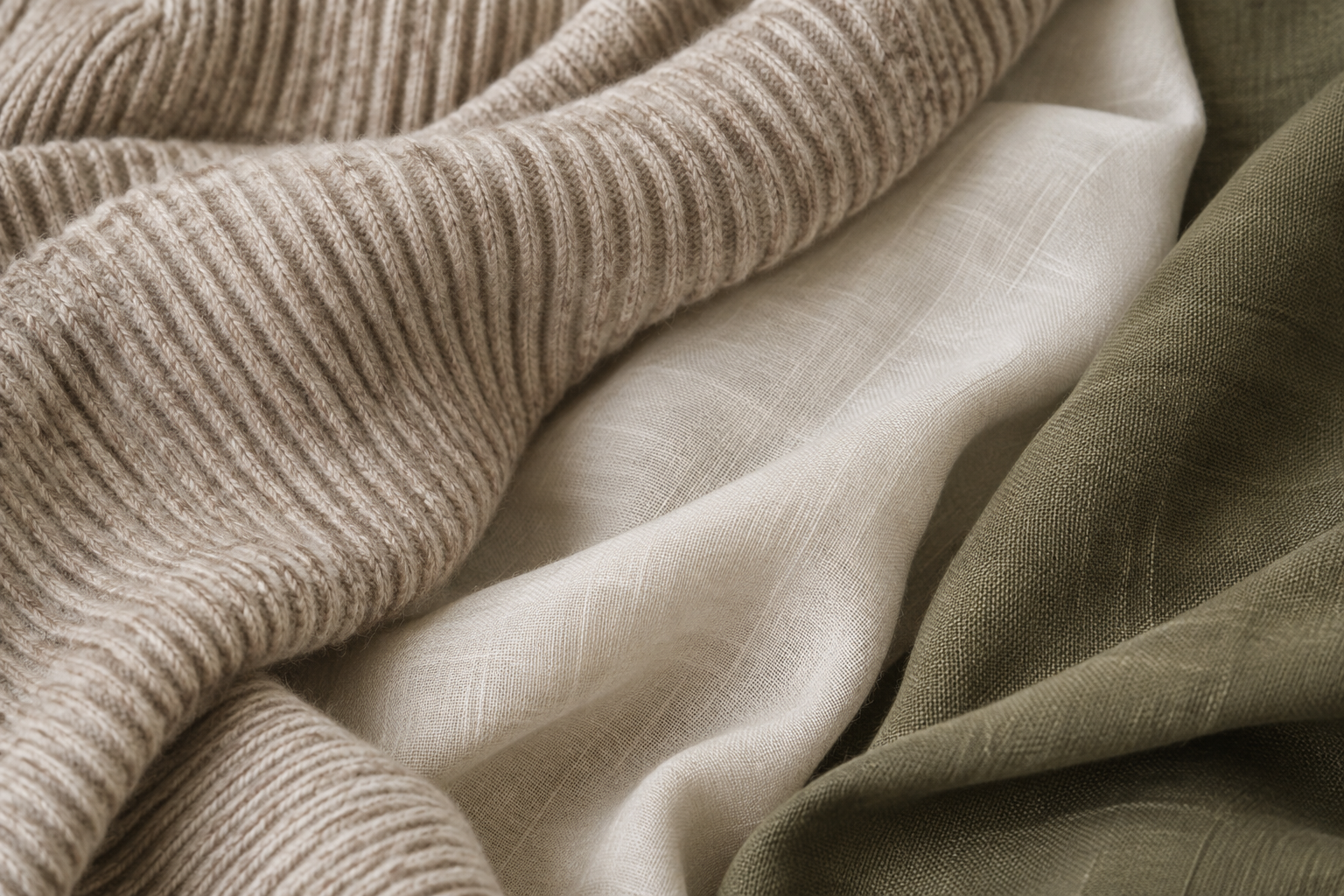
Lightweight merino wool leads — it wicks, resists odour through repeated wears, and never blooms a dark patch. Linen follows: it dries fastest and its natural texture disguises marks. Then loose-weave cotton and tencel or lyocell. Avoid tight-weave polyester, which traps and displays moisture, and silk, which rings. See the full merino wool guide for weights and care.
The colour chart
Safe zone: white, black, and the extremes of light and dark. Danger zone: mid-tones — light grey, light blue, mid pastels — where patches bloom hardest. Patterns and texture beat flat colour alone: small prints, heathered knits, seersucker and linen slub all break up the wet reflection.
The undershirt and barrier layer
A thin merino or micro-mesh undershirt absorbs sweat before it reaches the visible layer — worth it for events, too hot for ordinary summer days. Sweat pads and barrier undershirts exist for exactly this; their honest limit is bulk and heat, not effectiveness. Dress shields inside blazers protect linings at weddings and interviews.
When to stop adjusting.
If you soak through clothing regardless of fabric, colour and barrier layers, treat it as a medical question rather than a wardrobe one — excessive sweating is a recognised, treatable condition, and a GP or dermatologist can offer options no undershirt can. There is no embarrassment in that conversation; it is the step most people wish they had taken sooner.
Warm smart casual outfits for a real winter: invisible thermal layers, the overcoat that carries the look, temperature bands, and the commute-boot swap.