Warm months do not ask you to dress down — they ask you to dress lighter. Keep the same outfit architecture of smart trouser, structured top and smart shoe, then swap in hot-weather fabrics, lighter colors and fewer layers as the season runs.
The single rule behind every look here: change fabric weight and color, never formality. A linen shirt works the same slot your oxford worked in March, and stone trousers take over from charcoal without dropping a single formality notch. Pick the look that matches your month and setting, then use the transition plan to move between them as the heat builds.
The spring vs summer split
Spring keeps layering in play: the light jacket, the unlined blazer, the overshirt over a lighter base. Summer is when layers exit entirely and fabric and fit have to carry the smartness alone.
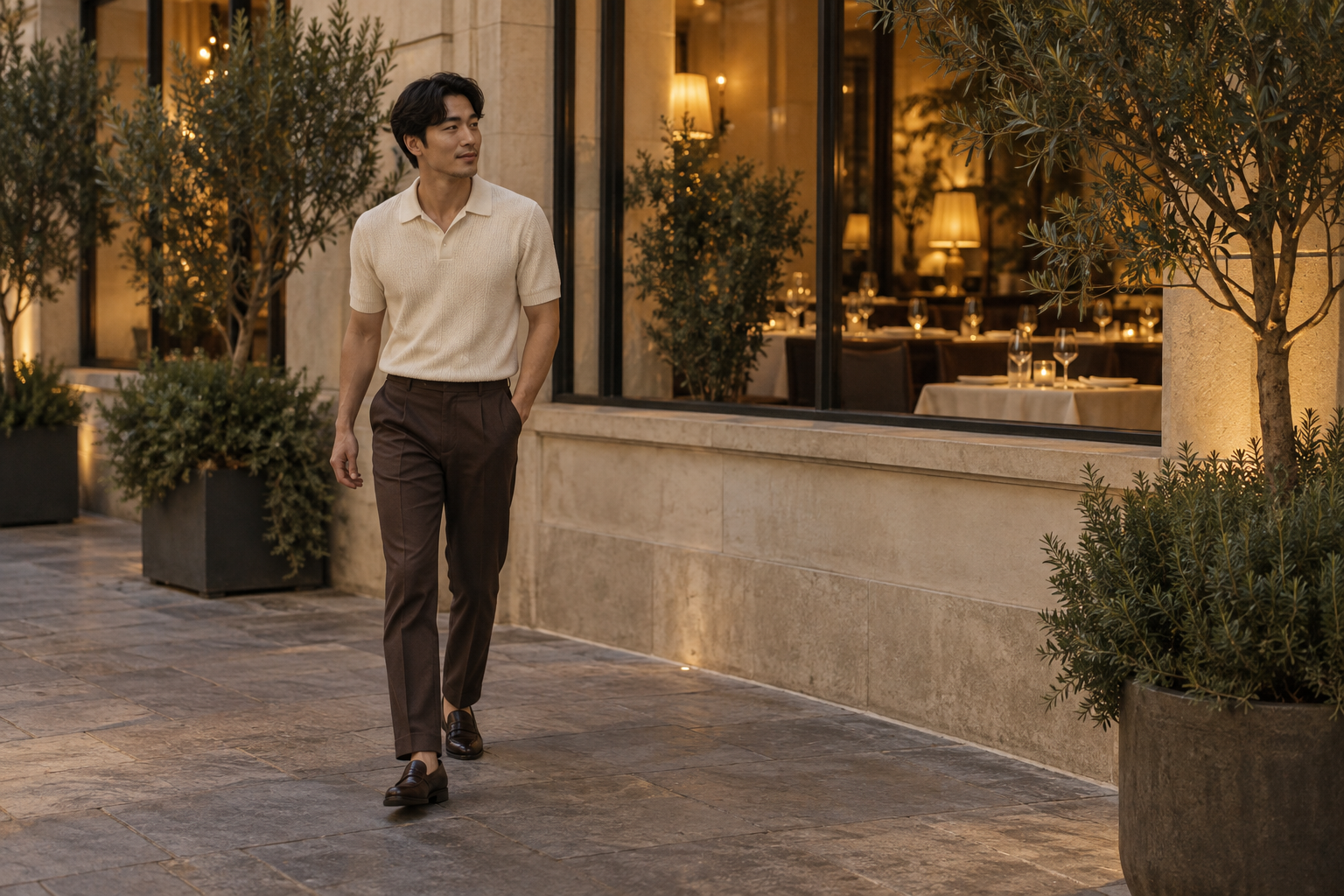
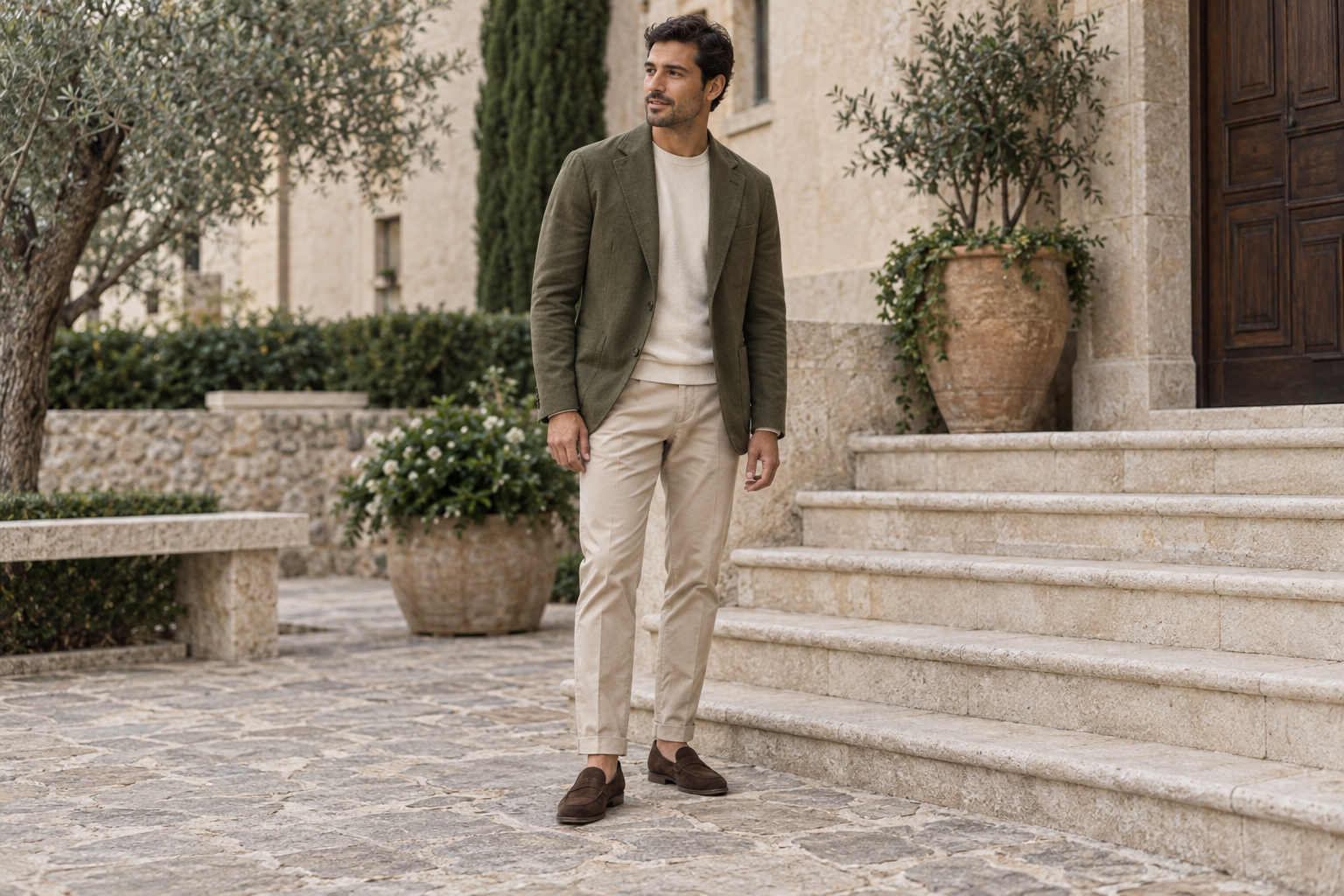
Three first-warm-day outfits cover the main situations: linen-blend shirt and white trousers for weekends, short-sleeve structured shirt and lightweight wool trousers for the office, and the unlined blazer combo for events. Each is the same architecture as your cold-weather version, executed lighter.
A month-by-month transition plan
March and April: keep the mid layer, lighten the base — this is the overshirt and chore-jacket window, worn over poplin instead of flannel.
May and June: unlined blazers, linen blends and short sleeves enter; the office reads jacket-optional, so the shirt has to be structured enough to stand alone.
July and August: no-jacket outfits, tailored shorts where the setting allows, and dressier sandals or closed leather shoes instead of winter boots.
Hemisphere check: if your summer is the default rather than a season, the year-round version of this plan lives in smart casual for hot and humid weather.
Linen season: wearing it without looking crumpled
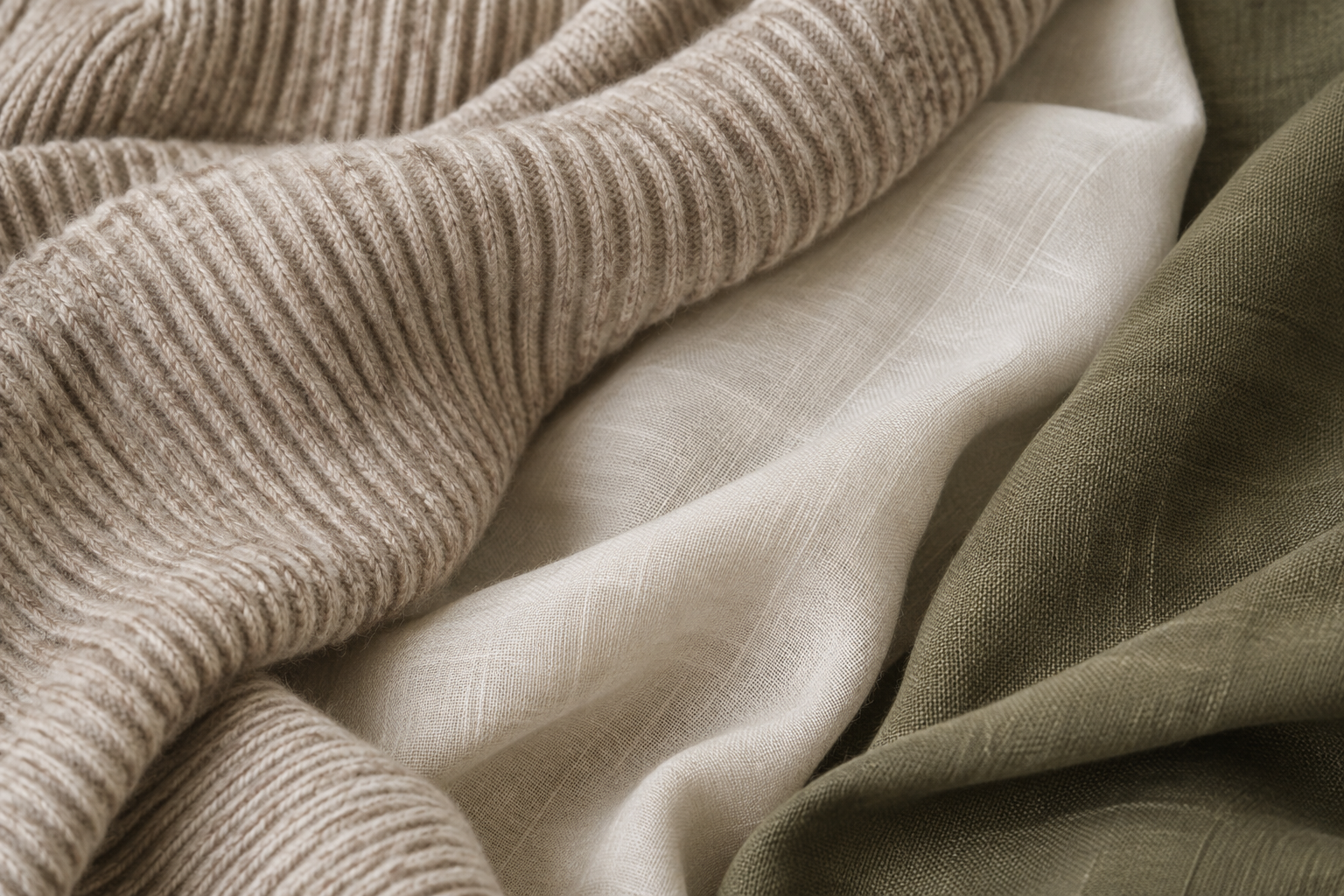
Pure linen creases the moment you sit; a linen-cotton or linen-viscose blend creases less and is often the smarter buy for shirts and trousers you wear to work. Linen-look polyester is the step too far — it stops breathing, which defeats the point.
Linen earns its place in shirts, trousers and unstructured blazers. It fails in dark linings and heavy interfacing, which trap heat and turn the garment into a sauna with structure.
The crease question: press the garment, then accept the sitting creases as the fabric being itself — the intentional-crease argument. How to wash, press and store it is in the full linen fabric guide.
Light colors done smartly
The warm-weather palette ladder runs stone, sand, light blue, olive and white. Combinations within it stay smart when one dark element anchors the outfit: brown shoes with stone trousers, a navy polo with sand shorts, a dark belt with light denim.
What reads sloppy in light colors is rarely the color — it is thin, see-through fabric, visible underwear lines, or white jeans in a setting that cannot carry them. Run the opacity and fit check before leaving the house, and keep one dark element in every light outfit.
Warm weather workwear for the office
Men: short-sleeve shirts pass when the collar is structured and the fabric is solid or micro-patterned — the camp-collar holiday shirt is a different category.
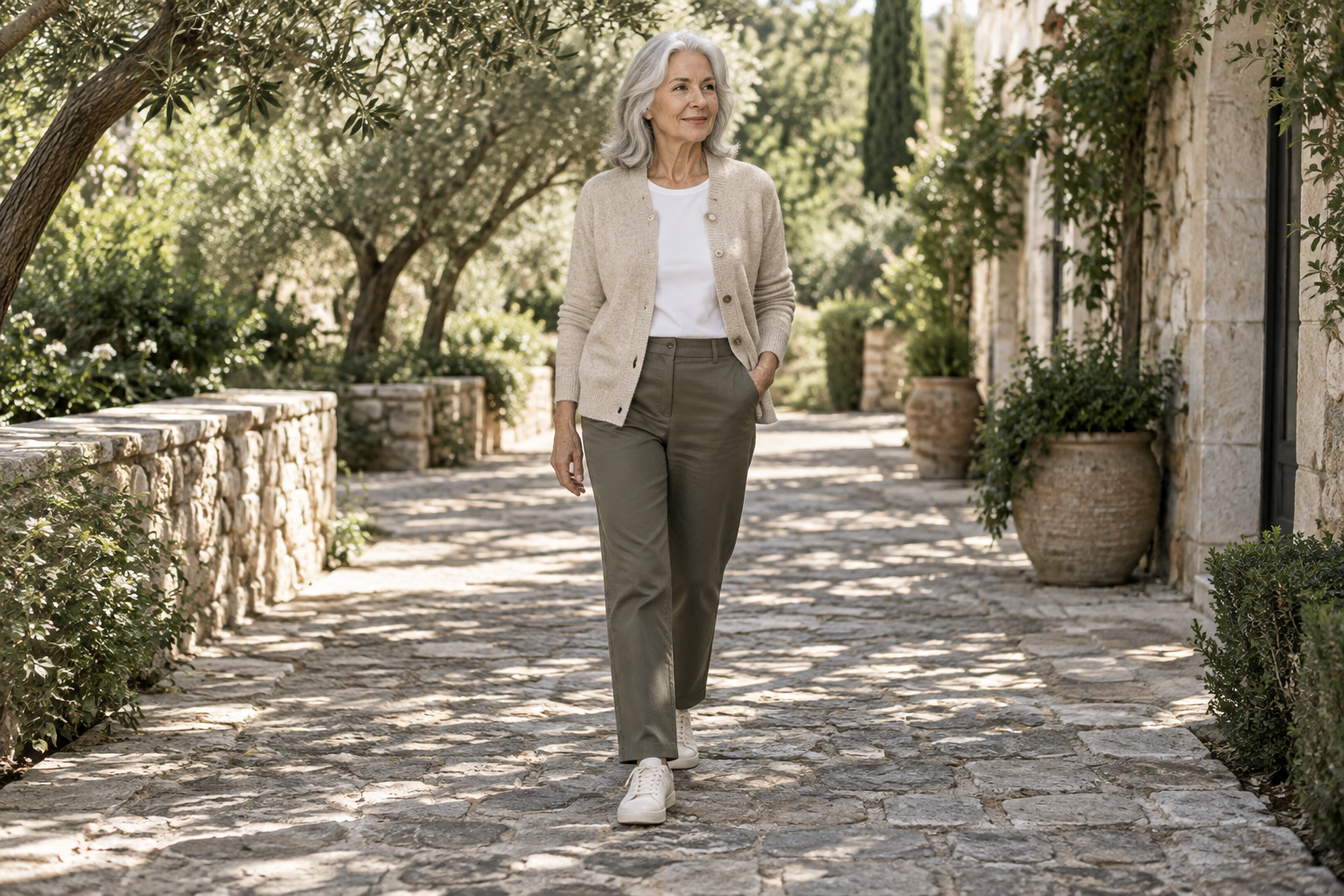
Women: midi dresses, wide-leg trousers, and sleeveless tops with a cover layer for conservative offices — a cotton poplin shirt over the top handles the meeting.
The AC factor: streets at 90, office at 68 — keep one light layer that lives at your desk, and pick base fabrics that do not show sweat the moment you walk in; the choices are in fabrics that hide sweat.
Summer footwear: the pass and fail lists
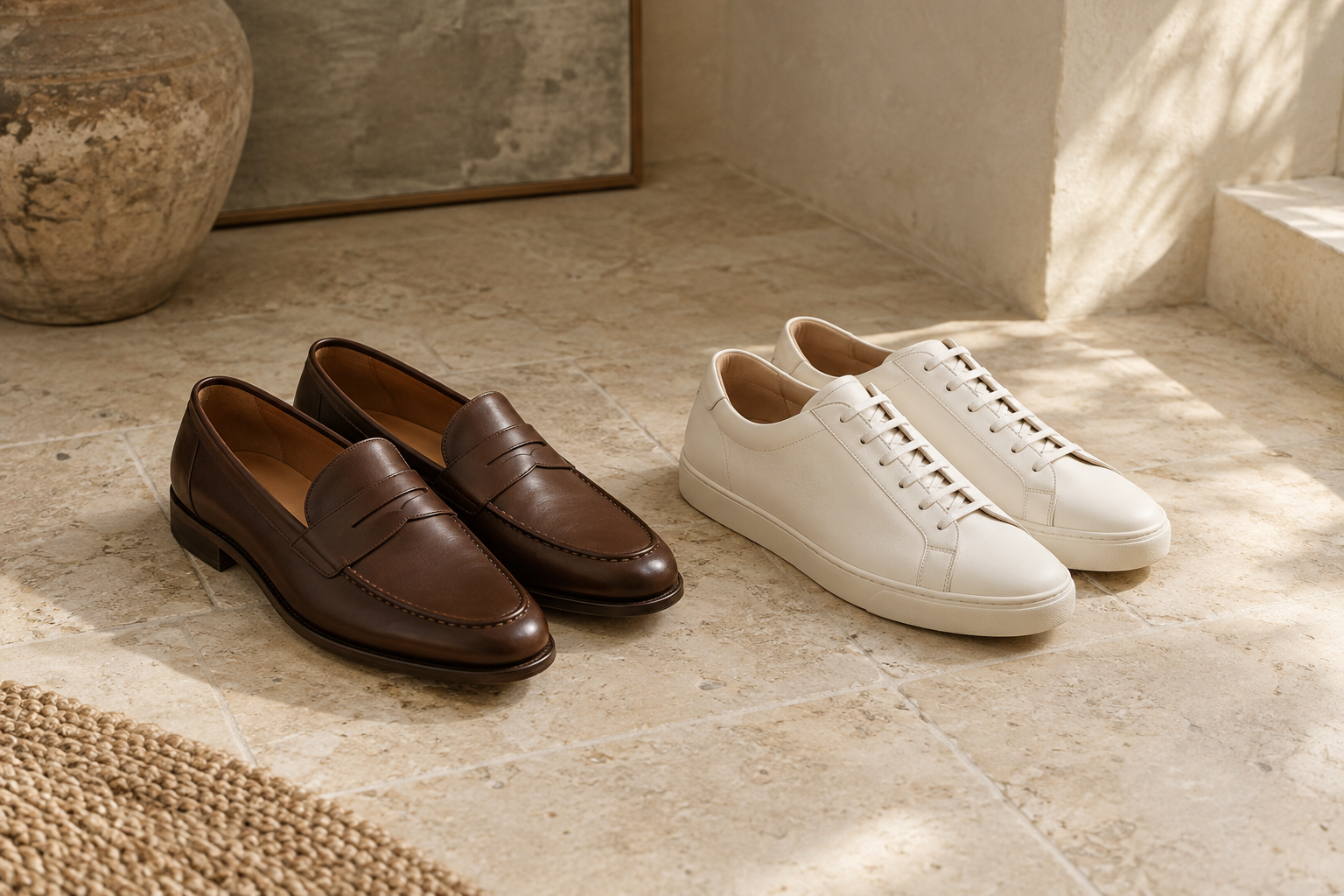
Passing: loafers worn with no-show socks, clean minimal leather sneakers, dressy leather sandals for women, and unstructured driving-shoe styles. Failing: flip-flops, worn canvas sneakers, and anything you would wear to a beach at anything above a casual setting.
Heat is hard on shoes, so rotation matters more in summer than any other season — two pairs alternating last far longer than one pair worn daily, per the shoe rotation rule.
Summer weddings and events overlap
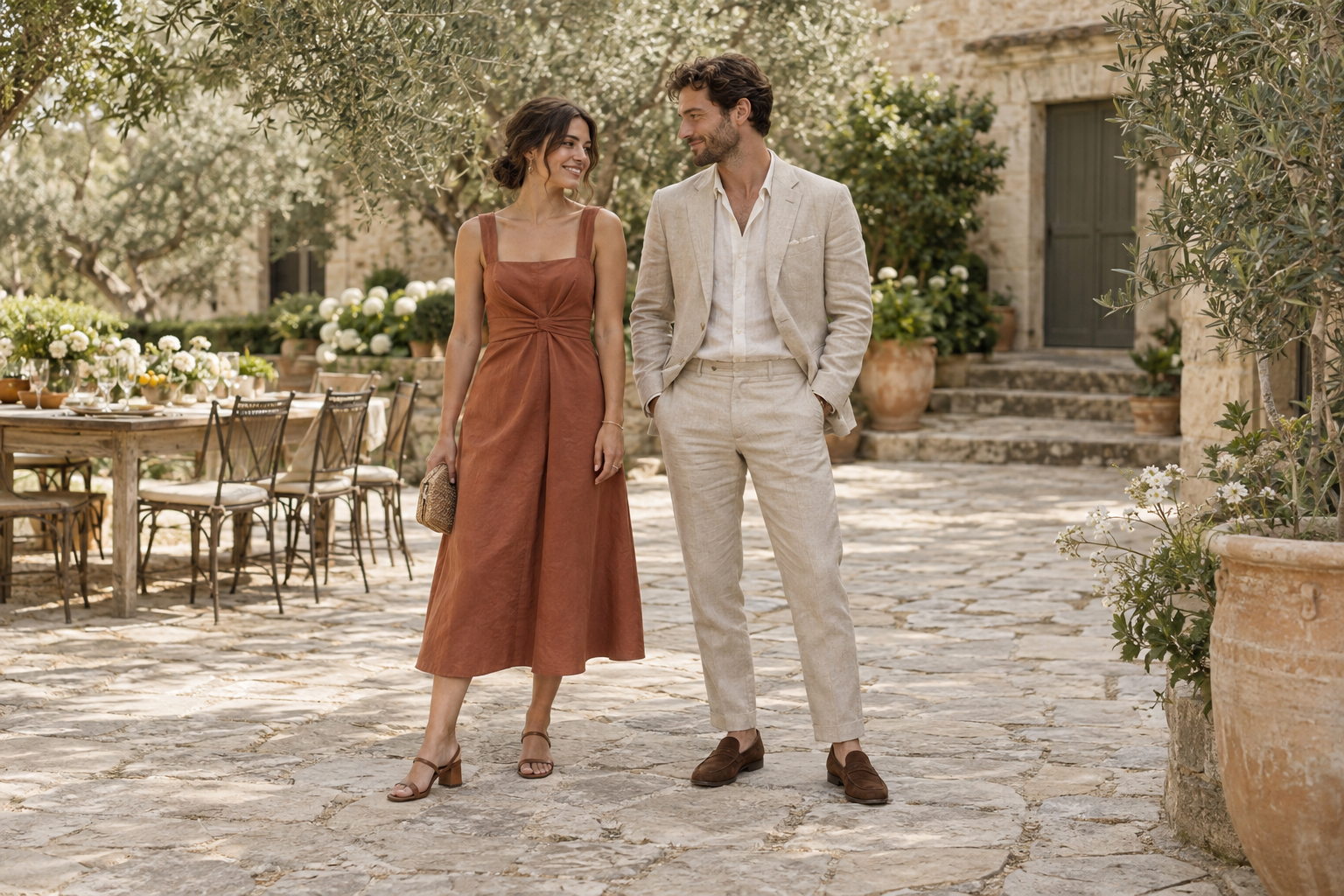
Summer is event season, and a good warm-weather wedding guest outfit is a smart casual outfit with one notch added. The shared logic: light fabrics, an unlined jacket if the invite is formal, and no dark wool suits at a noon ceremony.
The pack-light problem solves itself with one blazer: unlined and light grey, it serves the ceremony, the dinner and the next evening out. The men's full formula is in the summer wedding outfit guide for men.
Fabrics that work as it gets hot
Ranked for heat. Breathable beats thin — opacity and drape are what keep light clothes reading smart.
Fabric
Where it works
Watch out for
Linen and linen blends
Shirts, trousers, unstructured blazers
Pure linen creases hard; blends manage it
Cotton poplin and seersucker
Shirts, tailored shorts, dresses
Thin poplin can go see-through — check in daylight
Tencel and lyocell
Trousers and dresses with drape
Shows water spots; press low
Lightweight merino
Polos and fine knits — breathable and odor-resistant
Counterintuitive but excellent; buy the lightest weight
Avoid: polyester linings, heavy denim
Nowhere in summer
Trapped heat and sweat show through fast
Construction cues matter as much as fabric: unlined jackets, half-lined trousers and open-weave shirts breathe; a hot fabric in a breathable build still loses to a breathable fabric in any build. The full ranking lives in the best fabrics for smart casual.
Common spring/summer mistakes
Do not keep the winter jacket past its month — the overshirt replaces it in spring, and nothing replaces it in July.
Do not wear black head-to-toe at noon or let shorts sneak into dress codes above casual; tailored, knee-length shorts with a structured top are the only version that passes.
Do press the linen and keep one structured piece per outfit — the crease is fine, neglect is not.
The smart casual creep check: if all three of shorts, a camp collar and sandals appear at once, the outfit has drifted into plain casual.
Spring and summer questions
What is smart casual in summer? A smart trouser, a structured top and a smart shoe, executed in hot-weather fabrics and lighter colors with one dark anchor — the same architecture as the rest of the year.
Are shorts smart casual? Only tailored, knee-length shorts worn with a structured top and proper shoes — a camp collar and sandals alongside them is how the look drifts into plain casual.
Can you wear linen to work? Yes, in a tailored cut, pressed before you leave, with the sitting creases accepted as intentional — a linen blend makes the office version easier.
Which mood feels like your day?
Find a setting.
6 looks to explore
The linen-shirt reset
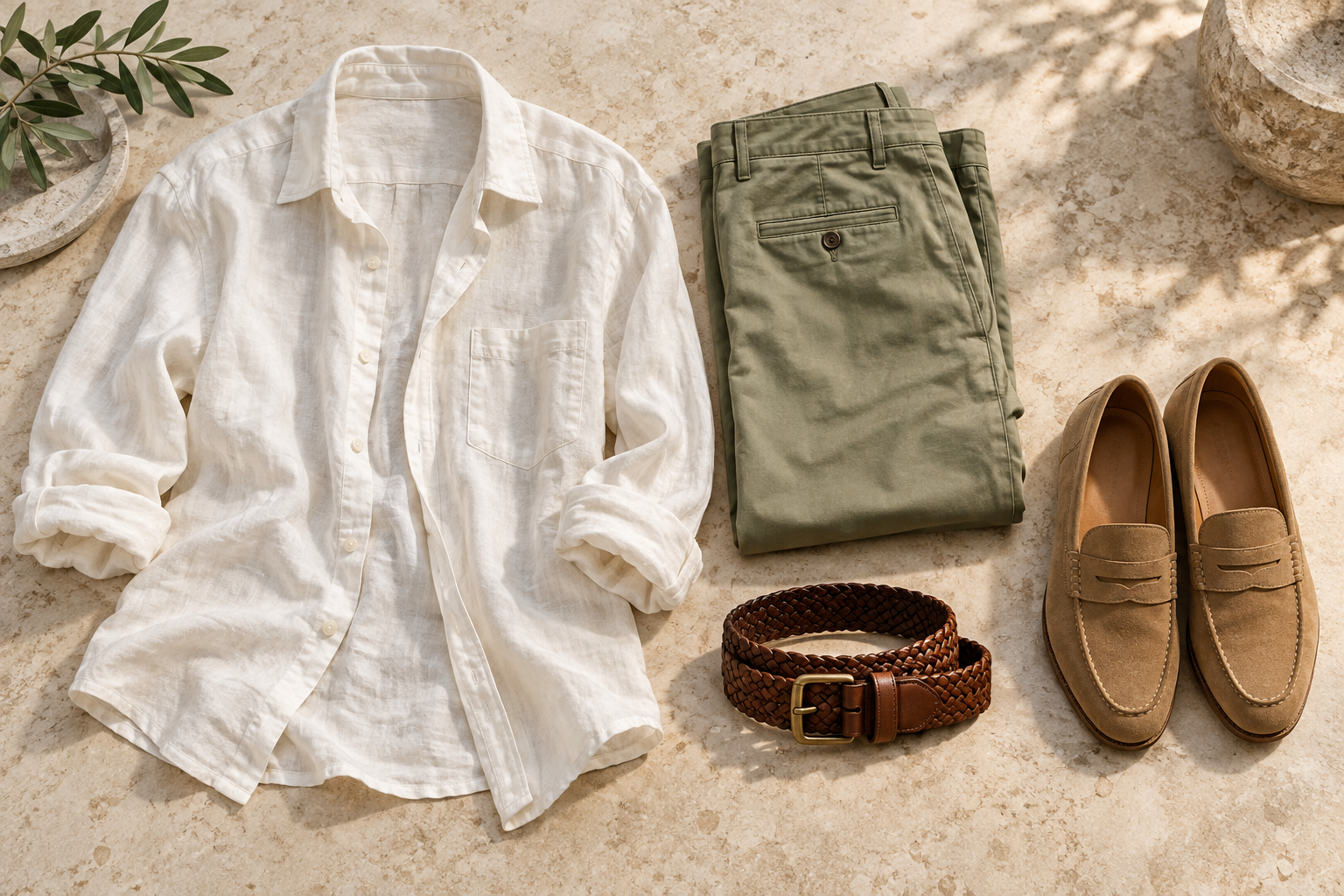
Stone linen-blend shirt, white cotton trousers, brown loafers worn sockless. The blend keeps the crease softer than pure linen, and the loafers hold the formality the shirt relaxes.
The no-jacket office formula
Light blue short-sleeve shirt with a structured collar, charcoal lightweight wool trousers, dark leather sneakers. The trouser weight carries the smartness so the jacket can stay home.
The one-dark-anchor weekend look
Sand chino shorts, navy polo, white leather sneakers with brown accents. All-light outfits need one dark element — here the navy does it — to keep the silhouette from dissolving.
The summer wedding guest look
Unlined light grey blazer, white poplin shirt, mid-blue trousers, brown loafers. The unlined construction is what makes a jacket survivable at an outdoor noon ceremony.
The sockless loafer look
Tan suede loafers with no-show socks, olive lightweight chinos, a white oxford shirt with rolled sleeves. The no-show socks are the invisible piece that makes sockless wearable all day.
The warm evening dinner look
Dark midi dress with flat leather sandals, or for men a black knit polo with tailored trousers and loafers. Darker fabric reads intentional after sunset without adding a single layer.
Make an idea your own.
Start with the trouser: lightweight wool, cotton poplin or a linen blend in stone, light grey or navy — this is the piece that sets the formality.
Add the structured top: an oxford, poplin or linen shirt, or a knit polo, with the collar built to stand on its own.
Choose the smart shoe: loafers, clean minimal leather sneakers or dressy sandals, with no-show socks where the look is sockless.
Place one dark anchor: a navy belt, dark shoes or a dark layer keeps a light outfit from reading beachwear.
Check opacity in daylight: hold the lightest pieces up to a window — visible underwear lines or see-through fabric is what makes light colors read sloppy, not the color itself.
Smart casual winter outfits for men: which jackets go over a dress shirt in real cold, temperature-banded looks from 12°C to below zero, and the two buys that matter.