What to Wear
How to Care for Leather Shoes: Clean, Condition, Polish Routine
How to care for leather shoes: the four-step routine — brush, condition, polish, rest — the starter kit that costs less than one repair, and what you can safely skip.
Footwear care
Shoes do not fail because you bought badly. They fail because a leather shoe worn every day never gets the day off it needs to dry out — and one habit with one extra pair fixes most of it.
Begin hereDefinition / explainer
Shoe rotation means never wearing the same pair of leather shoes two days running: each pair gets 24 to 48 hours off between wears so the moisture a day on your feet puts into the leather can fully dry. One pair cannot rest — a shoe worn daily stays damp inside indefinitely, and that constant dampness is what stiffens leather, rots linings and separates soles. The fix costs one extra pair and roughly doubles how long both of them last.
If they are leather and worn regularly, yes. The rule exists because of how the material works, not how expensive it was: leather is skin, it holds the day's moisture, and it needs time and airflow to give that moisture back. Skip the rest and no amount of proper care fully undoes the damp — conditioning a shoe that is worn daily again tomorrow is treating a symptom.
How long should shoes rest between wears? 24 hours minimum, 48 ideally, with cedar trees in from the moment they come off. The trees are the drying mechanism, not just shape-holders — they wick moisture into the wood, which then releases it into the air.
Match the minimum to your life, not to a collector's ideal. The table below covers the common situations — pick the row you actually live.
| Lifestyle | Minimum pairs | The set |
|---|---|---|
| Office daily | 2 to 3 | Two leather pairs alternating, plus a third for bad weather |
| Smart casual social | 2 | One loafer or derby pair, one suede pair |
| Hybrid office plus weekend | 3 | Leather pair, minimal sneakers, weekend boots or suede |
| Hot and humid climate | 3 | Any of the above, plus one — drying time doubles |
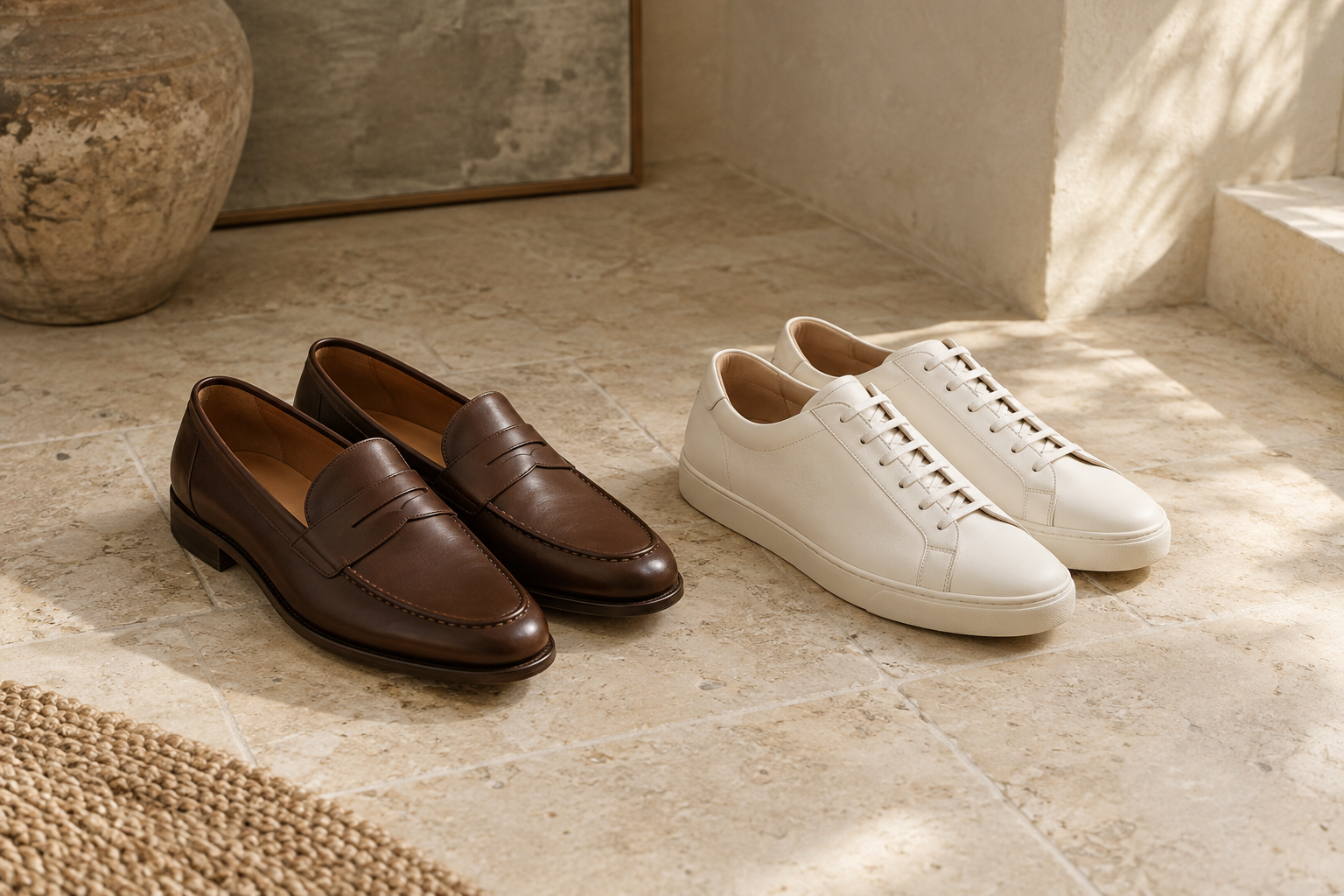
Choose the pairs so the rotation also covers your outfits: a dark smooth-leather pair for dressier days, a suede or lighter pair for the rest, minimal sneakers where your life allows them. The middle-ground shoe set is built to be exactly this two-or-three-pair core, and the work-and-dinner pairs page maps which shoe covers which setting.
Trace the chain: moisture saturates the leather and lining daily, the fibres stiffen as they dry unevenly, creases at the toe flex deepen until they crack, the lining powders and splits, the insole collapses, and the sole lets go at the welt or edge. Each stage is caused or accelerated by never drying out — and each one is delayed, often by years, by nothing more complicated than rest days.
The warning signs arrive in order. A damp-to-the-touch insole every morning means the shoe never dried overnight. Salt lines and deepening creases mean the surface is cycling wet and dry too fast. Persistent odor that no spray fixes means the interior has been damp long enough for bacteria to settle in.
Less critically, but two pairs still last visibly longer than one. Canvas and cheap trainers are the exception the other way: they are inexpensive enough that wearing them out and replacing them costs less than building a rotation. Leather sneakers — the kind that pair with tailored trousers — behave like dress shoes and deserve the same rest, per the leather sneaker care rules.
Honestly, yes — if you wear them two or three days a week, not five. One pair works when your calendar gives it natural rest days; it fails when the same pair fronts every workday. If you currently wear one pair daily, the second pair is not an indulgence — it is the cheapest way to make the first pair last.
And if the damage is already done: a full 72-hour dry-out with trees, then conditioning, revives a stiff but uncracked shoe. Cracked uppers are replacement territory — a cobbler can tell you in one look whether a resole is worth it. Suede follows the same rest logic with its own toolkit, covered in the suede care routine.
The shoe rotation rule: any leather shoe you wear regularly needs at least 24 to 48 hours of rest between wears, with cedar shoe trees inserted immediately afterward to pull moisture out while the leather dries. In practice this means owning and alternating a minimum of two pairs — rotation is the single highest-impact care habit, ahead of polishing or conditioning.
What to Wear
How to care for leather shoes: the four-step routine — brush, condition, polish, rest — the starter kit that costs less than one repair, and what you can safely skip.
What to Wear
How to clean suede shoes at home: the emergency fix for the spot you just found, the three-tool kit, protector spray done right, and the routine that keeps nap healthy.
What to Wear
How often to dry clean a blazer: about once a season at most, why over-cleaning ages the jacket, and the brush, air and rest routine in between.