Problem-solving
Fix the too-often-cleaned blazer, then keep it fresh without the cleaner
Most blazers are damaged by care, not by wear: repeated solvent and heat cycles fatigue wool fibres and the fusibles that hold a blazer's shape. The fix is a frequency rule — clean only on evidence — plus a between-clean routine so good blazers rarely need the cleaner at all.
What actually makes a blazer dirty
Body oils do the real work, and they concentrate at the collar and cuffs. Secondary dirt is invisible: lining absorbs odor, and dust settles into the weave. Worn it twice with no incident? That state is mostly harmless — wear count alone should never trigger a cleaning.
Run the sniff-and-inspect test instead: collar, underarms, cuffs, lining. Any failure is a legitimate clean; four passes mean the routine below is all the blazer needs.
Can you machine wash a blazer? The honest exceptions
Unstructured and deconstructed blazers, and some knitted or technical-fabric ones, can go on a cold delicate cycle in a mesh bag — check the care label first, and check the construction: lined, canvassed or shoulder-padded means no. Structured half- and full-canvas wool blazers never see a machine; for them it is dry clean or nothing.
The wider rule for structured tailoring is the same one behind the suit jacket as a blazer guide: construction decides what care it survives.
A year of blazer care: the calendar view
The blazer care calendar — seconds after wear, minutes monthly, one cleaner trip a season at most| Interval | What to do | Time it costs |
|---|
| After every wear | Brush downward, air 30 to 60 minutes, rest 24 hours on a broad hanger | About a minute |
| Monthly | Inspect collar and cuffs, steam if the surface looks tired or smells lived-in | Five minutes |
| Seasonally | Dry clean only if the evidence rule triggers; de-pill, check buttons and lining | One cleaner trip at most |
| Off-season | Clean before storing so soil does not attract moths, button one button, breathable bag | Ten minutes once a year |
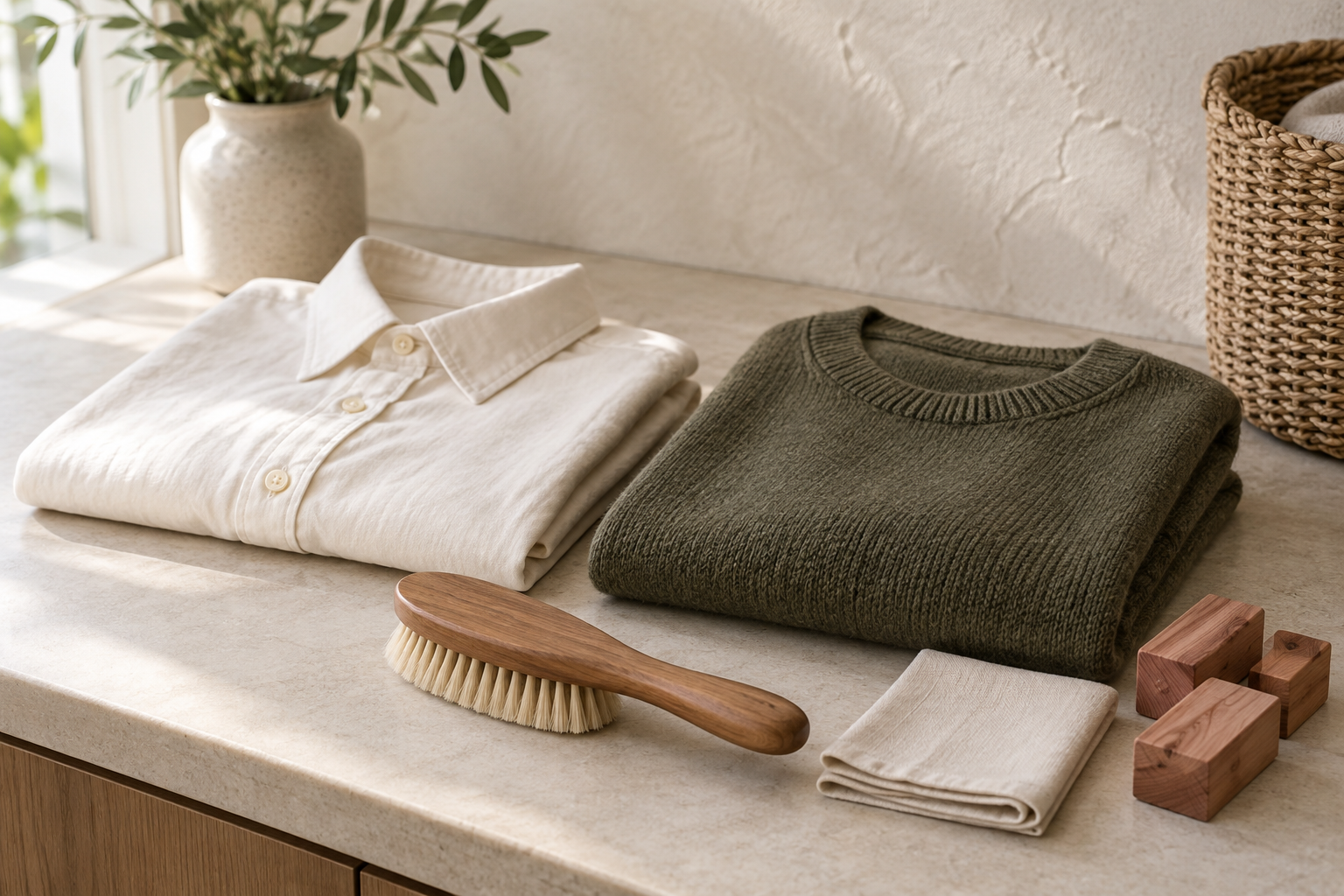
Storage is what keeps a blazer fresh longest: a breathable garment bag, never plastic, pockets emptied, and cedar nearby as a zero-effort habit. The full off-season routine is in the storing blazers guide. To pull a stored blazer back before wearing, steam it or give it thirty minutes of air.
Choosing a dry cleaner when you do go
- Ask for a gentle, perc-free or wet-cleaning process — many cleaners offer one without being asked.
- Request light pressing and no aggressive shoulder pressing, which is what flattens canvas.
- Cap the year at two to four cleans even with heavy wear, and keep receipts honest with yourself about triggers.
- If the blazer cost less than a few cleans, weigh cleaning against replacing — sometimes the cheap jacket loses the math.
Blazer dry cleaning: your questions
How often should you dry clean a blazer? About once or twice a season for regular wear, more only with visible soiling or odor — evidence, not a schedule.
Can I wash a blazer in the washing machine? Only unstructured, knitted or technical blazers on a cold delicate cycle in a mesh bag, and only if the label agrees. Structured wool blazers never.
How do I freshen a blazer without dry cleaning? Brush it, air it for an hour, then steam it — that sequence removes most odor and wrinkles between cleans.
Does dry cleaning damage suits and blazers? Repeated cycles age wool and fusibles through solvent and heat, which is exactly why the frequency is capped rather than unlimited.
How do you get a smell out of a blazer? Air it overnight, steam it, and if the underarm sniff test still fails the next day, that is the trigger for a professional clean.
What about a stain that has already set? Blot nothing further and take it in — home rescue attempts past the first blot tend to spread the mark, as the stain rescue guide explains. For creases without a cleaner trip, the wrinkles without an iron guide covers the steam options.
Open the symptom that matches. Start there.
A blazer that looks tired despite regular cleaning
Possible cause: Solvent and pressing heat, applied after every few wears, have aged the wool and weakened the fusibles, so the lapels lost crispness and the colour went dull.
Try first: Cut cleaning to the evidence rule: only when the collar, cuffs, lining or underarms show soil or odor. Brush and air after each wear instead, and the blazer stops aging ahead of its years.
Collar grime and shiny cuffs
Possible cause: Body oils concentrate at the collar and cuffs, the two real soil points on a worn blazer, and build invisibly until they show.
Try first: Brush both areas down after every wear to lift skin flakes before they settle, and spot clean light marks at home. If the collar is genuinely grimy, that is a legitimate trigger for a professional clean.
Odor without visible dirt
Possible cause: Bacteria and absorbed smells — food, smoke, a crowded room — sit in the lining and the weave, not as stains.
Try first: Air the blazer thirty to sixty minutes after wear, then steam it: a handheld steamer kills odor bacteria and relaxes wrinkles. A dry clean is only needed if the sniff test of collar and underarms still fails after that.
A spill or stain
Possible cause: Water-based or oil-based marks landed on the fabric, and rubbing or home experimentation is spreading them.
Try first: Blot, never rub. Dab water-based marks with a little mild soap on a damp cloth and white vinegar for odor spots, testing inside the seam first. Oil, ink or anything spreading goes to the cleaner immediately — that is what it is for.