
Dresses & Skirts
How to Style a Midi Skirt for Smart Casual Outfits
How to style a midi skirt for smart casual settings: one worked knit-and-flats outfit, five more complete looks, and the waist and shoe choices that decide the tone.
Outfit inspiration
A maxi skirt is decided by two things: where the hem sits in your actual shoes, and whether the top and shoe you chose still work when you walk, climb stairs and sit. Build from those checks outward.
Begin hereInspiration
Style a maxi skirt by checking its hem with the shoes you will wear, then choosing the top and layer you like. A longer skirt does not require a fitted top or a heavy shoe. Start with a knit or shirt and test walking, stairs and sitting so the outfit works beyond the mirror.
The maxi hem is fixed — that is the skirt's whole appeal and its whole complication. Because you cannot adjust the silhouette below the waist, every other choice is about keeping the length wearable: clearance over the shoe, a waist that reads somewhere, and a shoe that matches the fabric's weight.
'Maxi' covers two lengths that behave differently. An ankle-length hem ends at or just above the ankle bone and shows the shoe; a floor-length hem reaches the ground and is really an evening, heels-on garment.
Wearer height and stride change where a given skirt lands, so the label's length claim matters less than where the hem sits on you, in your shoes. Measure nothing at the start — just put the skirt on with the intended shoe and look down.
| Skirt shape | The outfit | Why it works | Check before wearing |
|---|---|---|---|
| Pleated, full | Navy pleated maxi with a striped breton tucked fully into the waistband, black leather loafers, hem ending just above the shoe | With that much fabric below, the full tuck restores the waist; a hem that grazes rather than pools keeps the loafers visible | Walk ten paces — pleats should swing, not wrap around your legs; check the tuck stays put when you sit |
| Column, slim | Charcoal jersey column maxi with a fine white cotton tee half-tucked at the front, simple leather ballet flats | A slim skirt balances a slimmer top, so the tuck can be looser — the leather shoes and half-tuck keep jersey above loungewear | Column skirts narrow your stride: take the stairs once to check the hem does not catch when you climb |
| Denim A-line | Washed-blue denim maxi with a fitted shirt tucked in, flat knee-high boots under a hem that ends at the boot top | Knee-highs close the gap between hem and shaft, and boot weight matches denim weight so neither looks borrowed from another outfit | Keep the hem no longer than the boot top, or fabric bunches over the shaft and ruins the walk — check standing, then walking |
Two further variations earn their place. A rust ribbed-knit maxi wants a cropped oatmeal jumper ending at the waistband and brown ankle boots — the short top restores the waistline a maxi hides, and boot weight matches knit weight. For an evening, a satin maxi with a tonal camisole, a slim belt and low block-heel sandals reads deliberate rather than black-tie; the block heel also survives grass and cobbles where a stiletto does not.
A maxi skirt only looks right with a fitted, tucked top — anything loose on top swamps you.
What the eye needs is a defined somewhere at the waist, and a tuck is only one way to get it. A slim column skirt carries a loose boxy blouse happily; a half tuck or a belt defines the waist without a fitted cut. Match top volume to skirt volume, not to anyone's body shape.
Tuck fully or partly when
Wear the top loose when
In the intended shoes, on a hard floor. A hem that swings cleanly at the ankle is right; one you step on or shuffle behind needs a shorter hem or a higher shoe before you leave the house.
Stairs lift a maxi hem higher than walking does and expose catching you cannot see standing still. Hold nothing back — if you gather the skirt to climb, the length is wrong for daily wear.
Check where the hem rides seated and whether the skirt pulls at the waistband. Pleated and tiered skirts forgive sitting; a tight column may not.
Skim the hem against the ground and your heel: contact at the back of the shoe is where fabric frays first. That is the sign to hem it up or change shoes.
For movement checks in more depth
The same seated, walking and stair checks applied to dresses — the logic transfers directly.
If the skirt fails the movement check, the fix is a proper hem adjustment, not a permanent heel. A qualified alterations tailor can shorten a pleated or tiered maxi while keeping the shape, usually for less than the cost of replacing the skirt.
Cold weather suits the knit maxi with ankle boots and a cropped jumper; hot weather favours lighter jersey or cotton with sandals — and sandals need the same clearance check as any closed shoe. In rain, a hem near the ground wicks water fast, so choose the ankle-grazing end of your range.
For long seated days — trains, offices, dinners — soft jersey and generous A-line cuts keep their shape better than crisp tiers that crease at the lap. Heels are never required; a flat loafer, boot or sandal chosen for the hem's fabric weight does the same proportional job with none of the ceiling rules.
For the flat-shoe decision
How fine flat shoes pair with long hemlines — the ballet-flat version of the column-skirt look above.
The parent hub for every dress and skirt guide on the site.
3 looks to explore
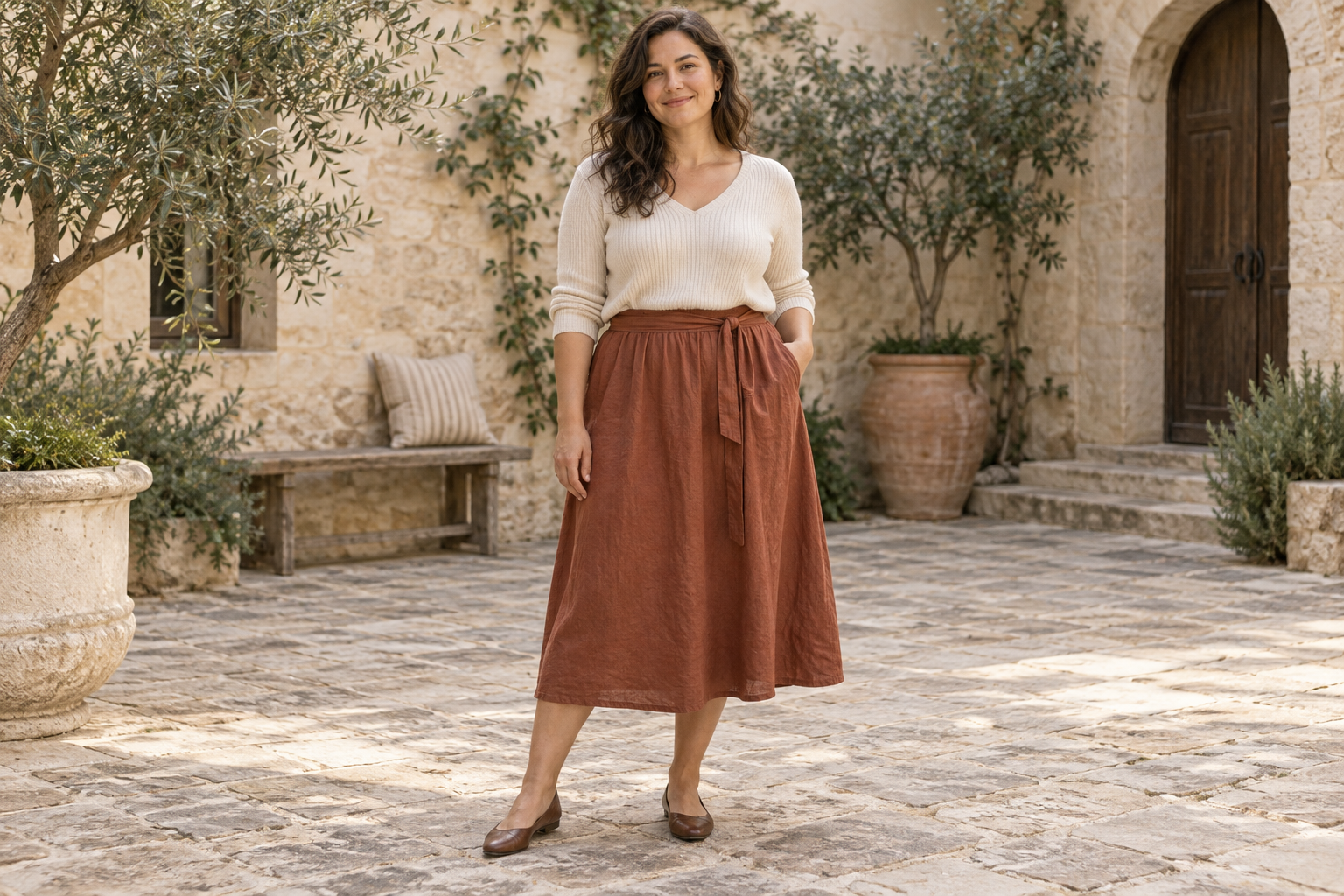
A rust midi skirt ending just above brown flats, in a stone courtyard. This is a midi, not a maxi — shown because the clearance logic is identical: the hem grazes the shoe rather than pooling over it, so the shoe stays part of the outfit.

An oatmeal cardigan ending at the waist over dark denim, with brown loafers. The cropped-over-long proportion is the same one a cropped jumper uses over a knitted maxi: the waistline comes back, and shoe weight matches fabric weight.
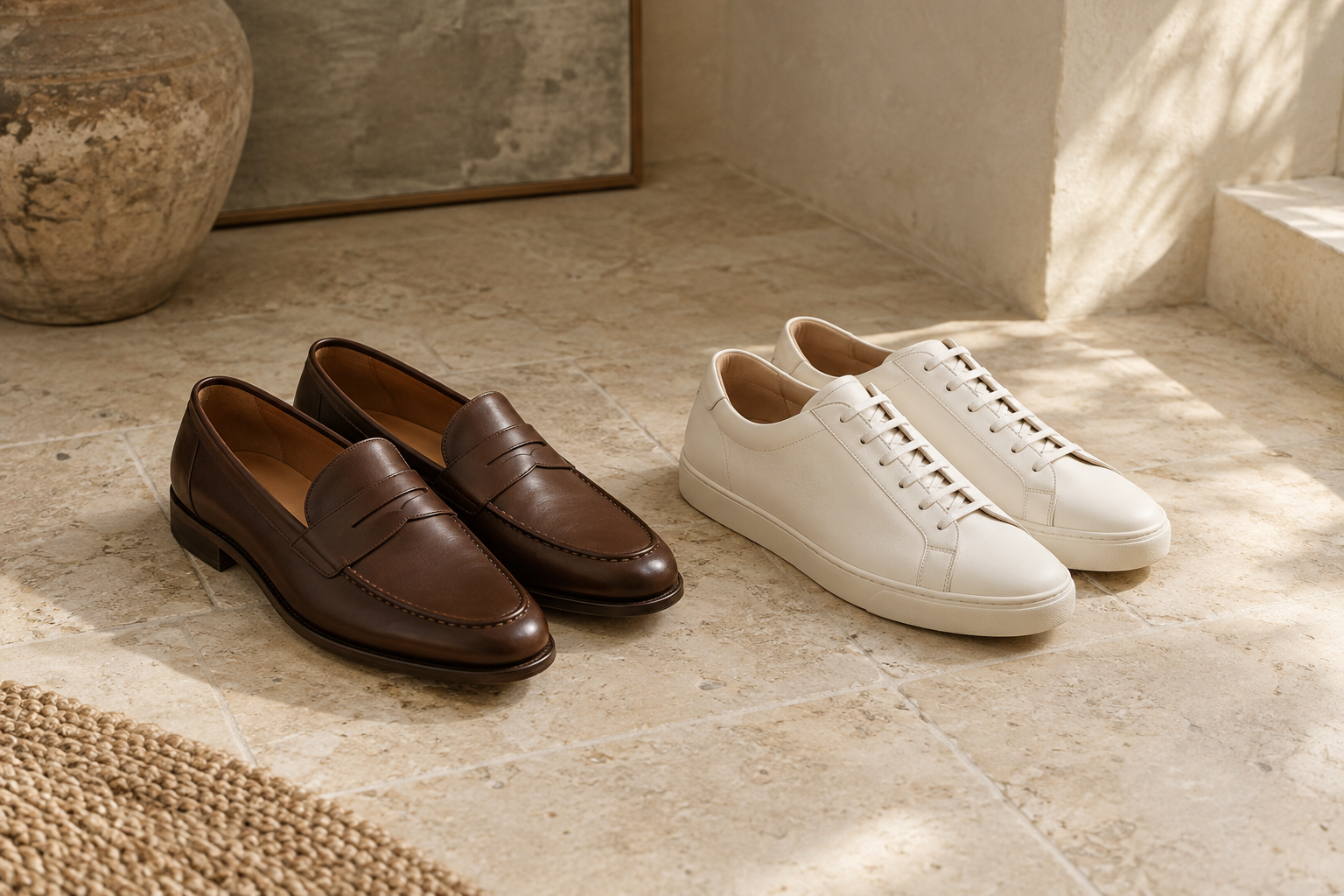
Brown penny loafers beside cream leather sneakers. Substantial leather flats sit naturally under denim, knit or pleated maxis; finer shoes belong with slim jersey or satin. A footwear still life, not a styled outfit.
Dresses & Skirts
How to style a midi skirt for smart casual settings: one worked knit-and-flats outfit, five more complete looks, and the waist and shoe choices that decide the tone.
Dresses & Skirts
Choose underlayers that keep a midi skirt comfortable and opaque in any season, without adding bulk or visible lines.
Dresses & Skirts
Denim skirt outfits that read smart casual: which length and wash to choose, what to wear on top, and how to style midi, knee-length, and long versions.