A SIMPLE STARTING POINT
Ease, with intention.
Match the brand to the garment, not the logo to the wardrobe: Uniqlo and M&S are the all-rounders for trousers, knits and shirts, Next earns its slot on petite, tall and curve length ranges, Cos is the elevated-basics step up, and H&M covers tees and jersey you will replace anyway. Women's budget workwear fails hardest on trousers and blazers, so those two categories get the deepest scrutiny — everything else on the high street is genuinely decent at the price.
This guide gives you a repeatable way to get dressed. Read the short version of each step here, then follow the deeper guides when you want more detail.
01
The answer: six brands that cover a women's smart casual wardrobe
The forum question that anchors this guide — what would you have in a budget work capsule wardrobe? — gets a brand-level answer below. Each name here has one job it does best and a known weakness; neither is negotiable. Availability and quality drift season by season, so treat this as a starting shortlist and run the sixty-second checks before the till.
THE SHORT VERSION / 4 STEPS
Identify your two biggest garment gaps before shopping — for most women that is trousers that hold shape and one structured layer.
Shortlist two brands per gap from the list above rather than shopping one label head to toe.
Buy one test piece from any brand you have not worn before, in your normal size.
Keep what passes the checks in the table below; return the rest inside the window.
02
Best brand per garment: trousers, blazers, dresses, knits, shirts
Garment-first organisation matters because no affordable brand is good at everything. The budget work capsule the forums keep asking for is built exactly this way: the best-value source for each piece, assembled into one interchangeable wardrobe.
THE SHORT VERSION / 4 STEPS
Start with trousers, because they anchor the most outfits and fail the soonest when cheap.
Add two shirts or tops per trouser so every bottom pairs with at least two tops.
Add one knit to lift the shirts a full formality notch.
Defer the blazer until the core works — then hunt it second-hand first.
03
How each brand fits: the sizing reality
Sizing is where online budget shopping is won or lost. The all-rounders cut fairly true but differ by line — Uniqlo runs slightly roomy through the hip in its smart trousers, M&S varies noticeably between its sub-brands, H&M runs small and long through the body, and Cos cuts generously but architecturally, which reads oversized on petite frames. Photographs flatter: a styled mannequin hides a waistband that digs or a hem that flares. If you shop petite or tall, the petite smart casual wardrobe guide covers the proportion fixes that matter more than brand choice. The systematic fix is measuring a garment that already fits you and comparing those numbers to each brand's chart — the online sizing strategy guide walks the method step by step.
THE SHORT VERSION / 4 STEPS
Measure your best-fitting trouser waist, hip and inseam flat, and keep the numbers on your phone.
Compare them to the size chart before every first order from a new brand — ignore the label number entirely.
Read recent reviews specifically for fit words: runs small, gapes at the waist, short in the body.
Order the test piece alone first; build the category only once the fit is proven.
04
A sample budget basket: ten pieces, mixed brands
Mixed-brand beats single-brand because each garment should come from its best value source. A workable basket: two pairs of tailored trousers from Uniqlo or Next, two cotton tops and one oxford shirt from M&S or Uniqlo, one merino-blend crew neck from Uniqlo, one jersey shirt dress from M&S, a second-hand or sale Cos blazer as the structured layer, white leather trainers or loafers as the shoe, and one tote. Planned at full high-street price that lands roughly in the £300 to £450 band in the UK, less with sales and second-hand finds — verify current prices before you shop. That basket generates two full working weeks of distinct outfits, and the deferred list (real leather shoes, a wool coat, a made-not-felt blazer) waits for later paydays. The week-of-outfits method shows how the combinations are counted.
THE SHORT VERSION / 4 STEPS
Buy trousers and tops first — the core that every later piece multiplies.
Add the knit and dress in month two, watching the sales rails.
Hunt the blazer second-hand rather than buying new-budget.
Upgrade shoes last: they are the most expensive per-quality pound in the basket.
SEE THE IDEA AT WORK
The sixty-second womenswear quality check, in store
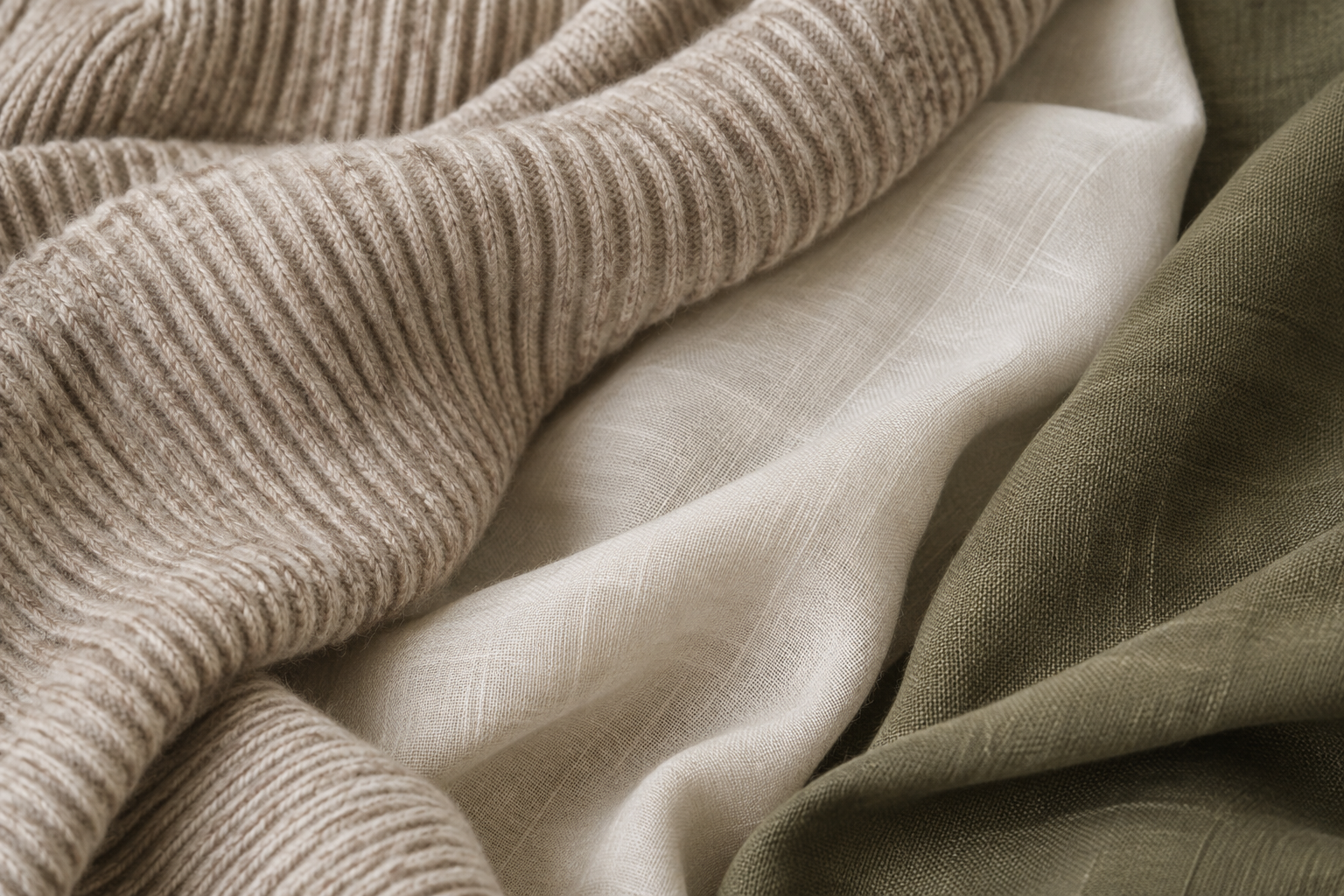
Budget womenswear fails in recurring, checkable ways. Crush a handful of dress fabric and count to ten — deep wrinkles that stay mean a wrinkle-prone weave. Hold the fabric to the light for opacity. Press a palm against the skirt and slide: cling means static-prone polyester. Then the two fit checks specific to womenswear: button the largest button at the bust and check for gaping, and sit down in the trousers to feel whether the waistband digs or the seat goes sheer.
- One pair of tailored trousers with knee recovery and a comfortable waistband
- One opaque, non-clingy top that survives the crush test
- One knit naming merino or cotton as the majority fibre
- One dress that passes the daylight opacity check
| Brand | Best at | Fit range | Watch out for |
|---|---|---|---|
| Uniqlo | Smart trousers, merino-blend knits, oxford shirts | Petite and tall lengths on many trousers | Runs slightly roomy; jersey skews casual |
| M&S | Shirting, wide-leg trousers, jersey dresses, curve line | Petite, tall and curve ranges | Quality varies between sub-brands |
| Next | Trouser inseam choice, work dresses | Long, short and regular on most styles | Fabric quality varies line to line |
| H&M | Tees, jersey, trend pieces | Standard plus-conscious ranges | Runs small; thin fabrics on structured pieces |
| Cos | Elevated basics, unstructured tailoring | Generous cuts; harder for petite frames | Two to three times budget-tier pricing |
| Second-hand platforms | Wool blazers, quality dresses, denim | Whatever the market has this week | No returns, fit lottery without measurements |
A last look in the mirror.
A MOMENT BEFORE YOU GO
0 of 7 ready
SMALL ADJUSTMENTS
When it feels almost right.
What does cheap womenswear get wrong most often?
Clingy polyester, unlined blazers, buttons that gape at the bust and trousers that bag at the knee. Every one has a fix: hold fabric to light, check lining before buying structure, size the shoulder and bust first and tailor the rest, and scrunch-test trouser fabric in-store.
Is a budget blazer ever worth buying new?
Sometimes — the least-bad unstructured styles from the all-rounders work for occasional wear. But blazers are the category where a second-hand mid-range piece most clearly beats a new budget one, so hunt resale first.
What should I never buy cheap?
Shoes, blazers and coats. They take the most punishment, show wear soonest, and are the three categories where upgrading one piece lifts every outfit it touches.
Still wondering?
Where can I buy affordable work clothes that look expensive?
Use the fit-fabric-palette method: buy only pieces that fit your measurements, prefer natural-fibre blends, and keep to a narrow navy-grey-white palette. On the high street, Uniqlo and M&S cover most of it; Next solves length problems.
How do I build a work wardrobe on a budget?
Start with two trousers and three tops, add one knit, then one dress, then hunt the blazer and shoes. The full budget build guide itemises the starter set with a phased plan.
Which brands work for petite, tall and plus sizes?
Next leads on inseam choice, M&S carries petite and curve lines, and Uniqlo offers petite and tall on many trousers. For plus sizes specifically, the plus-size smart casual guide covers fit priorities in depth.
How do I make cheap trousers look tailored?
Hem them. A trouser hem is the cheapest alteration with the biggest visual return, and waists are often takeable-in. The what can be tailored guide lists the alterations that transform budget pieces and the ones that are not worth it.