Comparison
Where blazer money stops being visible
Is an expensive blazer worth it? Usually not on your first purchase — the mid tier now captures most of what only premium prices used to deliver, and fit matters more than either. Pay mid-range for the blazer you will wear everywhere, and pay luxury only once a year of wear data proves you actually reach for one constantly.
Is an expensive blazer worth it? The honest answer
The classic forum question — the two-hundred-dollar item versus the thousand-dollar one — has a reliable shape, and blazers follow it. The first doubling of price buys most of the real difference: construction that lasts, fabric that behaves, fit that can be corrected. The second doubling buys the last slice of quality, which is real but only visible to people who look at clothing closely.
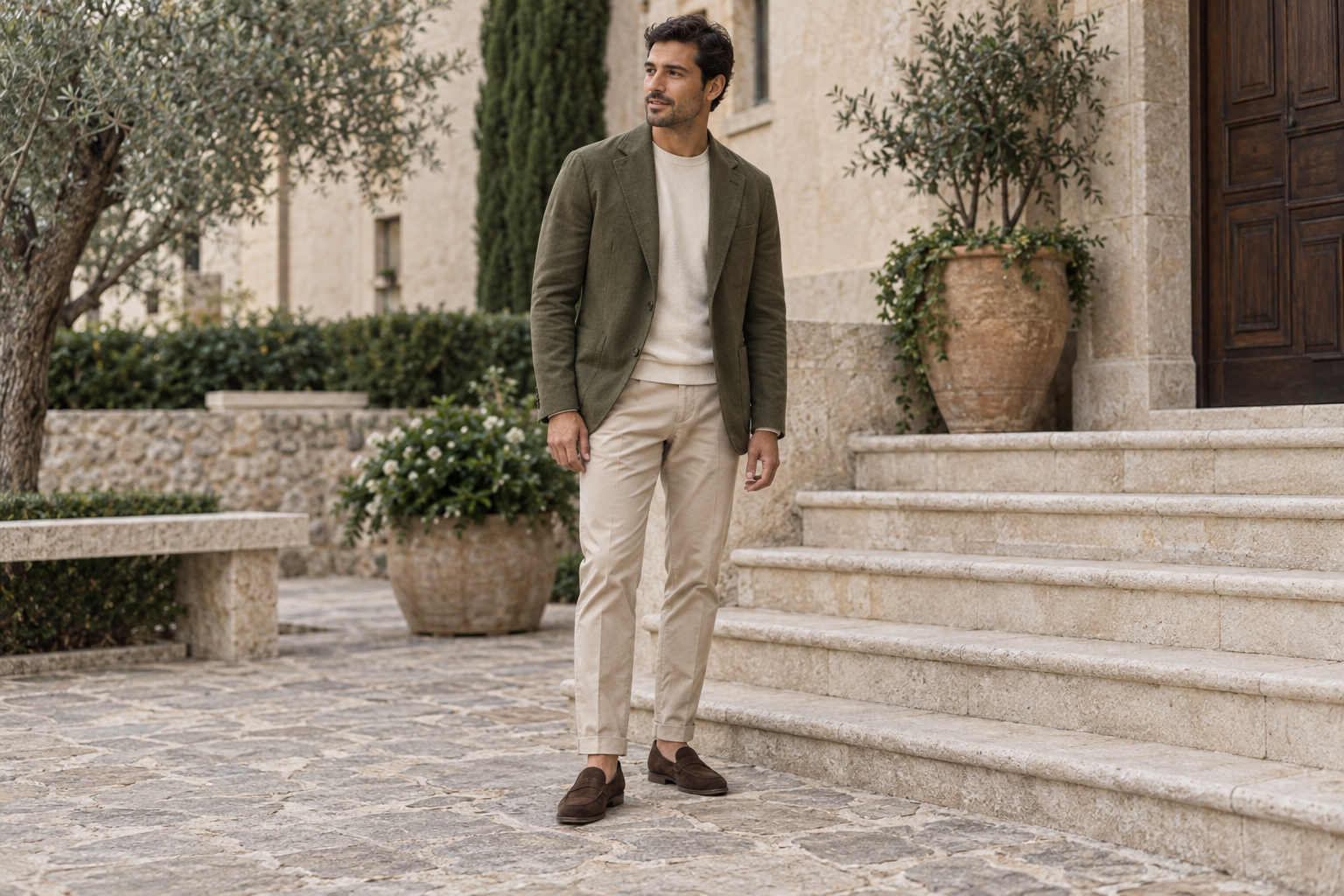
At three metres and in photographs, a well-chosen mid-range blazer is indistinguishable from a luxury one. What is distinguishable at any distance is fit — shoulder seam at the shoulder bone, sleeve showing a sliver of shirt cuff, collar sitting flush. Run that checklist before you care about construction at all.
Fit and tailoring: the multiplier that beats price
A mid-priced blazer altered to your body outperforms a costly one worn off the rack — this is the single most repeatable result in menswear. Sleeve shortening, side take-ins and collar work cost a fraction of a tier jump, and the tailoring costs guide prices out exactly which fixes are cheap. Luxury's better blocking matters mainly for athletic builds, long arms and unusual proportions, where off-the-rack patterns fight your body hardest.
Before spending at either tier, run the calibration test: try the same size in both a mid-range and a luxury jacket on the same visit. You will learn within minutes which differences you personally perceive — and many people discover the answer is drape, which fabric quality drives more than brand.
When price shows — and when it does not
- Job interview — fit decides the impression; construction tier is invisible to everyone in the room.
- Wedding guest — photos and distance hide everything but fit and colour; mid-range is the rational ceiling for most guests.
- Daily office wear — the one context where the extra spend compounds through longevity and repeated photos.
- Client dinners and scrutinising rooms — fashion-adjacent industries and members' clubs are the honest case for luxury, because some audiences do look.
- The confidence factor — some people genuinely perform better in a garment they know is excellent. That is real; it is just not a reason to start there.
The smart buying strategy at each tier
Mid-tier buyers should rarely pay full price: end-of-season sales routinely bring better construction into a lower band, and the sale shopping strategy shows what to hunt at each discount season. Check any discounted blazer for a fused chest posing as canvas and for lining damage before assuming it is a bargain.
Second-hand is the luxury loophole: barely-worn high-end blazers circulate at mid-range prices because most people buy them for a handful of events. The second-hand smart casual strategy covers the inspection routine — canvas chest, functioning sleeve buttons, lining condition — that separates the finds from the mistakes.
Whatever tier you land in, longevity is a care outcome as much as a build outcome; brushing after wear and honest dry-clean intervals matter more than the label. The reasoning is the same as in the investment pieces framework — wear frequency decides where money earns its keep.
The one-blazer strategy
Most people should own one mid-range, well-tailored navy or charcoal blazer worn dozens of times a year, not a luxury rotation worn rarely. Decide in this order: fit, then fabric, then construction tier, then price — and revisit the luxury question only after a year of honest wear data. When the wear count justifies it, upgrade; the math lives on the cost per wear page.
Expensive blazer questions
What is the difference between cheap and expensive blazers? Three things: canvas versus fused construction, real wool versus blends, and alterability — expensive jackets are built to be remade by a tailor, cheap ones are not.
How much should I spend on a blazer? Scale it to wears per year: a handful of events favours mid-range (or rental), weekly wear justifies the upper mid tier, and daily wear is the only case where the top tier pays for itself.
Are expensive blazers more durable? Generally yes, because finer cloth and stitched construction age better — but only with care, and a neglected luxury jacket loses to a maintained mid-range one.