Comparison
Spend on wear-frequency times wear-life, not on labels
Are expensive dress shoes worth it? Sometimes — and the same test works for every upgrade decision in the wardrobe. Money goes where you multiply how often you wear a piece by how many years it can last, and stops where a logo or a trend is the only thing you are buying.
Are expensive dress shoes worth it? Where the money shows
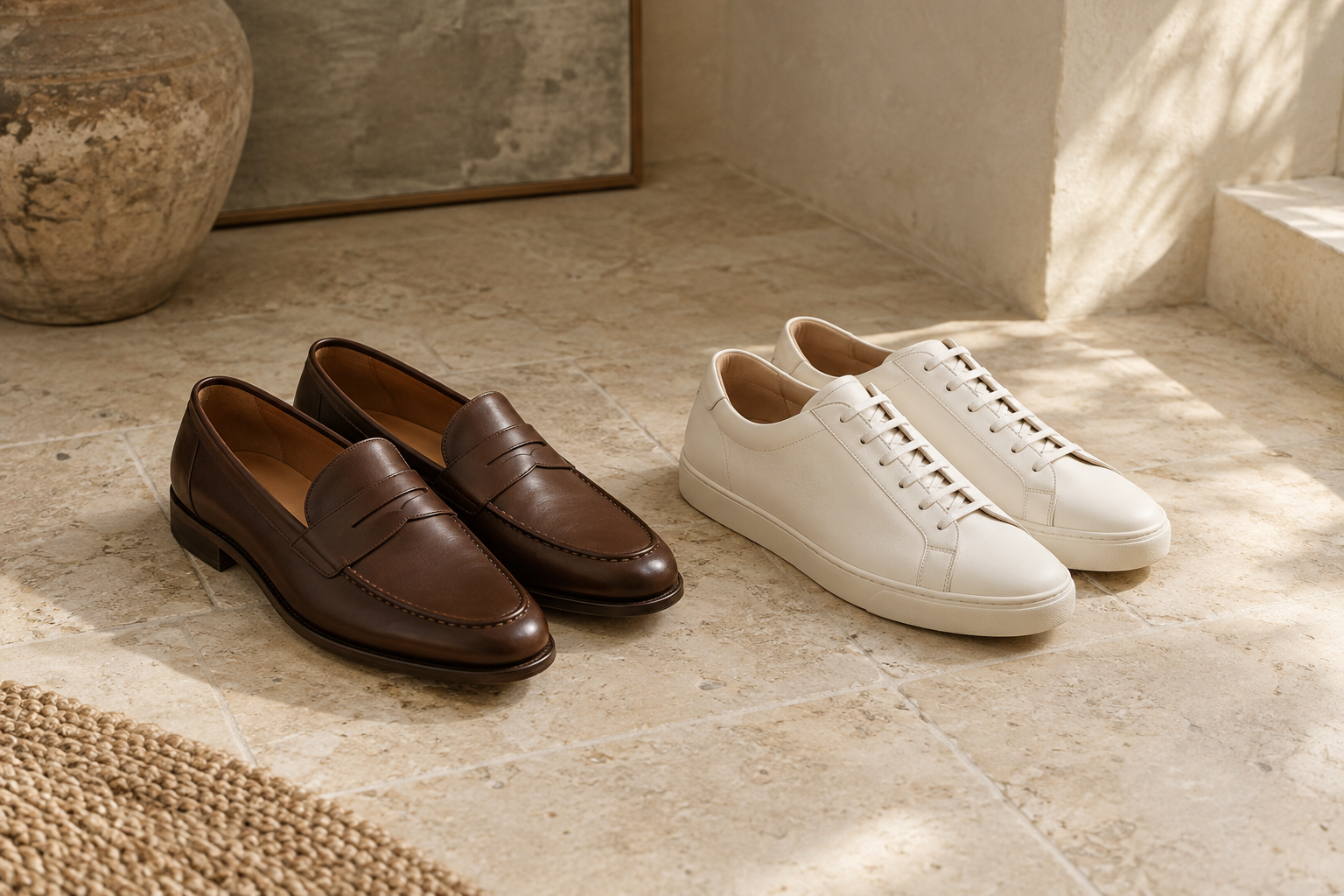
The extra spend buys construction you can check. A welted sole is stitched to the upper, so a cobbler can replace it; a cemented sole is glued and dies with the shoe. Better leather creases rather than crackles, holds a shine, and molds to your foot over months.
The forum question about the two-hundred-dollar shoe versus the thousand-dollar one has a real answer: the jump from budget buys comfort and longevity, then flattens, and the very top of the market charges again for finish and name. Mid-range welted is where most buyers should land — the budget dress shoes guide covers the ceiling below it.
Care is part of the equation, because longevity is the point. A rotation with shoe trees and the basics in leather shoe care can double the life of the pair you bought.
The coat: the cost-per-wear winner in cold climates
Outerwear is the most-seen garment of the week for four months straight, which is the arithmetic that makes a good wool coat the best investment in the wardrobe. Pay for full wool content, honest construction and a classic cut that will not date — the overcoat and topcoat guide walks the choices.
Where to save: the mid tier often captures most of the look, and climate decides the rest. In hot climates the coat slot swaps to whatever your wardrobe genuinely wears daily.
The blazer: worth it, but later
Blazer quality is real — canvas construction that molds to you, wool that breathes — but it is a lower-wear piece for most people, so it ranks below shoes and a coat. Fit dominates at every price: a tailored mid-range blazer beats an untailored expensive one, and the what tailoring costs guide shows what an alteration budget buys.
For wedding-guest use cases, frequency math says rent or buy mid-range and stop there. The top end of blazer pricing buys finishing that only daily wear can justify.
The touch-and-check protocol before you pay premium
- Shoes — look for a stitched welt, check the sole edge, and press the leather: it should crease, not crackle.
- Coats and blazers — feel the fabric content claim against the hand; full wool feels alive, not slick.
- Knitwear — squeeze the sleeve and check density; see the cashmere guide for the full feel test.
- Trousers — stretch the knee area and check recovery, because daily wear starts there.
What's not worth spending on
Dress shirts beyond a modest ceiling, accessories past the point nobody perceives, and any garment worn twice a year all fail the frequency test. The quiet-luxury trap is the same error wearing better clothes: paying for a label's story rather than checkable construction.
The full math behind these calls is on the cost-per-wear page, and if the budget is tight overall, start from the smart casual on a budget plan and upgrade in the order above as money allows.
Investment pieces: your questions
What should I buy expensive versus cheap? Expensive: shoes, a cold-climate coat, daily trousers, eventually a blazer. Cheap: shirts, trend pieces, occasion-only garments and anything with a visible logo.
How much should an investment piece cost? There is no single number — each category has a band where quality starts, and you find it by checking construction features in store rather than by reading prices.
Is cashmere worth it? Only at fibre grades that pass the feel test and only for weekly wear — the cashmere guide covers the ply, fiber length and density checks.