What to Wear
Trench Coat Smart Casual: Trench vs Mac, Cuts, Colours and Outfits
Trench coat smart casual rules: trench vs mac, which cut and colour to buy, outfits that work, and the honest limits on rain, winter and dating.
Outerwear guide
A serious winter coat is decided by three things: what you wear underneath, how you commute, and one colour call. Here is the topcoat-versus-overcoat answer, then the length and fit checks that protect the money you spend.
Begin hereInspiration
An overcoat at smart casual is not background warmth — worn right, it is the outfit. These six looks show the same coat logic at different levels, and every one of them starts from the fit rule: buy the coat to fit over the heaviest thing you will actually wear under it.
Both are tailored wool coats worn over suits or knitwear, and at smart casual the distinction is about weight and cut, not rules. The topcoat is the lighter, closer-cut version — historically it sat over a suit jacket without swallowing it. The overcoat is heavier and roomier, designed to go over everything: blazer, knit, sometimes both.
The buying rule follows directly. If the coat must go over a blazer, buy for the blazer — that usually means an overcoat. If it lives over knits, a topcoat cut is fine and looks sharper indoors. Commuters suit a knee-length overcoat; the car-and-event coat can be a shorter topcoat.
Three lengths cover the market, and each has a clear owner. Seat-length topcoats lean casual and suit shorter journeys. Mid-thigh is the versatile default and flatters most heights. Knee length is the most formal and the warmest, and it is the classic partner to a blazer underneath.
Two honest corrections to the 'knee is best' cliché. First, proportion: a seat-length coat over a long knit looks wrong, because the hems stack within a few centimeters. Second, the car reality: knee-length coats bunch badly when you drive or sit on transit, which is exactly why the shorter topcoat survives as a category. If you are mostly driving, mid-thigh is the smartest compromise.
| Colour | Formality | Best for | Trade-off |
|---|---|---|---|
| Navy | High | The all-rounder — works with denim, flannels and tailoring | Less of a statement than camel |
| Charcoal | Highest | City, evenings, the most formal guest look | Can read heavy in daylight |
| Camel | Medium | The warm statement — charcoal knit and dark denim underneath | Shows dirt and rain marks first |
| Black | High | Evenings and formal city wear | Severe in daytime smart casual; charcoal usually beats it |
The camel overcoat outfit spelled out: camel over a charcoal knit with dark denim, or camel over a navy blazer with grey flannels. Camel reads expensive in these pairings because it is the only warm tone in an otherwise cool outfit. For women's wardrobes the same decision applies with camel, grey and black leading — pick the coat colour your existing work palette lacks, not the one that duplicates it.
Money in a coat buys fabric weight and wool content first: a mid-weight wool or wool-cashmere blend around 400 to 500 grams is the smart casual sweet spot — warm without costume-drama bulk. 'Cashmere blend' is worth something at real percentages and is mostly marketing at trace ones; check the label content, not the wording.
Construction shows in four places you can check in-store: a lining that hangs smooth rather than pulling, set-in sleeves that look sharper than raglan for tailoring-adjacent wear, buttons with some heft, and a chest with structure. Overcoats are also the single best secondhand buy — low wear, timeless cut — if you want the fabric quality without the new price.
Brush the coat after wear, give it a wide shoulder hanger, and never cram it against velvets that crush the pile. Off-season, store it clean in a breathable bag. The care habits are the same ones in the layering system for smart casual and wool and merino care.
Yes — the whole point of the overcoat cut is that the blazer, including its sleeves and collar, disappears inside it. If the blazer hem or collar shows below or through the coat, the coat is either too short or too slim for the job.
Is camel hard to wear? No, as long as the pieces under it are quiet and the coat stays clean — the difficulty is maintenance, not styling. For the full winter picture beyond the coat itself, see smart casual in proper cold, and if the outfit underneath is a dress rather than a blazer, the crossover logic is in what to wear over a dress in winter.
6 looks to explore

The commuter default. The coat covers the blazer completely, the hem clears the knee so it works on foot or on transit, and nobody sees the blazer until you take the coat off indoors.
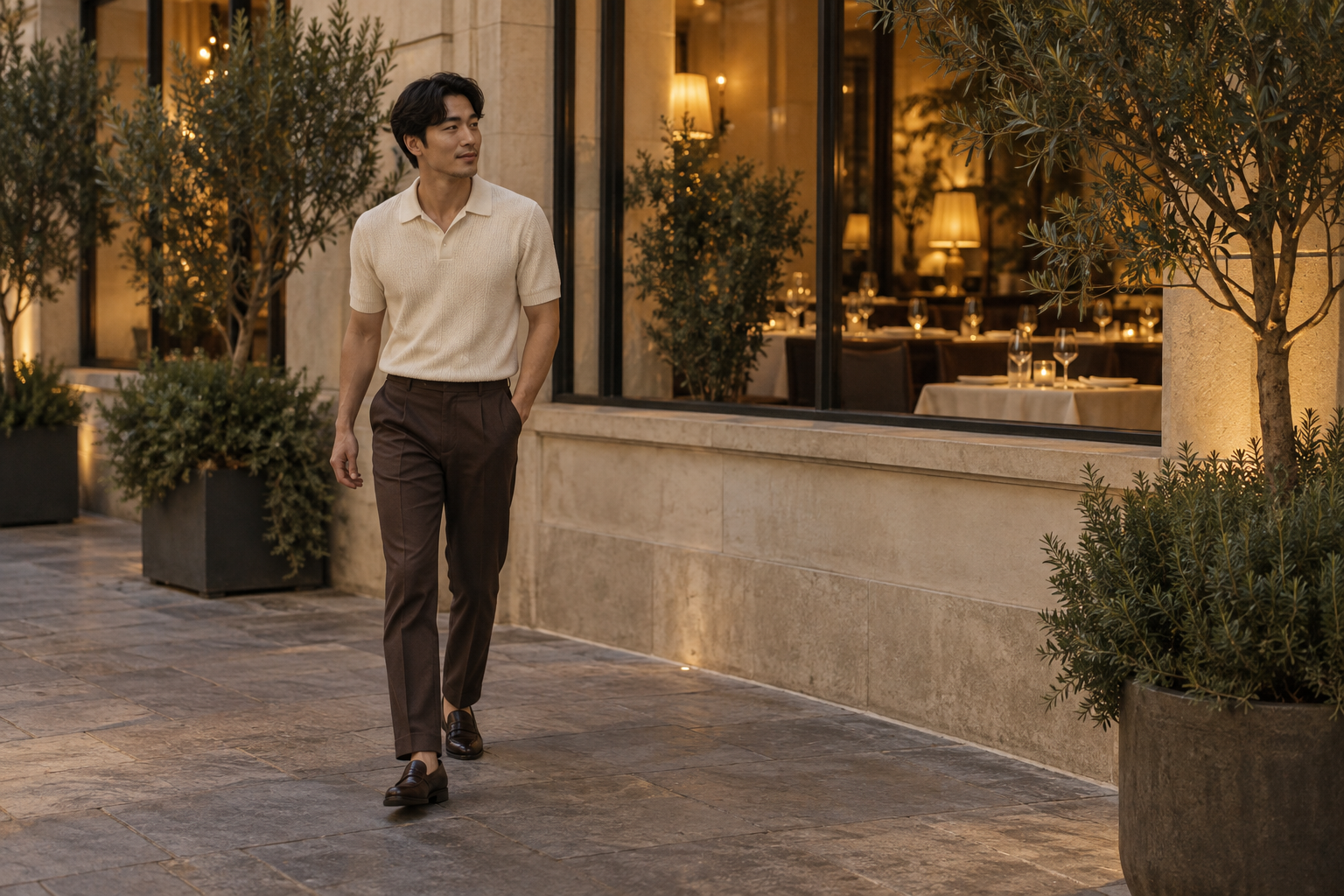
A topcoat cut closer to the hip or seat is the car-and-restaurant coat. Over a fine merino knit and dark trousers it reads sharper than a long coat in a warm evening setting.
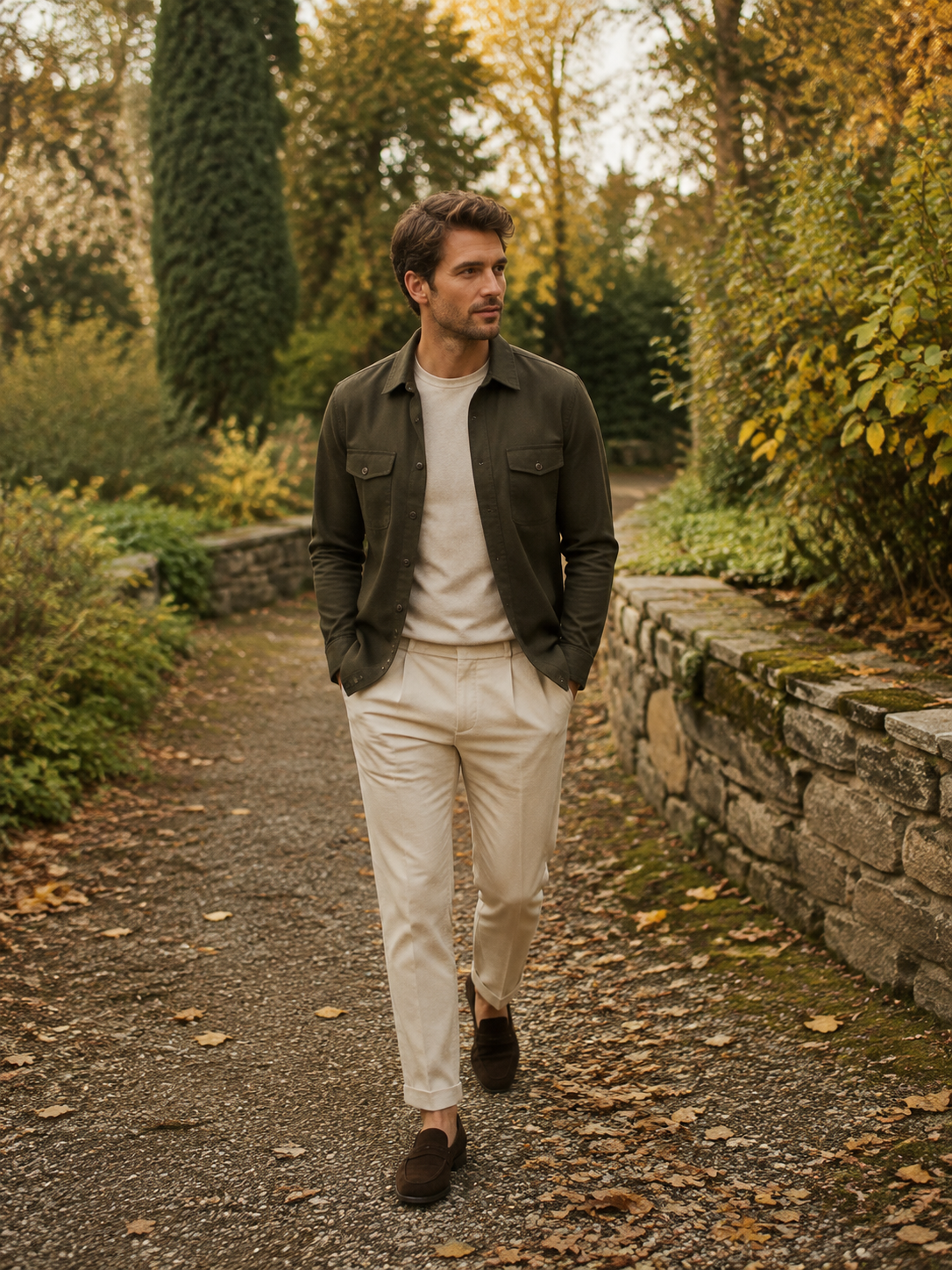
The camel overcoat outfit that reads expensive: one warm statement colour over two quiet ones. The coat is the outfit; everything under it stays subdued.

Arrive in the coat, lose it at the door, and the blazer-plus-open-collar outfit underneath is already complete. Navy or charcoal is the safe guest colour.
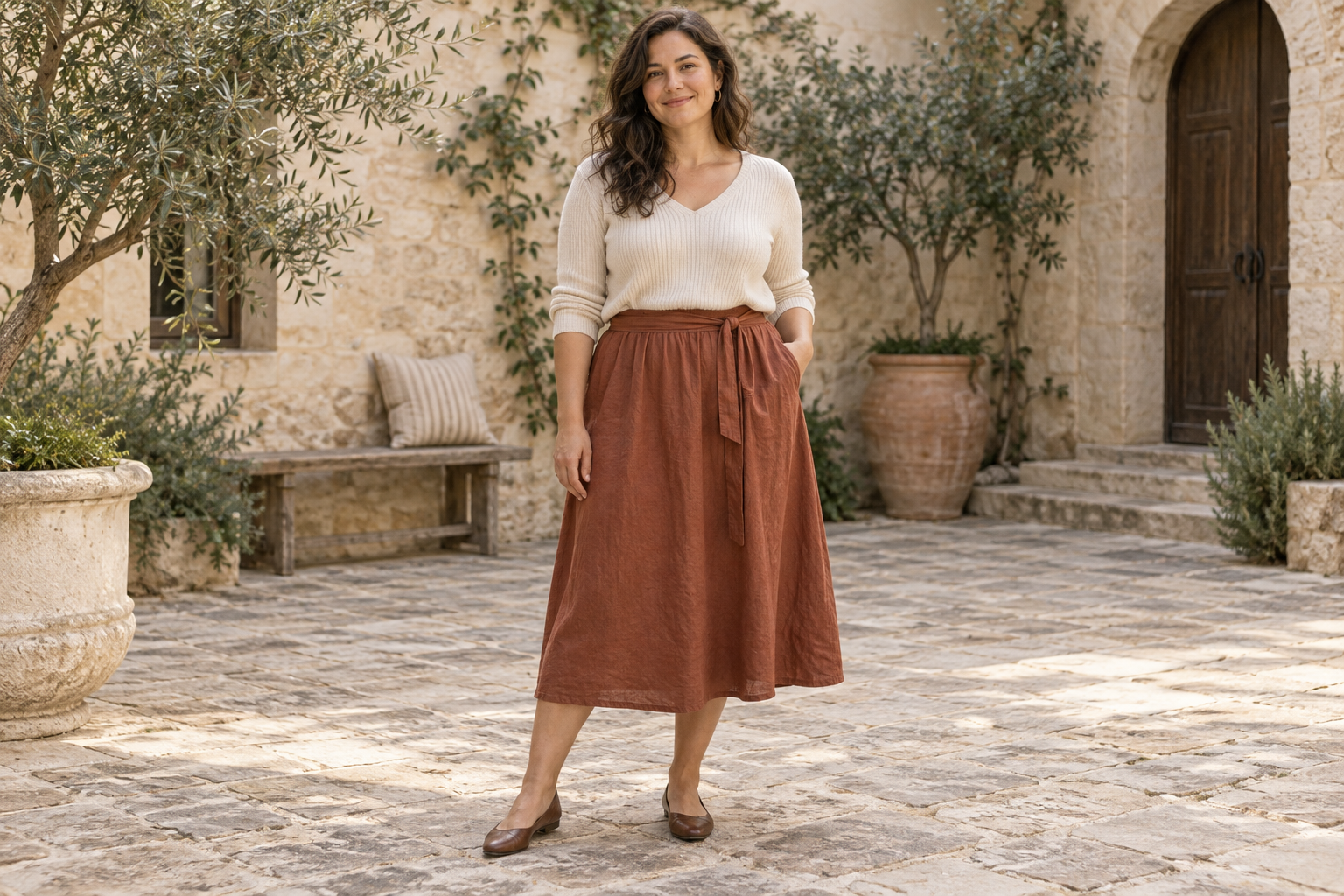
The women's version of the same logic: one continuous line from shoulder to below the dress hem. Camel or grey leads for work wardrobes, and the coat must close over the dress, not just sit on it.
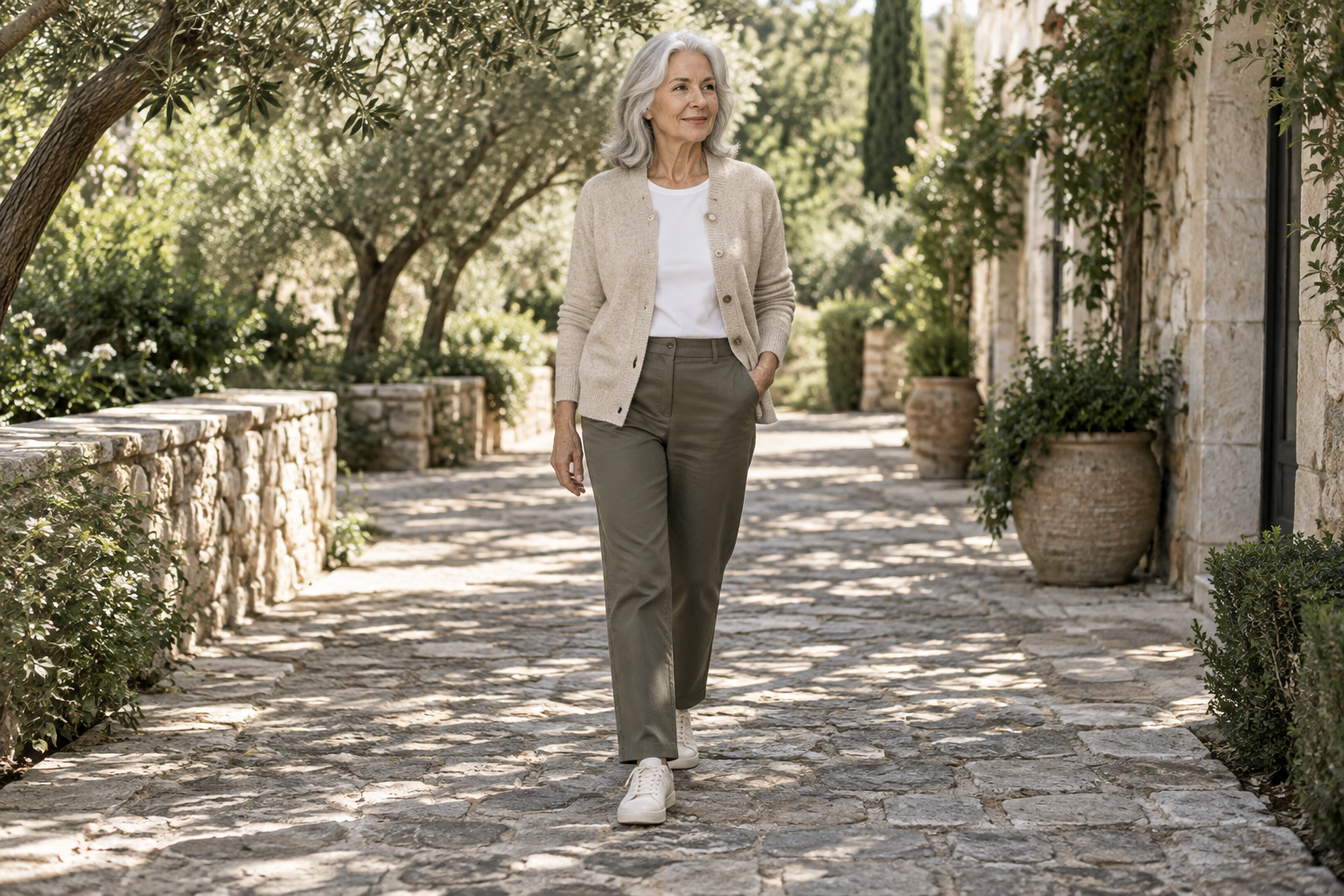
The weekend layering look. A wool scarf and leather gloves change the coat's read from formal to lived-in, and boots handle the pavement the derbies avoid.
What to Wear
Trench coat smart casual rules: trench vs mac, which cut and colour to buy, outfits that work, and the honest limits on rain, winter and dating.
What to Wear
Is a shacket smart casual? Yes on the casual side. Fabric tiers, fit rules, quilted jacket layering, and five shacket outfits with trousers that pass.
What to Wear
The best glasses for your face shape, frames that read professional, colour and material rules, and the hybrid buying path that avoids a bad purchase.