What to Wear
Accessories That Look Cheap: What to Drop and What Replaces Them
Which accessories make outfits look cheap: the three tells, the drop list from belts to watch straps, and the replace-or-repair rule that ends the loop.
Buying guide
Glasses are the accessory you wear every single day, which makes choosing frames the highest-stakes accessory decision in your wardrobe. Start with the face-shape chart, then apply the professional, colour and fit rules that make a pair work with smart casual.
Begin hereInspiration
Every classic frame shape produces a different read — businesslike, creative, understated, statement — and smart casual gives you room for all of them. The looks below are built the way outfits are: one frame as the anchor, quiet clothes around it, with a note on who each look flatters. Use the filters to find your shape and the recreate steps to build the office-default version yourself.
The logic of the chart is simple contrast: frames balance what the face already does. A round face gains definition from angular lines; a square face softens under curves; an oval face, being the middle case, tolerates most things. Heart-shaped faces carry width at the top, so bottom-heavy frames rebalance them, and long faces need vertical height in the frame rather than another long line.
| Face shape | Frames that balance it | Frames that fight it | The one-line logic |
|---|---|---|---|
| Round | Angular, rectangular | Small round frames | Angles add the definition the face lacks |
| Square | Round, oval | Sharp-edged squares | Curves soften a strong jaw |
| Oval | Most shapes | Frames far wider or narrower than the face | Balanced proportions tolerate almost anything |
| Heart | Bottom-heavy frames, thin metal | Heavy top lines on wide brows | Weight at the bottom rebalances the top |
| Long | Tall frames, larger lenses | Narrow, low-profile shapes | Height breaks the vertical line |
Run the photo test before committing to any category: try three shapes, photograph each straight-on, and choose from the photos rather than the mirror. Mirrors forgive; cameras do not — and the photos match how everyone else actually sees you.
The professional read comes from three things at once: a classic shape, a muted colour, and — most important — fit signals that read competence. Level frames. Eyes centred in each lens. No sliding down the nose, no temples digging behind the ears. A perfectly fitted simple frame outperforms a prestigious logo that slides, because fit is what people register as care.
Sizing in one measurement: frame width should match your face width at the temples. Too narrow pinches and makes the face look wider; too wide slides and makes everything look borrowed. This is also the number to check first when buying online, before colour or brand.
Acetate feels denser and warmer than injected plastic, with cleaner hinges and a deeper finish — tells you can check in-store or read about in reviews. Metal frames split into titanium and stainless steel versus cheap alloys, where green-skin reactions are the common complaint. Frames are the part you touch and wear every waking hour, so this is where cheapness costs you daily; lenses are where upsells hide — anti-reflective coating earns its price, exotic add-ons usually do not.
The practical route is hybrid: try shapes in-store, note the model and size, then price-check online. Online retailers ask for your pupillary distance — the millimetres between your pupils — because lens centring depends on it; opticians measure it, and some will from your prescription history. Before checkout, confirm the return policy is a full refund rather than store credit, and that lens remakes are covered if your prescription or fit is off.
Sunglasses follow the same face-shape rules with one extra filter: coverage and UV protection are non-negotiable, style is the flexible part. Prescription sunglasses, clip-ons and transitions lenses each trade convenience against cost, and for most wardrobes one genuinely good sunglasses pair in a classic shape matters more than a second optical pair.
What face shape do I have? The 30-second test: look straight into a camera, take a photo, and trace the outline — widest point, jaw line, face length. The widest-point comparison to your face length is the whole answer.
What glasses make you look professional and younger? Classic shapes with an upward brow line read both competent and fresh; avoid shrunken lenses and shapes that were everywhere a decade ago, which are the dated reads.
Can I buy glasses online safely? Yes, with the hybrid method: try shapes in-store first, verify the frame width, and buy only from a full-refund return policy with lens remakes covered.
How tight should glasses fit? Snug temples with no pressure points, and no slide when you look down at your shoes. Fit is the difference between frames that read intentional and frames that read tolerated.
For how frames sit within a whole accessorised look, the mens accessories 101 and womens accessories 101 guides cover the rest of the kit — watches, belts, bags — and how many deliberate elements one outfit should carry.
6 looks to explore
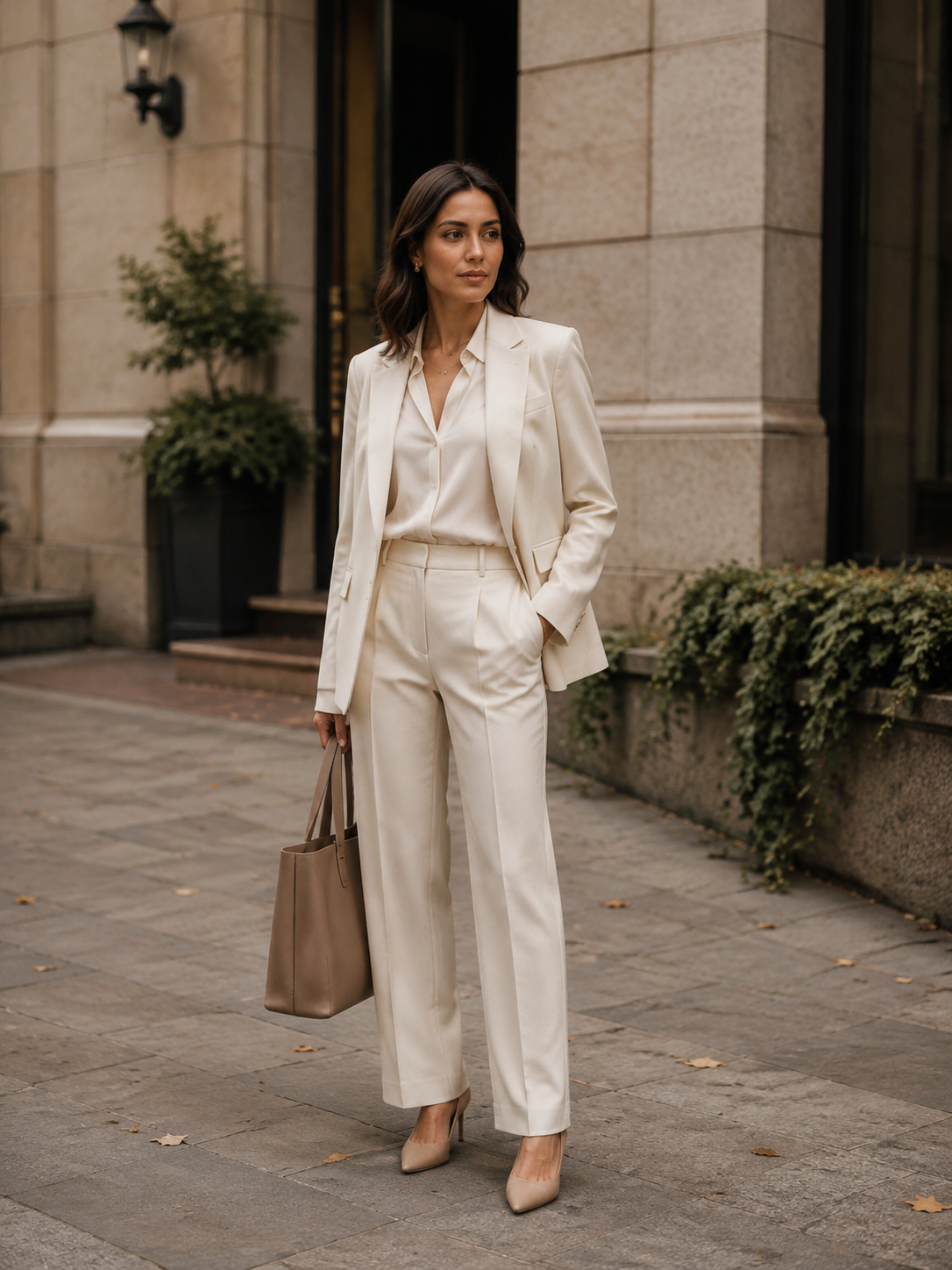
Slim rectangular frames in dark tortoise or black with a navy blazer, white shirt and dark chinos. The sharp horizontal lines of the frame echo the structure of the jacket, which is why this is the safest professional read on almost any face that is not already angular.

A fine silver or gunmetal rectangle or soft square with grey tailored trousers, a merino crew neck and loafers. Thin metal reads lighter and less severe than thick acetate, and it disappears into an outfit instead of competing with it — the frame equivalent of a quiet luxury watch.

Small round frames in matte tortoise with an oxford shirt, chore jacket and dark jeans. On square or angular faces the curves soften the jaw; on the right face the look reads thoughtful rather than retro, provided the frames stay small — large rounds turn the same outfit into a costume.
A browline in tortoise over dark metal, worn with a dark knit, unstructured blazer and leather sneakers. The heavy top line draws the eye to the brow, which structures longer faces and adds intent to a simple outfit — the smart casual all-rounder at its best in low evening light.

A softened-wayfarer shape in classic tortoise with a polo, harrington jacket and chinos. The tapered corners flatter round and oval faces and the shape has stayed current for decades, which is exactly what you want from the pair you touch every day.

A single bold frame — deep smoke, crystal clear or a flat matte colour — with everything else neutral: grey knit, white tee, dark trousers. This is eyewear as signature, and it works under one rule: loud frames, quiet clothes. The glasses become the thing people remember about your look.
What to Wear
Which accessories make outfits look cheap: the three tells, the drop list from belts to watch straps, and the replace-or-repair rule that ends the loop.
What to Wear
Trench coat smart casual rules: trench vs mac, which cut and colour to buy, outfits that work, and the honest limits on rain, winter and dating.
What to Wear
Overcoat vs topcoat for smart casual: the length rule that matters most, navy vs camel decided, and how to make sure the coat actually fits over a blazer.