What to Wear
Smart Casual Accessories for Women: What to Wear and How Much
How to accessorize smart casual for women: the three rules, the bag ladder, jewellery quantity, scarf and belt calls, and a 10-piece capsule checklist.
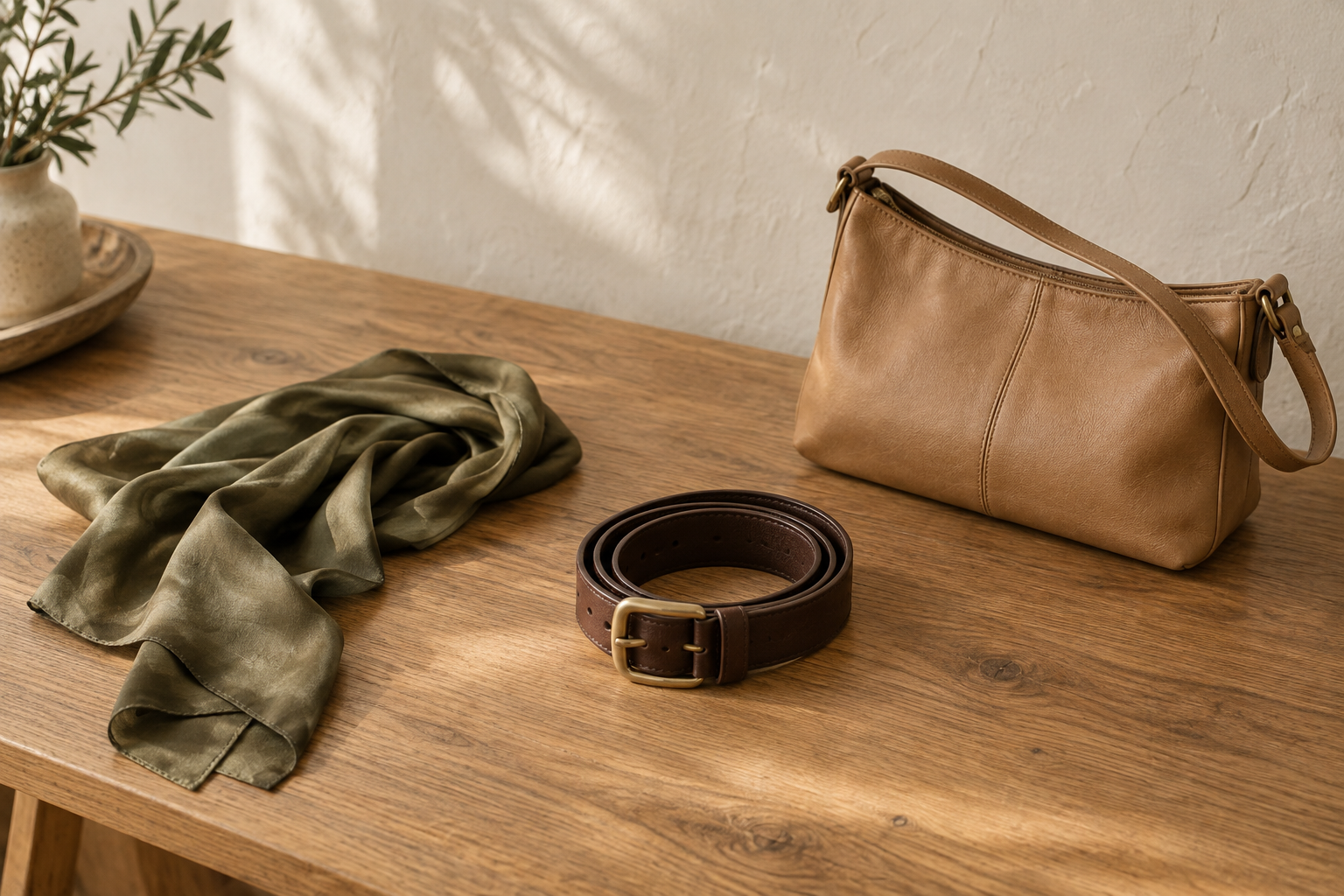
Accessories pillar
A Reddit thread full of men asks whether anyone actually notices subtle accessories. Short answer: people rarely name what is right, but they register what is wrong. Here is the minimal system — the trio that matters, the pieces that do not, and a five-piece kit built in the right order.
Begin hereInspiration
Men's smart casual accessories run on subtraction-based scoring: nobody applauds a well-chosen belt, but a scuffed one with a nylon bag gets quietly logged. Watch, belt and shoes in agreement does most of the work; everything beyond that trio is garnish, and three good pieces beat seven worn anxiously.
Yes — but not the way you fear. People almost never notice which accessories you got right; they reliably notice the ones that are wrong: a scuffed strap at a wedding, a gym band with a blazer, sport socks at the ankle. That is why accessories are subtraction-based scoring — the job is removing the failures, not adding flourishes.
The efficient version: when watch, belt and shoes agree in colour family and formality, the outfit reads deliberate, and that trio does roughly eighty percent of the work. The minimal reader's permission slip: three accessories chosen well beat seven worn anxiously.
What does not count and is not worth auditing: phone cases, fitness bands, earbuds. Nobody at a smart casual venue is scoring them, so spend zero anxiety there.
Strap material is the formality dial: leather strap or metal bracelet reads smart, rubber and woven sport straps read gym. Case size sits comfortably in the mid range — big enough to read on the wrist, small enough to disappear under a shirt cuff. The full styling calls, dial colours and dress-code edges are in the smart casual watch guide.
If your daily watch is a smartwatch, you do not have to choose between it and the dress code — a leather or metal band swap covers most smart casual situations, and the options are laid out in the smartwatch bands guide.
The simplified rule: belt in the same colour family as the shoes, similar formality. Dark brown belt with tan shoes passes; black belt with mid-brown shoes is the actual fail. Exact matching is a suit-era habit — smart casual rewards loose agreement.
Two belts cover nearly everything: black for the black-shoe days, dark brown for the rest. Buckle small, branding invisible. The full system, including casuality and strap width, lives in the belt rules guide.
| Bag | Reads | Pairs with |
|---|---|---|
| Structured leather messenger or tote | Smart | Blazers, wool trousers, office days |
| Leather backpack | Smart-flexible | Knits, chinos, creative offices |
| Canvas bag with leather trim | Casual-smart | Jeans, chore jackets, Fridays |
| Nylon sport bag | Casual | Gym — never the office |
The wallet is the smallest purchase with the biggest visible effect: a bulky brick distorts tailored trouser pockets and jacket lines from across the room. A slim leather bifold or cardholder fixes it for the price of a shirt, which is why it leads most budget accessory upgrade lists.
Socks: trouser-coloured for anything office-leaning, no-show for loafers in warm months — the conventions are expanded in the men's sock rules. Glasses are the always-on accessory; frames that suit your face do more daily work than any single purchase. And the unglamorous details score constantly: clean shoes, trimmed nails, a lint-free jacket.
The safe starter set is a wedding ring and a watch — that is a complete answer. One subtle chain or bracelet can join for dinners and social events without moving the read. What breaks the ceiling: stacked bracelets, multiple rings, or anything that jingles at an office. One extra piece is the limit that keeps it deliberate.
On a tight budget, buy in this order: wallet, belts, socks — all inexpensive — then the bag, then the watch. The watch is last not because it matters least but because a worn-out cheap watch reads worse than no watch; it is the piece worth saving for.
Skip entirely at smart casual: tie clips (no ties here), pocket squares worn daily, and hats worn as outfit pieces indoors. Each reads costume outside its niche.
Do guys need accessories for smart casual? No — but the belt-shoe-watch agreement is the floor, because those three are visible whether or not you choose them. Choosing them deliberately is the whole game.
Is it OK to wear an Apple Watch with a blazer? Yes, with a leather or metal-style band rather than the sport band. The band is the message; the case is fine.
How many accessories is too many for a man? Use the three-plus-one rule: watch, belt and shoes in agreement, plus at most one extra piece — scarf, bracelet or a statement bag. Two extras is where outfits start looking assembled.
Do belts and shoes have to match exactly? No — same colour family and similar formality is the standard at smart casual. The wardrobe partner version of this page, women's smart casual accessories, runs on the same three rules with a different shopping list.
6 looks to explore
The one accessory worth getting right. A leather strap or metal bracelet reads smart; a rubber strap reads gym no matter the case. Mid-size cases sit cleanly at a shirt cuff, and the strap tone should sit in the same family as your belt and shoes — loose agreement, not a twin match.

The simplified rule in action: belt in the same colour family as the shoes, similar formality, small buckle, no visible branding. Exact matching is not required at smart casual — dark brown with mid-brown passes easily. Black is the strict one: it wants black or very dark shoes.
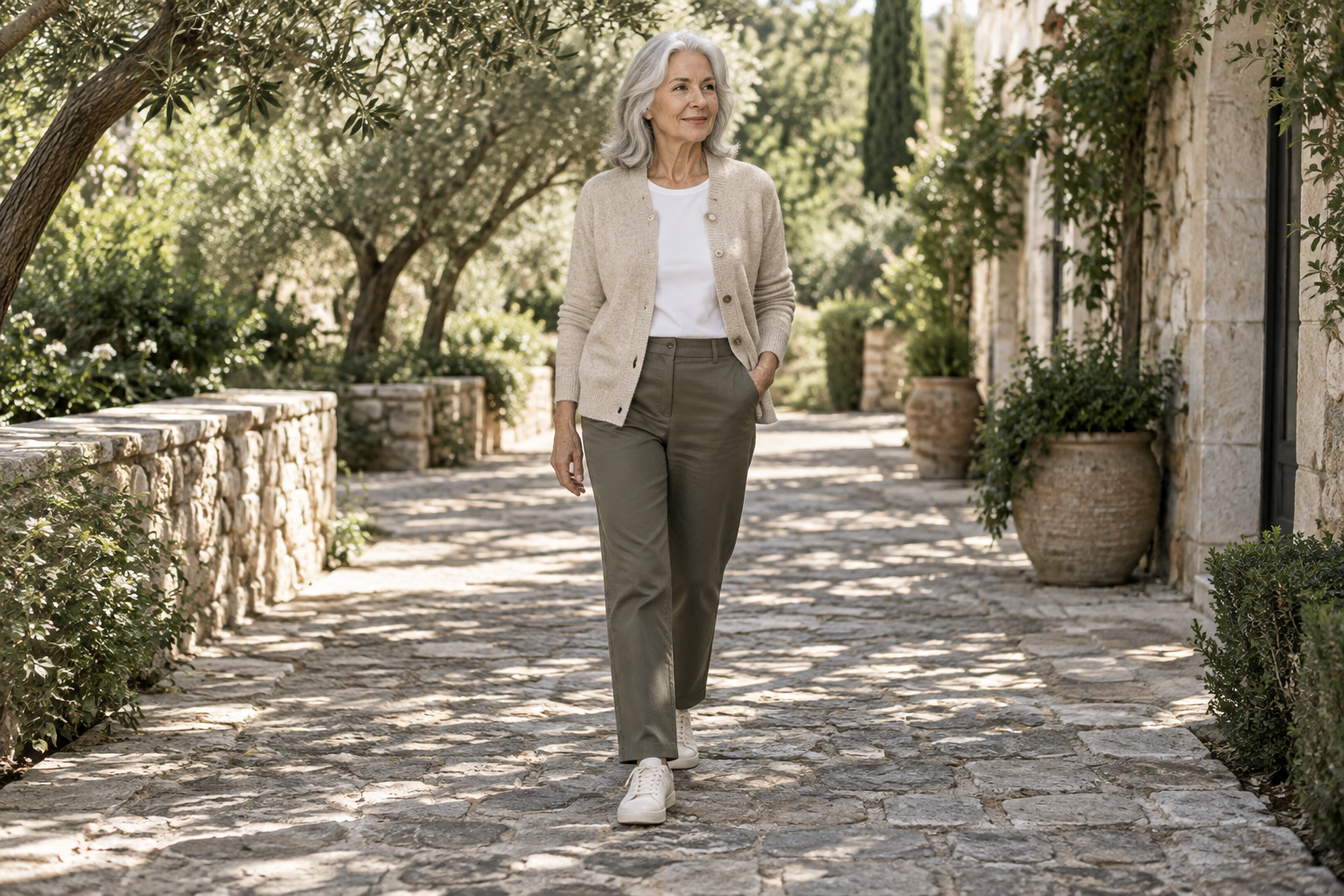
The bag ladder for smart casual: structured leather messenger or tote first, leather backpack second, canvas third, nylon sport bags never. Match the bag's leather tone to your shoes loosely. The same jacket-and-jeans outfit with a nylon satchel drops a full notch.
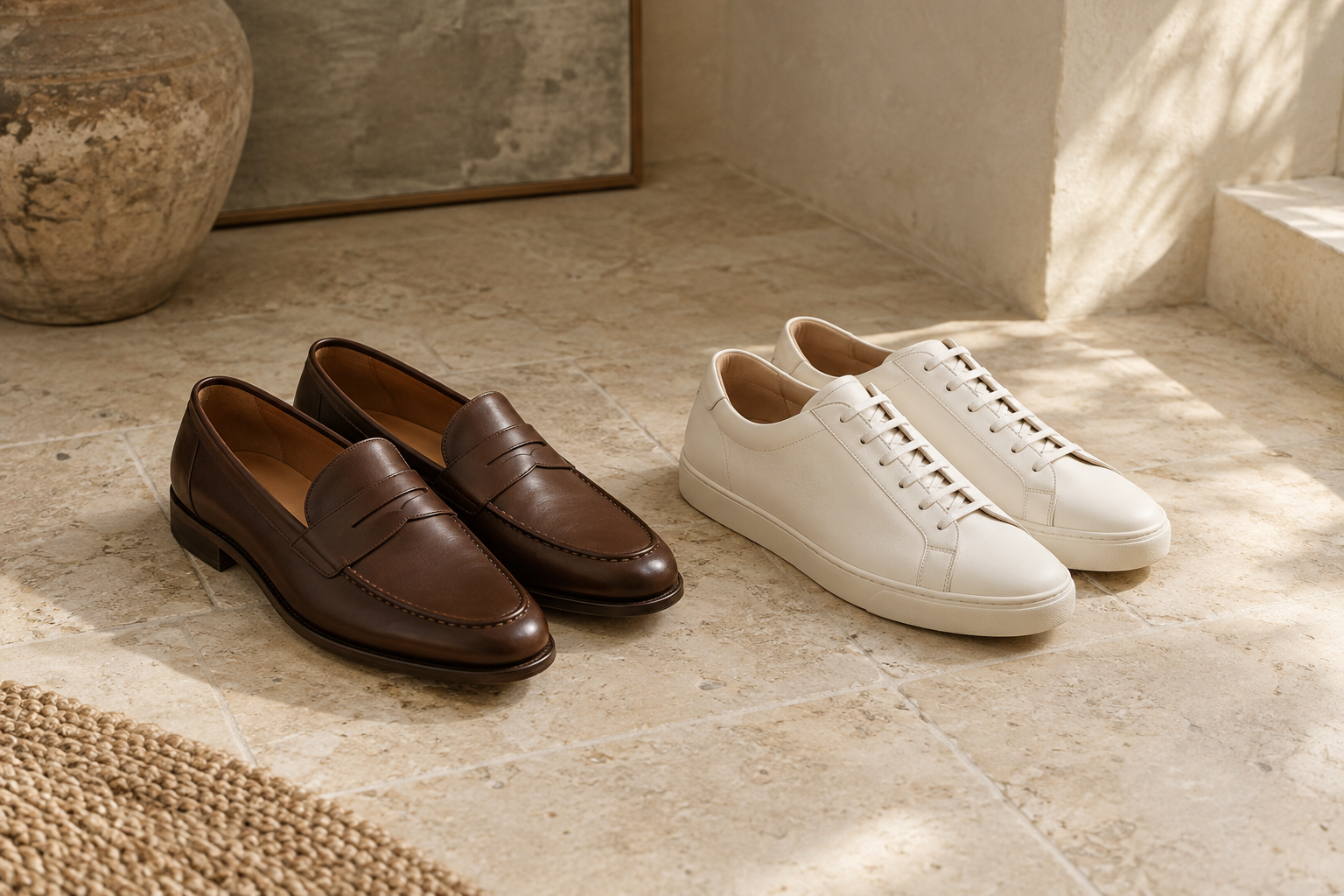
Socks in the trouser colour, not the shoe colour, keep the leg line long and the outfit office-ready. With loafers in warm months, no-show socks are the convention — visible sport socks are the single fastest way to undo a smart outfit at the ankle.
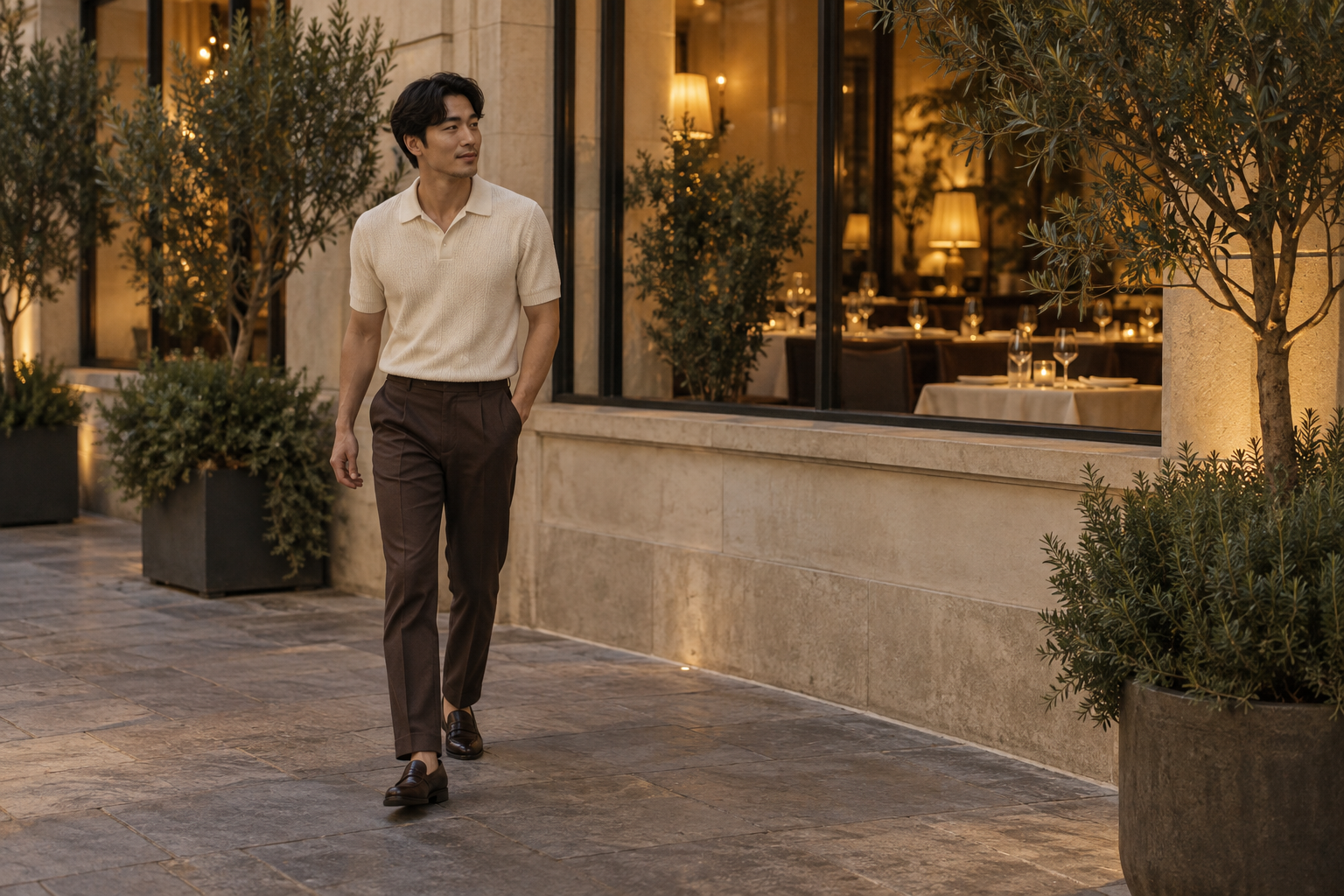
The safe starter set for men's jewellery is a wedding ring and a watch — that is a complete answer at smart casual. Adding one subtle chain or bracelet works for dinner; stacked bracelets at the office is where the ceiling breaks.
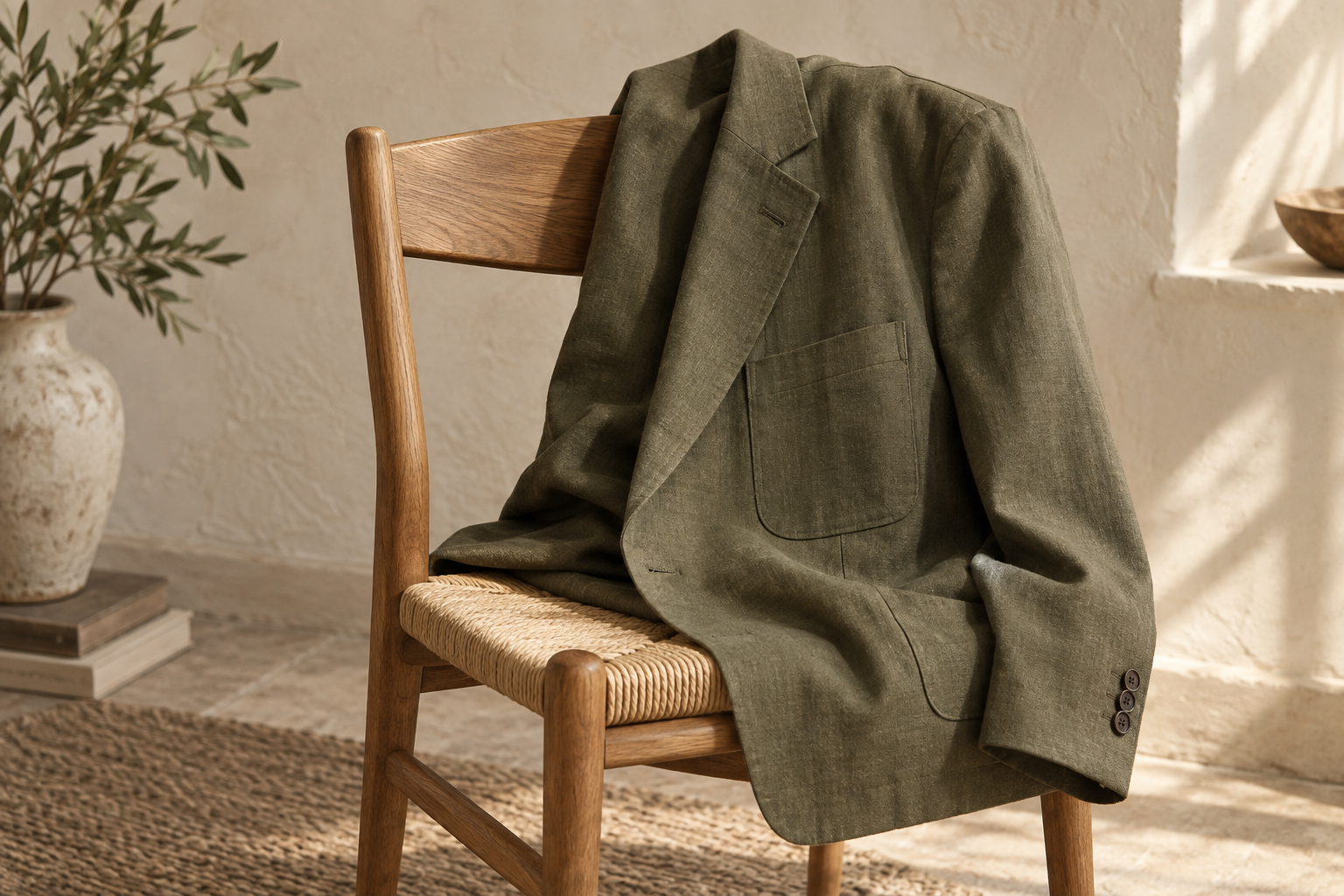
The formal end of the smart casual map: black-on-black leather, silver case and buckle agreeing, dark socks disappearing into the trouser. When an event is dressier than your usual week, this is the setting you reach for — and it needs no other accessories at all.
What to Wear
How to accessorize smart casual for women: the three rules, the bag ladder, jewellery quantity, scarf and belt calls, and a 10-piece capsule checklist.
What to Wear
Does a watch strap have to match your belt and shoes? Tone family beats exact match, black is the strict one, and a quick strap swap fixes the rest.
What to Wear
The smart casual watch guide: dress vs casual settled, strap formality ranked, case size for shirt cuffs, and a one-watch setup that covers every occasion.