What to Wear
The Best Watch for Smart Casual: A Men's Styling Guide
The best watch for smart casual is simple, on a leather strap. Case sizes, dial rules, strap matching and verdicts on divers and smartwatches.
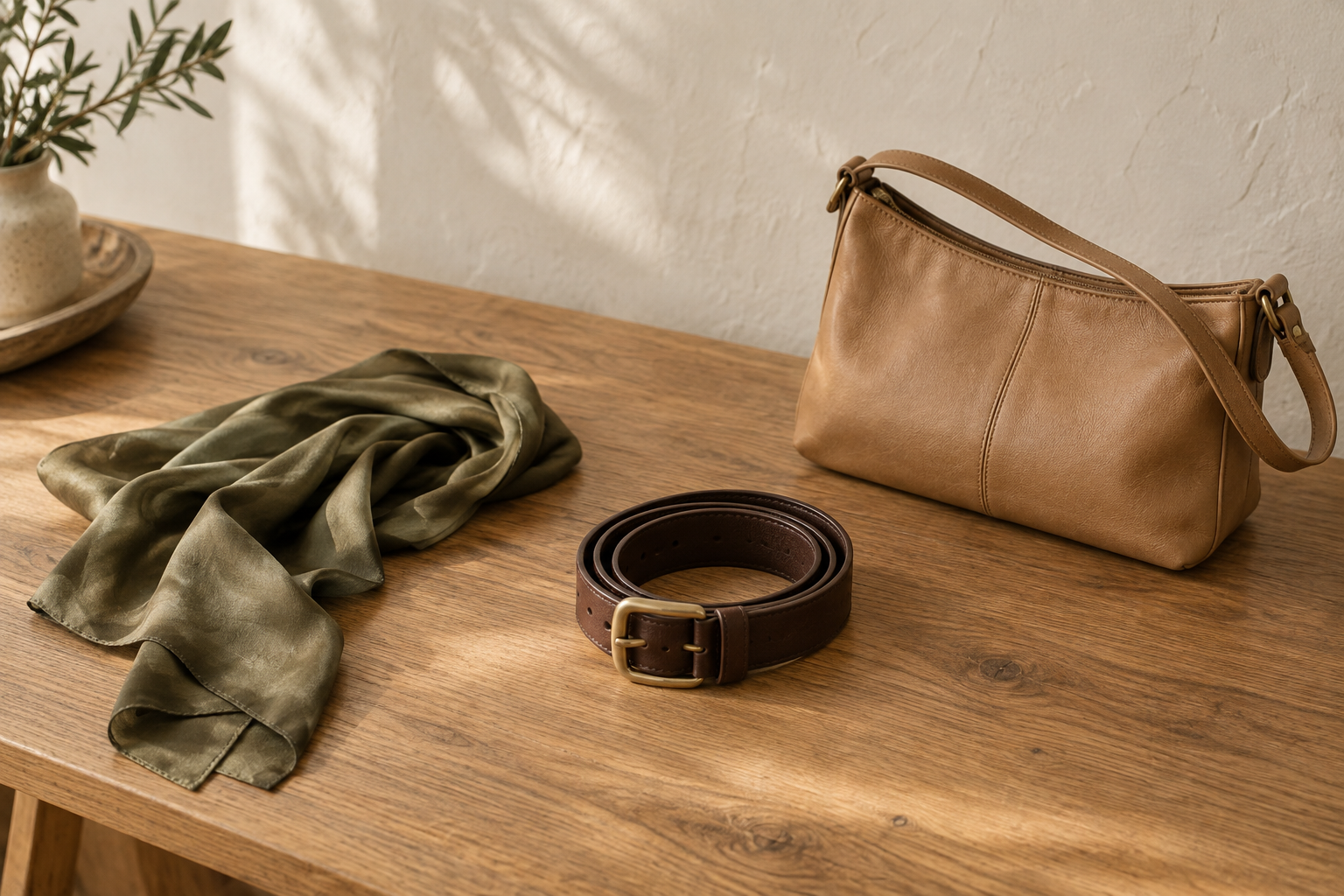
Belt rules
Your outfit is nearly finished and one doubt is left: does the belt have to match the shoes exactly? Usually no — and knowing the one exception, plus the width and buckle rules, takes about thirty seconds at the mirror.
Begin hereDefinition / explainer
No — match the colour family and the formality, never the exact leather. The exception (black-tie-adjacent rooms), the width rule and the thirty-second mirror check are all below.
At smart casual, belt and shoes should sit in the same colour family at a similar formality — an exact leather match is a business-dress rule, not a smart-casual one. Mid-brown next to dark brown passes here, even though a boardroom would flunk it.
There is one exception where you should move from approximate to exact: weddings, client meetings, and anything worn with a suit. When the stakes are remembered in photos, close the gap.
And a reassurance for anyone counting cost: one dark-brown belt and one black belt cover roughly ninety percent of smart casual. You do not need a belt for every pair of shoes.
| Shoes | Belt that works | Belt that fails |
|---|---|---|
| Black smooth leather | Black smooth belt, any close texture | Brown of any shade |
| Dark brown leather | Dark or mid-brown belt — close enough passes | Black, or pale tan |
| Tan leather | Tan or mid-brown matte belt | Black |
| Suede (any colour) | Suede belt, or matte leather in the family | Glossy polished calf |
| White or light sneakers | Often beltless, or a quiet matte belt | High-shine dress belt |
Dress belts run narrow — roughly 25 to 30mm — with smooth, polished leather and a small metal buckle. Casual belts run wider, around 35 to 40mm, in matte or textured leather, woven fabric, or with larger brushed buckles.
Smart casual lives between the two: roughly 30 to 35mm in matte or lightly polished leather. If a belt looks at home with both chinos and flannel trousers, it is the right middle.
This is the question that never stops coming up, and the honest answer is: buckle and watch-case metal matching is a nice-to-have, not a rule. Silver with silver is the easiest default — if you wear a silver watch or steel-frame glasses, pick silver hardware and stop thinking about it. Mixing metals is entirely fine at smart casual. If you wear a leather-strap watch, the same colour-family logic applies to the strap: match the leather type first, the exact shade second.
The full formality ladder lives in the belt formality guide.
And the no-belt question: beltless with side adjusters or elastic-waist chinos looks intentional. Beltless with ordinary belted trousers just looks unfinished. Pick one on purpose.
As a wedding guest, match the belt closely to the shoes, match buckle metal to your watch, and keep the width dress-leaning — the men's wedding outfit guide assumes all three. At office smart casual, the matching rule relaxes: consistency and condition matter more than exactness. What passes on Friday can fail a client meeting on Wednesday, so keep the sharper pairing for the meetings you cannot reschedule.
Women's belt rules are looser, because a belt is more often a silhouette tool than a matching obligation. A waist belt upgrades a dress or blazer look when it defines shape; it is unnecessary when the outfit already has structure. Match shoes if you like the look of it — otherwise the belt answers to the outfit, not the footwear.
Do your belt and shoes have to match exactly? No — same colour family and similar formality is the smart casual standard.
Can you wear a brown belt with black shoes? At smart casual, only if the brown is very dark and matte. Mid-browns clash with black's formality, which is why the pairing usually fails.
Does the belt have to match the watch strap? Only loosely — the strap-matching rule is about leather type and colour family, not exactness.
How should a belt fit? Buckle on the middle hole, tail ending past the first belt loop, no bunching in the loops.
A belt matches your shoes at smart casual when it sits in the same colour family and carries a similar level of formality — an exact leather match is a business-dress rule, not a smart-casual one. Width, buckle and condition each carry their own rule, and together they matter more than a perfect colour match.
What to Wear
The best watch for smart casual is simple, on a leather strap. Case sizes, dial rules, strap matching and verdicts on divers and smartwatches.
What to Wear
Can an Apple Watch pass business casual or smart casual? Yes — the band is the outfit. Which bands work, the two-band kit, blazer and wedding rules.
What to Wear
The five jackets that work over a dress shirt in winter — overcoat, topcoat, overshirt, quilted, wool — plus the layering order that keeps the shirt sharp.