What to Wear
Pocket Square Smart Casual Rules: When Flourishes Are Too Much
Pocket square rules for smart casual: when a square earns its place, the one-flourish-per-outfit rule, honest hat verdicts, and the folds that matter.
Accessories explained
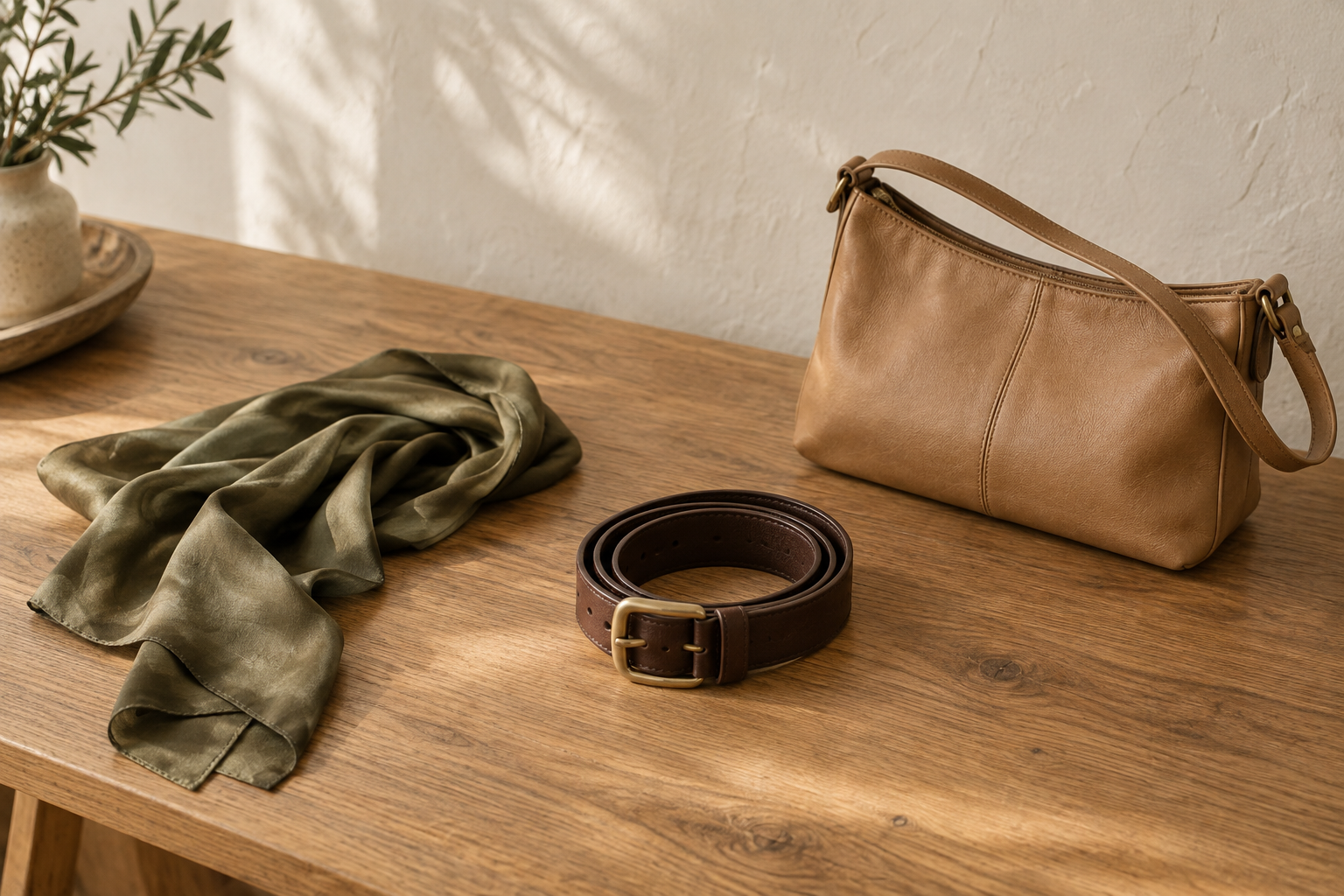
Every belt is a dress belt or a casual belt — you just have to read the three signals. This page turns what you half-know by look into rules you can apply in ten seconds, with a table for the exact outfits people actually wear.
Begin hereDefinition / explainer
A dress belt is narrow, smooth and quietly buckled; a casual belt is wider, textured and built to be noticed. Width, leather finish and buckle size decide which one you are holding — and whether it matches the formality of the trousers it is going into. Score any belt in ten seconds with the test below.
Width is the first signal because trousers enforce it physically: suit-trouser belt loops are cut narrow, and a wide belt either will not seat or will bunch in the loops. Jeans loops are generous, so a skinny dress belt rattles in them and looks lost.
The cuff test settles buckle size: a dress buckle is small enough to hide behind a shirt cuff held against your wrist. Brushed and gunmetal finishes lean casual, polished leans dress, and any plate, western or visible-logo buckle stops at denim. One coordination line covers hardware: let the buckle finish loosely echo your watch and glasses, no closer than that.
Cracked edges, peeling surfaces and flaking seams are the condition tells that downgrade an outfit before anyone notices its style. In plain language: full-grain leather is the top slice of the hide and ages by developing patina; genuine leather is a middle grade that lasts but creases hard; bonded leather is leather scraps pressed with adhesive, and after a year of flexing at the buckle it peels — that peeling is the tell.
Quick checks in the shop: flex the belt near the buckle (crackling means bonded), look at the cut edge (fuzzy or glued means weak), and smell it (chemical means heavily corrected). Contrast stitching is jeans-only; clean edges travel upward.
The honest verdict: a reversible belt is the right call for travel and for the one-belt phase of a wardrobe, and the wrong call after that. The rotating seam is the first part to crack, and a flaking seam downgrades the belt faster than the wrong colour ever could. Upgrade past one as soon as you own both black and brown shoes regularly — at that point two dedicated belts beat one rotating compromise.
The two-belt wardrobe is black and dark brown: black serves grey, black and mid-blue trousers; dark brown serves tan, khaki, mid-brown and dark denim. Tan and oxblood are third-belt candidates — tan unlocks summer linen and lighter chinos, oxblood pairs happily with grey and navy. The shoe side of each pairing is covered in shoe colour by trousers.
Formality agreement comes before colour matching: a formality-correct belt in a near colour beats a perfectly matched belt at the wrong register. The full matching logic is in the belt rules page.
Beltless works with side-adjuster trousers, elastic-waist chinos and jeans that actually sit at your waist — provided the shirt is tucked or the top is short enough not to matter. It fails when a waistband gaps, when a dress shirt is tucked into nothing, and with a blazer at anything wedding-adjacent. Braces are smart-leaning but a statement; wear them as one, not as a fix.
| Outfit | Belt that passes | Belt that fails | Why |
|---|---|---|---|
| Jeans + polo | 35 to 40 millimetre matte or woven brown, brushed buckle | Skinny polished black dress belt | Width and shine disagree with the denim's register |
| Chinos + oxford shirt | 30 to 35 millimetre matte brown, modest stitch | Plate buckle or heavy western belt | The buckle shouts over an otherwise quiet outfit |
| Trousers + blazer | 30 millimetre smooth or lightly matte leather, small framed buckle | Contrast-stitched casual belt | The blazer raises the register; the belt must rise with it |
| Wedding suit | 25 to 30 millimetre polished leather, or braces | Anything reversible with a visible seam | Nothing about the outfit survives a casual signal |
| Dark jeans + blazer | 30 to 35 millimetre matte leather, quiet buckle | Both extremes: skinny dress belt or wide work belt | The mixed outfit needs the mixed belt — the sweet spot exists for exactly this |
Can I wear the same belt with jeans and a blazer? Only if it is 30 to 35 millimetres, matte, and quietly buckled. Anything narrower or shinier swaps out when the blazer goes on.
How do I tell if a belt is good quality? Flex it near the buckle, read the cut edge, and smell it: no crackle, a clean dense edge, and leather rather than chemicals.
Do belt and shoes have to match? Same colour family and same formality — a dark brown belt with dark brown shoes, both in a comparable finish. Formality agreement matters more than the exact shade.
What size belt should I buy? Your trouser waist plus about two inches, so the fastening lands on the middle hole — a belt worn on its first or last hole is the wrong length, not a tight or loose waist.
A dress belt is roughly 25 to 30 millimetres wide, made of smooth polished leather, and finished with a small framed single-prong buckle — it exists to disappear into tailored trousers. A casual belt is roughly 35 to 40 millimetres wide, in matte, textured or woven leather, with a larger brushed or boxy buckle — it is part of the outfit rather than a structural necessity. The smart-casual sweet spot is a 30 to 35 millimetre matte leather belt, which legitimately serves both ends.
What to Wear
Pocket square rules for smart casual: when a square earns its place, the one-flourish-per-outfit rule, honest hat verdicts, and the folds that matter.
What to Wear
The best Apple Watch band for work by material: milanese, leather, link or sport. What to buy, what to skip, and the two-band kit that does it all.
What to Wear
How to look more put together without new clothes: five accessory upgrades in buy-order — watch, belts, bag, glasses and the cheap finishing trio.