Problem-solving
Settle the strap question before you leave the house
Should the leather on a watch strap match your belt and shoes? Ideally yes for brown-on-brown outfits — but it is the softest rule in menswear, and near-match in tone beats exact match every time. This page gives you the pass-or-fail table, the metal rules, and the thirty-second fix when your one watch clashes with your shoes.
The rule, ranked by what actually matters
- Strap condition and formality first: a scuffed strap or a rubber band at a formal event registers from across the room.
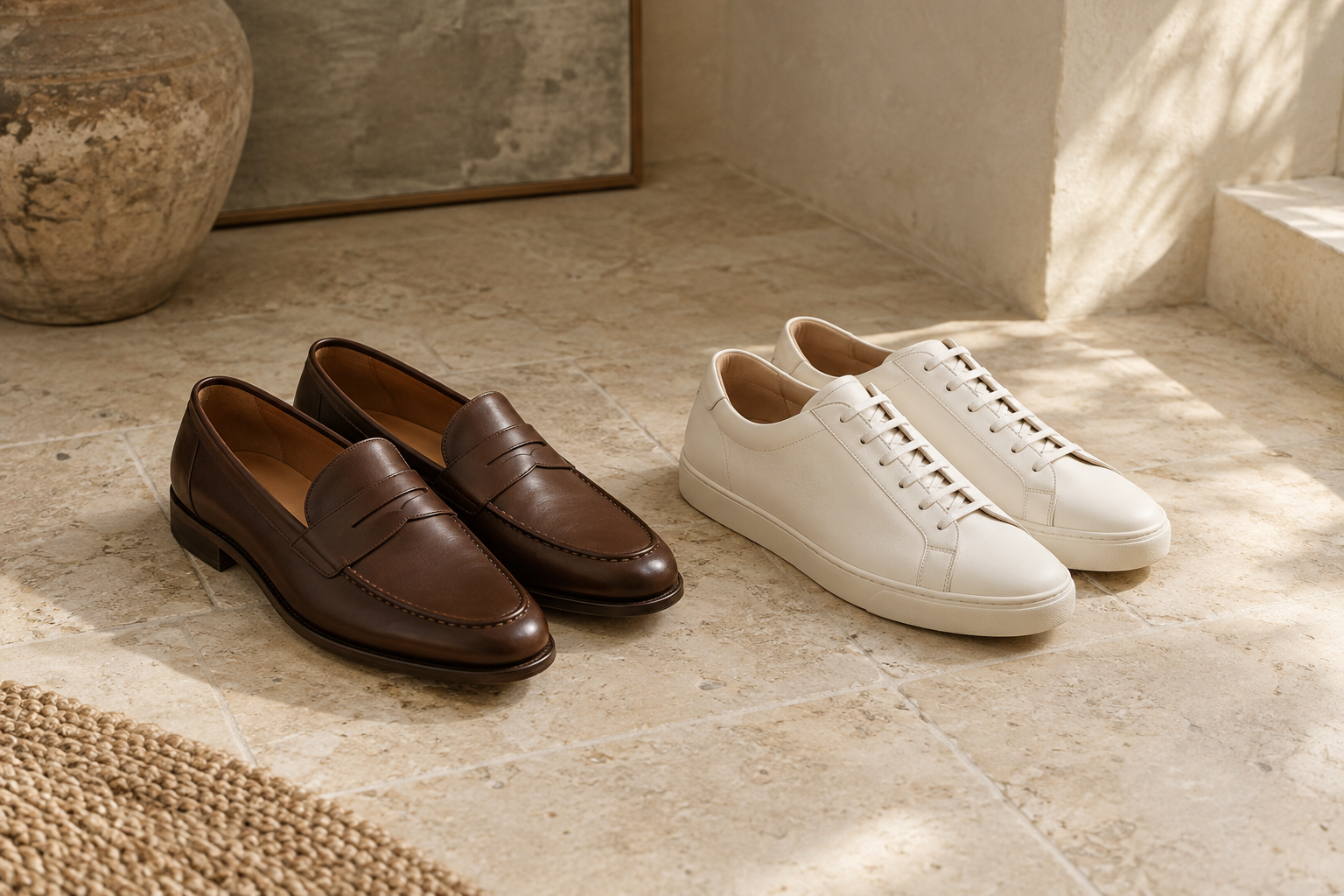
- Tone agreement second: strap, belt and shoes in the same colour family — browns together, blacks together.
- Exact colour match last, and optional: chestnut next to dark brown is a pass at smart casual and nobody credible says otherwise.
Scope note: all of this applies to leather straps only. Metal bracelets and rubber or fabric straps play different rules, covered further down.
The tone table: pass, borderline or fail
Read the strap row against your shoes and belt. When the belt and shoes disagree with each other, fix that before touching the watch.| Watch strap | Shoes and belt | Verdict |
|---|
| Dark brown | Dark brown | Pass — the default smart casual setting |
| Chestnut or tan | Dark brown | Pass — tone family, not twins |
| Dark brown | Black | Borderline — works if belt and shoes are firmly black |
| Black | Very dark brown | Pass — reads as a deliberate contrast |
| Black | Mid or light brown | Fail — change the belt or the strap |
| Tan | Black | Fail — the only warm leather on a cold outfit |
Why black is the strict one: black is an absolute, so it tolerates no warm neighbours — a black belt with tan shoes is the real fail in most of these outfits, and the watch is just standing near it. Browns are a family, so they forgive each other constantly.
Metal matching: case, buckle and the rest
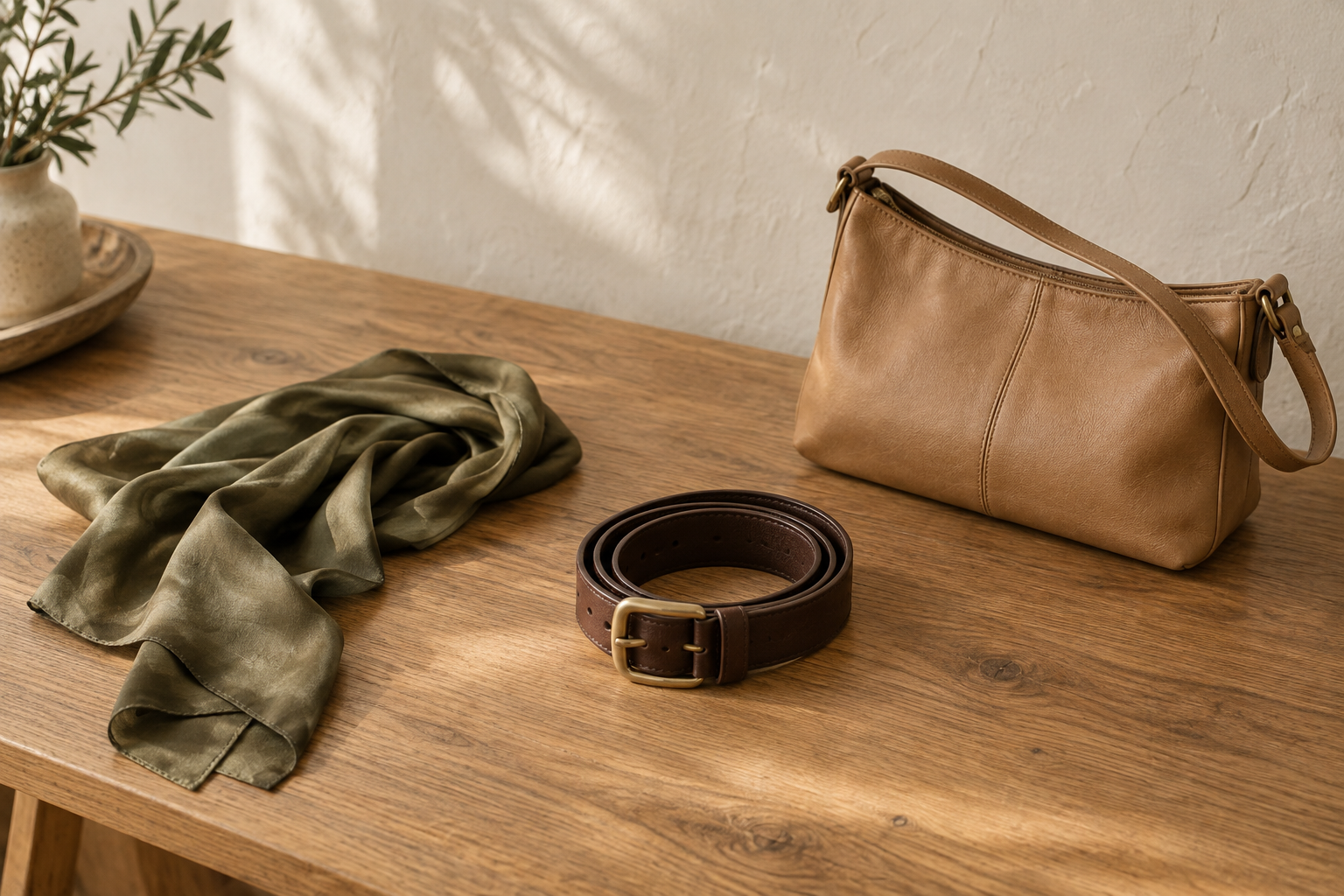
Watch case metal should agree with the belt buckle, and loosely with eyewear frames and jacket zips — loosely being the operative word. Mixing silver and gold on purpose is acceptable if each piece is internally consistent: a gold-cased watch on a brown strap with a silver buckle reads mismatched, while a two-tone watch reads chosen.
For one-watch owners, steel or silver is the practical default: it works with both leather colours and with almost all hardware. That is also why the bracelet version earns its keep — it never asks the strap question at all.
Metal, rubber and fabric straps: the different rules
A metal bracelet ignores the leather rule entirely and matches through the case metal instead — silver default, as above. Rubber and sport straps are a formality problem, not a colour problem: at smart casual they read gym with a blazer no matter what shade they are, and the fix is a band change rather than a shoe change. NATO and fabric straps live at the casual end — fine with jeans and chukkas; pick muted colours that echo the outfit instead of fighting it.
Weddings and high-stakes outfits: when to actually bother
Matching is worth real effort at weddings, client meetings and anything funeral-adjacent, where photos last and scrutiny is highest. The checklist: brown shoes, brown belt, brown strap — all in one tone family — with silver hardware throughout. If your leather options do not reach that standard, wear the steel bracelet instead; it is the answer that cannot mismatch.
Everywhere else, calibrate by the environment: at a relaxed office or a pub, chestnut against dark brown is invisible. The belt-side details are in the belt rules guide and the formality ladder in the belt formality guide.
What enthusiasts say versus what gets noticed
The watch community's honest verdict: strap matching is optional etiquette, not law — the same thread that asks the question full of doubt also fills with owners who deliberately never match. Reality at ground level: colleagues notice a scuffed strap or a sport band at a wedding; they do not notice chestnut versus dark brown.
The confidence rule closes it out: a deliberately mismatched outfit reads better than an anxiously almost-matched one. Decide on purpose — family-match, contrast, or bracelet — and any of the three lands.
Strap matching questions
Does a brown watch strap have to match brown shoes? No — tone family, not twins. Dark brown with nearly any other brown passes at smart casual.
Can you wear a black watch strap with brown shoes? Yes — with very dark shoes and a committed brown belt it reads as a deliberate contrast. It fails only against mid-brown with a black belt alongside.
Should the watch match the belt buckle? Loosely, through metal colour: silver with silver, gold with gold, and two-tone watches go with everything by committing to nothing.
What colour watch strap is most versatile? Dark brown smooth leather first, black second, plus a steel bracelet for the days the leathers will not cooperate. The wider styling picture is in the smart casual watch guide, and the full accessories system in men's smart casual accessories 101.
Open the symptom that matches. Start there.
Brown watch strap, black shoes and belt
Possible cause: The strap is the only warm-toned leather on the outfit, so it reads as an oversight rather than a choice.
Try first: Swap to a black strap, or wear the metal bracelet if the watch has one. If neither is possible today, the outfit survives — but change the belt to brown and the shoes to brown first, because the belt-and-shoe mismatch matters more than the watch.
Black watch strap, brown shoes
Possible cause: Black is the strict colour: it wants black or very dark shoes, and a mid-brown pair leaves it isolated.
Try first: It is actually wearable at smart casual — the contrast reads deliberate when the belt and other leathers commit to brown. What fails is black strap plus black belt plus tan shoes, where the belt and shoes disagree while the watch sides with the belt.
Two browns that almost but do not match
Possible cause: Chestnut, tan, oxblood and dark brown all read as 'brown' from a metre away, so the eye accepts near-matches easily.
Try first: Wear it. Nearly every dark brown works with nearly every other dark brown at smart casual — tone family is the standard, not twins. If the two leathers are genuinely different hues, a dark-brown strap splits the difference.
Sport or fabric strap at a formal event
Possible cause: The band's formality, not its colour, is what clashes — rubber at a wedding fails regardless of what the shoes are doing.
Try first: Change the strap, not the outfit. A quick-release leather strap is a thirty-second job, and the smartwatch bands guide covers the same fix for smartwatches.