Comparison
Tote, messenger or briefcase: the formality read, compared
Every work bag sits somewhere on a formality ladder, and the only real question is whether your rung matches your outfit. A structured leather tote over a blazer reads polished; a nylon sport bag over the same blazer reads like you borrowed someone's gym bag. Here is the ladder, the three-way comparison, and the honest answer on backpacks.
What bag is appropriate for work? The formality answer
Bag formality should match outfit formality — that single sentence is the whole work bag dress code. A structured leather tote or briefcase is the smart casual ceiling; a nylon sport bag of any kind is the floor. Most modern offices accept almost anything in between, so this page is really about reading your own office, not obeying a universal one.
The fastest way to calibrate is to look at what carries weight in your office: what the senior people bring to meetings is the local rule, and it is rarely written down anywhere.
The bag formality ladder
Ranked top to bottom. The two boundaries that matter most are leather-versus-not and structured-versus-slouchy.| Rung | The bag | Where it passes |
|---|
| 1 — Most formal | Structured leather briefcase | Formal offices, legal and finance, client-facing days; pairs with suits and tailoring |
| 2 | Leather tote, structured | Nearly every smart casual office; pairs with blazers, dresses, tailored trousers |
| 3 | Leather messenger | Smart casual offices and commutes; pairs with blazer-and-chinos outfits |
| 4 | Leather or structured backpack | Relaxed smart casual and tech offices; pairs with knitwear, clean sneakers, unstructured jackets |
| 5 | Canvas with leather trims | Casual offices and internal days; reads weekend with anything tailored |
| 6 — Floor | Nylon or sport fabric anything | Gym, site visits, not the office floor; downgrades every outfit it touches |
The backpack question: yes, but
Is a backpack OK for work? A leather or structured backpack passes at smart casual; hiking-style and nylon ones do not. That is the full verdict, and it applies at every office that calls itself smart casual.
Two honest costs come with backpacks. The wear pattern is real: straps over a blazer shoulder pilling and wrinkling the cloth is a trade you accept each time. And in client-facing roles or jacket-heavy wardrobes, the graduation to a tote or messenger is less about rules and more about what the shoulder of your best jacket looks like in June.
Matching the bag to the outfit and the shoes
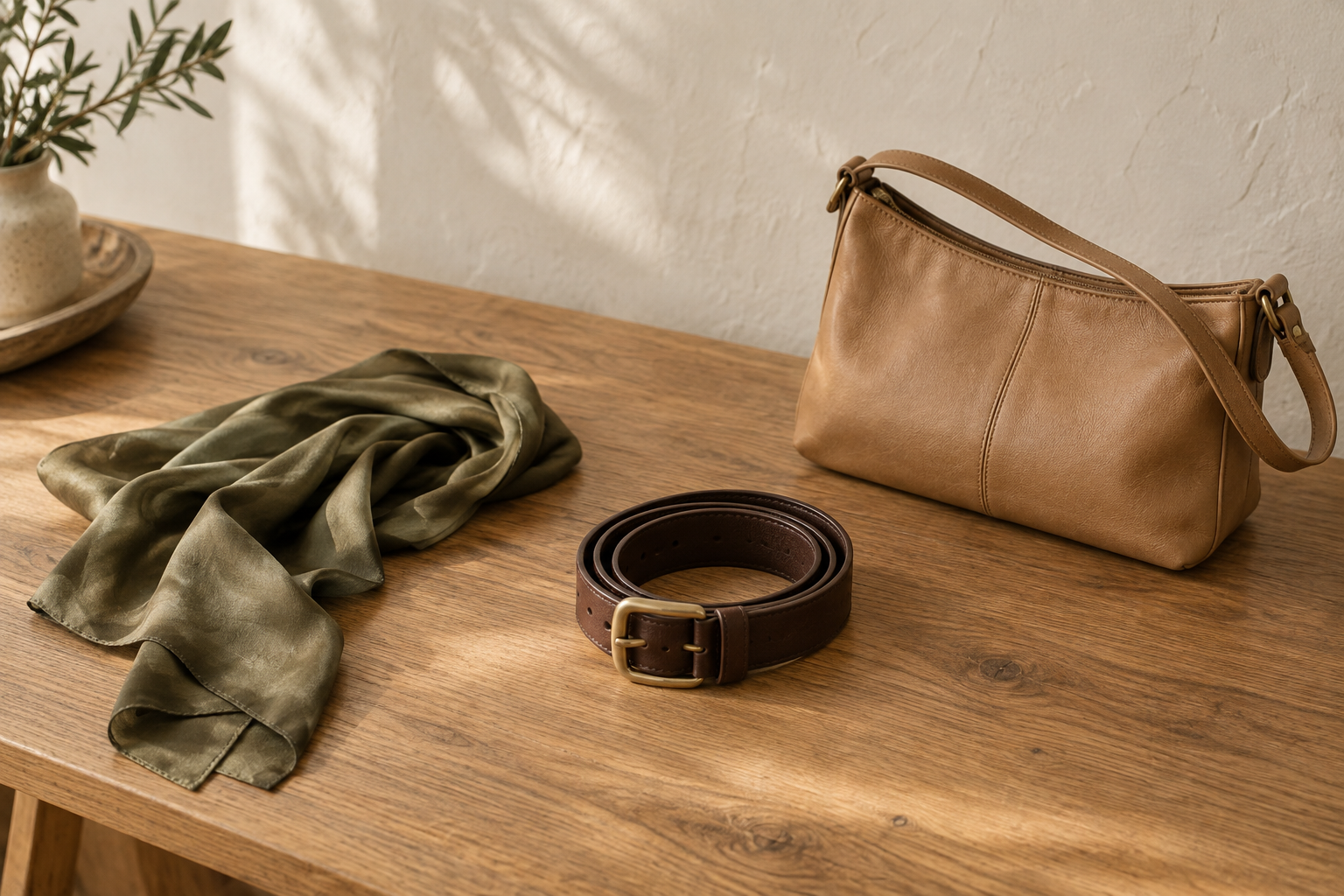
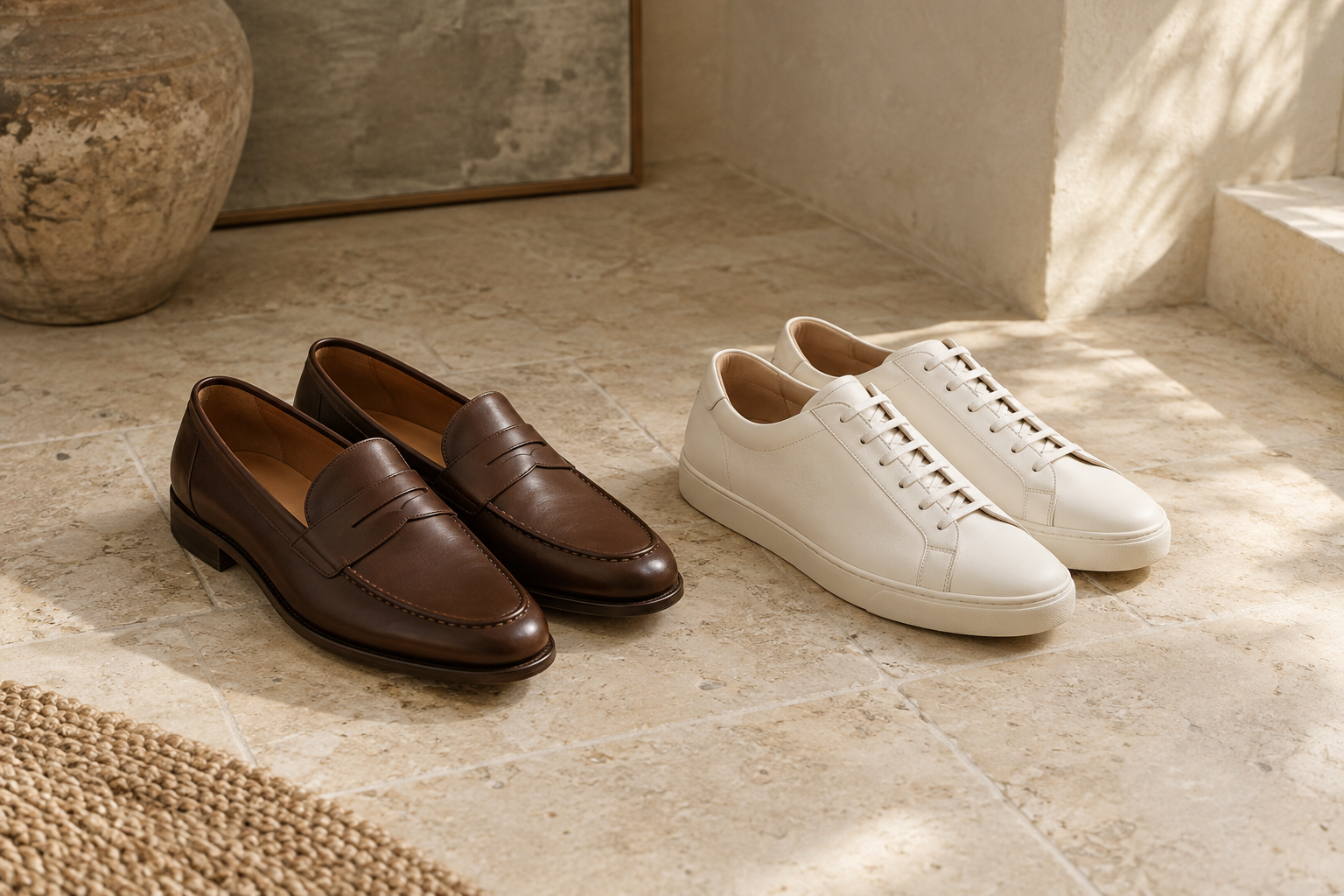
The loose rule is two agreements: the bag's leather tone agrees with the shoe leather family, and the bag's structure agrees with the outfit's structure. Should your bag match your shoes exactly? No — same family, not clone; dark brown with tan is a match, dark brown with a grey fabric sneaker is a mismatch.
What fails is easy to spot once named: a glossy briefcase with sneakers-and-chinos, or a gym duffel silhouette with tailored trousers. Both fail on structure, not colour. Colour guidance is simple — black, dark brown and navy bags maximise wardrobe compatibility, and one statement-colour bag is the single loud move an outfit gets.
Office etiquette: where the bag goes
- Meetings: bag on the chair back, on the floor beside you or under the table — never on the table. The interview is the strictest version of this rule.
- The desk: one bag, set in the same place every morning. Digging through it at your desk every hour is the habit that makes any bag look wrong.
- Gym kit: shoes and clothes in a drawstring or shoe bag inside the work bag, so the smart shell stays clean and the office never sees the kit.
- The laptop sleeve: a slim sleeve lets one bag serve the commute and the meeting, and lets you lift the laptop out without upending the bag on the conference table.
One bag or two?
The one-bag argument is strong: a structured leather tote or messenger in a neutral colour covers the office, events and most weekends, and it is the right first buy. The two-bag upgrade is a smart bag plus a weekend bag — worth splitting when your weekends genuinely differ from your workdays, hiking or hauling gear, say. If you are building up from nothing, the bag ranks alongside the belt and the watch in the budget accessory upgrades buy-order.
Work bag questions
Is a backpack OK for business casual? Leather or structured, yes; nylon, no. The structure boundary is the one that decides it, at business casual exactly as at smart casual.
Messenger vs briefcase — which is more modern? The messenger at smart casual, the briefcase in formal, legal and boardroom contexts. The briefcase is not wrong, it is just context-dependent in a way the messenger is not.
Should your bag match your shoes? Same leather family, same formality level — never an exact-match requirement, and never a factory-set match either.
Can a tote be smart casual? A structured leather tote, absolutely — it is the most versatile rung on the ladder. Soft canvas totes read weekend, and no amount of styling changes the fabric.