What to Wear
Jewelry for Smart Casual: Minimal vs Statement at the Office
How much jewelry for smart casual? One focal point per outfit. Office jewelry rules for earrings, necks, wrists and metals, and when statement pieces work.
Accessory rules
Men's jewelry is fully accepted at smart casual — the modern limit is a ceiling, not a ban. Here is the order to add pieces in, and the rules that keep each one office-safe.
Begin hereInspiration
Nobody at the office is counting your pieces — they register clutter, not quantity. These six setups show what a quiet chain, a signet ring or a bracelet does to a look at each level of formality, so you can pick the tier that matches your day.
Mens jewelry at smart casual is not a question of permission anymore; it is a question of volume. The working rule is watch plus ring plus one extra piece for the office, and two extras once evenings and weekends enter the picture. What people actually notice is not the count — it is clutter, mixed vibes, and any piece doing more work than the outfit.
That is why the answer to the question men keep asking each other online is reassuring: in a 2025 r/mensfashionadvice thread, men asked whether anyone even cares about subtle accessories. The honest answer is that subtle ones pass unnoticed, in a good way. Overdone ones get registered as trying hard. Aim for the first category.
A chain should be discovered, not announced. That means a thin gauge, a small pendant or none, and a length that sits at the collarbone — roughly 45 to 50 centimeters — so it appears when the collar is open and vanishes under a buttoned shirt. Longer chains and visible pendants read more casual, which is fine for weekends and a compromise at work.
The shirt decides whether a necklace makes sense at all. Hidden under a buttoned shirt, a chain is doing nothing; visible with an open collar or a tee under a blazer is the intended look. If your office uniform is a closed oxford, wear the chain for the commute and the evening, not the meeting.
The accepted menu is short: a signet ring, a single plain band on another finger, matte metals over mirror polish. The signet on the little finger is the classic men's ring and the most naturally smart-casual one, because it reads as inheritance or signature rather than decoration.
Use a one-ring-per-hand heuristic at the office. What still reads costume in a work setting: chunky sovereign-style rings, full knuckle stacks, and metal on every finger. The outfit should stay the headline.
Yes, with two conditions: quiet materials and no noise. The safe entry is a single leather or muted beaded bracelet worn on the opposite wrist from the watch, or next to it at the weekend. A metal cuff or bangle is fine as the one extra piece if it is fine-gauge and matched to the watch metal.
Bracelets are the highest-risk category because they fail loudly. Stacked friendship bracelets, shells, and anything that jingles against a desk are the office failures. If you can hear your wrist when you type, the stack is too much — see which pieces to retire in accessories that read sloppy.
Match loosely, not obsessively. Silver-tone steel is the default because it coordinates with almost any watch case and belt buckle. Gold-tone jewelry works when it is consistent and fine — the mixed silver-and-gold question has a simple answer: deliberate is fine, accidental is messy. Finish matters as much as colour: polished with polished, matte with matte.
In most modern offices, single studs and small hoops pass without comment; conservative industries like law and finance are the lagging exception. Plugs and multiple ear piercings are accepted in creative fields, and the practical calibration is to look at what senior people in your specific workplace wear. For interviews, the pragmatic note is that facial piercings are still a risk you choose — take them out if you want zero variables.
| Area | Do | Don't |
|---|---|---|
| Neck | Thin chain, 45 to 50 centimeters, visible with an open collar | Thick rope chains or pendants over a buttoned shirt |
| Wrist | One leather or beaded bracelet, opposite wrist from the watch | Full stacks, shells, or anything that jingles on the desk |
| Fingers | Wedding band plus one signet or plain band | Rings on every finger or knuckle stacks at work |
| Ears | Single small stud or hoop in most modern offices | Full ear parties in conservative industries |
| Interview | Watch and wedding ring only | Any new piece you are still testing |
| Wedding guest | Fine chain optional over an open collar | Bracelet stacks in photos that last forever |
Is it unprofessional for men to wear necklaces? No, if the chain is fine and short. Visibility is decided by the shirt, and an open collar is what makes the piece deliberate rather than accidental.
How many rings can a man wear? A wedding or signet ring plus one more is the comfortable office limit; context can stretch it, but nothing at work needs more.
Do men actually get judged for subtle accessories? They get judged on clutter, not on wearing any — which is why the one-extra-piece rule works. For the wider picture beyond jewelry, the parent guide is men's accessories 101, and what watch to wear with smart casual covers the piece that matters most.
6 looks to explore
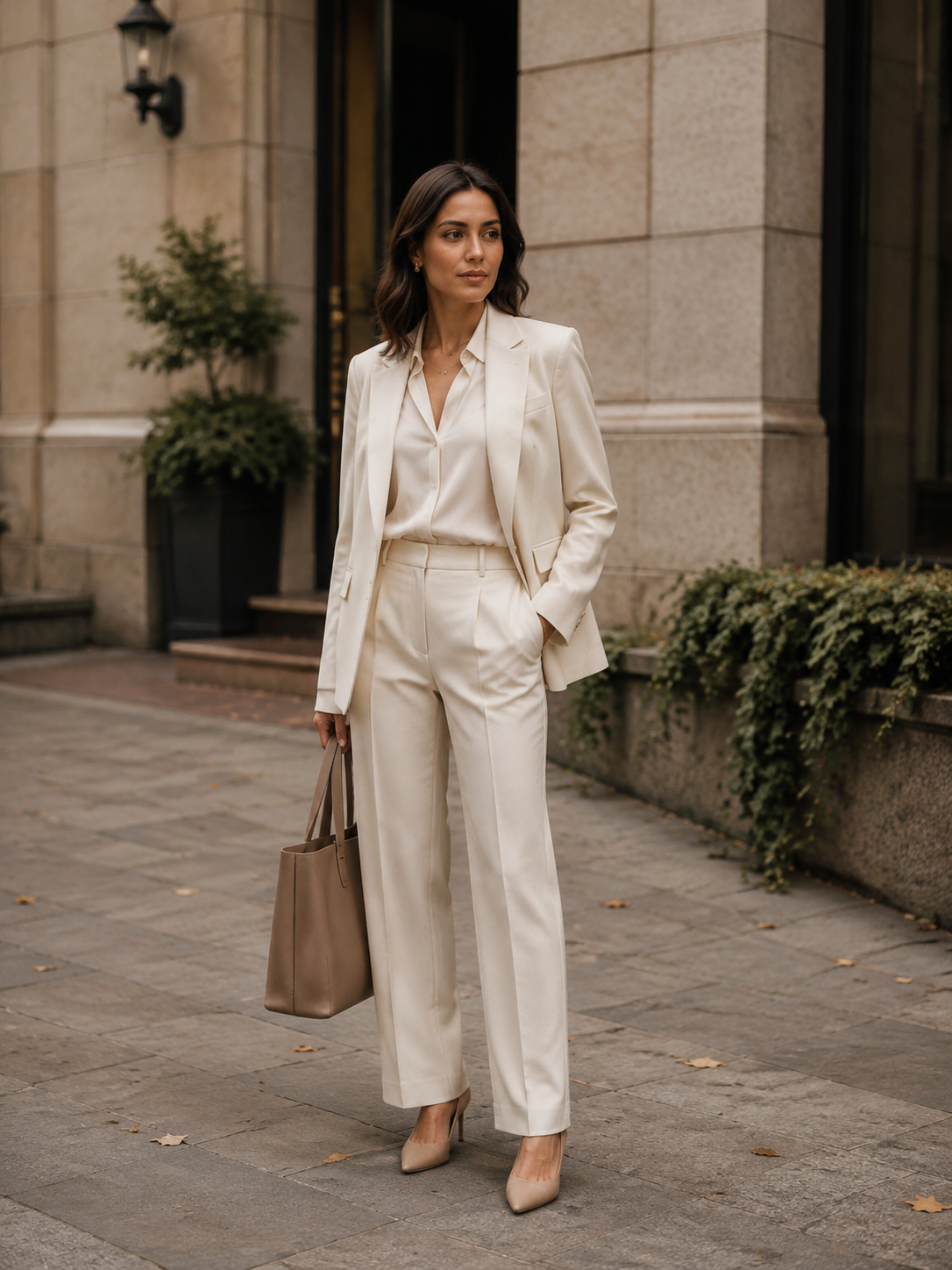
The baseline that never needs defending. A steel watch on a leather or steel band plus a plain band does the reputational work, because both read as functional rather than decorative.
The one-extra-piece office setup. A thin silver-tone chain that sits at the collarbone and disappears under a buttoned shirt, but shows with the collar open or a tee under a blazer.

The most smart-casual-native men's ring. A matte silver or gold signet on the little finger reads as signature, not costume, and pairs cleanly with chinos and an unstructured blazer.

The two-extra-piece evening tier. A leather or quiet beaded bracelet worn on the opposite wrist from the watch, with the same fine chain — enough interest for a restaurant without a second focal point.

On non-office days, the same bracelet can sit next to the watch. Stacking works when the materials are quiet — muted beads, no shells, nothing that jingles against the desk on Monday.

For photos that last forever, a fine gold chain over an open-collar shirt is plenty. Skip bracelet stacks and rings on every finger — the outfit should outlast the trend of the year, not the month.
What to Wear
How much jewelry for smart casual? One focal point per outfit. Office jewelry rules for earrings, necks, wrists and metals, and when statement pieces work.
What to Wear
How to wear a scarf smart casual: silk versus wool, the one knot each material needs, winter office rules, and the colour logic that makes any scarf work.
What to Wear
Glasses and face shape: the smart-casual frame formula, honest face-shape starting points, work-appropriate eyewear, and sunglasses dress code rules.