Comparison
Silk vs wool: two different jobs, one knot each
Silk and wool scarves are not two versions of the same accessory — they do different jobs. Wool goes over coats outdoors and comes off at the desk; silk works indoors as a proper outfit layer. Learn one knot for each and you are done, because a scarf should look thrown on, not tied to regulations.
How to wear a scarf smart casual: the short answer
Wool and heavy scarves go over coats outdoors; silk and light scarves work indoors as an outfit layer. Mixing these two jobs is where most scarf attempts fail. Each material needs exactly one technique — silk gets a single refined knot, wool gets the once-around wrap — and the result should look thrown on, not tied to regulations.
That is genuinely the whole skill. The rest of this page is the details: the three silk methods, the wool wrap in three steps, and the colour logic that stops a good scarf from fighting a good outfit.
Silk scarves: the three ways that work
- The neck knot: fold the scarf on the bias into a band, wrap once and knot at the side or front under a blazer collar. The smart casual signature for women and men.
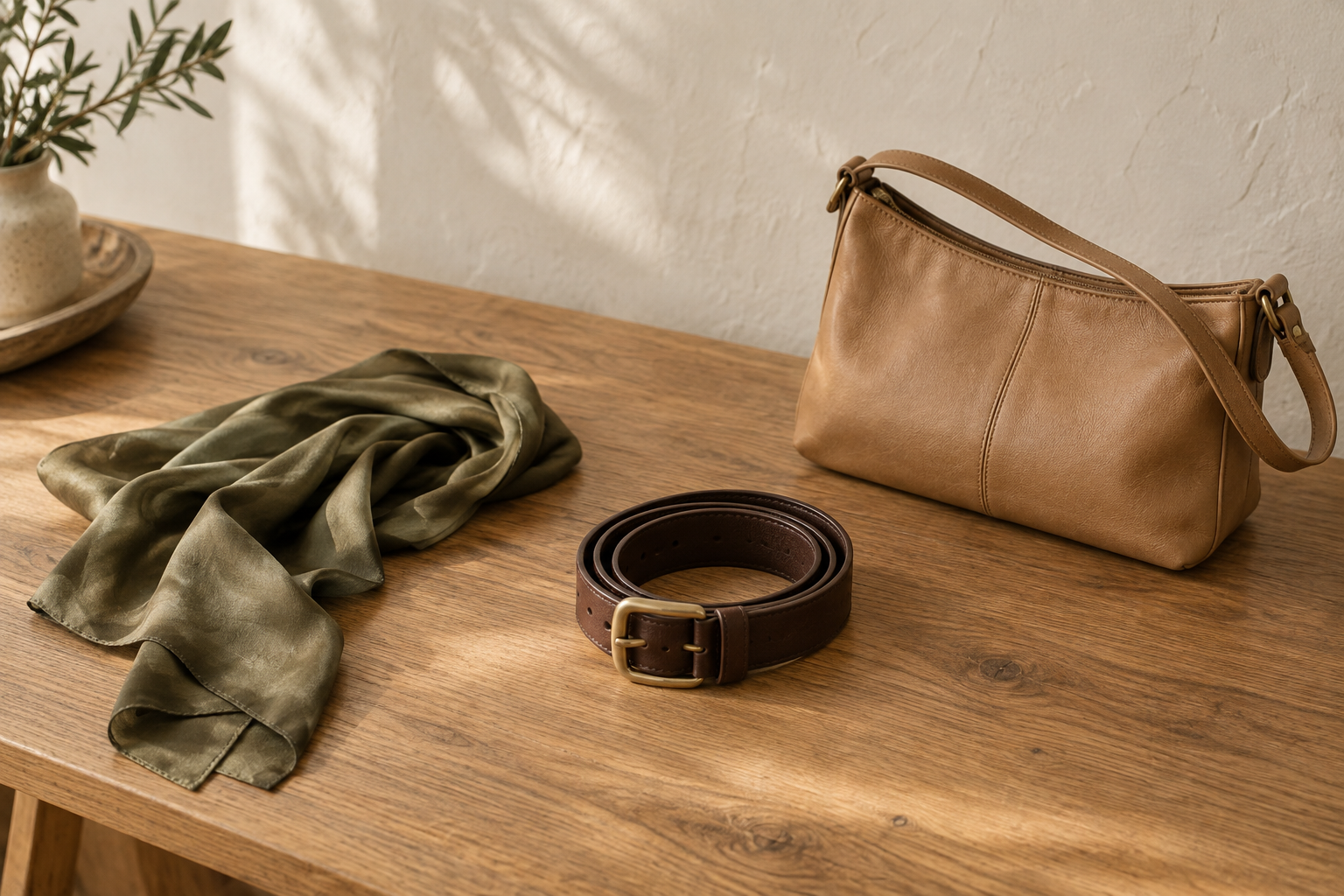
- The bag-handle tie: knotted around a tote or handbag handle. Low effort, adds colour, zero bulk — the easiest first step if neck scarves feel like a costume risk.
- Hair or wrist: tied at a ponytail or around the wrist works when the rest of the outfit is quiet. It reads costume when the scarf is loud and the outfit is loud too.
What fails is equally short: the headscarf knotted under the chin unless the retro look is deliberate, and the scarf repurposed as a makeshift belt. Both read as tricks rather than styling.
Wool and heavy scarves: the winter default
- Drape the scarf around the back of the neck with one end longer.
- Wrap the long end once around the neck and let both ends hang level, past the coat lapels but well above the knees.
- Nestle the wrap into the coat collar and stop adjusting — the once-around wrap is meant to look easy.
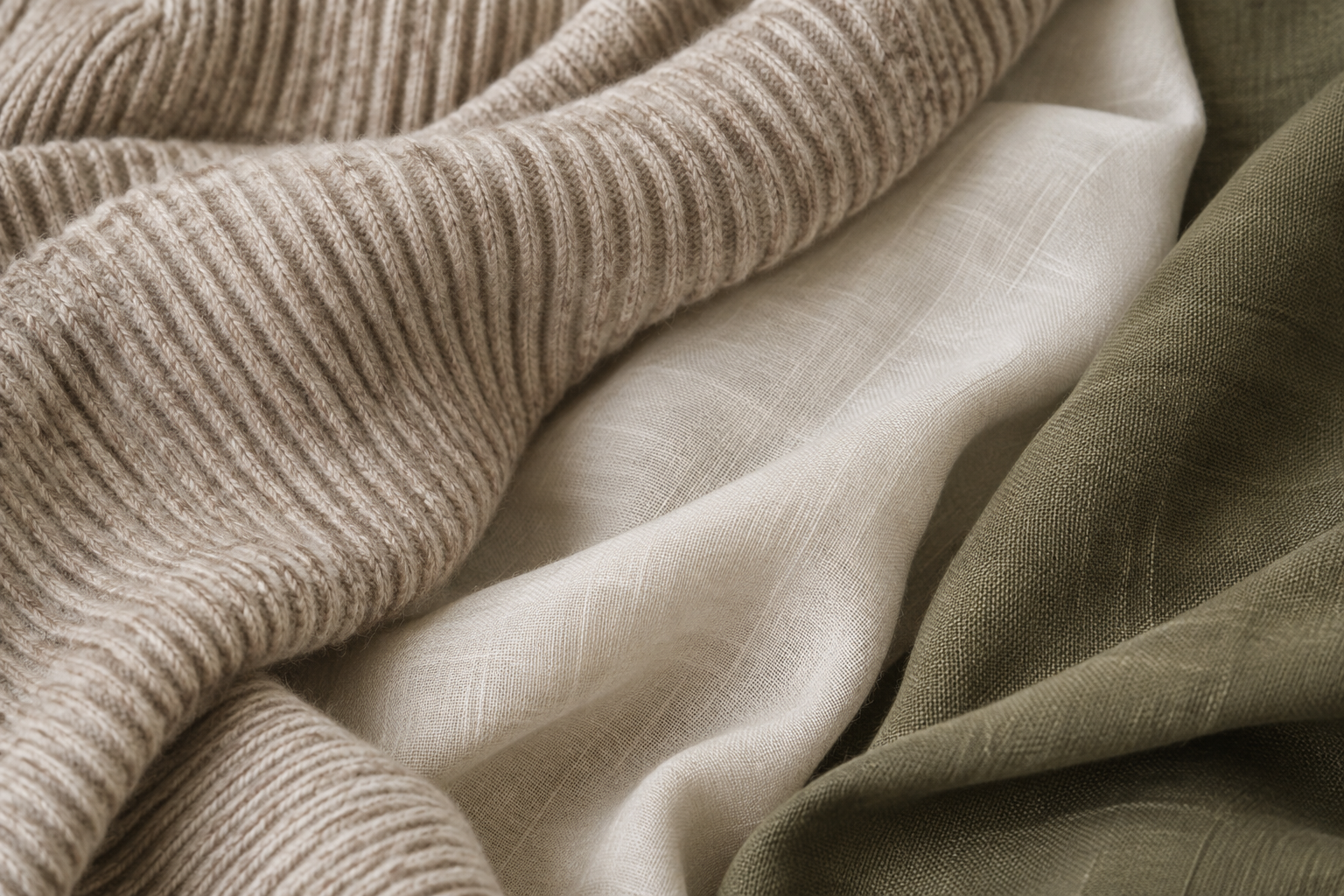
Material choice is feel more than rules: lambswool is the sturdy classic, merino is softer and lighter for its warmth, and cashmere is the luxurious end that pills less if you care for it. The fabric differences are covered properly in the cashmere guide and the merino wool guide. What fails at this end: over-long dangling ends worn inside with a blazer, novelty pom-poms, and knits wider than a hand that bulk into a roll when knotted.
Scarf colour rules
The logic: a scarf either echoes a colour already in the outfit or provides the single contrast. A third unrelated colour family is what makes an outfit look assembled from lost property. Pattern follows the same discipline — one pattern per outfit, so a patterned coat takes a solid scarf.
Neutrals that always work, by coat colour. When the coat is patterned, stay solid.| Coat | Scarves that always work | Watch out for |
|---|
| Navy | Burgundy, grey, camel, cream | Black-on-navy, which flattens both |
| Black | Almost anything — black is the neutral host | Nothing much; keep pattern to one piece |
| Camel | Cream, brown, burgundy, navy | Camel-on-camel unless the tones clearly differ |
| Grey | Burgundy, navy, forest green, black | Pale grey on pale grey, which drains the face |
Scarves at the office: the indoor rules
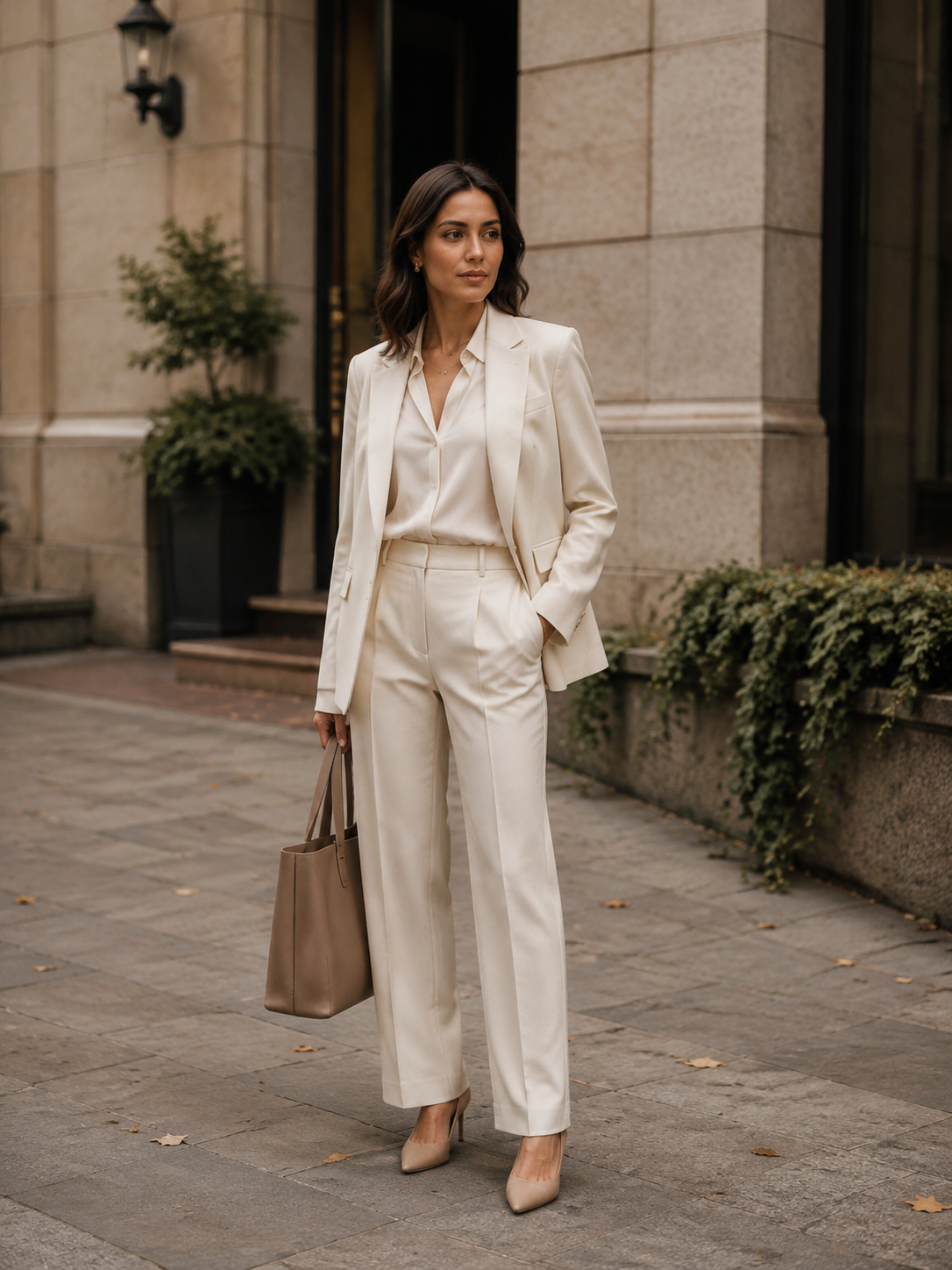
Outdoor scarves come off at the desk, exactly like the coat — that is the default. Silk neck scarves are the exception that can stay, and over a plain blouse or dress they genuinely upgrade an office outfit. Over a patterned top, or alongside a statement necklace, the same silk adds clutter.
The practical problem is the coat-on-chair moment: coat and wool scarf both come off, and neither has anywhere good to go. Have a pocket or bag plan — the scarf folds small, so a bag pocket solves it. Anyone who has stuffed a wool scarf into a borrowed shopping bag knows why this is worth deciding in advance.
Size, proportion and care
Length: long enough to wrap once with the ends reaching past the lapels — too-short scarves look like regretted purchases. Width: bulky knits overwhelm petite frames, so lighter gauges flatter, the same proportion logic as dressing for your body shape. Broader frames and heavier coats take heavier scarves without being swallowed.
Care is short and material-specific. Wool: spot clean, air out between wears, de-pill with a comb, and store with moth protection at season's end — the wool and merino care guide has the full routine. Silk: follow the care label on the hand-wash-or-dry-clean question, and keep silk away from velcro and rough hardware that snag the weave.
Scarf questions
Are scarves smart casual? Outdoors with a coat, always. Indoors, only silk and light styles — a chunky wool scarf belongs at the coat check, not the desk.
How do you tie a silk scarf with a blazer? Fold it on the bias into a band, wrap it once around the neck and knot it at the front or side under the collar. One knot, left slightly loose.
What colour scarf goes with everything? Grey, burgundy and camel cover nearly every coat — pick by the table above rather than hunting for one universal scarf.
Can men wear silk scarves? Yes — the neck knot under an open collar, kept matte and small-scale, reads sharp rather than affected. The hair-tie and bag-handle options are also gender-neutral territory.