What to Wear
Plus-Size and Petite Smart Casual: Fit the Width, Fix the Length
Plus size petite smart casual, solved: the fit-width-first rule, the alterations that do most of the work, and outfits cut for a shorter plus frame.

Shape guide
Shape advice usually stops at jeans and swimwear. This page translates the four shapes into smart casual specifics: which jackets, trousers and dresses do the work at the office and at events.
Begin hereInspiration
Body shape is simply where your waist sits relative to your bust and hips, and every shape has a smart casual formula that flatters it. Each look below names the shape it serves and the one move doing the visual work, so you can copy the formula even with different pieces.
Face a mirror and look at where your body is widest relative to everything else. If your middle leads, you are an apple. If your hips lead, you are a pear. If bust and hips are level with a clear waist between, you are an hourglass, and if the line runs fairly straight from shoulders to hips, you are a rectangle.
A tape measure settles any doubt: compare bust, waist and hip measurements, and the largest one names your shape. Most people land between categories, which is fine — use the formula for the shape you resemble most and borrow from the neighbour.
Whatever your shape, three habits do most of the work: fit the largest part of your body rather than the average, define somewhere (a waist, a shoulder seam, an open vertical layer), and wear one structured piece. Get those right and shape-specific tweaks are fine-tuning, not rescue work.
This is also why generic dress-for-your-shape advice disappoints: it optimises for illusions instead of actual dress codes. Here the goal is simpler — look sharp at the office and at events, in clothes that are comfortable enough to wear all day.
For apple shapes, and especially for anyone with a shorter frame and a fuller middle over 40, the answer is structure over the middle, not hiding it. A structured third piece worn open — a blazer or a longline cardigan — draws two vertical lines down the body, and a fitted-not-tight base underneath keeps the line clean.
Necklines matter more than people expect. V-necks, wrap tops and empire seams all pull the eye upward and lengthen the torso, while clingy jersey and cropped tops sitting above high-rise trousers break the line at exactly the wrong spot.
Pears want presence above and skim below. Structured shoulders, boat necks and detail sleeves widen the top half visually, while high-rise A-line or wide-leg trousers and skirts pass over the hips without gripping.
Jacket length is the trap: a hem ending exactly at the widest hip point draws a line there. Go shorter (cropped, ending above the hip) or longer (below it), and check in the mirror from the side as well as the front.
The fit problem pears know best — trousers that fit the hips but gape at the waist — is a tailoring fix, not a body problem. A ten-minute waist take-in solves it permanently; the what-can-be-tailored guide covers what else can be changed cheaply.
No. Definition through cut beats literal belts every time: a single-button blazer, a wrap dress or a tucked fine-gauge knit keeps the waist visible without adding hardware. Belts are one tool among several, not a uniform requirement.
The hourglass failure mode is boxy layering — an oversized cardigan over an untucked top buries the waist and adds bulk on both halves. Keep layers waist-length or belted, choose high-rise straight or bootcut trousers, and chunky crops only over high-rise bottoms.
Rectangles gain definition from tucking, mid-width belts, and seams that suggest a waist — a peplum-lite hem or a wrap-effect top both do it quietly. Head-to-toe loose layers are the shape's one real hazard: rectangle plus volume equals shapeless.
Layering is the reward for the straighter figure. Jacket-over-column, long vests and asymmetric openings all look deliberate on a rectangle in a way other shapes have to work harder for. Fabric with a bit of body — oxford cotton, stable knits — helps the shapes you build actually hold.
| Shape | Jacket cut | Trouser cut | One mirror check |
|---|---|---|---|
| Apple | Longline, worn open; single-button | High-rise straight or wide | Does the open layer fall past the widest point? |
| Pear | Cropped above the hip or clearly below it; structured shoulder | High-rise A-line, wide or straight | Does the hem avoid ending at the widest hip point? |
| Hourglass | Single-button, belted, or fitted blazer | High-rise straight or bootcut | Can you see a waist from the side? |
| Rectangle | Asymmetric opening, long vest, hip-grazing | High-rise wide or straight, tucked top | Is there one defined point between ribs and hips? |
Trouser rise is high-rise across the board by default — it lengthens the leg and gives every shape a stable waistline to build from. Mid-rise wins only when high-rise digs in when you sit; comfort outranks the table.
Constraints stack, and the comfort-and-coverage rules usually win. If you are petite, the petite smart casual guide adjusts lengths first and shape rules second; the plus-size guide reorders priorities for bust and midsection fit. Fit the body you have today — the shape table is a default, not a law.
The honest test is not whether you followed the table but whether you feel sharp when you catch yourself in a shop window. Elastic waists and soft tailoring can absolutely read smart — structure does not have to mean stiff.
What is smart casual for an apple shape? A fitted-not-tight base, high-rise straight trousers and one structured layer worn open — the vertical opening does the flattering work without cling or tent.
Can apple shapes wear crop tops? A cropped layer over a high-rise bottom can work, but on most apple shapes a hip-length V-neck top keeps the line cleaner for smart casual settings.
Does body shape matter more than fit? No — fit always wins. A garment that fits the largest part and defines somewhere looks sharp on every shape; the shape table just tells you where to aim.
I'm over 40 with a shorter frame and a bigger stomach — where do I start? Start with the apple formula, keep the blazer open, and read the men's belly fit guide or the women over 50 guide for the stacked version of the same rules.
6 looks to explore
The apple shape formula in one outfit: an open blazer falling past the hip creates a long vertical line, the V-neck keeps the eye moving up, and high-rise straight trousers sit at the natural waist. Nothing clings at the middle and nothing tents from the chest.
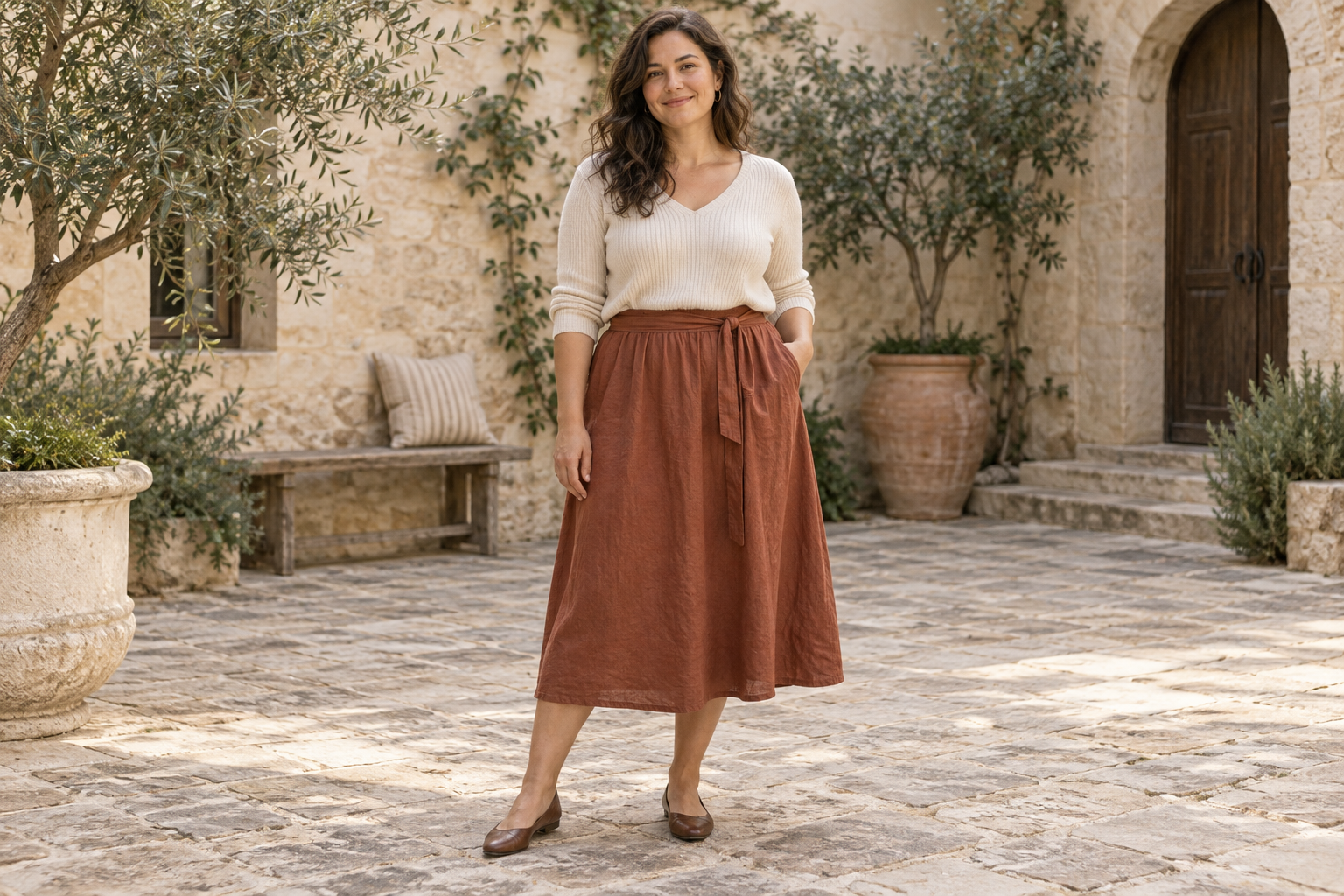
The pear shape balances a fuller hip by adding presence up top. A boat neck widens the shoulder line, a fitted top ends above the widest hip point, and a high-rise A-line skirt skims over the hips instead of gripping them.
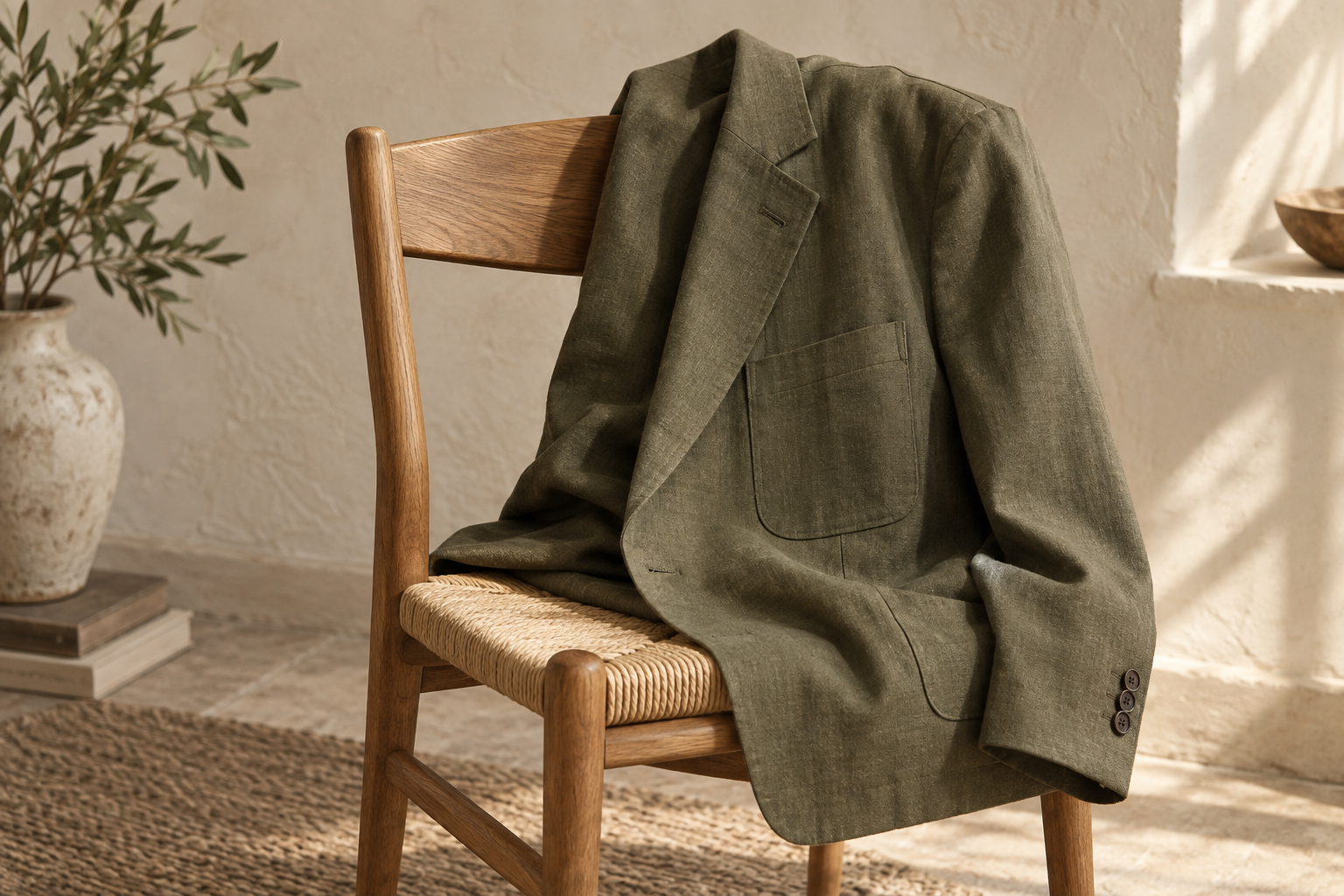
The hourglass shape keeps its waist instead of burying it. A single-button blazer cinches at the natural waist, a fine-gauge top is tucked in, and high-rise straight trousers continue the line. One visible waist seam does more than any belt pile-on.
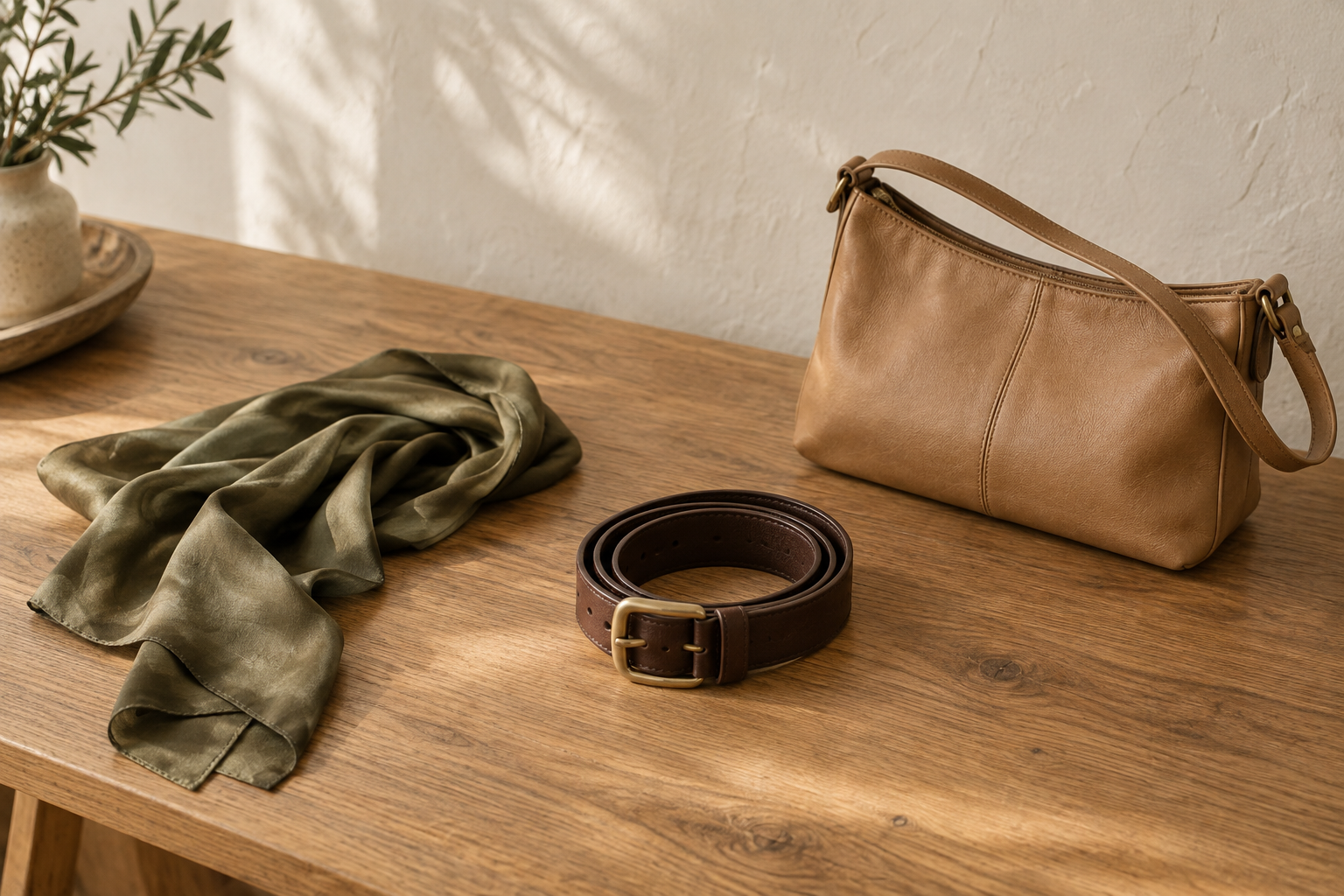
The rectangle shape builds definition with layers. A shirt dress gives a ready-made waist when belted, and an open long jacket adds the vertical structure that straighter figures can wear brilliantly without looking costumed.

The wrap dress is the apple shape's event shortcut: the diagonal wrap seam crosses above the fullest point of the middle, the V frames the neck, and the skirt falls straight from the tie. Add low block heels and one accessory and it is done.
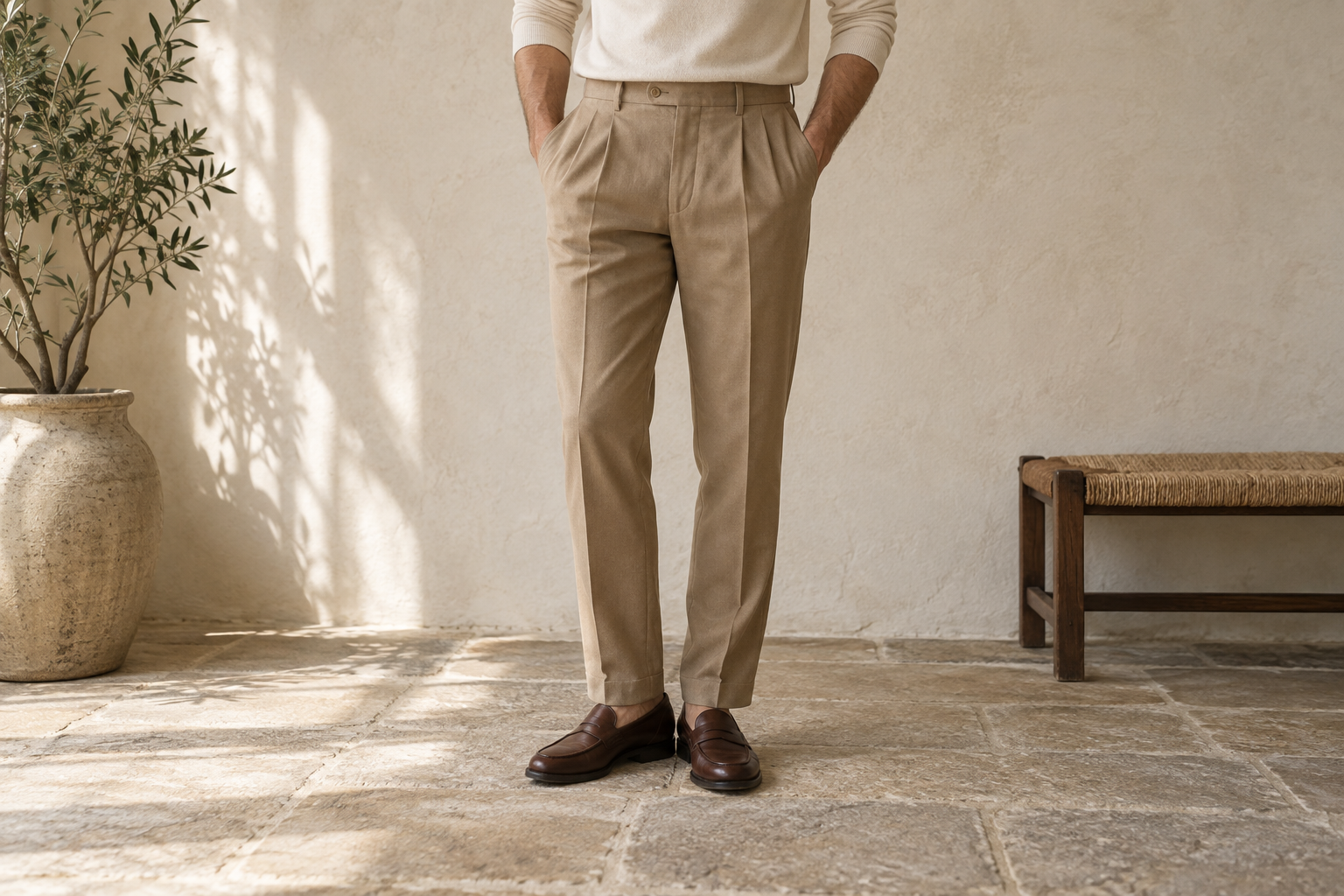
Straight figures carry volume well when it is structured. A tucked tee and high-rise wide-leg trousers form the column, and a hip-grazing jacket with an asymmetric opening adds the shape. This is the rectangle's layering superpower used deliberately.
What to Wear
Plus size petite smart casual, solved: the fit-width-first rule, the alterations that do most of the work, and outfits cut for a shorter plus frame.
What to Wear
Big and tall smart casual: structure at the shoulder, room through the middle, tuck and layering rules for big frames, and where to shop 2XL to 6XL.
What to Wear
Tall men's smart casual: three measurements that fix sleeve and trouser length, 60-second fit tests, why XL fails, and proportion rules for a long frame.