What to Wear
Tall Men's Smart Casual: Sleeve Length, Inseam and Proportion Rules
Tall men's smart casual: three measurements that fix sleeve and trouser length, 60-second fit tests, why XL fails, and proportion rules for a long frame.
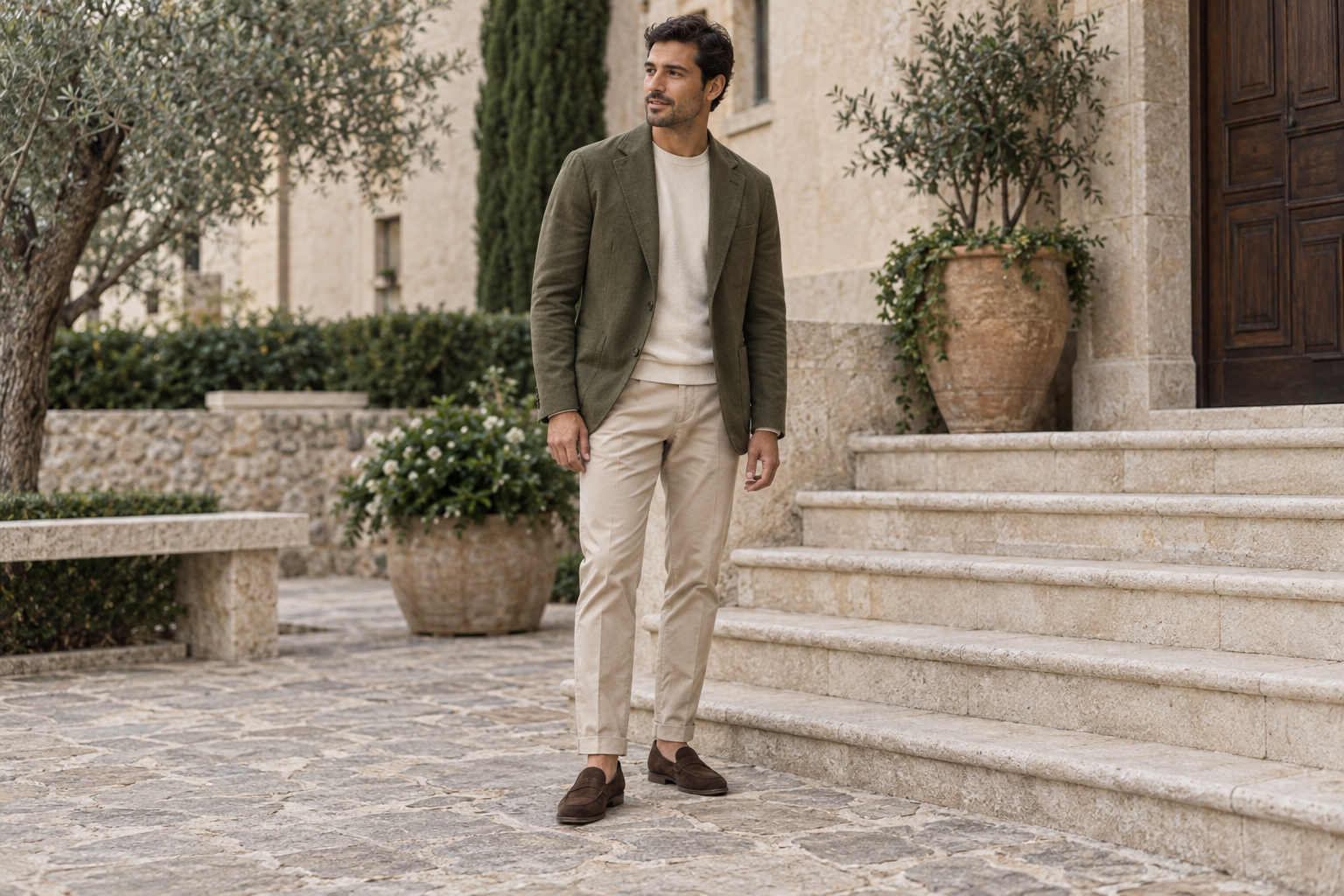
Fit guide
The rule is structure at the shoulder, room through the middle, and nothing baggy overall — big clothes on a big guy is the number one mistake. Here are the silhouettes, the tuck rules, and the shopping strategy for 2XL and up.
Begin hereInspiration
Buy for the shoulders and chest, add structure on top — a blazer, chore jacket or proper collar — and keep every piece skimming rather than tight or tented. Most big men dress wrong in both directions: sizing up for the belly destroys the shoulders and sleeves, when the fix is cut and fabric, not size.
Measure your neck, your sleeve, and your waist, then work out your drop — chest minus waist. Most big guys are athletic-adjacent up top and big through the middle, and brands differ on which of the two they draft for. That single fact explains why one brand's 2XL fits and another's looks like a graded-up tent.
Smart casual for a big frame is the same dress code as anyone's — fewer off-the-rack options, so the wardrobe is smaller and better chosen. That is a feature: fewer pieces, chosen on the fit checks below.
Fit landmarks first: collar snug with one finger, shoulder seam on the shoulder point, and no pull-lines across the belly buttons when you sit — that is the seated test, and it matters more than the standing one.
Tuck rules: tuck with trousers and a belt for the structured look. Go untucked only when the hem ends around mid-fly and the shirt is cut straight — an untucked shirt on a big frame must never be long or boxy. The hem-length details match the standard untucked shirt fit rules.
Fabric is half the fight. Chambray, oxford and heavier poplins hold a shape through the middle; thin, clingy fabrics show every contour. If a shirt reads tight when you sit and fine when you stand, trust the sitting verdict.
Mid-to-high rise with a real waistband sits at the natural waist so shirts tuck clean. Low rise on a big frame creates the muffin line under shirts — that is the whole argument. The trade-offs are the same as in how to choose a trouser rise.
Open vertical layers — blazer, chore jacket, overshirt worn open — create a lengthening line down the torso. Closed layers and crew-neck cardigans buttoned alone do the opposite. Collars and open necklines frame a big chest; a crew-neck tee alone flattens it, so make the tee-under-layer the default.
Judge a range on three criteria before you care about price: does it draft on big bodies (a shoulder-to-waist drop actually shaped for big frames) instead of grading up a medium; does it cover tailoring-adjacent categories like blazers and chinos rather than only graphic tees; and how high does the size ceiling go — to 6XL or not.
The blazer problem is real at big sizes: fewer brands cut larger drops, so try the ones that do, and price made-to-measure against the cost of tailoring failures — at some point MTM becomes the cheaper long-run option. Secondhand is the hardest segment; buy measurement-first, comparing pit-to-pit and length to a garment that already fits you.
Two freebies: shirt-tucking height and shoe choice change perceived proportion instantly — the same logic short men use in reverse. A clean, substantial shoe anchors the outfit better than a slim sneaker on a big frame.
If the current wardrobe is safety-mode gym clothes — big guy, casual office, zero style — do not rebuild everything at once. Buy three things and run the seated fit test on all of them: one dark straight trouser, two oxford shirts (one to wear, one to have taken in), and one open layer — overshirt or unstructured blazer. That trio makes more outfits than everything currently in rotation; expand it with the mens capsule wardrobe as the template.
| Check | Pass | Fail means |
|---|---|---|
| Shoulder seam | Lands on the shoulder point | Size was chosen for the belly — size the shoulder, tailor the body |
| Seated buttons | No X-wrinkles at the belly | Shirt too tight through the middle |
| Side view | Fabric skims, does not cling or flare | Tent flare = too big; pull-lines = too small |
| Untucked hem | Ends near mid-fly, cut straight | Too long or boxy — tuck it instead |
| Trouser line | Straight fall from waist to shoe | Pooled fabric or ankle squeeze |
How should a big guy dress smart casual at the office? Dark mid-rise trouser, tucked oxford, open blazer or overshirt, clean leather shoe — structure on top, skim through the middle, never baggy overall.
Tucked or untucked? Tucked with trousers and a belt as the default; untucked only when the hem ends near mid-fly and the shirt is cut straight.
What fabrics work best on a big frame? Ones with body — oxford, chambray, heavier poplin, mid-weight knits. Thin clingy fabric shows every contour; stiff oversized fabric turns you into a tent.
6 looks to explore

Dark straight trouser at mid-rise, oxford shirt tucked with a belt, open blazer or overshirt on top, clean leather sneaker or derby. The open layer draws one long vertical line straight down the body.
Dark straight jean, heavy oxford untucked at the correct hem — ending around mid-fly — with a chore jacket worn open and minimal sneakers. Weighty fabric holds the shape instead of clinging.
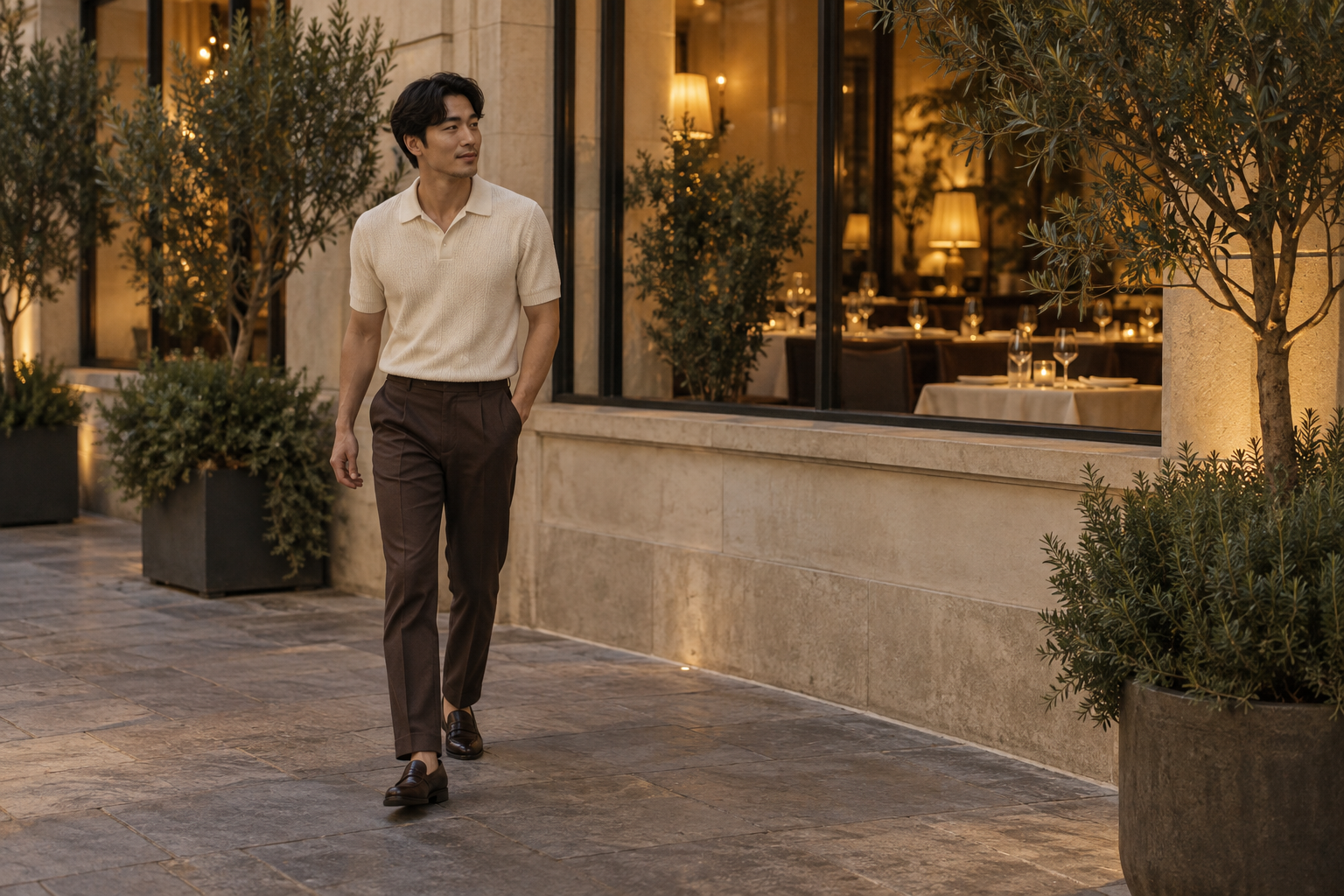
Navy blazer that fits at the shoulder, mid-rise trouser, collared fine-knit instead of a shirt and tie. The blazer is worth tailoring even at big sizes — it is the piece that makes the whole outfit read deliberate.
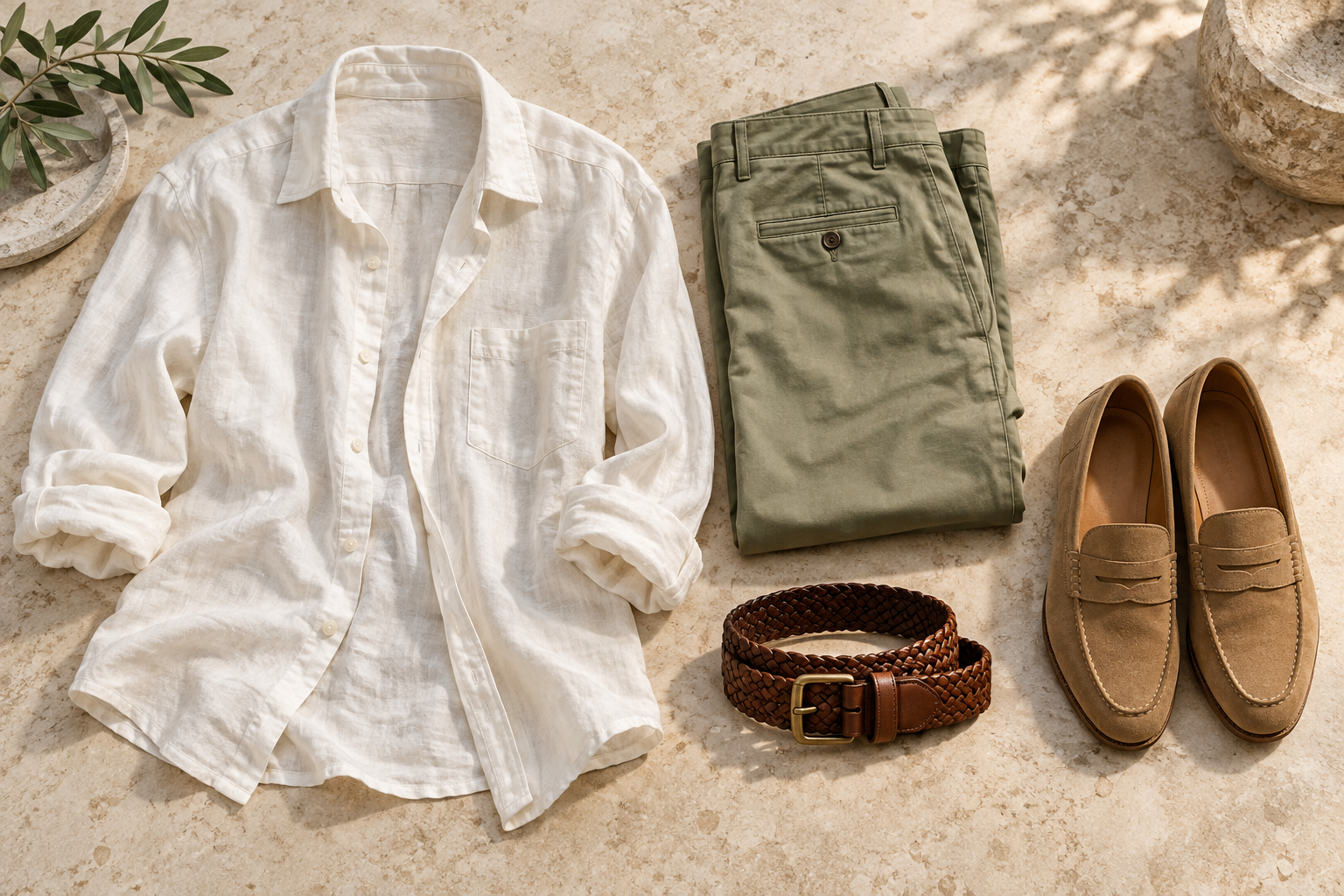
Short-sleeve oxford with a real collar, tailored shorts or a linen-blend trouser, leather sandals or clean sneakers. Tuck the shirt if the trousers have a proper waistband; leave it out only if the hem passes the mid-fly test.

Mid-weight merino crew over a collared shirt, dark straight jean, white leather sneaker. The collar under the crew frames the neck and chest so the knit hangs straight instead of hugging.
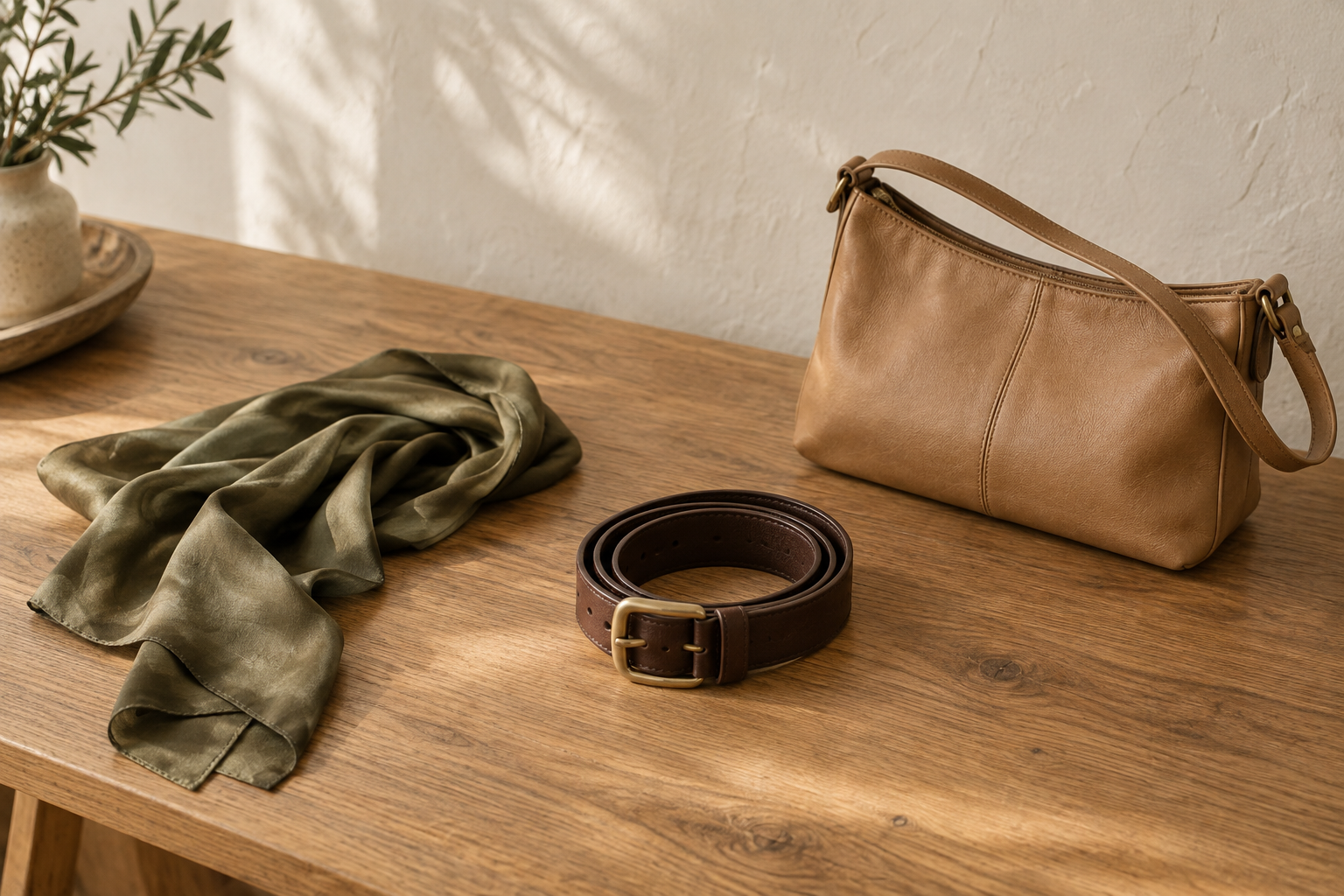
A simple watch, a matching belt, dark socks. Nothing novelty, nothing oversized — at big sizes small, quiet accessories keep the proportions yours.
What to Wear
Tall men's smart casual: three measurements that fix sleeve and trouser length, 60-second fit tests, why XL fails, and proportion rules for a long frame.
What to Wear
Smart casual for your body shape: a 60-second shape test, then the jacket, trouser and dress formulas for apple, pear, hourglass and rectangle shapes.
What to Wear
Short men's smart casual is three rules: where the jacket ends, where the trousers end, where the colour changes. Hem heights, jacket length, what to buy.