What to Wear
Tall Men's Smart Casual: Sleeve Length, Inseam and Proportion Rules
Tall men's smart casual: three measurements that fix sleeve and trouser length, 60-second fit tests, why XL fails, and proportion rules for a long frame.
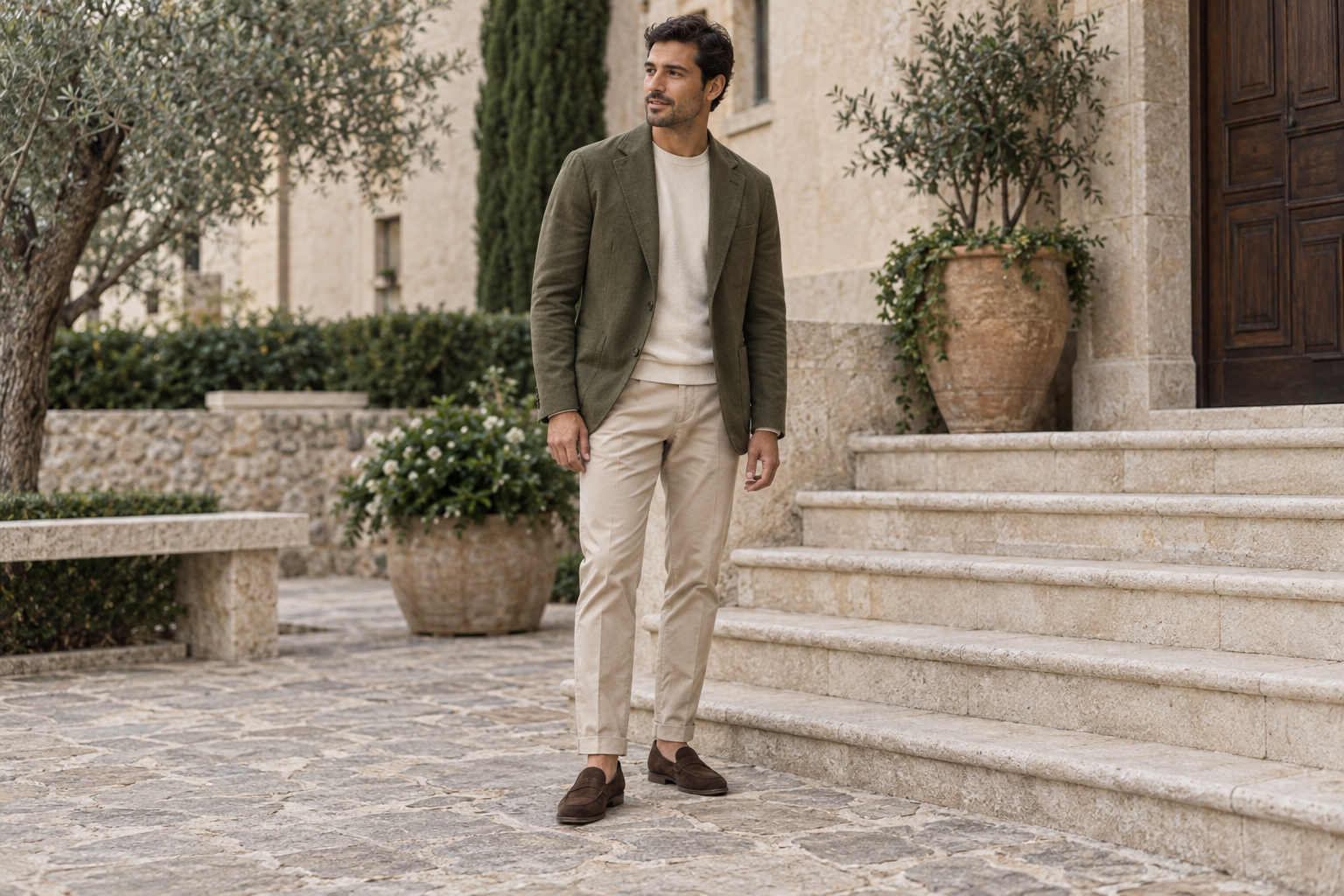
Fit guide
Perceived height is not set by your skeleton — it is set by three breakpoints: where the jacket ends, where the trousers end and where the colour changes. Control those three and smart casual gets simple.
Begin hereDefinition / explainer
Proportion, for a shorter man, is the management of where the eye stops as it travels down your outfit. It is not height hacking and it is not a pile of tricks; it is three measurable breakpoints on real garments, and every rule on this page is one of them in disguise.
Standard sizing scales for height as well as girth, so a size S that fits your chest is still too long in the body and too long in the sleeve. Shoulders gap, the jacket covers your thigh, and the trousers pool on the shoe — three wrong breakpoints from one rack.
The measurements to shop by are jacket body length (collar to hem), sleeve length and inseam. Brands with short-fit blocks solve some of this off the peg; otherwise the trade-off is honest — buy the shoulders right and pay a tailor for the rest.
Ranked for shorter frames: no break lengthens the leg most, slight break is the safe everyday choice, and full break plus pooling shortens it visibly. Cropped, ankle-length trousers can work if the crop is clean — hem above the ankle bone, no sock showing — but full-length no-break is the default that never argues back.
No cuff, or a very narrow one. A deep cuff adds a horizontal band at the narrowest point of the leg and reads as a cut. Take this table to the tailor and say the words out loud: no break, keep the original finish.
| Shoe | Where the hem should sit | Break |
|---|---|---|
| Derby or loafer | Just kissing the top of the shoe | None to slight |
| Minimal sneaker | Touching the canvas, one soft fold at most | None to slight |
| Chelsea boot | At or a hair below the top of the shaft | None |
| Sandal or no-show summer | Above the ankle bone, clean crop | None (cropped) |
At or just below the seat — it covers the seat curve, not the thigh. The classic check is the thumb test: arms relaxed, jacket hem level with your thumb's knuckle or shorter. It is a rough gauge, not scripture, but on a shorter frame it catches most too-long jackets instantly.
Cropped and chore-style jackets are the one trend that flatters shorter men for free — they end above the hip and hand the leg line back. When buying a blazer, choose the shoulders first and budget for body and sleeve shortening; non-functioning sleeve buttons make that an easy alteration.
Yes, and it is the most reliable trick on this page because it removes a breakpoint entirely. A tonal column — trouser and shoe in the same or close tones, top matching or close — lets the eye travel from shoulder to floor without a horizontal cut. Contrast is not banned; put it in the shirt or jacket, not at the ankle. The tonal outfits guide shows full column outfits built for exactly this.
Vertical elements genuinely help: an open jacket over a tonal base draws two lines down the body, and V-necks do similar work. Vertical stripes are overrated — the weave-level stripe matters far less than where your hems and colour changes sit. Slightly chunkier soles add height legitimately; pointed toes promise more than they deliver.
The alteration ranking for short frames, cheapest first: trouser hem, jacket sleeve with non-functioning cuffs, shirt body, then jacket body shortening — possible but pricier, and the tailor must check vent and pocket placement first. Shoulders, collar and chest cut are walk-away items; the what-can-be-tailored guide lists the full constraints and costs.
How should short men wear blazers? Seat-length or shorter, single-breasted, shoulders right off the rack, body and sleeve tailored after. Buy in person or from short-specific blocks when you can.
Can short men wear wide-leg trousers? Yes — keep the rise mid-to-high, the hem no-break, the shoe substantial enough to anchor the width, and tuck the top. Wide plus low-rise plus pooling is the failing combination, not wide itself.
Is dressing tall the opposite problem? Mostly, yes — the tall men's guide runs the same breakpoints in reverse. And before any outfit leaves the house, the fit-check guide verifies every breakpoint on this page in two minutes.
Proportion is where the eye stops: the point where your jacket hem ends, the point where your trouser hem ends, and the point where one colour changes to another. Each stop cuts the body into segments, and fewer, longer segments read taller. Short men's smart casual is simply the practice of placing those stops deliberately — jacket at the seat, trousers with no break, and a tonal column where you want the length.
What to Wear
Tall men's smart casual: three measurements that fix sleeve and trouser length, 60-second fit tests, why XL fails, and proportion rules for a long frame.
What to Wear
How to dress well with a big stomach: the skim-don't-cling rule, shirt fit, the tuck question, waistband comfort and the swaps that fix it.
What to Wear
Maternity smart casual: what to buy in each trimester, a 10-piece work capsule, and the stretch-column formula for a smart casual wedding at 7 months.