What to Wear
Smart Casual for Your Body Shape: Apple, Pear, Hourglass, Rectangle
Smart casual for your body shape: a 60-second shape test, then the jacket, trouser and dress formulas for apple, pear, hourglass and rectangle shapes.

Fit guide
Petite ranges usually stop around a US 14/16, and plus ranges are drafted on a taller frame — so nothing fits both constraints straight off the rail. This page gives you the buying rule that breaks the deadlock, the alterations that do most of the work, and outfits cut for a shorter plus frame.
Begin hereInspiration
Smart casual for plus size petite bodies comes down to one rule: buy the garment that fits your width — bust, shoulders, waist — and fix the length afterwards. Width alterations are expensive or impossible; hem and sleeve changes are cheap and routine. Everything on this page follows from that trade.
Most clothing is built in two separate blocks. Petite lines are drafted shorter but graded only through mid sizes, so they stop before you. Plus lines are graded wider but drafted on a fit model around five foot eight, so the proportions assume legs and a torso you do not have. You are shopping in the gap between two product blocks — which is why nothing off the rack fits both at once, and why no single label can be trusted.
The workaround is not finding a magic brand. It is a method: buy from whichever range gets your width right, then treat length as a solvable, budgeted problem. That is the same petite-first approach shorter women use at any size, with the plus-range fit questions from the plus-size smart casual guide layered on top.
Dressing this combination well is about keeping vertical lines visible, because everything that shortens also widens on a smaller frame. The classic failure is the double constraint stacking: trousers flooding over the shoe while a long drapey top adds width on top — the outfit reads smaller and rounder at once.
There is no single right range — each garment has a natural home depending on which axis it stresses. The table below is the decision I make for every category.
| Garment | Best range | Why | The usual alteration |
|---|---|---|---|
| Trousers and jeans | Plus line | Rise, hip and thigh room matter most; petite-plus denim is rare | Hem to graze the shoe |
| Blazers and jackets | Whichever fits the shoulder | Shoulders cannot be taken in; body length can be shortened | Sleeve and body-length trim |
| Knitwear | Either | Knit flexes over width, so pick the sleeve and body length that lands right | Often none needed |
| Dresses | Plus line | Wrap and A-line blocks fit the bust and hip; length is easy to fix | Hem to knee or your midi point |
| Shirts and blouses | Petite line, if it stretches | Stretch and soft-tailoring pieces in petite ranges often clear larger widths | Check the bust before assuming |
Ranked by impact for money spent: trouser and dress hems first, then sleeve shortening on anything without a functioning cuff, then a waist take-in on trousers and skirts. Those three cover most garments. Refuse the expensive ones — shoulder re-cuts and taking in the bust of a lined jacket cost more than the garment is worth and often look worse.
Build a relationship with one tailor and learn their language: hem to shoe-top keeping the original finish, sleeves to the wrist bone. Ask for trouser hems and jacket adjustments by landmark, not by inches. Once you know a fix is easy and cheap, you can buy the right width confidently wherever you find it — and buy specifically because the alteration is simple.
Few brands serve petite-plus natively, so shop by method instead of by logo. Check whether a brand publishes length specifications — inseam, sleeve, shoulder-to-hem — in its size charts; brands claiming petite-friendly plus ranges without length data are waving a red flag. Search secondhand by flat measurements (pit-to-pit, length laid flat) rather than labels, because labels are close to useless here. And when three purchases in a row fail, a made-to-measure piece for the hardest category — usually trousers or tailoring — often beats a fourth guess; online sizing strategy covers the measurement-first buying method.
Each look below is a complete outfit with the one alteration it usually needs. They restyle for conservative events too: a knee-or-below hem and a covered-shoulder layer are the default shift for weddings and formal family occasions.
| Setting | The outfit | Why it works here | Usual alteration |
|---|---|---|---|
| Office default | Plus-line high-rise straight trouser, hemmed to graze, with a fitted knit front-tucked, an open blazer at hip length, pointed shoes | High waist and open front keep the vertical line; the pointed toe extends it | Trouser hem |
| Dress route | Plus-line wrap dress hemmed to the knee, with a cropped cardigan and mid-heel or pointed flat | The wrap defines the waist; the cropped layer keeps proportion | Dress hem |
| Event route | Monochrome column of trousers and knit, with a contrasting hip-length third piece | The column elongates; the third piece adds the occasion note without cutting the line | Sleeve on the third piece |
Winter is where proportion breaks most often, because coats are the hardest garment to fit twice over. Three silhouettes work: a column of color underneath a long open coat, a belted wrap coat fixed at the waist, and a cropped puffer that ends at the high hip. Skip the duster-with-everything approach entirely.
In summer, structured linen blends and ponte skim without clinging or adding bulk — clingy viscose does neither. The same skim-don't-cling logic applies at every temperature.
6 looks to explore
The default office look: plus-line high-rise trousers hemmed to graze the shoe, a fitted knit front-tucked at the natural waist, and a hip-length blazer worn open so the front line runs unbroken. Pointed shoes finish the vertical.
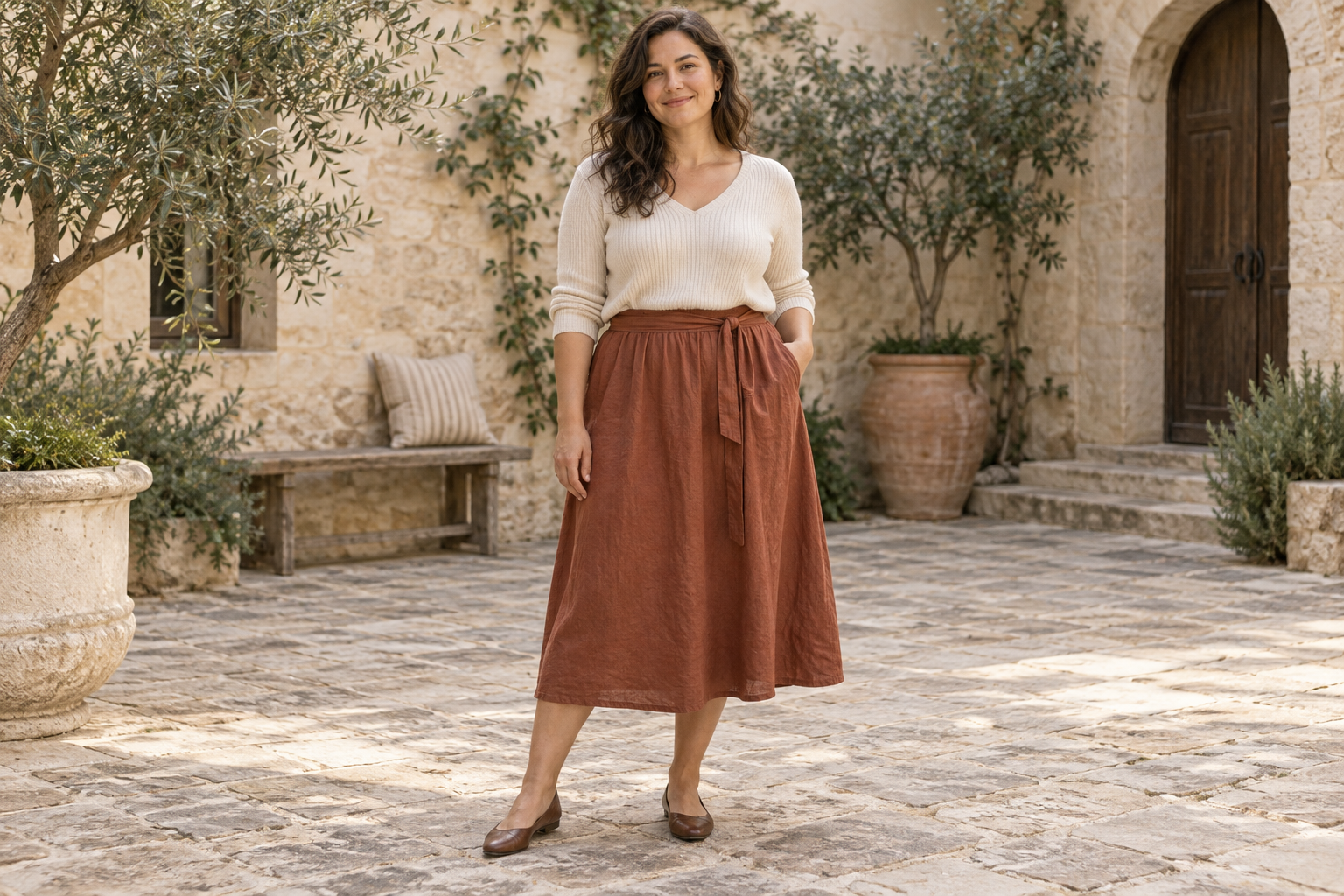
A plus-line A-line skirt hemmed at the knee with a soft blouse tucked at the natural waist. The waist seam sits at your narrowest point, and the boot's shaft meets the hem so no bare band cuts the leg line.
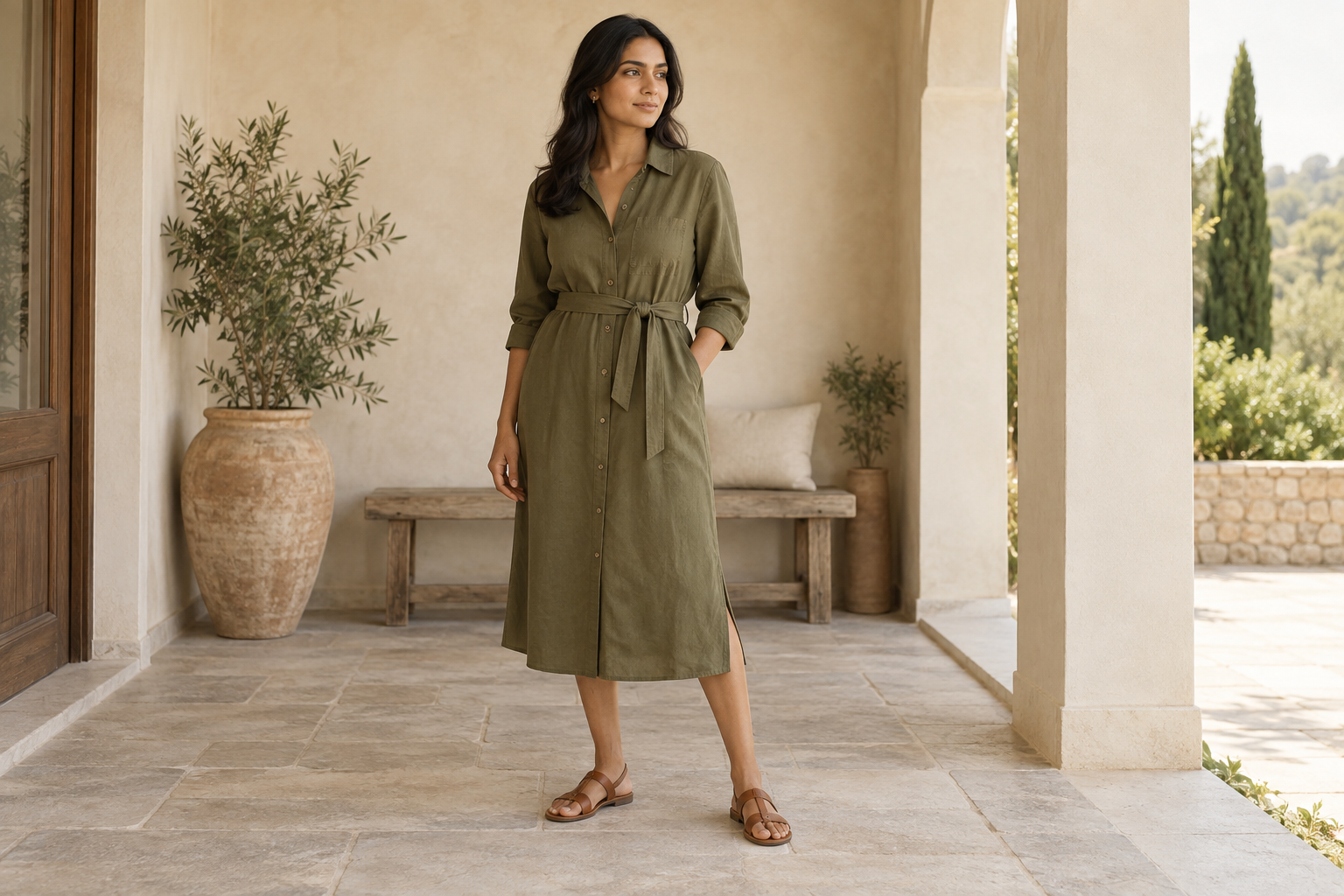
The dress route: a plus-block wrap dress tailored to knee length with a cropped cardigan that ends at the high hip. The wrap tie marks the waist, and the short layer keeps the silhouette from reading as one long column.
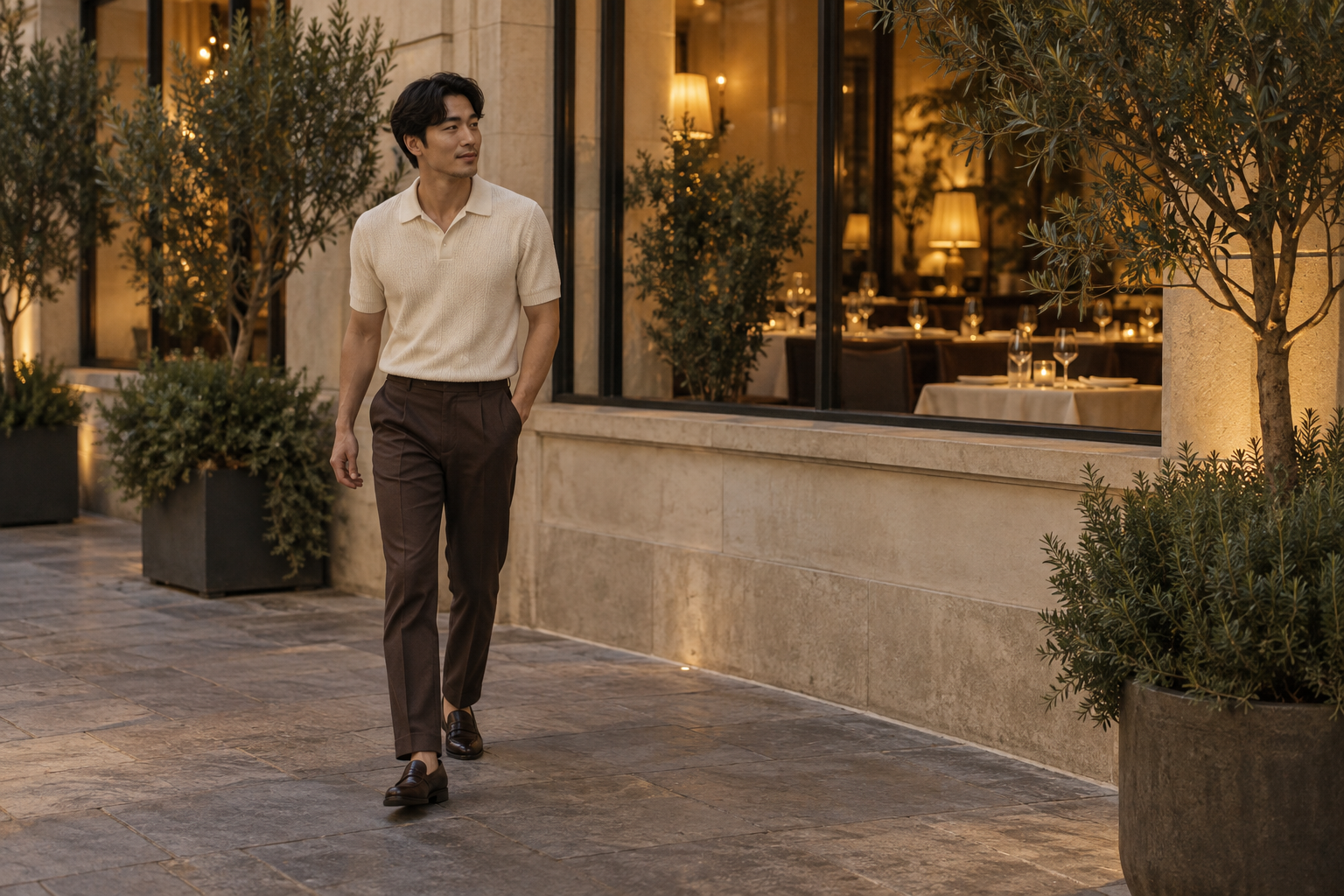
The event formula: trousers and knit in one deep color head to toe, with a contrasting hip-length jacket as the third piece. The column lengthens; the jacket signals occasion without chopping the line at the widest point.
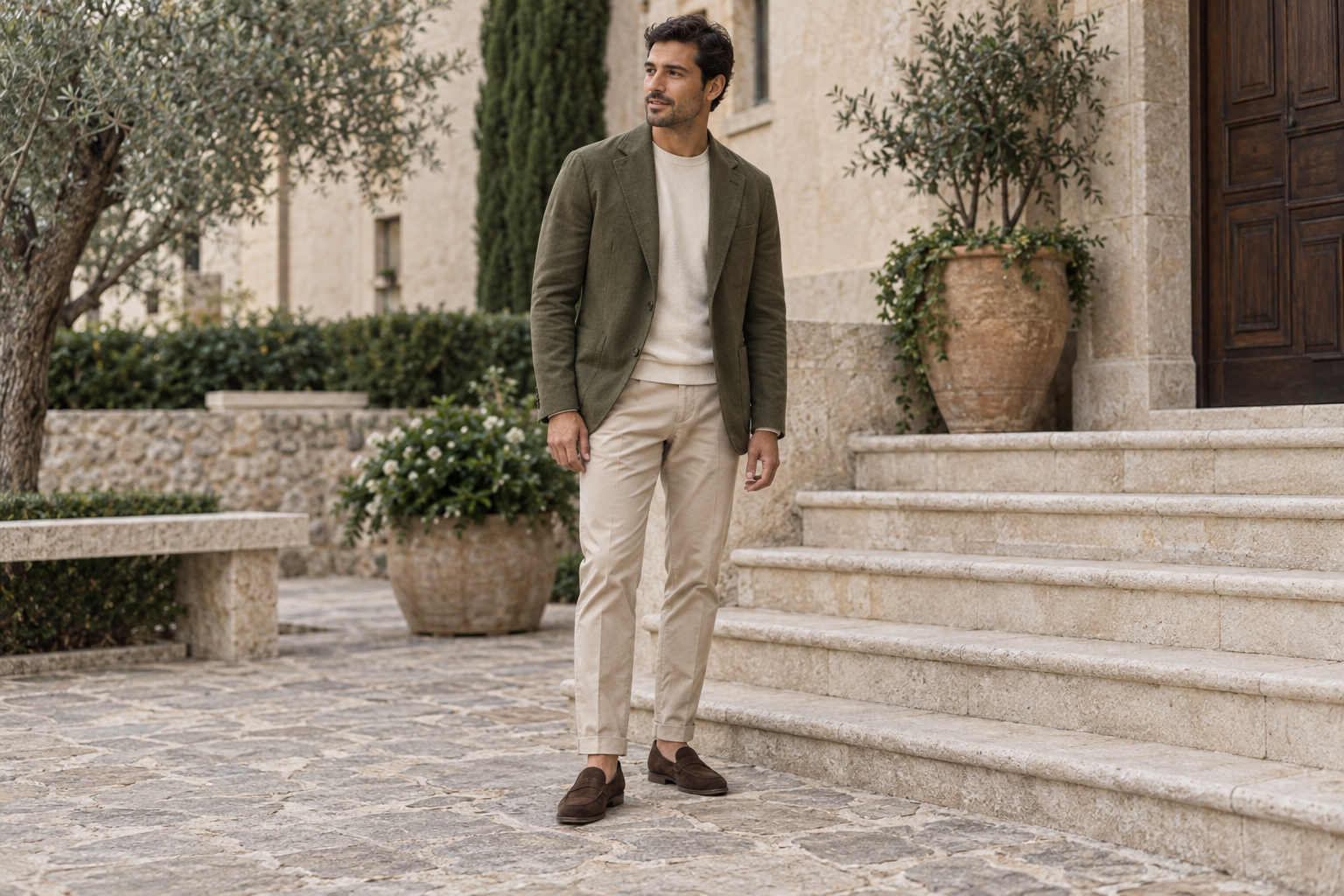
The relaxed-event version: plus-line straight jean hemmed at the ankle, a structured top, and a low block heel. The closed shoe and clean hem keep it deliberate rather than thrown-on.
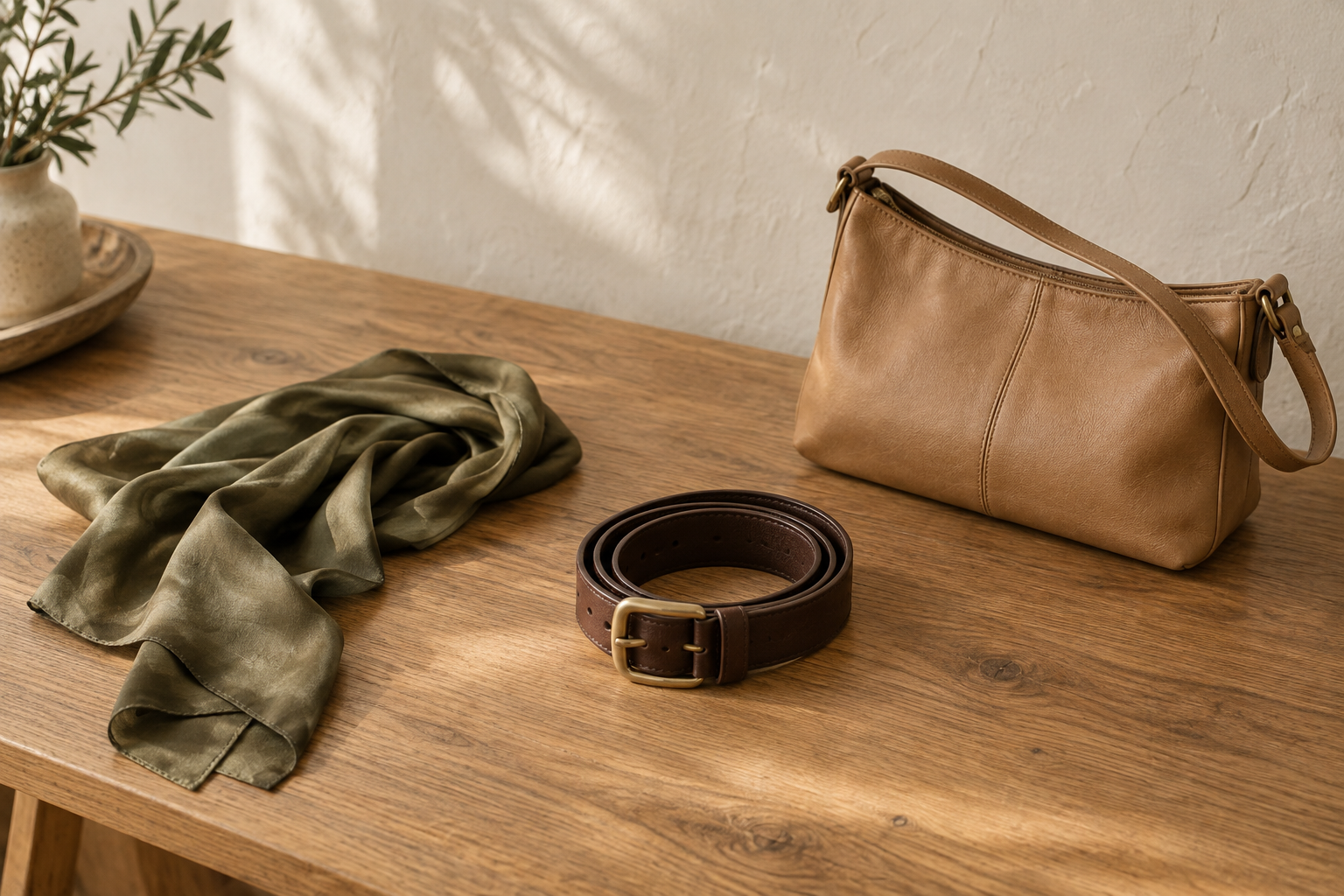
The finishing rules: pointed or elongated toe shapes stretch the leg line, and a medium-scale bag sits proportionate on a shorter frame. An oversized tote swallows the outfit; a tiny bag makes it look bigger.
What to Wear
Smart casual for your body shape: a 60-second shape test, then the jacket, trouser and dress formulas for apple, pear, hourglass and rectangle shapes.
What to Wear
Big and tall smart casual: structure at the shoulder, room through the middle, tuck and layering rules for big frames, and where to shop 2XL to 6XL.
What to Wear
Plus size smart casual: structure where you want shape, ease where you don't. Midsection styling, blazer fit rules and a 12-piece wardrobe.