What to Wear
Business Dinner Outfits for Men: Client Dinners, Networking and Drinks
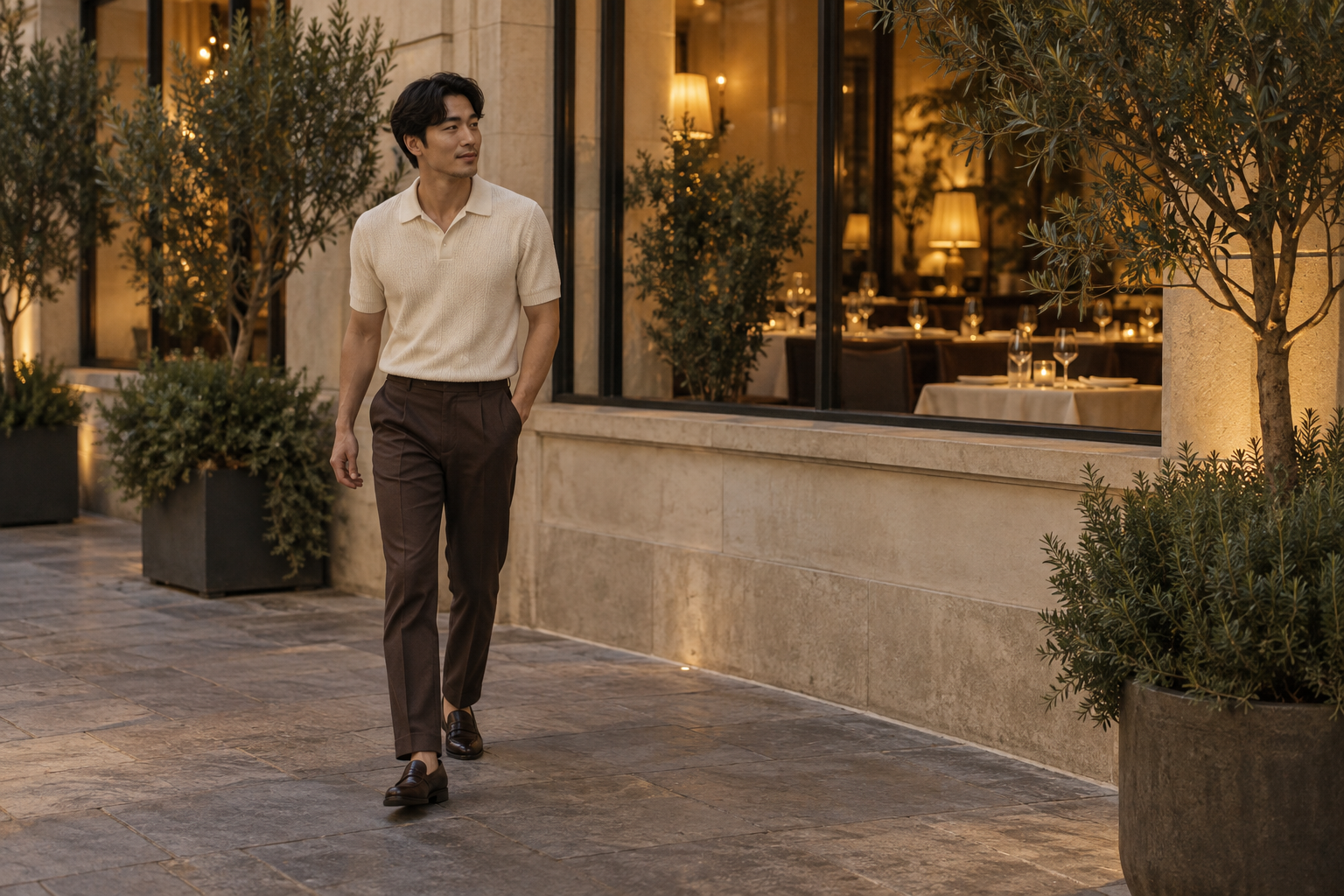
What to wear to a client dinner, networking event or after-work drinks: the seniority rule, two go-to outfits, and the desk-to-bar transition.
Occasion guide
Smart casual means something different in every office, and your first week is when you find out what yours means. Dress one notch above on Monday, then calibrate down with a plan — so you never have to think about this again by Friday.
Begin hereDefinition / explainer
Ask five people what smart casual means for a new office and you will get five different answers — because each of them is describing a different office. The workable version: on day one, dress one notch above what you believe the norm is, then adjust down as you observe. Nobody remembers the slightly sharp new starter; everyone clocks the too-casual one.
The Reddit thread titled Starting new job – What is smart casual? collected answers ranging from suit and tie to jeans and trainers — and every answer was right for somebody's office. That spread is the real problem: smart casual is decided floor by floor, not by the dictionary.
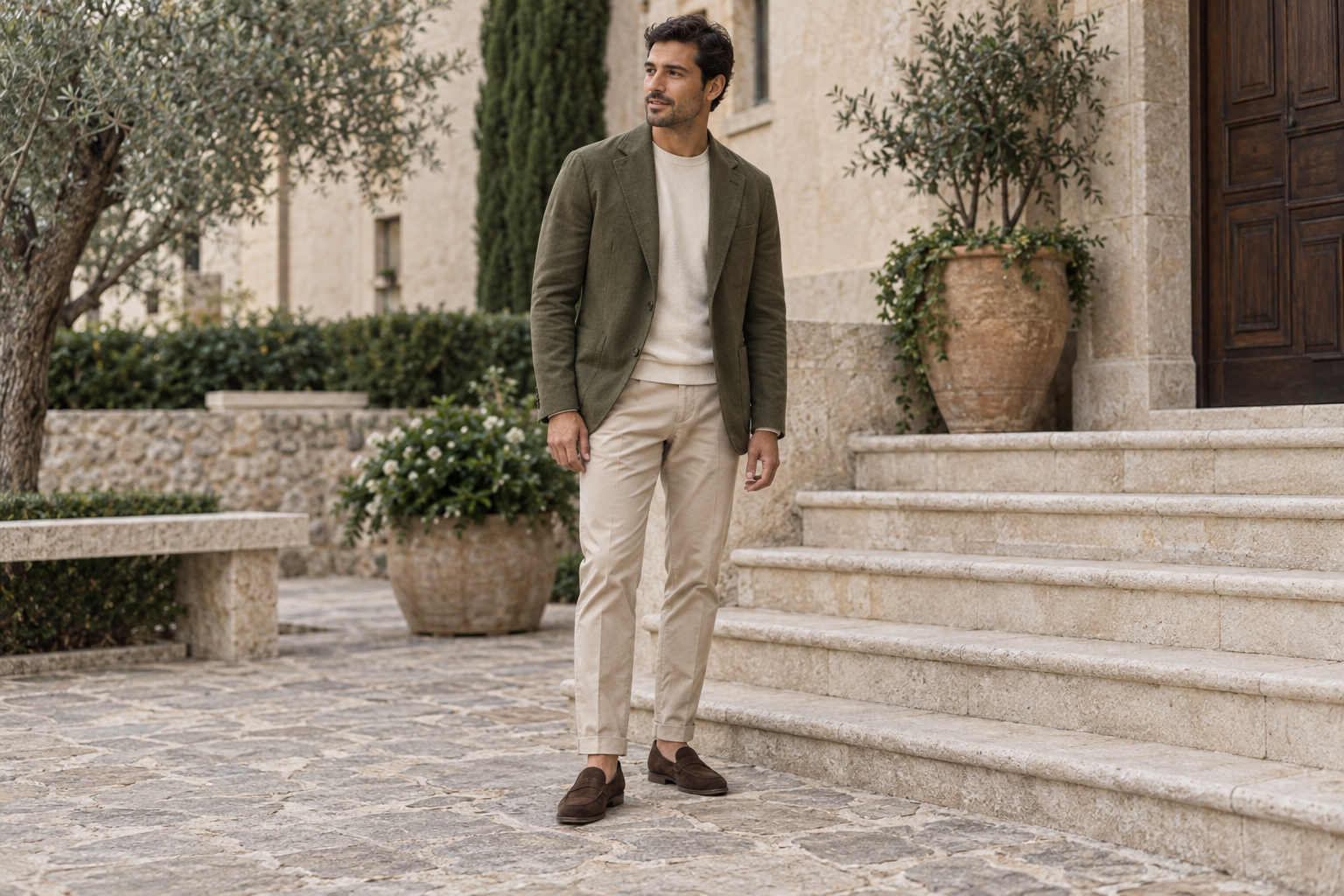
So the first-day default is built to be adjustable: navy blazer or knit blazer, light shirt with no tie, dark chinos or trousers, loafers or clean leather sneakers. Wear the jacket so you can take it off — removing it an hour in is a visible act of calibrating, and the outfit underneath still passes. What you are avoiding is both failure modes at once: stiff interview-dress all day, or showing up more casual than your manager.
Why not ask before you arrive? Because HR tells you the policy and the policy always says smart casual — the culture is only visible on the floor. Observe first, and if you must ask, ask a peer what they wear on an ordinary Tuesday, not what the dress code is. The interview-to-employee transition has its own logic, covered in the smart casual interview outfit guide.
Calibrate by Friday: drop the jacket Tuesday, test your actual daily uniform Wednesday, run the casual test Thursday if the floor supports it, and match the office's real Friday on Friday. One exception: if you meet clients or the board in week one, keep a notch in reserve regardless of floor culture.
| Day | Outfit | What you're testing | What to observe |
|---|---|---|---|
| Monday | Blazer, light shirt, dark chinos, loafers | Your ceiling — sets the sharpest version of you | Who else wears a jacket; who visibly does not |
| Tuesday | Shirt or knit, no jacket, same trousers | Whether shirt-level tops are the floor's baseline | Collar styles, tucked vs untucked, sleeve habits |
| Wednesday | Knit shirt or polo, stone chinos, suede shoes | Whether polo-level tops read normal here | Footwear range — the single clearest tell |
| Thursday | Dark jeans + knit + boots (only if supported) | The casual boundary — does denim actually appear | Whether leadership joins the casual side |
| Friday | Whatever the office's real Friday looks like | The true floor of the dress culture | How far grooming and shoes are allowed to slip |
Ten items cover the whole week with room to rotate: three trousers (dark chinos, charcoal trousers, dark jeans if the floor allows), four tops (two shirts, two fine knits or polos), one blazer, two shoe options, and one belt that matches both pairs of shoes.
The maths is the reason to buy this way: ten interchangeable pieces generate more than a dozen distinct outfits, because every top works with every trouser. The full method is in the men's capsule wardrobe guide. What not to buy yet: five of anything, trend pieces, ties, or a suit — none of that is decidable until you have read the room.
On budget: where you are starting from decides the shopping list, and there is a staged plan for building the kit around a first salary in the first job wardrobe budget guide. The short version — get fit and shoes right first; shirts are the cheapest thing to upgrade later.
Decision fatigue is the real enemy of smart casual. The fix is a uniform: one formula with two or three variants — trousers plus shirt or knit plus loafers — rotated by colour rather than reinvented each morning.
The commute is the enemy of the pressed shirt: a backpack across the back creases the placket, so wear the knit layer over the shirt for travel, hang the shirt in bathroom steam on arrival, or change shoes at the desk if you walk or cycle. And new buildings run unpredictably hot or cold — the mid-layer that lives in the office solves both.
One small thing: ID photo day. The picture lives on your badge for years, so dress for the photo. And time your upgrades to the pay cycle — buy the ten-piece starter now, the second blazer, better shoes and the watch after month one, when you know what the floor rewards.
Signals you can go more casual: three or more people in jeans, leadership in trainers, an actual-practice casual Friday. Signals to stay sharp: client days, senior presence on the floor, or any mention of appearance at all — take that seriously once, fix it visibly, and move on.
What if you were the most overdressed person all week? The downgrade path is fast — jacket off, knit instead of shirt — and day one still earns it back, because a sharp first impression is remembered long after outfit details are not.
Is it better to be overdressed or underdressed at a new job? Overdressed, every time — the asymmetry is that you can take a blazer off, but you cannot add structure you did not bring.
Can I wear jeans in my first week? Hold them until you have observed the floor, then run the Thursday test — dark, clean denim with a knit and boots, and see whether anyone joins you.
How do I find out the dress code before starting? Ask the recruiter or hiring manager what people usually wear rather than what the policy is — and weight observation over any answer, because both summaries drift from the floor's reality.
First week office outfits for men follow one rule: dress one notch above the office norm on day one, then calibrate down across the week as you observe what the floor actually means by smart casual. The safe default is a blazer or knit blazer, a light shirt with no tie, dark chinos or trousers, and loafers or clean leather sneakers — pieces designed to survive being downgraded.
What to Wear
What to wear to a client dinner, networking event or after-work drinks: the seniority rule, two go-to outfits, and the desk-to-bar transition.
What to Wear
What men should wear to a smart casual interview: the one-notch rule, an industry-by-industry table, three outfit builds, and the honest verdict on suits.
What to Wear
What men wear to a funeral with no dress code: dark, quiet, structured. No-suit fallback outfits, the respectful palette, shoes for wet grass.