Skip to content

Find your next good read.

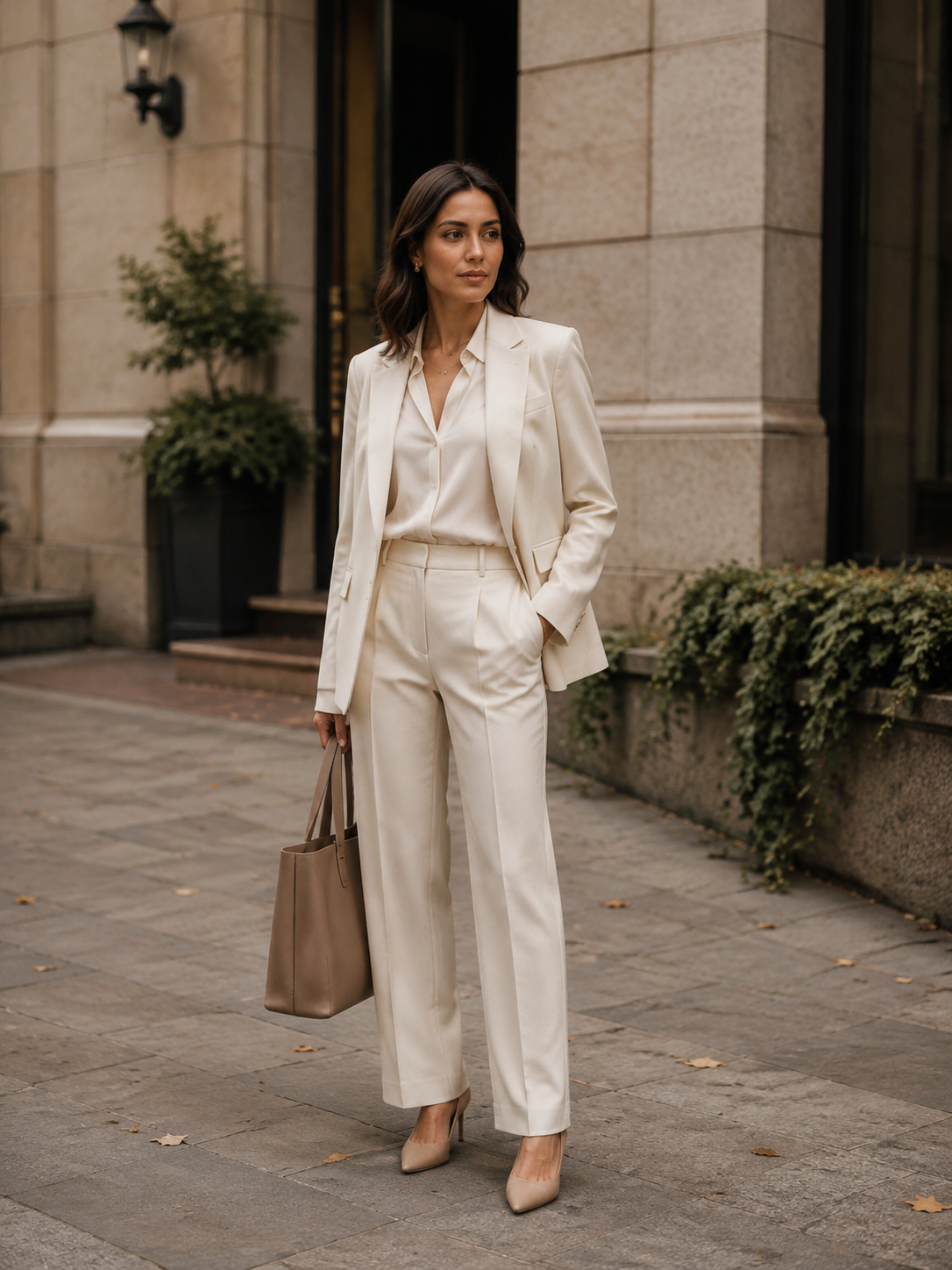
Cream tailored suit with relaxed trousers and a canvas tote

Budget capsule

Your First Job Wardrobe: Smart Casual on a Small Budget

You need a work wardrobe before the first paycheck arrives, and everything has to come at once. Ten pieces, bought in the right order from the right places, cover a smart casual office — and the second paycheck upgrades the weakest piece, not the whole rack.

Begin here

Occasion advice

Smart casual for the first job, on a starter budget

The starter work wardrobe is ten pieces: two dark trousers, two collared or structured tops, two plain tees or fine knits, one layer, one dark jean, and one pair each of smart shoes and clean sneakers. Buy them in that order — shoes first — and the wardrobe works from day one even if the paycheck arrives late.

The ten pieces, specified

The budget work capsule: what each piece must do
PieceSpecificationWhy this specCheapest route
Smart shoesPlain dark leather, stitched or glued cleanly, comfortable from day oneAnchors every outfit; hardest to fakeSecondhand, then a basic care routine
Clean sneakersPlain white or dark leather-look, no logosCovers casual offices and FridaysHigh-street basics ranges
Dark chinoStraight, mid-rise, full-lengthThe everyday workhorseBasics retailers, end-of-season sales
Smarter trouserWool-blend or ponte, dark, straightCarries the formal-leaning daysSecondhand — structure pieces are the best finds
Oxford shirt or blousePlain, wrinkle-resistant, true white or light blueIroned, it reads effort instantlyMulti-buy offers at basics retailers
Knit polo or simple blouseFine gauge, neutral colorSmart without a collar's formalitySales — knitwear is seasonal
Two plain tees or fine knitsHeavyweight cotton, no logosThe layering bases for every rotationCheap year-round
The layerUnstructured blazer, cardigan or overshirtUpgrades every combination beneath itSecondhand first — best value category
Dark jeanStraight, dark indigo, no distressingCasual offices and FridaysDenim goes on sale mid-season
Coat (winter starts)Dark, simple, fits over the layerIt is in every outfit photo for monthsEnd-of-season windows

The cheapest routes repeat two themes: secondhand first for structure — blazers and leather shoes are the best secondhand value there is — and sales timing for seasonal pieces. The where-to-buy-online strategy page covers the measurement-first buying method that makes both work, and the affordable menswear brands list is the starting point for new basics.

The first two weeks: outfits from nothing

Ten pieces make ten-plus combinations, which is enough that nobody notices the rotation. The pattern to internalise: alternate the two trousers, alternate the two top halves, and let the layer decide the formality of the day. Wash mid-week — with ten pieces, that is part of the system, not a sign of failure. The first-week office guide walks through reading the room day by day, and if you land over- or under-dressed, the fix is one piece tomorrow, not a rethink.

Week one from the ten pieces
DayCombinationRegister
Day 1Smarter trouser, oxford, layer, leather shoesOne notch up — the safe opener
Day 2Chino, knit polo, sneakersCalibrating down
Day 3Chino, oxford untucked, overshirt, sneakersCasual office default
Day 4Dark jean, tee, overshirt, sneakersReads the room's casual end
Day 5Smarter trouser, fine knit, leather shoesEnd-of-week polish, no layer needed

Making cheap look expensive: the care multiplier

  • Iron the shirt and press the trouser crease — thirty minutes and no money, and it is the single most visible upgrade.
  • De-bobble knits and keep shoes wiped; condition, not price, is what colleagues read as quality.
  • Spend one small tailor visit on hems — a correctly hemmed budget trouser beats an ill-fitting premium one every time.
  • Keep the palette all-neutral at the start; mismatched colors are what makes budget wardrobes read cheap, and neutral color discipline fixes it for free.
  • Match belt to shoe and retire worn-out gym shoes from the rotation entirely.

Growing the wardrobe, month by month

One purchase per paycheck, spent on the weakest piece, is the whole growth plan. By month two you will know which pieces actually got worn — buy more of that shape and nothing else, because your own wear record beats any list. One nice piece is a fine celebration; the full designer leap is the classic first-paycheck mistake.

When the starter pieces wear out, they retire into weekend wear, and the wardrobe quietly becomes real. The long view lives in the wardrobe from scratch plan and the men's capsule wardrobe guide.

  • Ten pieces cover a smart casual office: two trousers, two tops, two bases, one layer, one jean, two shoes.
  • Buy in order — shoes first — and each step works with everything already bought.
  • Calibrate from the offer email and company photos, then dress one notch above average for week one.
  • Secondhand the structure, buy basics on sale, and let care — iron, wipe, hem — do the upgrading.
  • One purchase per paycheck replaces the weakest piece; your own wear record decides what that is.

BEFORE YOU CHOOSE

Read the room. And the invitation.

  • Smart casual ranges widely by industry: the same phrase means a blazer in banking-adjacent offices and clean jeans at a design studio. Calibrate before buying anything.
  • The first two weeks are a calibration period, not a final exam. Dressing one notch above the office average, then adjusting, beats a big shop built on a guess.
  • Budget wardrobes fail on condition and mismatch, not on price. Ten coordinated pieces that are pressed and clean outperform thirty random ones at any price point.

A useful outfit formula.

  1. Bottom half: one chino and one smarter trouser, both dark, straight-cut and full-length — these two carry every working day.
  2. Top half: one oxford shirt or blouse and one knit polo or simple blouse — wrinkle-resistant fabrics matter more than labels at this budget.
  3. Base layers: two heavyweight plain tees or fine knits in neutral colors, no logos — the layering engine of the capsule.
  4. The layer: an unstructured blazer, cardigan or overshirt, matched to the office's formality — the single piece that upgrades everything else.
  5. Shoes: one pair of smart leather shoes and one pair of clean minimal sneakers; shoes anchor every outfit and are the hardest thing to fake cheap.
  6. Extra: one dark jean for casual offices, and a coat if you are starting in winter.

Two starting points.

Cream tailored suit with relaxed trousers and a canvas tote

The day-one outfit

The smarter trouser with the oxford shirt, unstructured layer and leather shoes. This is the outfit for the first day and any meeting where you do not know the dress code yet — it reads effort without reading formal.

Woman in an oatmeal cardigan, dark jeans and brown loafers carrying an olive tote in a cafe courtyard.

The casual-office rotation

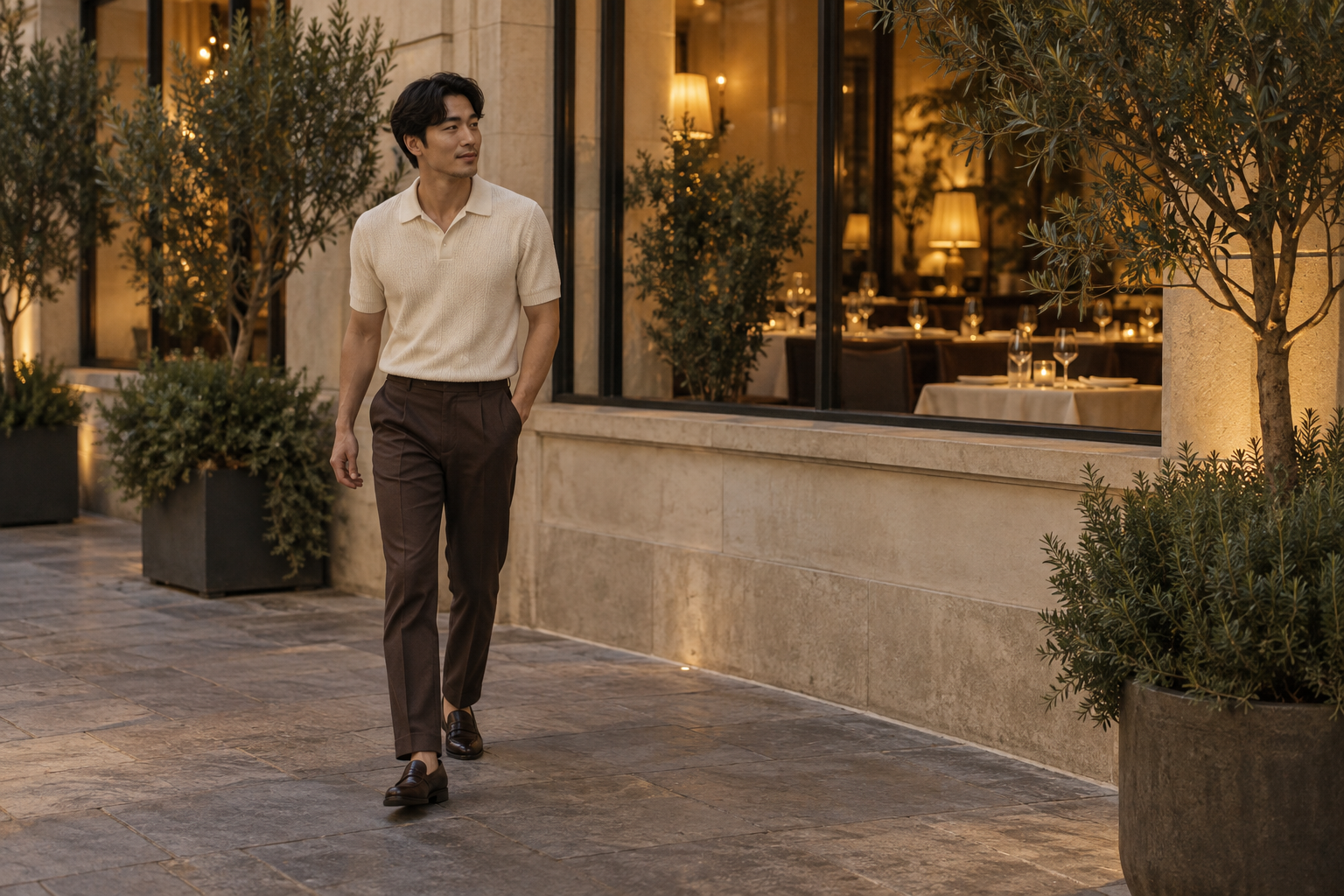
The dark jean with a knit polo or tee, the overshirt on top, and clean minimal sneakers. This is the Monday-after-the-first-paycheck look in most modern offices — same five pieces, lower formality.

Man in a cream knit polo and dark brown trousers walks beside a warmly lit restaurant.

The straight-to-dinner outfit

The chino with the fine knit, leather shoes, layer folded over the arm. When colleagues suggest drinks after work, this version crosses from desk to table with no change — the reason every piece here is chosen to mix.

Adjust for the day.

Formal-leaning offices

When the company photos show jackets and leather shoes, the smart trouser and oxford become the daily default and the layer is a blazer. The jean stays for Fridays only, if that. Buy the second collared top before the second knit.

Casual and creative offices

When the photos show jeans and sneakers, the dark jean promotes to daily wear and the oxford becomes the up-notch piece. Spend the layer budget on an overshirt instead of a blazer — same upgrade, right register.

Starting in winter

A coat enters the ten pieces and displaces the jean if money is tight. End of season is when coats and leather shoes are cheapest, so buy the coat late if you can bridge the cold weeks with layers you already own.

Very small budgets

The three-piece minimum — smart shoes, one dark trouser, one collared top — gets you through week one, with the rest following one paycheck at a time. Borrow the interview-to-first-week layer rather than buying it in a hurry.

Leave these assumptions behind.

  • Buying the suit first. Unless the industry demands one, a suit hangs in the wardrobe while the daily pieces do the work — the exception is covered in the no-suit interview approach.
  • Buying to the imagined office instead of the real one. The offer email and the company's own photos tell you more than any dress-code article.
  • Buying everything dry-clean-only or high-maintenance. Ten pieces means washing mid-week; fragile fabrics cannot survive that rotation.
  • Spending the first paycheck on one designer piece. The upgrade path works by replacing the weakest piece each month, not by leaping at the top of the rack.

Keep exploring.